

Programmable Logic Controllers (PLCs), core devices in the industrial control field, are renowned for their high reliability, strong anti-interference capabilities, and simple programming. However, they still have some limitations in practical applications. The following systematic analysis of their shortcomings encompasses multiple dimensions, including technology, cost, scalability, and maintenance:
1. Hardware Performance Limitations
Computing Power and Memory Capacity:
Traditional PLCs typically have lower CPU speeds and memory capacity than industrial PCs or high-performance embedded systems, making them difficult to handle complex algorithms (such as machine vision and real-time big data analytics) or large-scale parallel tasks. For example, when executing high-frequency motion control (such as synchronizing multiple servo motors), long scan cycles (in the millisecond range) can cause latency.
I/O Points and Scalability:
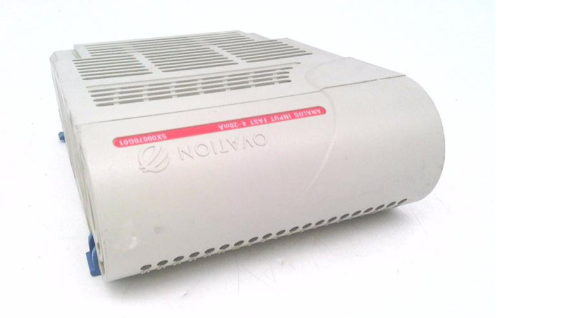
Basic PLCs have a limited number of I/O modules. Expansion requires additional modules or distributed slaves, increasing system complexity and cost. While high-end PLCs support more I/O, their cost is significantly higher, and inter-module communication can introduce latency.
Real-time bottlenecks:
Although PLCs are designed for real-time control, their scan cycles (typically 10-100ms) may not meet requirements in high-speed scenarios (such as microsecond response times), necessitating integration with dedicated motion controllers or industrial PCs.
2. Programming and Development Limitations
Programming Language Limitations:
Mainstream ladder diagrams are suitable for logic control, but complex algorithms (such as PID closed-loop and fuzzy control) or advanced data structures require switching to structured text (ST), sequential function charts (SFC), or function block diagrams (FBD), resulting in a high learning curve. Some PLCs do not support high-level languages (such as C/C++), limiting development flexibility.
Complex debugging and diagnostics:
Program debugging relies on simulators or online monitoring, and troubleshooting requires a combination of experience and tools (such as a logic analyzer). Incompatibility between cross-vendor PLC programming software (such as Siemens TIA Portal and Mitsubishi GX Works) increases development migration costs.
Lack of Standardization:
PLC programs are often tied to specific hardware, resulting in poor code portability. While international standards (such as IEC 61131-3) standardize programming languages, implementation differences between manufacturers make program reuse difficult.
3. Cost and Maintenance Challenges
High Initial Investment:
Hardware (CPU, I/O modules, communication modules) and supporting software (programming tools, host monitoring system) are expensive, especially for high-end models. Small projects may experience higher unit costs due to limited economies of scale.
Maintenance and Upgrade Costs:
Hardware failures require specialized repairs, resulting in high spare parts inventory costs. Software upgrades (such as firmware updates and feature expansions) may require reprogramming or configuration, increasing downtime and maintenance costs.
Energy Consumption:
Some PLC devices consume high power, requiring additional consideration for energy-efficient designs in energy-sensitive scenarios (such as green factories).
4. Cybersecurity and Compatibility Risks
Cybersecurity Vulnerabilities:
Traditional PLC designs focus on functional safety, with limited cybersecurity protection. Unencrypted communications, weak passwords, and unpatched firmware can serve as attack vectors (e.g., the Stuxnet virus incident). In the context of Industry 4.0, additional firewalls, intrusion detection systems (IDS), or encrypted communication protocols (e.g., TLS) are necessary.
Compatibility and Interoperability:
Communication protocols (e.g., Modbus, PROFINET, and EtherCAT) vary among PLCs from different manufacturers, requiring protocol conversion gateways during system integration, increasing latency and potential failure points. Older PLCs may not support new industrial Ethernet technologies (e.g., Time-Sensitive Networking (TSN)), hindering system upgrades.
5. Environmental Adaptability Limitations
Extreme Environment Tolerance:
Although PLCs are generally designed for industrial environments (wide temperature ranges, dustproofing, and vibration resistance), extreme conditions (e.g., high temperature and humidity, strong electromagnetic interference, and corrosive gases) require customized protection (e.g., additional heat dissipation modules and sealed enclosures), increasing costs.
Space and Installation Constraints:
Large PLC cabinets occupy considerable space, necessitating a compact design or distributed architecture in space-constrained environments (e.g., ships and mobile equipment). 6. Innovation and Ecosystem Constraints
Slow Innovation:
Compared to the rapid iterations in the IT sector, PLC hardware and software have long update cycles, making it difficult to quickly integrate new technologies (such as AI algorithms and edge computing). Some vendors maintain closed ecosystems, restricting third-party application development.
Talent Gap:
PLC programming and maintenance require specialized skills. Traditional engineers may be familiar with a single brand, which can lead to knowledge barriers when collaborating with other vendors or applying new technologies (such as digital twins and predictive maintenance).
Summary and Recommendations
PLCs’ shortcomings stem primarily from their design focus—prioritizing reliability and ease of use in industrial environments over high performance and flexibility. Choosing a PLC requires a careful balance of requirements: For standard scenarios such as logic control and sequential control, PLCs remain the preferred choice. However, for scenarios involving high-speed computing, complex algorithms, and strong network interactions, industrial PCs, embedded systems, or edge computing platforms can be considered as supplementary options.
Optimization Directions: Adopt modular design to enhance scalability, integrate industrial Ethernet to enhance communication capabilities, strengthen network security, and promote programming tool standardization and the development of an open source ecosystem to adapt to Industry 4.0 and smart manufacturing trends.
Related product recommendations:
ABB 5SHY3545L0014 3BHB020720R0002
ABB 5SHY4045L0003
5SHY4045L0003 3BHE019719R0101
5SHY4045L0003 3BHB021400 3BHE019719R0101
5SHY3545L0005 336A4954ARP2
KUC321AE HIEE300698R1
KUC711AE 3BHB004661R0001
KUC720AE 3BHB000652R0001
GFD233A101 3BHE022294R0101
GFD563A102 3BHE046836R0102
GF D563 3BHE046836R010
3BHE017628R0002 PPD115A02
PPD517A3011 3BHE041576R3011
PCD232A 3BHE022293R0101
PCD237A101 3BHE028915R0101
PCD230A 3BHE022291R0101
PCD231B 3HHE025541R0101
PCD235C101 3BHE057901R0101
More……