
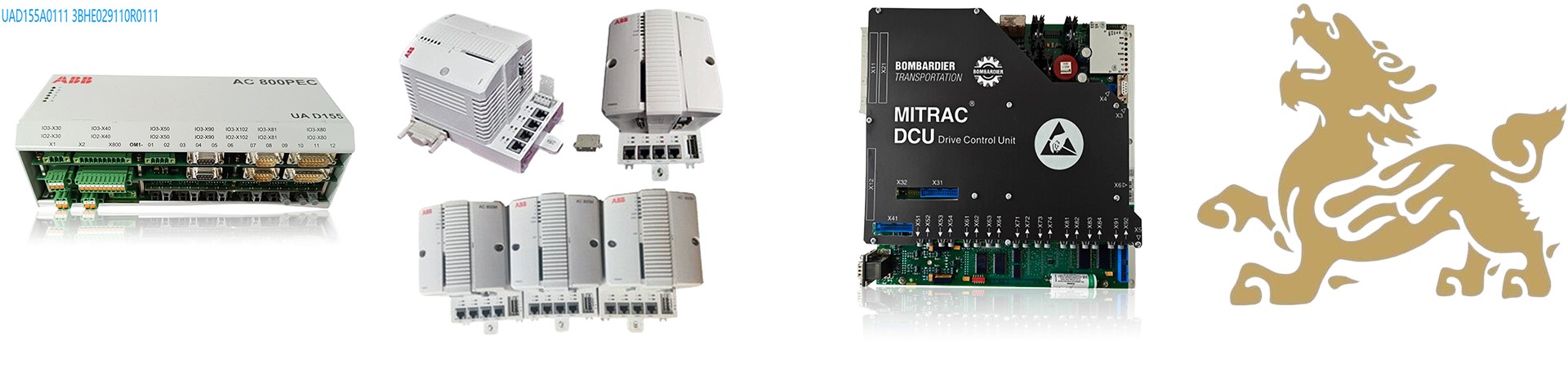

As a core device in the industrial control field, PLCs (Programmable Logic Controllers) hold an irreplaceable position in automation scenarios thanks to their high reliability, adaptability, ease of use, and flexibility. The following systematically analyzes their advantages from three perspectives: core strengths, technical features, and application value:
1. Core Strengths: The “Anchor” of Industrial Scenarios
Superior Anti-interference and High Reliability
Hardware Design: Utilizing industrial-grade chips, isolated circuits, and shielded enclosures, these controllers withstand harsh environments such as high temperatures (typically -20°C to 70°C), high humidity, strong electromagnetic interference (such as those meeting IEC 61000-4 standards), and vibration, achieving a mean time between failures (MTBF) of up to hundreds of thousands of hours.
Software Redundancy: Supports hot or cold backup of the CPU, power supply, and communication modules, enabling seamless failover in the event of a failure, ensuring continuous system operation (e.g., in critical scenarios like petrochemicals and nuclear power plants).

Self-Diagnostic Function: Built-in error detection mechanisms (such as memory checksum and communication timeout alarms) monitor hardware status in real time and trigger fault codes for quick problem location.
Modularity and Scalability
Building-block architecture: The CPU, I/O modules, communication modules, and power modules can be flexibly combined, supporting local expansion (such as increasing I/O points) or remote distributed expansion (via industrial Ethernet networks such as PROFINET and EtherCAT), adapting to the needs of small stand-alone control systems to large, complex systems.
Standardized interfaces: Supports diverse signal input/output, including analog, digital, high-speed pulse, temperature, and position, and is compatible with sensors, actuators, inverters, servo drives, and other devices.
II. Technical Features: “Intelligent Engine” for Efficient Control
Programming Simplicity and Flexibility
Graphical Programming: The mainstream programming language uses intuitive programming languages such as ladder diagrams and function block diagrams (FBD), which align with the logical thinking of electrical engineers and lower the learning threshold. Advanced languages such as structured text (ST) and sequential function charts (SFC) are also supported to meet complex algorithm requirements (such as PID closed-loop control and fuzzy control).
IEC 61131-3: An internationally standardized programming framework ensures code portability and cross-vendor compatibility, reducing redevelopment costs.
Online Debugging and Simulation: Supports online program modification, real-time variable monitoring, and forced signal operations. Combined with simulation software (such as PLCSim), logic can be verified in advance, reducing on-site debugging time.
Real-Time Response and Deterministic Control
High-Speed Scan Cycle: Typical PLC scan cycles range from a few milliseconds to tens of milliseconds, enabling rapid response to input signals (such as buttons and sensors) and driving outputs (such as motors and valves), meeting the real-time requirements of industrial processes.
Motion Control Capabilities: Through high-speed pulse output, position feedback, and electronic cam functions, it enables precise control of multi-axis synchronization, interpolated motion, and electronic gears. It is widely used in packaging machinery, textile equipment, robotics, and other fields.
III. Application Value: The “Cornerstone” of Industry 4.0
Cost-Effectiveness and Long-Term Benefits
Reduced Overall Cost: Despite the high initial hardware investment, the PLC’s high reliability reduces downtime losses, its modular design reduces maintenance costs, and its long lifecycle (typically over 10 years) dilutes unit costs.
Improved Production Efficiency: Optimize production processes through automated control, reduce manual intervention, and improve product consistency and yield (e.g., automotive assembly lines, food packaging lines).
Industrial Network and Ecosystem Integration
Open Communication Protocols: Supports industrial Ethernet and fieldbuses such as Modbus, PROFINET, EtherCAT, and OPC UA, seamlessly integrating with higher-level systems such as SCADA, MES, and ERP to achieve integrated data collection, monitoring, and management.
Edge Computing and IoT Integration: Modern PLCs integrate edge computing capabilities for local data processing (e.g., AI algorithms and predictive maintenance), reducing cloud latency. They also support IoT protocols (e.g., MQTT) for remote monitoring and cloud-based analysis.
Security and Compliance
Functional Safety: Complies with safety standards such as IEC 61508 and SIL, supporting the integration of safety devices such as safety relays and safety light curtains to ensure the safety of personnel and equipment.
Cybersecurity: Protects against cyberattacks through firewalls, encrypted communications, and access control, meeting the cybersecurity requirements of Industry 4.0.
IV. Typical Application Scenarios
Discrete Manufacturing: Automotive production lines (e.g., welding, painting, and final assembly), electronics assembly (e.g., SMT placement machines), and packaging machinery (e.g., pillow packaging machines).
Process Industry: Chemical reactor control, water treatment plants (e.g., pH adjustment, pump station control), and power transmission and distribution (e.g., substation automation).
Infrastructure: Elevator control, building automation (e.g., HVAC, lighting), and rail transit (e.g., signaling systems and shielded door control).
Summary
The advantages of PLCs can be summarized as four core features: reliability, flexibility, ease of use, and efficiency. Their industrial-grade design ensures stable operation in harsh environments, their modular architecture supports flexible expansion, their graphical programming reduces user barriers, and their real-time control meets the demands of industrial processes. Furthermore, through open communication and ecosystem integration, they adapt to the trends of Industry 4.0. Despite limitations in computing power and cost, PLCs remain irreplaceable in the industrial control field and are a cornerstone of smart manufacturing and digital transformation.
Recommended modules with the same function:
GFD563A101
GFD563A101 3BHE046836R0101
GFD563A102
GFD563A102 | 3BHE046836R0102
GFD212A 3BHE020357P201
GFD212A 3BHE020356R0101
GFD233A 3BHE022294R0103
GFD233A
GFD233A103
KUC321AE HIEE300698R1
3BHB004661R0101
PPD512 A10-15000 3BHE040375R1023
3BHE017628R0002 PPD115A02 SG579989013
UAD149A1501 3BHE014135R1501
UAD142A01 3BHE012551R0001
PPD513AOC-100440 3BHE039724R0C3D
PPD517A3011 3BHE041576R3011
PPD517 3BHE041576R3011
PPD512A10-454000 3BHE040375R103E
3BHE057901R0101 PCD235
PCD235C101 3BHE057901R0101
GFD563A102 3BHE046836R0102
GFD563A101 3BHE046836R0101
GF D563 3BHE046836R010
GFD563A102 3BHE046836R0102
PVD164 3BHE014377R0001
UNITROL 1020 3BHE030579R0001
UNITROL 1020 3BHE030579R0003
more……