

Core Functions
Excitation Control Core
Generator Voltage Stabilization: As part of the excitation power unit and regulator, it provides precise excitation current to the synchronous generator rotor, maintaining a constant terminal voltage (fluctuation ≤ ±0.5%) to ensure grid stability.
Reactive Power Distribution: Regulates the excitation current in parallel units to optimize reactive power distribution and avoid overload or underload.
Integration and Collaborative Control
Modular System Integration: Collaborates with the ACS6000‘s ARU (Active Rectifier Unit), INU (Inverter Unit), and CBU (Capacitor Unit) modules to achieve efficient energy flow through a common DC bus, supporting synchronous operation of multiple motors and regenerative braking.
Communication and Monitoring: Supports Ethernet/IP, Modbus, Profibus, and other protocols, seamlessly integrating with host computers, SCADA systems, or the ABB 800xA platform to achieve remote parameter adjustment, status monitoring, and fault diagnosis.
.jpg)
Protection and Diagnosis
Multiple Protection Mechanisms: Built-in overvoltage, overcurrent, short circuit, and over-temperature protection, combined with fault waveform recording (e.g., COMTRADE format) and event logging (≥1000 entries) for rapid fault location.
Self-Diagnosis Function: Real-time monitoring of hardware status via LED status indicators (e.g., RUN/ALARM/TRIP) and software tools (e.g., PCM600), supporting automatic switching of redundant channels to reduce downtime.
Voltage Stabilization and Regulation
Maintaining generator terminal voltage or main transformer high-voltage side voltage at set levels through precise control of excitation current, ensuring voltage stability during load changes (e.g., automatically increasing excitation current to prevent voltage drops during sudden load increases).
Supporting dynamic reactive power distribution, coordinating reactive power output of each unit during parallel generator operation, and optimizing the grid power factor.
System Stability Enhancement
Enhancing the static, transient, and dynamic stability of the power system. For example, it suppresses voltage fluctuations by rapidly adjusting the excitation current, preventing system overload or loss of synchronism; and achieves rapid demagnetization during faults (such as short circuits), protecting the generator and transformer.
.jpg)
Working with the ACS6000’s rectifier unit (ARU) and inverter unit (INU), it optimizes power flow through vector control (VC) or direct torque control (DTC) technology, reducing harmonic components and improving system response speed.
Protection and Monitoring
Integrates multiple protection functions including overvoltage, undervoltage, overcurrent, and overtemperature, monitoring rotor current, voltage, and temperature in real time, triggering alarms or automatic shutdown to prevent equipment damage.
Provides a fault diagnosis interface, supporting LED status indication, fault code output, and remote communication (such as Ethernet/IP, Profinet, Modbus), facilitating system integration and maintenance.
Modularity and Scalability
Adopts a modular design, supporting independent configuration of multiple channels (such as thyristor channels and signal processing modules), allowing for flexible expansion to adapt to different power levels and application scenarios (such as power generation, metallurgy, and marine).
Compatible with ABB 800xA systems and DCS (Distributed Control Systems), enabling seamless collaboration with PLCs, frequency converters, and other equipment.
Working Principle
Excitation System Composition
Power Unit and Regulator: The excitation power unit (e.g., a thyristor rectifier bridge) provides the excitation current. The excitation regulator dynamically adjusts the output based on PID algorithms or adaptive control strategies, according to generator load and voltage/current feedback signals.
Closed-Loop Control: Real-time data is collected through high-precision sensors (e.g., voltage/current transformers), combined with control algorithms (e.g., DTC direct torque control) to calculate the optimal excitation value, ensuring fast response (response time ≤ 25μs) and precise regulation.
Regulator Algorithm: Employing digital signal processing (DSP) and advanced control algorithms (e.g., PID, fuzzy control), the excitation current is adjusted in real time according to grid demand, load changes, and generator status. For example, by detecting the generator terminal voltage deviation, the excitation current is dynamically corrected to maintain a constant voltage.
.jpg)
Phase Synchronization and Energy Management
Phase Control: Utilizing a phase detection circuit to monitor the grid voltage/current phase in real time, the output phase is adjusted via an IGCT (Integrated Gate Commutated Thyristor) or IGBT module to ensure phase consistency of the motor under different operating conditions (such as starting, braking, and sudden load changes), reducing vibration and efficiency loss.
Energy Recovery: Through a common DC bus design, braking energy is fed back to the grid or used by other equipment, improving system energy efficiency (≥94%).
Modular Design and Expandability:
Hardware Architecture:Employs a modular design, supporting hot-swapping and redundant configurations (such as dual power supplies and dual communication links), adaptable to industrial environments (operating temperature -40℃~70℃, IP67 protection).
Software Support: Compatible with the ABB Control Builder M programming environment, supports IEC 61131-3 standard languages (such as FBD and ST), and can be integrated with MATLAB/Simulink for model simulation and code generation.
Key Technical Components
Signal Detection Board: Integrates voltage/current sensors and isolation amplifiers to acquire excitation voltage, current, and rotor grounding fault signals (such as insulation resistance detection) in real time.
Control Board (e.g., AMC3):Executes core control logic, including rectifier/inverter control, pulse width modulation (PWM), and fault protection logic.
Communication Interface: Supports high-speed communication such as fiber optic and Ethernet, exchanging data with the ACS6000’s central control unit (COU), I/O modules, and host computer.
Collaborative Working Mechanism: In the ACS6000 system, the excitation controller works collaboratively with the rectifier unit (ARU), inverter unit (INU), water-cooled unit (WCU), and voltage limiting unit (VLU). For example, energy sharing is achieved through a common DC bus, and the fast short-circuit detection board (FSCD) and anti-saturation device (ASE) ensure the safety of power devices.
Combining Direct Torque Control (DTC) technology, the motor torque and flux are calculated every 25μs, achieving a rapid response of 50μs through optimal switching logic, thus improving system dynamic performance.
Environmental Adaptability
Designed to industrial standards, it supports a wide temperature range (-25℃ to +70℃), high voltage/current capacity (e.g., input AC 100-240V, output DC 24V/10A), and possesses electromagnetic interference (EMI) immunity, ensuring stable operation under harsh conditions.
Application Scenarios
Power Industry: Generator excitation control, grid stabilization, new energy grid connection (e.g., wind power, photovoltaic).
Industrial Sector: High-power motor control in metallurgy (rolling mill drive), mining (hoisting machines), chemical industry (pump loads), port cranes, etc.
Infrastructure: Scenarios with high requirements for power quality and reliability, such as subways, airports, and data centers.
Technical Highlights
High-Precision Control: Combining DTC technology and adaptive algorithms, it achieves precise control of torque and flux, with a torque response time ≤25μs.
Reliability Design: Industrial-grade hardware (such as fanless cooling and lightning protection), redundant architecture, and fault prediction functions ensure long-term stable operation.
Energy Saving and Efficiency: Through energy recovery and high-efficiency power conversion (efficiency ≥94%), it reduces energy consumption and operating costs.
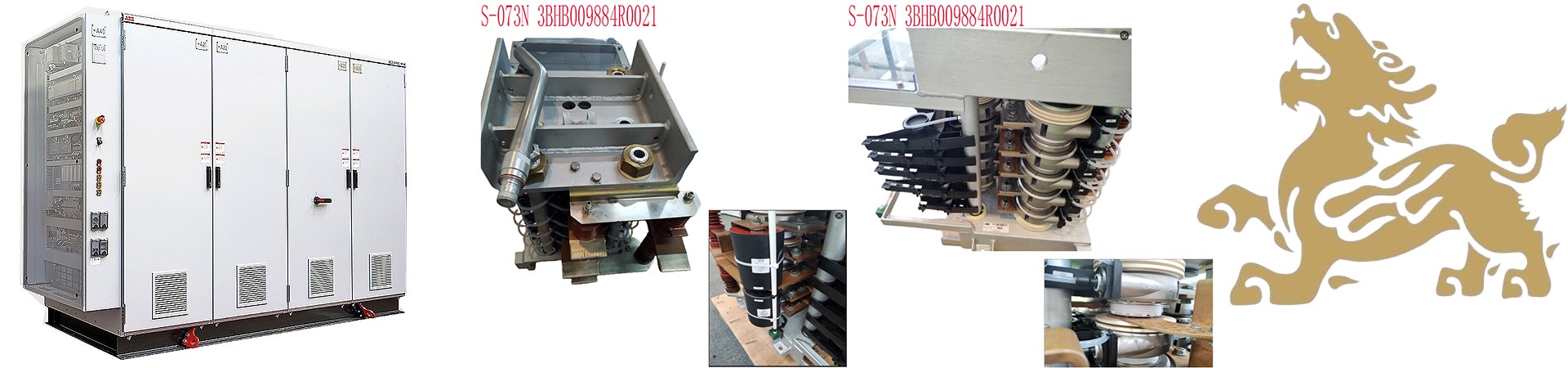
Summary: The PCD237A101 3BHE028915R0101 excitation controller plays a core role in the ABB ACS6000 system. Through precise excitation control, phase synchronization, and energy management, it ensures stable and efficient operation of the power system, especially excelling in high-voltage, high-power scenarios. Its modular design, multiple protection mechanisms, and deep integration with the ABB ecosystem make it a preferred solution in industrial automation and power electronics. In the ABB ACS6000 system, it plays the role of “voltage stabilizer” and “system guardian”, ensuring the generator operates efficiently, safely and stably, while supporting flexible expansion and intelligent monitoring in industrial automation scenarios.
Recommended modules with the same function:
PCD2000
PCD237A101
PCD237A101 3BHE028915R0101
PC D232 A|PEC80-CIO
8R37-2021-21-3101 PCD2000
PCD232A-3BHE022293R0101
PCD230A101
PCD230A101 3BHE022291R0101
PCD231B
PCD231B 3HHE025541R0101
PCD530A102
PCD530A102 3BHE041343R0102
PCD230A101
PCD230A101 3BHE022291R0101
PCD237
PCD287
PCD232A101
PCD232A101 3BHE022293R0101
PCD235B101 3BHE032025R0101
PCD235B101
more…..
Thank you for putting this in a way that anyone can understand.
I’ve bookmarked this post for future reference. Thanks again!
I learned something new today. Appreciate your work!
You made some excellent points here. Well done!
Keep educating and inspiring others with posts like this.
Your breakdown of the topic is so well thought out.
Thank you for sharing this! I really enjoyed reading your perspective.
This clarifies a lot of my confusion on the topic.
QQ88 – Nhà cái trực tuyến hàng đầu châu Á, uy tín, bảo mật tuyệt đối, khuyến mãi khủng, hỗ trợ 24/7, nơi mỗi cược là cơ hội thắng lớn.
Great points, well supported by facts and logic.
This made me rethink some of my assumptions. Really valuable post.
So simple, yet so impactful. Well written!
Excellent work! Looking forward to future posts.
This post gave me a new perspective I hadn’t considered.
This gave me a whole new perspective on something I thought I already understood. Great explanation and flow!
It’s really a nice and helpful piece of information. I’m glad that you shared this helpful info with us. Please keep us informed like this. Thank you for sharing.