
.jpg "PCD231B101(1)")
Description
Many products have not been listed yet. For more products, please contact us
If the product model is inconsistent with the displayed image, the model shall prevail. Please contact us for specific product images, and we will arrange for photos to be taken and confirmed in the warehouse
We have 16 shared warehouses worldwide, so sometimes it may take several hours to accurately return to you. We apologize for any inconvenience caused. Of course, we will respond to your concerns as soon as possible.
GFD563A102 3BHE046836R0102 Other names:
Central processing unit ABB GFD563A102 | 3BHE046836R0102
ABB GFD563A102 | 3BHE046836R0102 PLC processing board
Functional module ABB GFD563A102 | 3BHE046836R0102
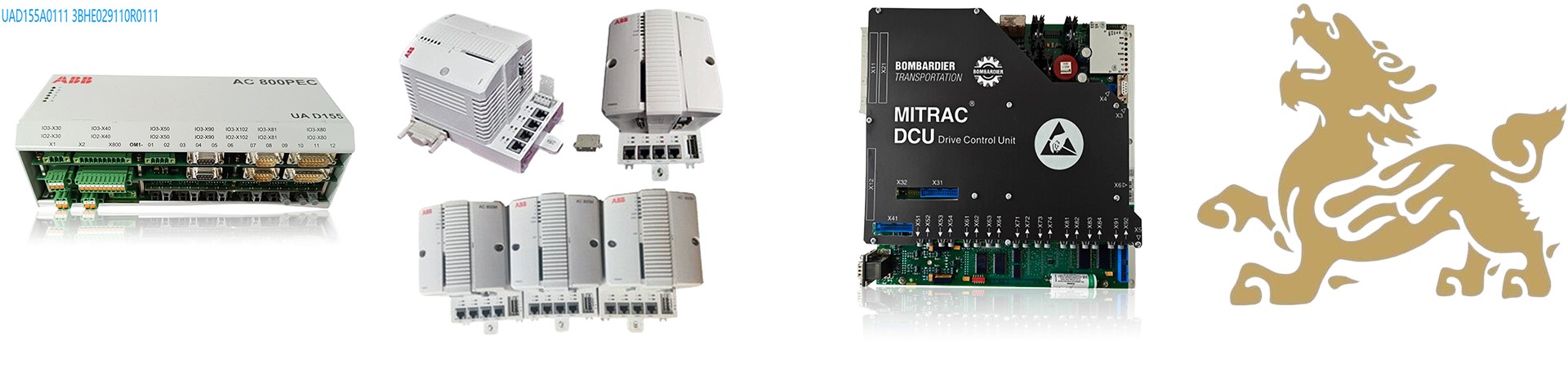
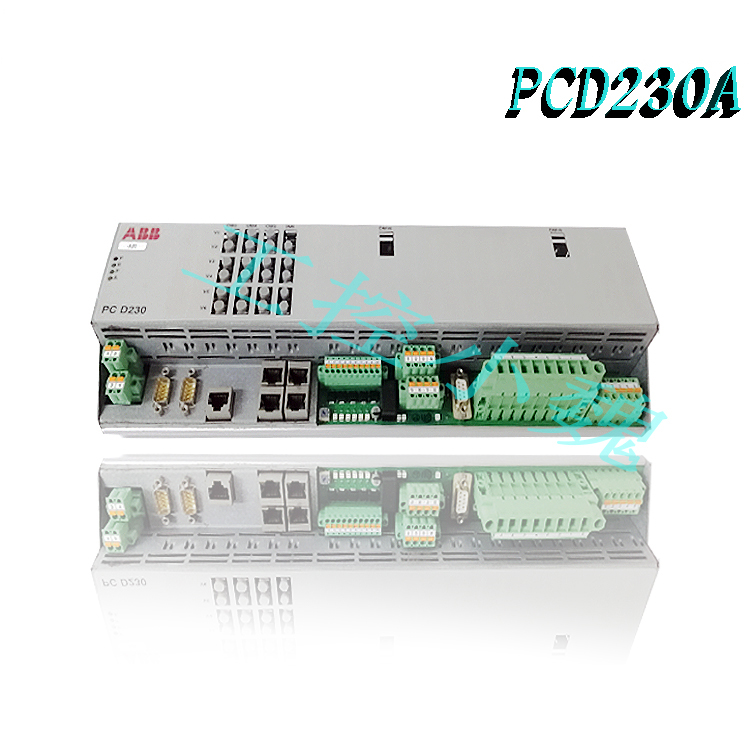
ABB GFD563A102 | 3BHE046836R0102 | GF D563 A102, AC 800PEC controllers are suitable for industries such as industrial automation and machinery, utilities and energy, process control and monitoring. The AC 800PEC toolbox is required to access the controller hardware. Using Simulink external mode can achieve user-friendly monitoring. If an AC 800PEC controller is required, it can be programmed using ABB’s Control Builder M programming tool (compliant with IEC 61131-3), as well as MATLAB, Simulink, and Simulink Coder. The AC 800PEC toolbox is required to access the controller hardware. Using Simulink external mode can achieve user-friendly monitoring. ABB GFD563A102 | 3BHE046836R0102 | GF D563 A102 AC 800PEC controller is a powerful tool for controlling high-speed and low-speed processes in various industries. It can be programmed using ABB’s Control Builder M programming tool (compliant with IEC 61131-3), as well as MATLAB, Simulink, and Simulink Coder. You need to use the AC 800PEC toolbox to access the controller hardware and can use Simulink external mode for user-friendly monitoring. ABB GF D563 | 3BHE046836R0101 | GFD563A101 | AC 800PEC. ABB AC 800PEC is a controller that combines high-speed control requirements for processes such as power electronics applications with low-speed process control tasks typically performed by separate PLC units. It uses ABB’s Control Builder M programming tool (compliant with IEC 61131-3), as well as MATLAB, Simulink, and Simulink Coder for configuration and programming. The AC 800PEC is connected to ABB’s I/O system through the optical S800 ModuleBus and to ABB’s communication module through the Communication Expansion Bus (CEX). It also supports third-party Anybus-S fieldbus modules.
To use the AC 800PEC controller in Compact Control Builder 5.1, you can refer to the manual or documentation related to the configuration of the AC 800PEC controller.
The AC 800PEC GFD563 controller can be used in industries such as industrial controllers and PLCs, control systems, digital signal processing, embedded systems, process control and monitoring, real-time systems, industrial automation and machinery, utilities and energy.
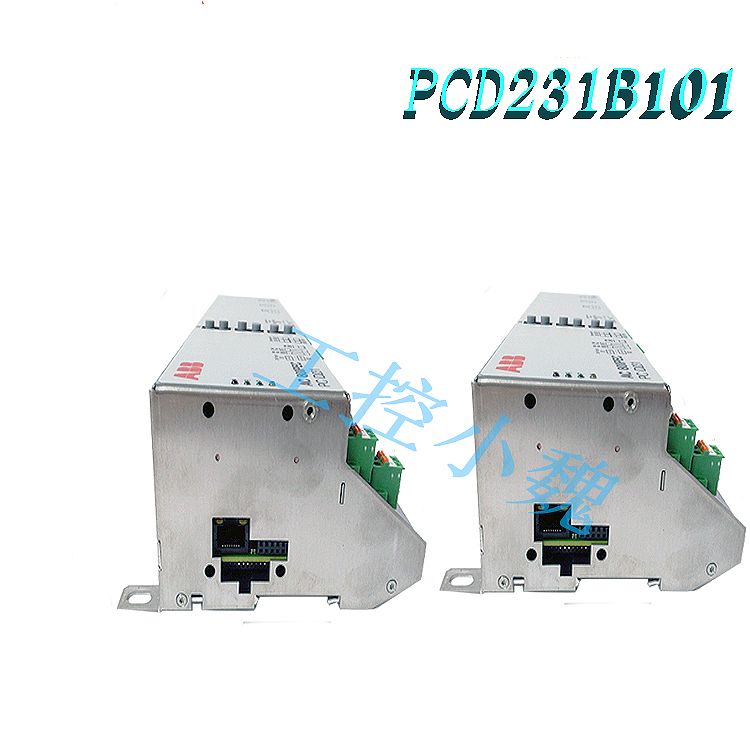
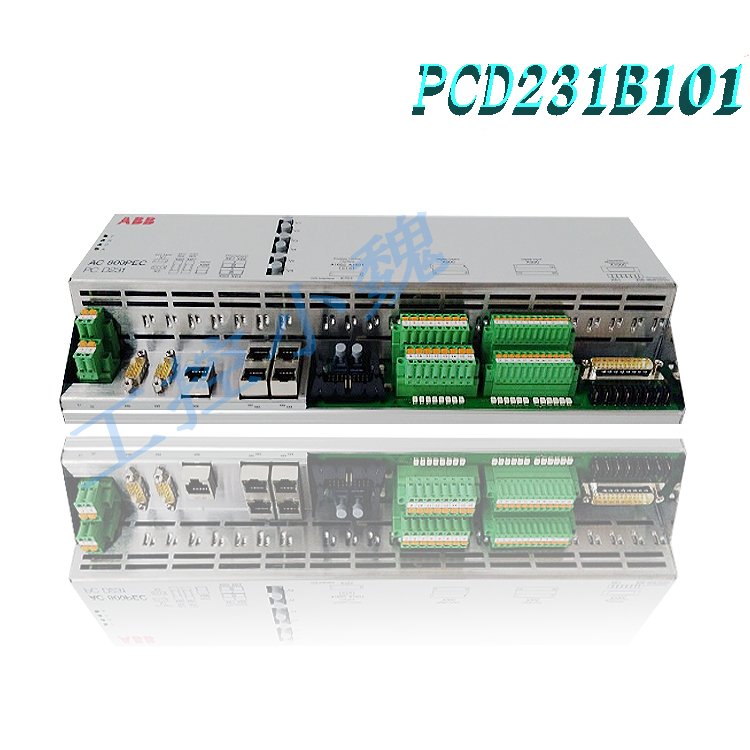
Multi channel control: This module typically has multiple control channels and can be used to simultaneously monitor and controlmultiple power generators.
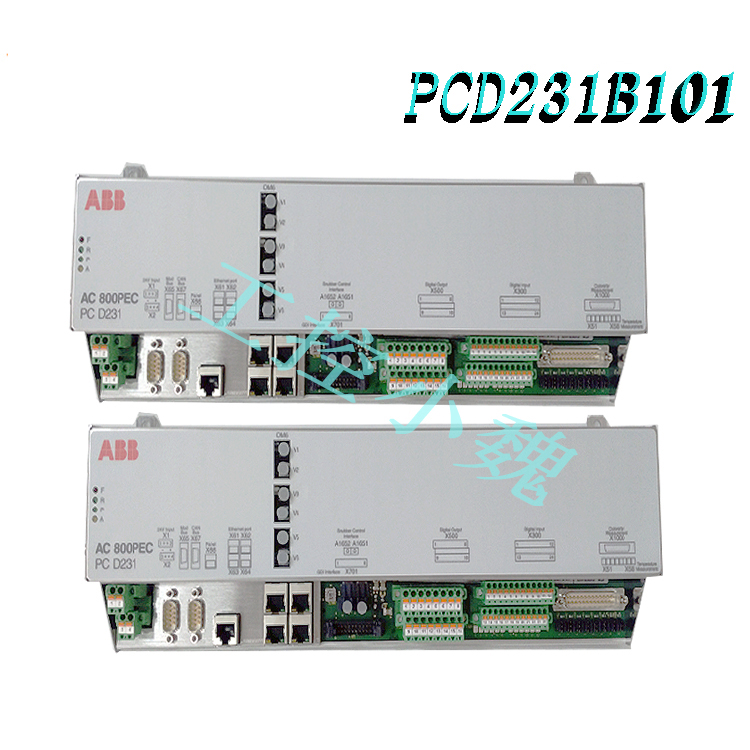
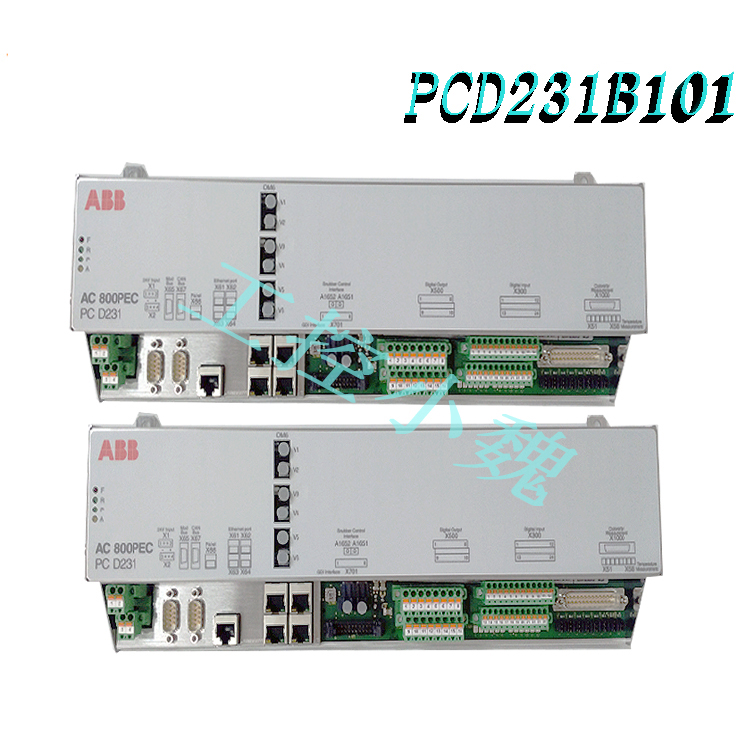
Communication interface: The PCD231B101 module tpically supports communication interfaces for data exchange and communicationwith other devices, control systems, or monitoring systems.
Curent and voltage monitoring: Modules typically have current and voltage monitoring functions to monitor the electrical parameters ofthe generator in real-time.
Current and voltage regulation: This control module can usually adjust the excitation current and voltage of the generator to meet the needs of the power system.
Protection and safety: Excitation control modules tpically have protection functions to monitor and protect the generator from overcurrent, overvoltage, or other faults.
Alarm and diagnosis: Modules are usually able to monitor abnormal situations and generate alarm information to assist operators or control systems in taking appropriate measures.
All products on this website are special products, and market prices have been fluctuating,
The specific customer service quotation shall prevail, as the product is a new one and the traps are not real,
Please confirm the model, product, price, and other detailed information with customer service before placing an order. The website has been used,
New for sale, please contact the website https://www.weikunfadacai1.com/ Customer service communication.
Recommended popular module models:
3BHE046836R0101
GFD563A101 3BHE046836R0101
3BHE046836R0102
GFD563A102 3BHE046836R0102
GFD563A101 3BHE046836R010
3BHE046836R010
PC D232 A|PEC80-CIO|3BHE022293R0101
PDD24
PCD2000
GFD563A101
8R37-2021-21-3101 PCD2000
GFD563A102
GFD563A102 3BHE046836R0102
PC D232 A|PEC80-CIO|3BHE022293R0101|PCD232
UAD149A0011 3BHE014135R0011
more……
-300x300.jpg)
admin –
ABB GFD563A102 | 3BHE046836R0102 | GF D563 A102, AC 800PEC controllers are suitable for industries such as industrial automation and machinery, utilities and energy, process control and monitoring. The AC 800PEC toolbox is required to access the controller hardware. Using Simulink external mode can achieve user-friendly monitoring.
Terrence Dushane –
I know this if off topic but I’m looking into starting my own blog and was curious what all is required to get setup? I’m assuming having a blog like yours would cost a pretty penny? I’m not very web savvy so I’m not 100 sure. Any tips or advice would be greatly appreciated. Thanks
Terrence Carnoske –
I enjoy reading and I believe this website got some truly utilitarian stuff on it! .
Jamison Detommaso –
I was examining some of your posts on this website and I think this internet site is rattling informative! Continue putting up.
admin –
ABB GFD563A102 3BHE046836R0102 Excitation Control Unit Comprehensive Analysis
Core Positioning and Technical Features
System Affiliation: This unit belongs to the ABB AC800PEC high-end control system, order number 3BHE046836R0102, and is the core module for generator excitation control and industrial automation. It utilizes a multi-core processor architecture (2.5GHz or PowerPC 405 200MHz) to support high-speed control (cycle time ≤ 100 microseconds) and integration with low-speed process control, making it suitable for high-power rectifier scenarios.
Hardware Design:
Physical Parameters: Dimensions: 142mm × 73.5mm × 380mm, weight: approximately 1.54kg, IP65/IP20 protection rating, operating temperature: -20°C to +60°C, suitable for harsh industrial environments.
Electrical Parameters: Input voltage 85V AC to 264V AC (supports 24V DC), output voltage 0-400V AC or 5V-60V DC, output current 10A, power 100W. Equipped with 4GB DDR3 RAM/8GB eMMC storage, it supports 62 I/O channels (30 digital inputs + 28 digital outputs + 2 analog inputs + 2 high-speed outputs), expandable to 1024 I/O points.
Interfaces and Communications: Compatible with RS232/RS485, Ethernet, PROFINET DP, CAN, and other protocols, supporting Modbus/CANopen industrial standards. Built-in dual-port redundancy allows for ring network construction and HSR/PRP protocols.
Core Functions and Application Scenarios
Excitation Control: A closed-loop PID algorithm precisely regulates the generator rotor excitation current, maintaining terminal voltage stability (fluctuation ≤±0.5%), optimizing reactive power distribution, and improving the static and dynamic stability of the power system. It supports overvoltage, undervoltage, and overcurrent protection, as well as rapid de-excitation.
Industrial Automation: Widely used in power (thermal power/hydropower/wind farms), petrochemicals, metallurgy, rail transit, intelligent manufacturing, and other fields. Typical cases include:
Power Industry: Substation automation, dynamic reactive power compensation in HVDC converter stations, and grid monitoring.
Industrial Control: SCADA systems, PLC expansion modules, and process control systems.
Special Scenarios: Marine propulsion systems, grid-connected inverters for new energy vehicles, arc furnace power factor optimization, process optimization in municipal wastewater treatment plants, and automotive production line control.
Technical Advantages and Innovations
Redundancy and Self-Diagnostics: Supports dual-module redundant configuration with active/standby switchover time of ≤ 20ms, ensuring continuous system operation. Built-in fault code storage, real-time status monitoring, and a remote diagnostic interface are compatible with SCADA systems.
Modular Expansion: Compatible with ABB S800 I/O modules and fiber-optic communication links, it supports functional expansion up to 1024 I/O points, reducing integration costs.
Software Support: Compatible with ABB Control Builder M, Automation Builder, and CODESYS platforms, it supports IEC 61131-3 programming standards and automatically generates control code, streamlining the development process.
Certifications and Standards: It complies with international certifications such as CE and UL, meets industrial automation safety standards (such as IEC 61508), and features a built-in STO (Safe Torque Off) function to ensure safe operation.
Installation and Maintenance Recommendations
Installation: Follow DIN rail mounting standards, ensure unobstructed heat dissipation, and avoid sources of electromagnetic interference (such as high-power motors). A separate overspeed protection device is required to comply with EMC standards (such as EN50082-2).
Maintenance Tips: Regularly inspect connector oxidation, capacitor aging, and cooling fan status. Perform firmware upgrades every two years to optimize algorithms. Unauthorized modifications may void the warranty. Troubleshooting: LED indicators (such as RUN/ERR) can quickly identify problems. A solid red light indicates a hardware failure and requires contacting the supplier’s technical support.
Compatibility Verification: Compatibility with the ABB AC800PEC backplane system, S800 I/O modules, and third-party devices must be verified to avoid configuration errors.
Differences from the GFD563A101
I/O Expansion Capacity: The A102 supports 62 I/O channels, expandable to 1024 I/O points; the A101’s I/O configuration may differ (specific model confirmation required).
Processor Performance: The A102 uses a multi-core processor (2.5GHz or PowerPC 405 200MHz), while the A101 may use a processor with a different architecture.
Communication Protocol Support: The A102 is compatible with more industrial protocols (such as PROFINET DP and CANopen), while the A101 may focus on Ethernet or specific protocols.
Application Scenario Adaptability: The A102 performs better in industrial automation and robotics (such as machine tool control and packaging machinery), while the A101 may be more focused on scenarios specific to the power industry.