

Description
Many products are not yet listed. Please contact us for more product information.
If the product model differs from the displayed image, the model number shall prevail. Please contact us for specific product images; we will arrange to take photos in our warehouse for confirmation.
We have 76 shared warehouses worldwide, so it may sometimes take several hours to return an accurate answer to you. We apologize for the inconvenience. Of course, we will respond to your inquiries as soon as possible.
UAD142A01 3BHE012551R0001 Other Names:
Input/Output Unit UAD142A01 3BHE012551R0001
UAD142A01 3BHE012551R0001 Analog Unit
Excitation Processor Unit UAD142A01 3BHE012551R0001
Technical Specifications and Core Parameters
Input/Output Characteristics:
Input Voltage Range: 12-48VDC, supports wide voltage range for industrial environments.
Output Voltage: 5VDC, maximum output current 10A, efficiency >90%, meeting the needs of high-power devices.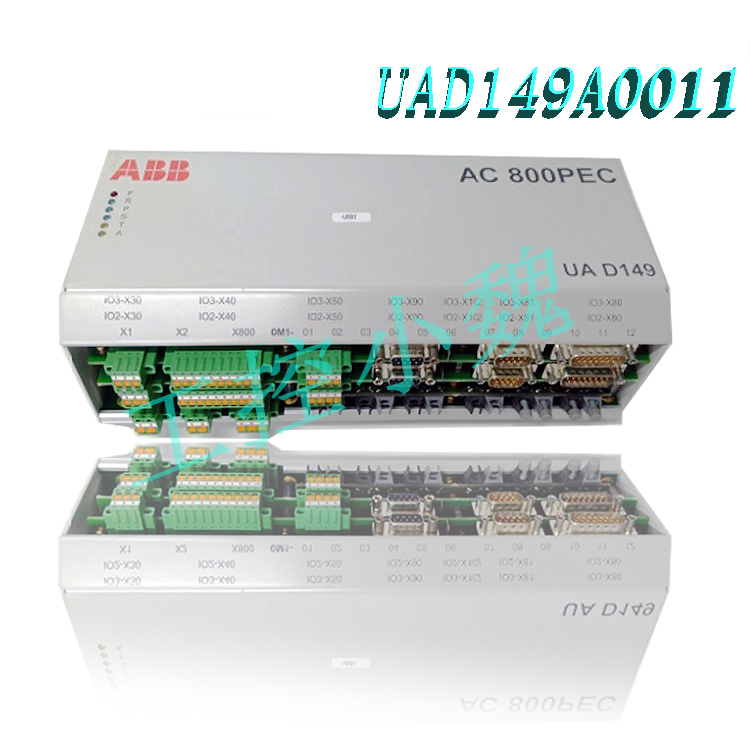
Physical Dimensions: 170mm × 105mm × 32mm, compact design suitable for rack mounting.
Compatibility:
Belongs to the ABB Advant DCS system, working in conjunction with modules such as the AC 800PEC control board, UFC765AE102, and GVC750BE101, supporting Modbus, Profibus, and Ethernet communication protocols.
Special Scenario Compatibility: Some materials mention interface expansion capabilities with Arduino DUE, but compatibility differences between industrial and consumer-grade devices should be noted.
Application Scenarios and System Role
Industrial Automation:
Core Applications: Power plants, oil and gas, chemical, smart building, etc., providing stable power for sensors, actuators, and I/O modules.
Expansion Capabilities: Supports 16-channel I/O configuration, compatible with DI/DO and AI/AO modules, enabling signal acquisition and control output.
Power Distribution and Process Control:
In the Advant Master DCS, it acts as a power supply expansion unit, ensuring system reliability in high-temperature, humid, and vibration environments.
It monitors power status in real time, detecting anomalies such as overvoltage, overcurrent, and short circuits, triggering alarms or automatic protection.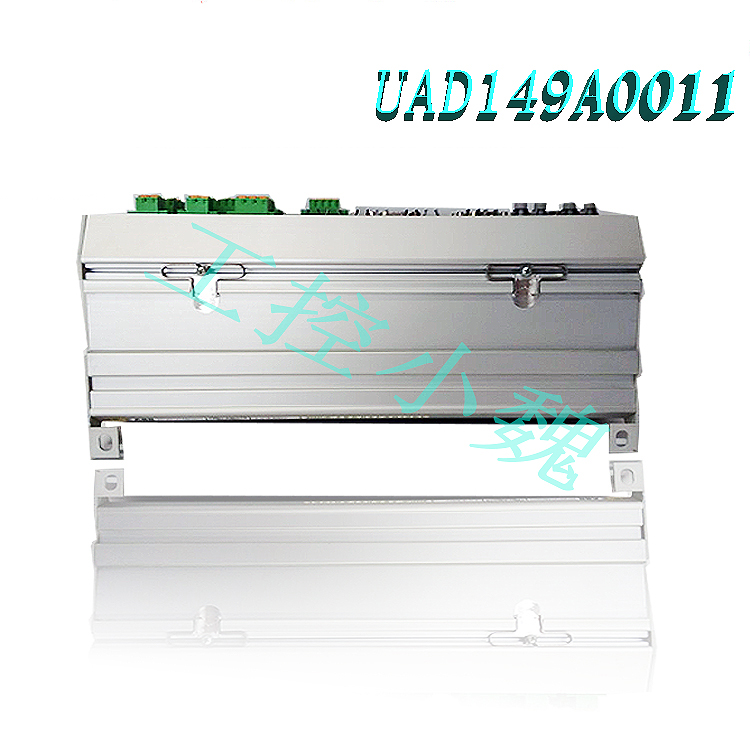
Maintenance and Troubleshooting
Diagnostic Functions:
It has a built-in self-test mechanism, providing status codes via the Modbus protocol (e.g., error code 2 corresponding to an illegal data address), requiring parsing with ABB engineering tools.
Error Handling Example: Modbus error code 2 requires checking the validity of the data address and adjusting the Mint program to reduce invalid calls.
Maintenance Recommendations:
Regularly check the power module temperature and output voltage stability, using professional tools (such as ABB Engineering Tools) for configuration and debugging.
Redundant Power Supply Design: Supports hot-swapping and backup power supply switching, improving system fault tolerance.
Integration Methods and Extended Configuration
System Integration:
It connects to control units such as the AC 800PEC via a backplane bus, achieving seamless power and signal transmission.
Modular design allows for flexible expansion, such as adding more I/O modules or external device interfaces.
Configuration Steps:
Configure output channel parameters (such as voltage and current range) and set communication protocols and address mappings using ABB software tools.
Hardware installation must comply with industry standards, ensuring grounding, heat dissipation, and electromagnetic compatibility meet specifications.
Model and System Integration
Core System: Part of the ABB Advant Master Distributed Control System (DCS), often used in conjunction with the AC 800PEC control board and integrated into the Advant Master DCS framework.
Compatible Components: Works with control modules such as UFC765AE102, GVC750BE101, and UAC389AE02, supporting communication protocols such as Modbus, PROFIBUS, and Ethernet, enabling seamless integration with PLCs, SCADA systems, and other devices.
Expansion Capabilities: As an expansion output power board, it is mainly used to provide stable power to additional I/O modules (such as DI/DO, AI/AO) or external devices (such as sensors, actuators), supporting flexible configuration of 16 input/output channels.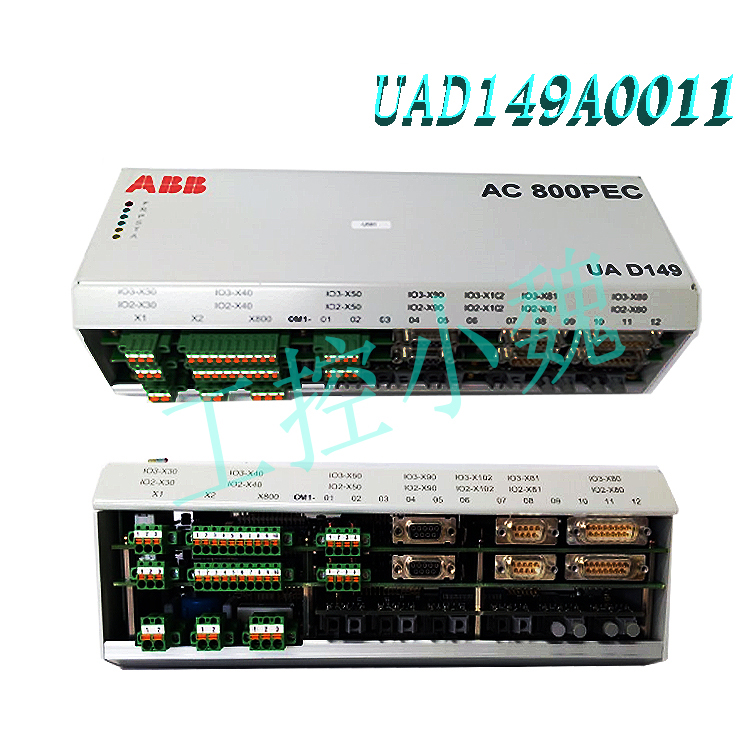
System Role and Functions
Power Management: Provides efficient and stable DC/AC power output to meet the power needs of equipment in industrial automation, power distribution, and process control (such as chemical, pharmaceutical, and power generation), ensuring reliable system operation in harsh environments such as high temperature, humidity, and vibration.
Signal Processing: Built-in signal conditioning, filtering, and digital processing functions, supporting multiple signal types such as voltage, current, resistance, thermocouples, and RTD, providing accurate data for control and monitoring.
Diagnosis and Maintenance: Possesses self-testing and fault diagnosis capabilities, can monitor module status in real time and issue alarms, and can work with the central control unit of a DCS system to achieve remote monitoring and maintenance.
Application Scenarios: Widely used in power generation, oil and gas, chemical processing, intelligent buildings (such as lighting and security), motor control (such as frequency converters, pumps, and compressors), etc., supporting discrete control, data acquisition, and machine status monitoring. Technical Features
High Reliability: Rigorously tested in industrial environments, featuring anti-interference and vibration-resistant design, and supporting redundant power supply configurations.
Flexible Configuration: Modular design allows users to expand power output channels according to needs, adapting to different power and voltage requirements.
Ease of Use: Standardized interfaces and integrated tools (such as ABB Engineering Tools) simplify installation, configuration, and commissioning processes.
Summary: The UAD142A01 3BHE012551R0001 is a key power expansion module for ABB industrial control systems. Through collaboration with core control units such as the AC 800PEC and I/O modules, it provides stable power, precise signal processing, and efficient system integration capabilities for complex industrial scenarios. It is one of the core components of Advant DCS for achieving high-reliability control. Note: All products on this website are special products, and market prices are constantly fluctuating.
Please refer to customer service for a quote, as the product is new and the price is not accurate.
Please confirm the model, product, price, and other detailed information with customer service before placing an order. This website is currently in use.
New products are available for sale; please contact customer service for further information.
Model recommendation:
UAC389AE02
HIEE300888R0002 UAC389AE02
UAD149A00-0-11
AC800PECUAD149A0011
AC800PECUAD149A0011
UAD149A0011 3BHE014135R0011
UAD154A
UAD154A 3BHE026866R0101
UAD155A0111
UAD155A0111 3BHE029110R0111
S-093H 3BHB030478R0009
S-093M 3BHB009885R0013
S-093R 3BHB009885R5311
S-097H 3BHB009885R0052
S-093M 3BHB009885R0063
ABB S-093H 3BHB030478R0309
ABB S-093S 3BHB030475R0009
S-093S 3BHB030475R0009
S-073N 3BHB009884R5211
S-073N 3BHB009884R0021 35SHY3545L0014
S-053M 3BHB012897R0003
S-073N 3BHB009884R0021 35SHY3545L0014
S-073N ABB 3BHB009884R0021
S-097H 3BHB009885R0052
S-093H 3BHB030478R0309
More……
-1-300x300.jpg)
-300x300.jpg)
admin –
The UAD142A01 3BHE012551R0001 extended output power board is a device used in power and automation systems, whose main function is to provide additional output capability to support the power requirements of connected devices. The following are some detailed features and information about the UAD142A01 3BHE012551R0001 extended output power board: