
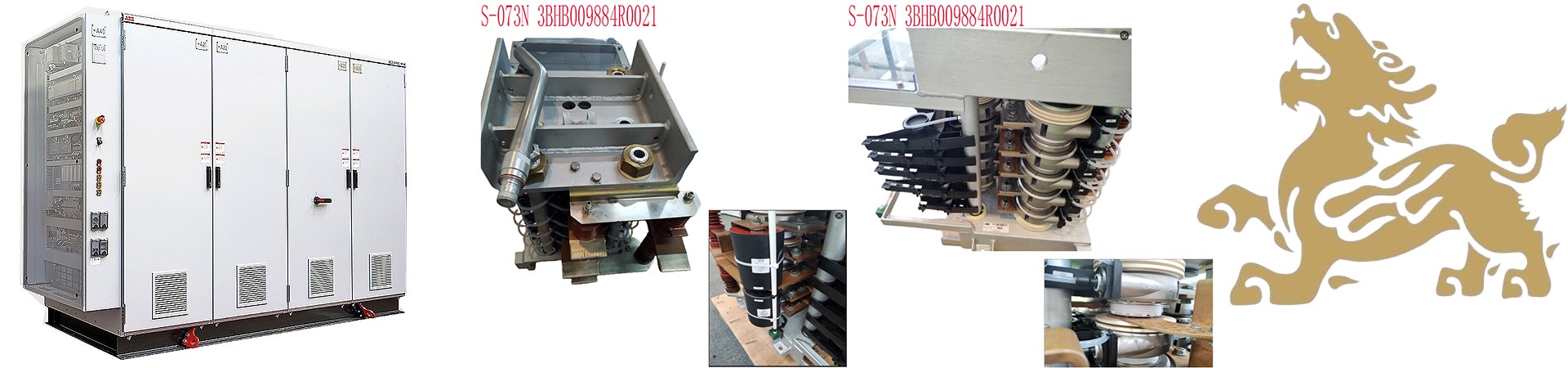
.jpg "PFTL101B 5.0KN(1)")
.jpg "PFTL101B 5.0KN(2)")
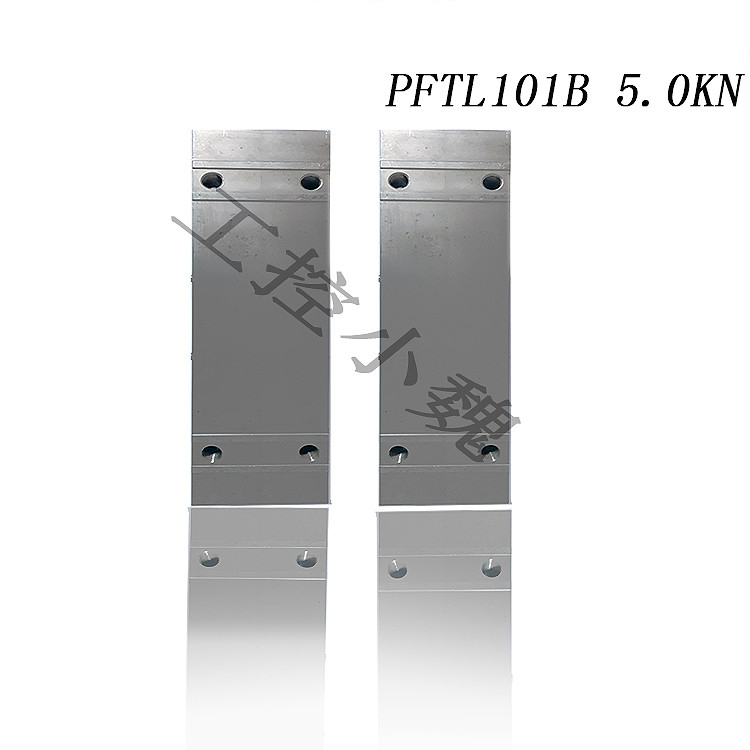
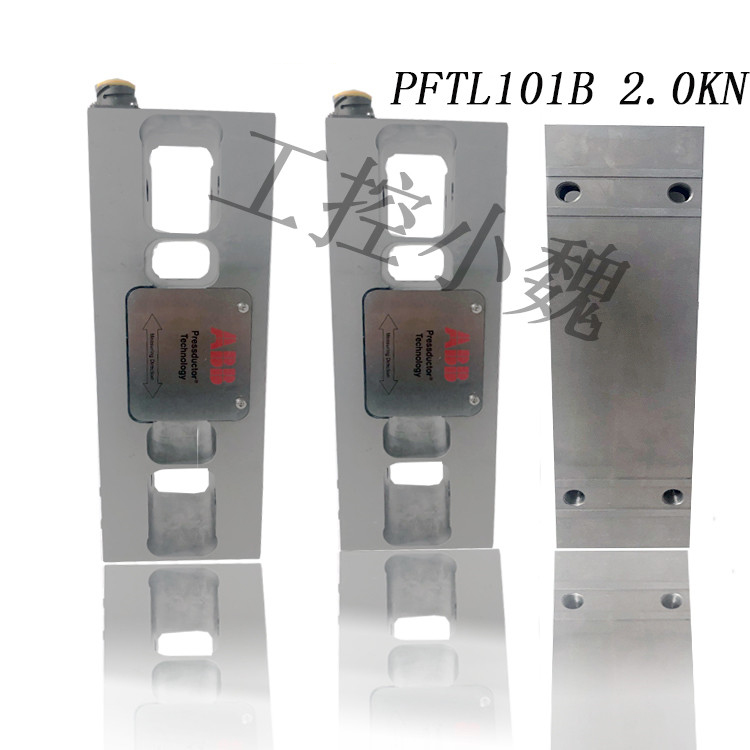
.jpg "ABB PFTL Full Series (1)")

Description
Many products are not yet listed. Please contact us for more product information.
If the product model number differs from the displayed image, the model number shall prevail. Please contact us for specific product images; we will arrange to take photos in our warehouse for confirmation.
We have 76 shared warehouses worldwide, so it may sometimes take several hours to accurately return the information to you. We apologize for any inconvenience. Of course, we will respond to your inquiries as soon as possible.
Other names for PFTL201D 100KN 3BSE008922R0100:
Tension Sensor PFTL201D100KN 3BSE008922R0100
PFTL201D 100KN 3BSE008922R0100 Weighing Sensor
Pressure Sensor PFTL201D 100KN 3BSE008922R0100
Core Model and Classification
Full Model Name: PFTL201D 100KN 3BSE008922R0100, belonging to ABB’s flagship heavy-duty industrial tension measurement system, with a rated load of 100kN, achieving sub-nanometer tension detection based on strain gauge measurement technology.
Technical Parameters and Characteristics
Accuracy and Response: Measurement accuracy ±0.005%FS~±0.01%FS (full scale, industry-leading level), response time ≤120ms, repeatability error ≤0.003%FS, supports bidirectional vertical force measurement, meeting 20nm-level dynamic control requirements.
Measurement Principle: Based on magnetoelastic effect, it detects mechanical force through magnetic field changes, outputting high-power, low-impedance AC signals without physical deformation, and has strong anti-electrical interference capabilities.
Environmental Adaptability: Protection rating IP68/IP69K+ATEX Zone 0, operating temperature range -60℃ to +200℃, shock and vibration resistance conforms to IEC 60068-2-27 standard, resistant to strong acids/alkalis, high-concentration salt spray, 99.9% humidity, and high-temperature radiant heat (suitable for nuclear reactor coolant pumps and high-temperature molten metal transportation).
Signal and Communication: Outputs 4-20mA/0-10V standard signals, compatible with dual-channel EtherCAT, Profinet IRT, Powerlink, Modbus TCP, and other real-time industrial Ethernet protocols. Supports nanosecond-level data synchronization and remote diagnostics with ABB 800xA control systems, Siemens S7-1500, Rockwell ControlLogix, and other PLCs.
Structural Features: Pillow-block design, supports vertical/horizontal installation, uses cylindrical plugs or sealed cable connectors, modular design for easy integration into industrial systems..jpg)
Durability and Safety: Forged from special aerospace-grade stainless steel, the equipment has a lifespan of over 30 years; supports 350% rated load (350kN) instantaneous overload protection, built-in four-temperature compensation algorithm (environmental + internal + dynamic + stress compensation), full-temperature range error <0.002%FS; the cable adopts explosion-proof and acid-resistant armor + six-layer shielding design, suitable for ATEX Zone 0 explosion-proof areas and chemically corrosive environments.
Application Scenarios and Cases
Metal Rolling and Processing: Achieve precise tension control at the 100kN level in hot-rolled strip steel production lines, with thickness deviation ≤0.005μm, reducing strip breakage rate by 70%, and increasing annual production of heavy plates by 200,000 tons; adaptable to dynamic tension adjustment of cold rolling mills (6000m/min), reducing material waste by 55%.
New Energy and Nuclear Power: Achieve slitting tension accuracy of 0.005%FS for lithium battery copper foil (2μm), with thickness uniformity CV value ≤0.05%; achieve nanometer-level thickness control in nuclear reactor fuel rod production, improving safety and performance consistency; increase the pass rate of photovoltaic backsheet film production by 45%.
High-End Thin Films and Optics: Achieve sub-nanometer-level tension control in BOPET film stretching, reducing surface defect rate by 50%; achieve thickness deviation ≤0.002μm in optical-grade film production, adaptable to semiconductor photoresist coating, display panel manufacturing, and AR/VR optical film production..jpg)
Papermaking and Printing: Controlling paper roll force, improving paper manufacturing process stability, and adjusting printing press tension to prevent stretching or warping.
Special Environments: Steel plant pickling lines feature acid-resistant cables designed to ensure sensor stability in hydrochloric and sulfuric acid environments, extending equipment lifespan by 100%; high-temperature furnace areas (near 2500℃ radiant heat sources) employ heat insulation protection design to ensure long-term stable sensor operation; nuclear power plants are suitable for high-radiation-dose scenarios, ensuring zero data transmission loss.
Installation and Maintenance Points:
Installation Specifications: Ensure the installation plane is level (error ≤ 5mm); use shielded cables and separate power and signal lines (spacing ≥ 50cm); use spherical bearings or positioning fasteners to prevent lateral forces; the installation environment must be free of conductive dust and corrosive gases, with an altitude ≤ 2500 meters; support bolt fixing or hanging installation, avoiding overload (safe overload 150% FS, ultimate overload 300% FS).
Key Maintenance Points: Regularly check sensor status to avoid self-adjustment to zero; use stranded copper wire to form an electrical bypass to prevent lightning/welding interference; clean sensor surfaces and avoid magnetic objects or strong electromagnetic fields; disconnect cables when not in use for extended periods to extend lifespan; use dedicated junction boxes for signal cable extensions, ensuring insulation resistance meets the 2000-5000MΩ standard, and recalibrate if necessary.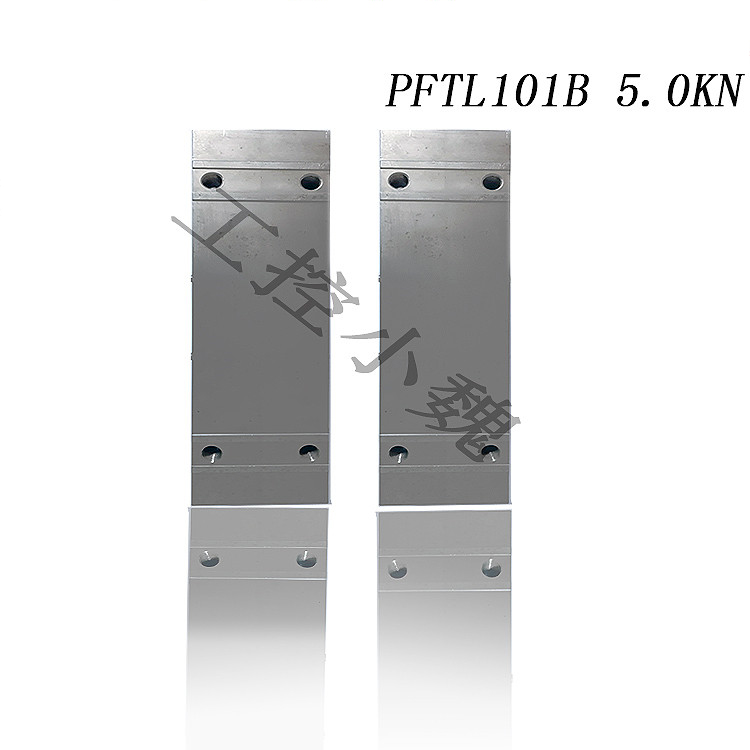
Supporting Systems and Advantages
System Integration: Integrates with ABB ACS880 drivers and PLC/DCS systems; supports PFCA401 control units for intelligent tension control and fault warning; compatible with AI predictive maintenance algorithms to improve equipment reliability throughout its lifecycle.
Core Advantages: Magnetoelastic/strain gauge measurement principle achieves high precision and strong anti-interference capability; wide temperature and pressure design adapts to extreme operating conditions; long lifespan and low maintenance costs reduce total lifecycle costs; supports multi-sensor joint use and real-time data synchronization to improve production process stability and efficiency.
Supporting Systems: Integrates with ABB ACS880 drives and PLC/DCS systems, supports PFCA401 control units, enabling intelligent tension control and fault warning.
Safety Features: Automatic power-off protection prevents material breakage; PLC controller reduces labor intensity; complies with industrial safety standards (such as SIL2 certification).
All products on this website are special products, and market prices are constantly fluctuating.
Please refer to customer service for a quote, as the price is not accurate for new products.
Please confirm the model, product, price, and other detailed information with customer service before placing an order. This website is currently in use.
New products are available for sale; please contact customer service for further information.
Model recommendation:
PFTL101A0.5KN
PFTL101A 0.5KN 3BSE004160R1
PFTL101A1.0KN
PFTL101B2.0KN
PFTL101B2.0KN
PFTL101B20KN
PFTL101B20KN 3BSE004203R1
PFTL101B5.0KN
PFTL101B5.0KN 3BSE004191R1
3BSE004166R1
3BSE004191R1
PFTL 101A-2.0 3BSE004172R1
3BSE004166R1 Tension sensor
PFTL 101A-1.0 3BSE004166R1
3BSE004185R1
more……
-300x300.jpg)
admin –
PFTL201D 100KN 3BSE008922R0100 pressure gauge is an instrument used for measuring and monitoring gas or liquid pressure, widely used in industrial automation, process control, environmental monitoring and other fields. ABB, as a leading global electrical and automation technology company, produces pressure gauge products with high precision, high reliability, and long lifespan.
Carrey –
According to specific models and specifications, the PFTL201D 100KN 3BSE008922R0100 pressure gauge can have different measurement ranges, accuracy levels, and output methods. For example, some models of pressure gauges can measure pressures up to hundreds of megapascals, while others are more suitable for measuring low pressure ranges. In addition, the PFTL201D 100KN 3BSE008922R0100 pressure gauge can also be customized according to user needs to meet specific application requirements.
PFTL201D 100KN 3BSE008922R0100 pressure gauges come in various types, including absolute pressure gauges, gauge pressure gauges, differential pressure gauges, etc., to meet the needs of different application scenarios. In addition, ABB also offers customized pressure gauge solutions that can be designed and produced according to the specific needs of customers.
admin –
Working principle
The working principle of ABB tension sensor is based on the piezomagnetic effect, that is, the magnetic properties of magnetic materials will change under mechanical loading. The measuring element is made of specially treated metal sheets, and the primary and secondary coils are wound vertically in the same direction through four holes in the sensor. When the sensor is working, an alternating voltage is passed through the primary coil. When there is no mechanical loading, there is no magnetic coupling between the two coils because they are wound vertically, so there is no induced voltage in the secondary coil. When subjected to mechanical loading, the magnetic field pattern generated by the primary coil changes, and part of the magnetic flux will be coupled to the secondary coil. At this time, an alternating voltage is induced in the secondary coil, and this induced voltage is proportional to the mechanical loading of the sensor
admin –
A tension sensor is an instrument used to measure the tension value of a coil, commonly used in tension control processes. This type of sensor plays an important role in fields such as pharmaceuticals, printing, packaging, textiles, and steel. It detects tension or tension on the coil through specific measurement principles, such as strain gauges or micro displacement, in order to achieve monitoring and control of tension changes. The working principle of strain gauge type tension sensors is that strain gauges (including tension gauges and compression gauges) are connected together in an electric bridge manner. When subjected to external pressure, the resistance value of the strain gauges also changes, and the amount of change will be proportional to the magnitude of the tension applied. The micro displacement type, on the other hand, applies a load through external force, causing the leaf spring to produce displacement, and then detects tension through a differential transformer. Due to the extremely small displacement of the leaf spring, it is approximately ± 200 μ m. So it is called a micro displacement tension detector.