

ABB AC800M 3BSE053240R1 PM891 redundant system control module is one of the core components in System 800xA distributed control system. It is equipped with a powerful processor and sufficient memory, which can quickly process a large amount of data and control tasks to ensure the real-time performance and response speed of the system. It supports CPU redundancy design. When the main controller fails, it can seamlessly switch to the backup controller to ensure the continuous operation and stability of the system.
Model recommendation:
PM861AK01
PM861AK01 3BSE018157R1
PM861K01
PM861K01 3BSE018105R1
PM864AK01
PM864AK01 3BSE018161R1
PM864AK01-eA
PM864AK01-eA 3BSE018161R2
PM865K01
PM865K01 3BSE031151R1
More……
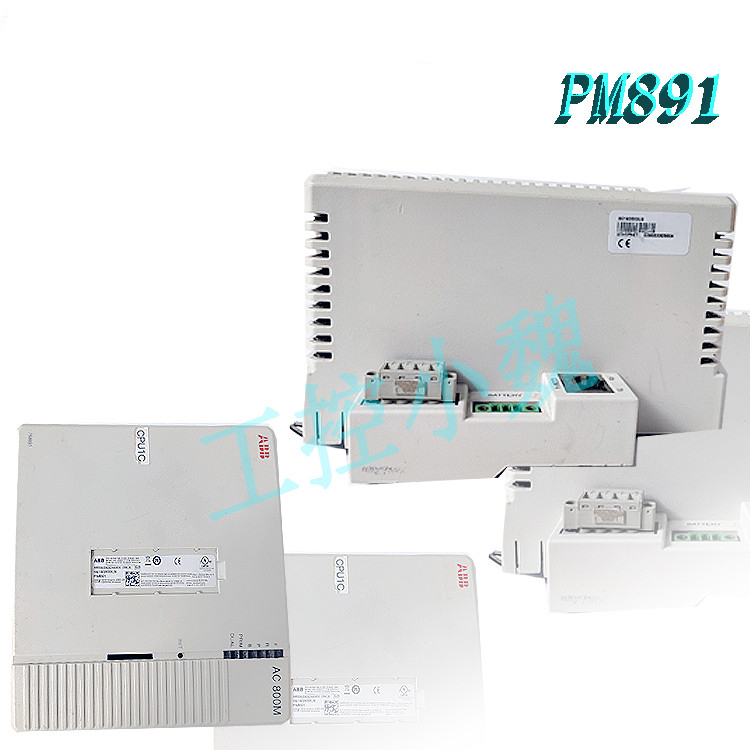
ABB PM891 3BSE053240R1 Redundant System Control Module In-Depth Analysis
As a high-performance redundant controller in ABB’s AC800M series, the PM891 (order number 3BSE053240R1) is a core control unit for industrial automation, process control, and critical infrastructure, thanks to its high-speed processing capabilities, fully redundant architecture, and industrial-grade reliability. The following systematic analysis covers five aspects: technical features, core functions, application scenarios, installation and maintenance, and market trends:
I. Core Technical Features and Advantages
Processor Architecture: Utilizing a high-performance 450MHz processor, it can process 1000 Boolean operations in just 0.043ms. Equipped with 256MB of RAM (208.985MB available) and Flash storage, it supports complex algorithms and multitasking.
Redundant Design: Supports full redundancy of the CPU, CEX bus, communication interfaces, and I/O modules, with a master-slave switchover time of ≤10ms. Built-in dual Ethernet ports (supporting redundant ring networks) and an isolated RS-232C serial port are compatible with protocols such as Modbus TCP, PROFIBUS DP, Ethernet/IP, and IEC 61850, making it compatible with ABB 800xA systems and third-party PLCs.
Expandability: Compatible with ABB S800 I/O modules and fiber-optic communication links, it supports expansion up to 1024 I/O points, and its modular design allows for flexible configuration.
Environmental adaptability: Operating temperature range -40°C to +70°C, IP20 protection, CE, UL, and IEC 61508 safety certifications, built-in overvoltage/undervoltage, overcurrent, short-circuit protection, and fault ride-through functions.
Physical Characteristics: Dimensions: 174mm × 186mm × 94mm, weight: 1.6kg, mounts on a DIN rail or in a 19-inch cabinet. No internal battery, requiring an external power supply.
II. Core Functions and Performance
Real-time Control: Supports closed-loop PID, vector control, V/F control, and AI algorithm integration, ensuring stable system operation under dynamic parameters and maintaining terminal voltage fluctuations ≤±0.2%.
Multitasking: Simultaneously performs data acquisition, logical operations, communication, and fault diagnosis, improving system efficiency and reliability.
Self-diagnosis and Maintenance: Built-in LED indicators (RUN/ERR) quickly locate faults, support fault code storage, remote diagnosis, and SCADA system integration; equipped with a real-time clock and memory backup.
Safety: Supports SIL3 certification, with built-in STO (Safe Torque Off) and F-CPU (Fail-Safe CPU) functions, meeting industrial safety standards.
III. Application Scenarios and Typical Cases
Industrial Automation: Production lines, packaging machinery, printing machinery, and robotic control (such as machine tools and packaging lines) utilize AI control technology to automatically adjust process parameters, reducing manual intervention.
Process Control: Complex process control (such as reactor temperature control and pipeline pressure monitoring) in industries such as petroleum, chemicals, pharmaceuticals, and food and beverages optimizes production efficiency and safety. Power Systems: HVDC converter stations, STATCOMs, grid dynamic reactive power compensation, and substation automation. For example, in nuclear power plants, redundant design ensures continuous control system operation and improves the static and dynamic stability of the grid.
Special Scenarios: Marine propulsion systems, rail transit traction motor control, grid-connected inverters for renewable energy, arc furnace power factor optimization, and coating technology to protect PCBs from dust and oil contamination.
IV. Installation and Maintenance Recommendations
Installation Specifications: Use DIN rail or 19-inch cabinets to ensure unobstructed heat dissipation (dual-mode air/water cooling system) and avoid electromagnetic interference sources (such as high-power motors). Independent overspeed protection devices must be configured to comply with EMC standards.
Maintenance Key Points: Regularly check connector oxidation, capacitor aging, and cooling fan status. Perform firmware upgrades every two years to optimize algorithms. Unauthorized modifications may void the warranty. Troubleshooting: The LED indicator can quickly locate the problem. A solid red light indicates a hardware failure and requires contacting the vendor’s technical support.
Compatibility verification: It is necessary to confirm compatibility with ABB AC800M series backplane system, S800 I/O module and third-party devices to avoid configuration errors.