
Description
All products on this website are special products and market prices are constantly fluctuating,
The specific quotation from customer service shall prevail. Because the product is a new product, the price is not real.
Please confirm the model, product, price and other detailed information with customer service before placing an order. The website has been used.
New ones are on sale, please contact customer service to communicate.
1. Working principle
This module adopts a dual-CPU architecture (control CPU + display CPU), and is equipped with an independent hardware manual backup circuit to realize integrated working logic of measurement, calculation, control, and display.
Signal acquisition link: The analog input AI receives 4-20mA, voltage, thermal resistance, and thermocouple signals from the on-site transmitter, and the digital DI collects the switch status; the instrument performs filtering, linearization, and temperature/pressure compensation on the original signal.
Computational control link: Built-in IEEE754 standard 4-byte floating point arithmetic unit, equipped with hundreds of arithmetic modules. Supports two working modes: programming-free function selection mode (single loop, cascade, selection control); programmable mode (function block programming/text programming). According to the deviation between the process set value (SP) and the field measurement value (PV), PID, logic, feedforward, compensation operations are performed, and the control output value MV is output.
Output drive link: The operation results drive the regulating valve and other actuators through the analog output AO, and the DO outputs switching signals for interlocking and alarming. The hardware manual loop is independent of the digital circuit. When the main control CPU fails, the output can still be manually adjusted to ensure process safety.
Display and communication: Color LCD displays measured values, set values, bar graphs, trend curves, and alarm information in real time; supports RS485 peer-to-peer communication, allowing point-to-point data interaction between multiple instruments, and uploading process data to the upper computer at the same time.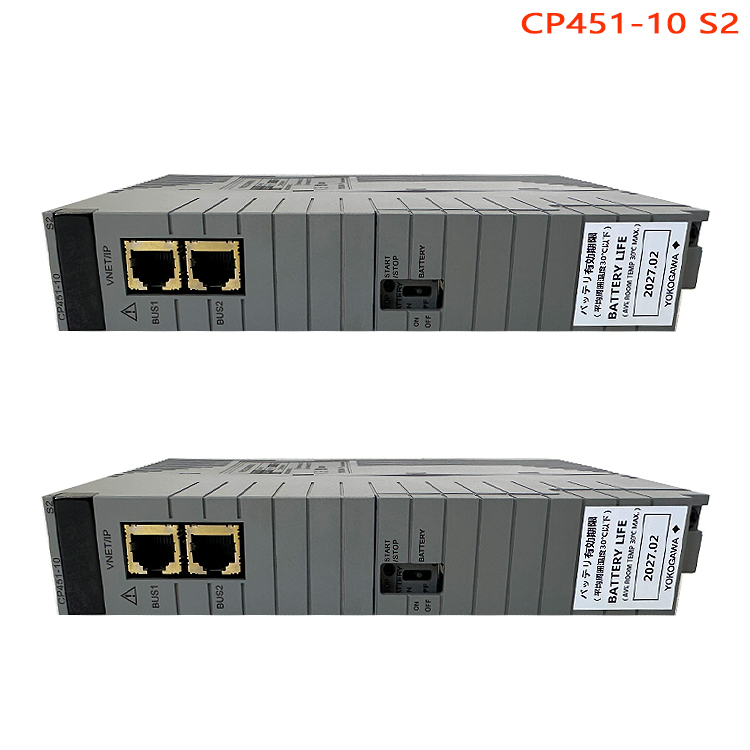
Self-diagnosis and storage: Built-in self-diagnosis of the whole machine, detecting I/O, power supply, and CPU faults; using non-volatile memory, parameters and user programs can be saved without batteries, and data will not be lost when power is turned off.
2. Product core advantages
Highly reliable dual-CPU fail-safe design. The control CPU and display CPU run independently. If any CPU is abnormal, the instrument can still retain display and manual operation; independent hardware manual backup circuit, when the overall digital system fails, the operator can manually intervene in the output to avoid process out of control, meet industrial safety requirements, and support CE and FM non-flammable certifications (optional).
Flexible and programmable, two programming methods support GUI graphical function block programming (up to 400 function blocks) and traditional text programming (up to 1000 steps); you can also directly use the built-in single-loop, cascade, and selection control schemes without programming, adapting to simple to complex processes. You can develop and download programs through YSS1000 host software, and you can also set parameters locally on the panel.
High-precision signal processing I/O measurement accuracy is improved, voltage input accuracy is ±0.1%, voltage output is ±0.1%, and current output is ±0.2%; internal operation resolution is greatly improved, and floating-point operations support complex calculations such as exponential, logarithm, and temperature and pressure compensation, adapting to high-precision process control scenarios.
Wide voltage universal power supply supports AC/DC wide power supply, DC24V non-polar access, can withstand grid voltage fluctuations and reduce the risk of downtime caused by on-site power failure.
I/O is expandable and the panel is compatible with replacement. The basic model has multiple analog and digital inputs and outputs, and the DI/DO terminals can customize the input and output directions. The instrument opening size is compatible with the old YS series controller. On-site modification and replacement do not require reprocessing of the control cabinet panel, reducing the cost of modification and construction.
Rich visualization and human-computer interaction The full-color LCD display supports bar graphs, real-time trends, alarm events, and loop data multi-screen switching. All parameters can be set directly through the front panel buttons, and basic debugging can be completed without relying on a computer.
3. Corresponding industries and functions
As an independent single-loop controller, this module is responsible for closed-loop adjustment of process parameters, interlocking protection, and local monitoring functions, reducing the load on the DCS system, and is suitable for local control and key loop redundant control scenarios.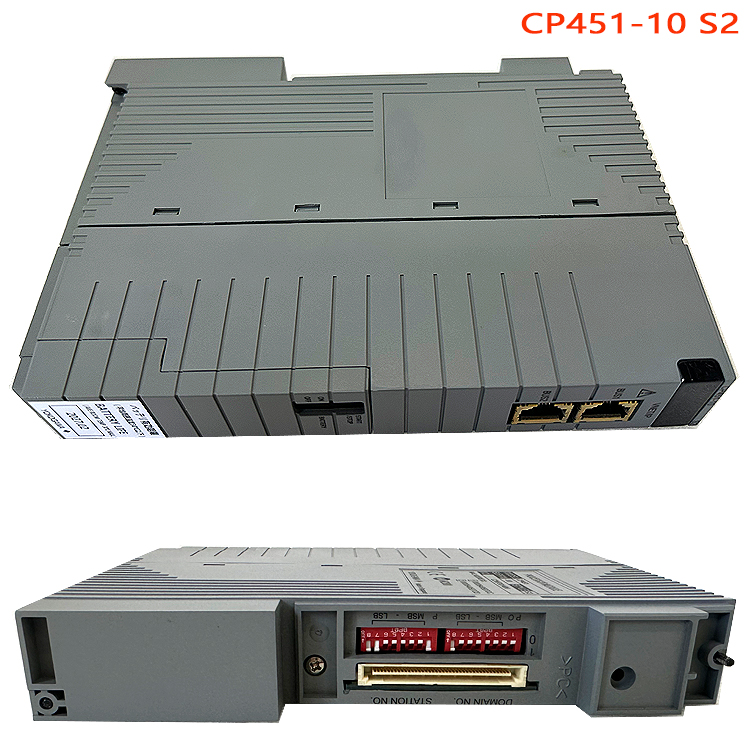
Electric power industry: Industrial boiler drum water level, steam pressure, fuel/air volume ratio control, realizing boiler three-impulse and cascade adjustment, stabilizing boiler operation, reducing the risk of pipe explosion and overpressure, and improving combustion efficiency.
Chemical and fine chemical industry: Reactor temperature, pressure, liquid level, and flow control can realize temperature and pressure compensation and intermittent process sequence control to ensure the stability of the reaction process and reduce product batch differences.
Water treatment and environmental protection industry: sewage pH adjustment, dosing flow control, pool liquid level, aeration pressure control, realizing automatic proportioning of chemicals, reducing chemical consumption, and stabilizing water output indicators.
Iron and steel metallurgy industry: Closed-loop control of temperature and pressure of heat treatment furnaces and heating furnaces to stabilize the working conditions in the furnace, improve the quality of steel heat treatment, and reduce energy consumption.
Papermaking and pulping industry: pressure, liquid level and flow adjustment in cooking and bleaching sections to ensure the stability of the continuous production process.
Oil and gas, HVAC, food and pharmaceutical industries: pipeline pressure, tank level, sterilization temperature control, and local independent control of key process parameters. When DCS upper system communication is interrupted, the instrument continues to maintain loop regulation to ensure continuous production operation.
Summary of general functions in the industry: ① Local independent closed-loop control to share DCS pressure; ② Safety redundancy of key process loops, maintaining regulation when communication is interrupted; ③ Real-time collection, display, storage of process data, local alarm prompts; ④ Realization of complex calculations, temperature and pressure compensation, and interlocking logic; ⑤ Simplification of control cabinet modifications to facilitate replacement and upgrade of old instruments.
4. Basic operation methods
Tip: For major process parameter modifications and program downloads, it is recommended to operate when the process is allowed to shut down or switch to manual backup state.
Inspection before powering on: Confirm the power supply voltage and wiring terminals, distinguish AI/AO/DI/DO, check that there are no short circuits or virtual connections in the transmitter and actuator wiring, and confirm that the instrument is grounded reliably.
Power on and basic viewing: Turn on the power, perform self-test of the instrument, and enter the main measurement screen after the self-test is completed; switch the screen through the panel buttons to view PV measurement values, SP set values, output MV, bar graphs, real-time trends, and alarm records.
Control mode switching supports manual MAN, automatic AUT, and cascade CAS modes. In manual mode, the operator directly modifies the MV output; in automatic mode, the instrument automatically adjusts the output according to PID; in cascade mode, the main loop output is used as the secondary loop set value. Confirm the process conditions before switching modes to prevent disturbance.
Parameter setting operation: Enter the instrument parameter menu and set the range, engineering unit, filtering, PID parameters (proportional, integral, differential), upper and lower alarm limits, and I/O type; all parameters can be configured locally on the panel.
Program download (programmable mode) Install the YSS1000 configuration software on the computer, connect the module through the communication line, write the function block/text program, download it to the instrument after compilation is correct; after the download is completed, check the program and conduct simulation testing.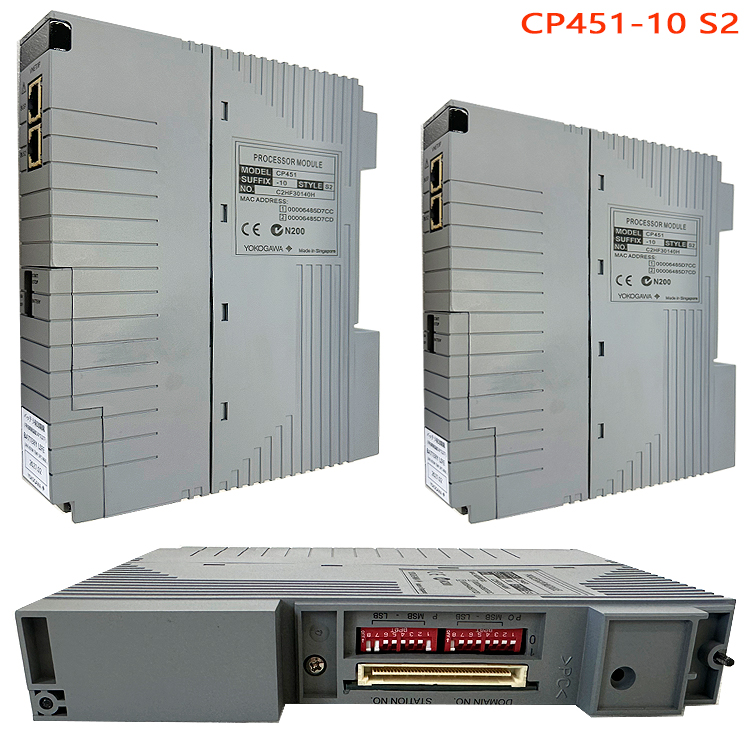
Alarm viewing and reset When an alarm occurs, the alarm indicator light on the panel lights up. Enter the alarm screen to view the fault code and alarm cause; after troubleshooting the on-site fault, perform the alarm reset operation.
Communication configuration: Set the instrument station number, baud rate, and configure RS485 communication parameters to achieve peer-to-peer communication between multiple instruments, or to interface with host HMI or SCADA.
5. Precautions for installation and use
Installation environment requirements: The instrument is a panel-mounted meter, installed on the control cabinet panel; avoid areas with strong vibration and strong electromagnetic interference, and stay away from frequency converters and high-power contactors; the ambient temperature and humidity must comply with the instrument specifications. Direct installation in environments with severe corrosive gases and dust is prohibited. In explosion-proof scenarios, corresponding explosion-proof models must be selected, and explosion-proof regulations must be strictly followed.
Wiring safety specifications: Use shielded cables for analog signal cables, and the shielding layer is grounded at one end; power cables and signal cables are routed separately to avoid interference; the wiring is powered off to prevent short circuit damage to the instrument module; pay attention to the polarity of DC24V power supply. This model of DC supports no polarity, but it is still recommended to standardize the wiring.
Operational safety points
Assess process risks before switching between automatic/manual modes to avoid sudden changes in output causing large movements of the valve;
Before modifying PID parameters and user programs, give priority to switching to manual mode to prevent parameter modifications from causing process fluctuations;
Although the dual CPU is fail-safe, the hardware manual loop is only an emergency means and cannot be used as a long-term normal operation method.
Maintenance and Storage The instrument uses battery-free non-volatile storage, so there is no need to replace the battery regularly; regularly check the terminal block tightening, heat dissipation, and panel cleaning; do not wipe the display screen with solvents; cut off the power before disassembly and save program backup to prevent program loss.
Fault and program management Before modifying the configuration program, back up the complete project file on the computer; if a fault code appears on the instrument, consult the Yokogawa original manual first, check external wiring, sensors, and actuators, and do not modify the internal underlying parameters at will; it is recommended that instrument troubleshooting be performed by personnel with industrial instrument qualifications.
Model Selection and Model Confirmation This model has fixed I/O and functional configurations. Completely check the model code when replacing spare parts. The I/O, communication, and certification configurations corresponding to different suffix codes are different and cannot be directly mixed.
6. Conclusion
This Yokogawa programmable indication controller relies on dual CPU safety architecture, high-precision computing, flexible programmability, and takes into account local display, PID adjustment, and interlocking logic. It is a key single-loop control instrument in industrial process control. It can independently complete process closed-loop control, and can also be used as an on-site supplementary redundant control unit for DCS systems. It is widely adapted to continuous process control in multiple industries such as electric power, chemical industry, water treatment, metallurgy, etc., and plays an important role in ensuring stable production, improving control accuracy, and reducing the difficulty of on-site transformation.
Recommended products:
YOKOGAWA AS.V8308WA
YOKOGAWA GF1-A
YOKOGAWA 2379-29
YOKOGAWA -60 TO
YOKOGAWA EXA-SC402
YOKOGAWA ASSY V8219
YOKOGAWA SDV144-S33 S2
YOKOGAWA AAI841-H00 S2
YOKOGAWA RS71B
YOKOGAWA SB301
More……

Reviews
There are no reviews yet.