
Description
Many products are not yet available. Please contact us for more information.
If the product model number differs from the displayed image, the model number will prevail. Please contact us for specific product images, and we will arrange to take photos at the warehouse for verification.
We have 76 shared warehouses worldwide, so it may sometimes take several hours for us to accurately deliver your product. Please understand. We will, of course, respond to your inquiries as soon as possible.
3BHE046836R0101 Other names for the :
Controller Unit 3BHE046836R0101
3BHE046836R0101 I/O Unit
Editable Control Unit 3BHE046836R0101
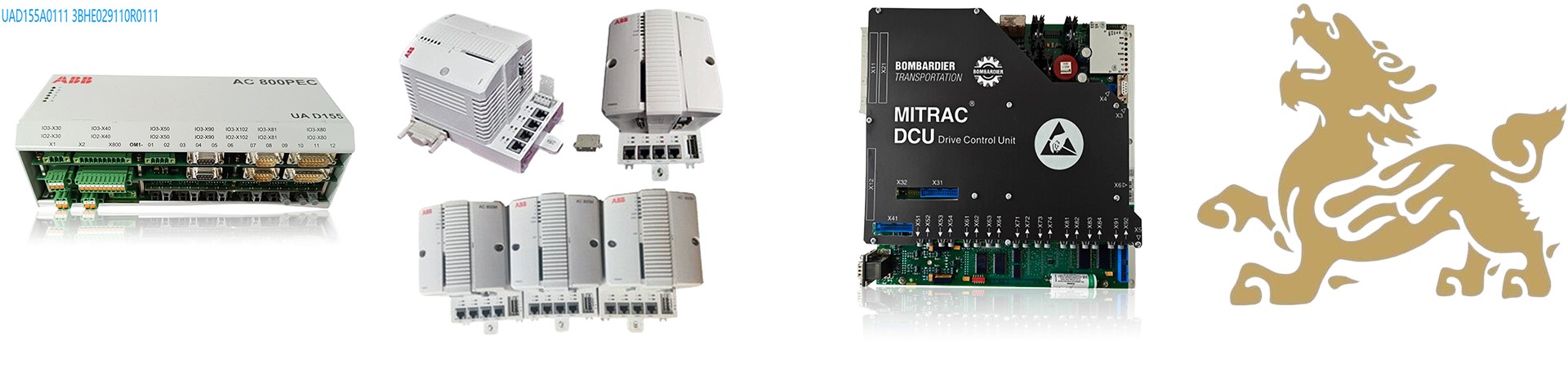
The 3BHE046836R0101 is a core industrial automation module manufactured by ABB, model GFD563A101. It belongs to the AC 800PEC series of high-performance controllers or Ethernet port modules and is widely used in industrial automation, energy management, transportation systems, building automation, and other fields. Its core functions focus on high-speed data communication, real-time control, and system integration. It supports industrial protocols such as Ethernet, Modbus, and Profibus, and is compatible with ABB’s full range of automation devices (such as inverters, PLCs, and drives).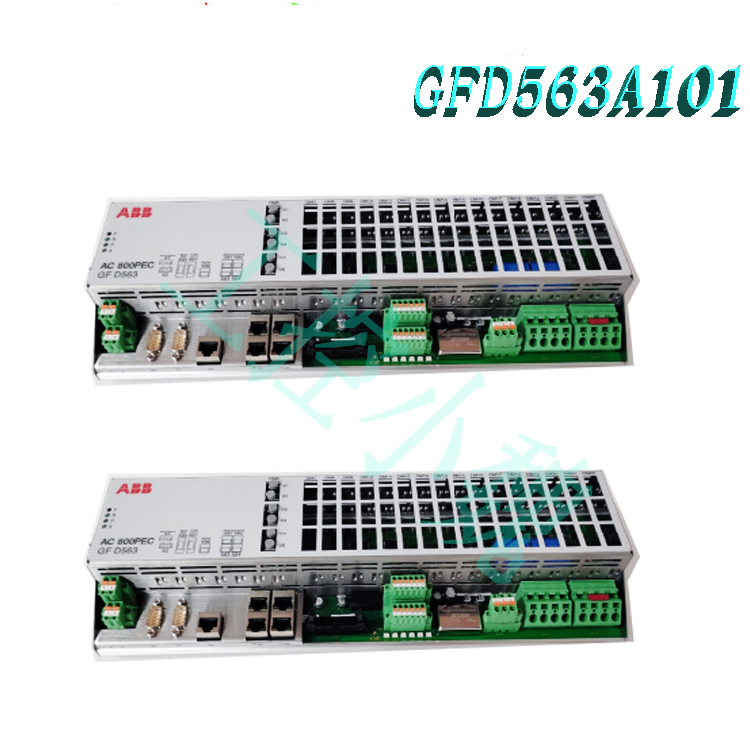
LCI Integration: Load Commutated Inverter (LCI) is a key technology in power electronics. This module uses high-speed control algorithms (cycle times as low as 100μs) to support precise regulation of LCI systems, such as generator excitation control, reactive power compensation, and dynamic voltage stabilization.
LIN Functionality: LIN (Local Interconnect Network) is a low-cost serial communication protocol suitable for low-speed communication between local devices. This module integrates a LIN interface that connects to sensors, actuators, and other devices, enabling data exchange and control within the local network, such as device status monitoring and parameter adjustment in industrial scenarios.
Technical Specifications and Features
Hardware Configuration:
Processor: Dual-core CPU or PowerPC architecture with integrated FPGA technology, supporting MATLAB/Simulink real-time control development.
Communication Interfaces: Supports Ethernet, RS232, RS485, PROFINET DP, CAN, and is compatible with industrial protocols such as Modbus and CANopen. High-speed I/O expansion (data throughput <100μs) is possible via fiber optic links.
Storage and Expansion: 8GB eMMC storage supports local/remote I/O expansion up to 1024 points. Compatible with ABB S800 systems and third-party devices.
Environmental Adaptability: Industrial-grade design, operating temperature -20°C to +60°C, IP67/IP65 protection, and electromagnetic interference resistance, suitable for harsh industrial environments.
Communication Capabilities
Supports Ethernet protocols, enabling high-speed, stable data transmission in industrial scenarios, suitable for factory automation, robotic control, energy monitoring, and other applications..jpg)
Compatible with the LIN (Local Interconnect Network) bus, it is suitable for local interconnect scenarios such as automotive electronics and low-speed sensor networks. However, the physical implementation of the LIN interface must be confirmed based on the specific hardware configuration.
Control and Protection Functions
When used as a frame circuit breaker (such as the GFD563 series), it provides overload and short-circuit protection with a rated current range covering industrial-grade requirements (e.g., 24mA-24kW), making it suitable for low-voltage power distribution systems in industries such as power, metallurgy, and papermaking.
Integrated PID control, condition monitoring, and feedback control functions support precise process control (e.g., production line, pump, and fan control).
Hardware Design
The modular design supports integration with CABLETRON components and industrial interface modules to meet the requirements of distributed control systems (DCS).
The rugged housing withstands vibration and temperature fluctuations in industrial environments, meeting SIL CL2/PLd safety standards and ensuring functional safety.
Protection Mechanisms:
Built-in overcurrent, overvoltage, and overtemperature protection support fault diagnosis and remote monitoring.
Compliant with IEC 60204 safety standards, the integrated Safe Torque Off (STO) function ensures safe operation.
Application Scenarios and Industry Adaptation
Power Electronics:
Generator excitation control, reactive power regulation, and dynamic voltage setpoint control.
Applied to excitation systems in thermal power plants, hydropower plants, and renewable energy power plants (such as wind power/photovoltaic power plants) to ensure grid stability.
Industrial Automation:
Production line control (such as assembly and quality inspection), robotic motion control, and coordinated pump/fan control.
Real-time monitoring and optimization of process parameters in manufacturing (such as chemicals, metallurgy, and food and beverage).
Manufacturing: Production line automation, robotic control, and assembly line coordination to improve production efficiency and precision.
Energy Management: Power plant/grid monitoring, energy distribution optimization, and energy efficiency improvement.
Transportation: Traffic signal control, railway signal systems, and aerospace equipment management.
Building Automation: Building management systems and smart home energy/safety control.
Process Control: Real-time process monitoring and adjustment in industries such as chemicals, oil and gas, and food processing.
Energy Management: Substation and distribution system monitoring, energy optimization, and energy-saving control..jpg)
Transportation and Infrastructure:
Rail transit signal control and aerospace equipment collaboration improve system reliability and responsiveness.
Deep Integration with LCI and LIN
LCI System Integration: The module leverages high-speed FPGA processing to achieve precise control of LCI inverters, support load commutation algorithms, optimize power conversion efficiency, and reduce harmonic interference.
LIN Communication Network: The LIN interface is used to build local device networks, such as connecting motor drives, sensors, and actuators, enabling low-cost, highly reliable data transmission. It is suitable for scenarios with low responsiveness requirements (such as device status feedback and parameter settings).
System Compatibility: Deeply integrated with the ABB 800xA system, it supports IEC 61131-3 standard programming and seamlessly connects to third-party devices (such as PLCs and SCADA systems), achieving plant-wide data transparency and unified control.
Maintenance and Upgrade Recommendations
Installation and Commissioning: Professionals are required to ensure correct electrical connections and grounding procedures, and verify communication protocol compatibility.
Regular Maintenance: Check cable insulation, cooling systems, and power modules. Update firmware regularly to fix potential vulnerabilities and utilize diagnostic tools for troubleshooting.
Expandable Compatibility: Supports modular expansion, such as adding ABB S800 I/O modules or third-party Anybus bus modules, to accommodate applications of varying scales.
All products on this website are special products, and market prices fluctuate.
Please refer to customer service for specific quotes. Since these products are new, prices are not guaranteed.
Please confirm model, product, price, and other details with customer service before placing an order. This website is used.
New products are available for sale. Please contact customer service for details.
Recommended popular module models:
3BHE046836R0101
GFD563A101 3BHE046836R0101
3BHE046836R0102
GFD563A102 3BHE046836R0102
GFD563A101 3BHE046836R010
3BHE046836R0101 Excitation
PC D232 A 3BHE022293R0101
PDD24
PCD2000
8R37-2021-21-3101 PCD2000
S-073H 3BHB009884R0052
S-073H 3BHB009884R0204
S-093H 3BHB009885R0002
S-093H 3BHB009885R0004
S-093M 3BHB009885R0014
S-093S 3BHB009885R0031
S-093H 3BHB009885R0104
More……
-300x300.jpg)
admin –
ABB GF D563 | 3BHE046836R0101 | GFD563A101 | AC 800PEC.The ABB AC 800PEC is a controller that combines high-speed control requirements of processes like those in power electronics applications with the low-speed process control tasks usually carried out by separate PLC units. It is configured and programmed using ABB’s Control Builder M programming tool, which complies with IEC 61131-3, and MATLAB, Simulink, and Simulink Coder. The AC 800PEC interfaces with ABB’s I/O systems via the optical S800 ModuleBus and with ABB’s communication modules via Communication Expansion Bus (CEX). It also supports third-party Anybus-S fieldbus modules. The AC 800PEC controller can be programmed using Simulink and Simulink Coder. The AC 800PEC Toolbox is required to access the controller hardware. User-friendly supervision is possible using Simulink external mode.
admin –
ABB 3BHE046836R0101 Excitation Signal Control Unit (GFD563A101) Comprehensive Analysis
Core Functions and Technical Features
Excitation Control Core: As the core module of the AC800PEC system, it is designed specifically for self-shunt static rectifier excitation systems. It maintains power system stability by regulating generator excitation current and voltage. It supports reactive power regulation, dynamic voltage setpoint control, and fault protection (such as overcurrent, overvoltage, and overtemperature protection).
Signal Conversion and Processing: It provides both analog and digital signal conversion capabilities, connecting sensors (such as temperature, voltage, and current sensors) with digital control systems (such as PLCs) to accurately collect and execute industrial process data. It supports high-speed I/O (fiber optic links) and low-speed I/O expansion, and is compatible with the ABB S800 system and third-party devices (such as Modbus, Profibus, and Ethernet/IP protocols).
High-Performance Processing: Utilizing a dual-core processor with integrated FPGA technology, it supports MATLAB/Simulink programming and IEC 61131-3 standards, enabling the implementation of complex control algorithms (such as PID and condition monitoring). With control cycles as low as 100 microseconds, it is suitable for applications in power electronics, power plants, and substations.
Industrial-Grade Design: Its rugged housing withstands harsh environments (such as vibration and temperature fluctuations) and features overcurrent, overvoltage, and overtemperature protection. Measuring approximately 12×12×12cm in black, it supports 5A current and 220V voltage.
Core Function: Precisely regulates the generator rotor excitation current through a closed-loop PID algorithm, achieving voltage stability, reactive power control, and dynamic response optimization. Integrated pulse triggering (such as thyristor/IGBT control) ensures stable rectifier bridge output. Overvoltage, undervoltage, and overcurrent protection prevent equipment damage.
Application Scenarios and Industry Compatibility
Power Systems: Excitation control, reactive power compensation, and voltage stabilization in power plants and substations. Widely used in high-power rectifier applications such as generator excitation systems and DC transmission regulation.
Industrial Automation: Manufacturing production line control, robotic motion control, and motor drives (such as pumps, fans, and conveyors). Supports precise control of motor applications such as conveyors, pumps, and fans.
Energy Management: Energy optimization systems and smart grid monitoring enable real-time energy-saving control and improved energy efficiency.
Process Control: Real-time monitoring and adjustment of processes in industries such as chemicals, oil and gas, and food and beverages ensures consistent production.
Technical Features and Parameters
Communications: Supports industrial protocols such as Modbus TCP/IP, Profibus-DP, and IEC 61850. Equipped with Ethernet and RS485/RS232 interfaces for easy integration with DCS/SCADA systems.
Interface Configuration: Analog inputs (such as PT/CT secondary signals), digital I/O (status monitoring and control commands), dedicated 24V DC excitation winding drive, and 10V DC excitation current monitoring output.
Physical Parameters: Dimensions are approximately 142mm × 73.5mm × 373mm, weighs approximately 1.5kg, and has an IP20 protection rating (compliant with IEC 60529), suitable for harsh industrial environments.
Scalability: Supports redundant design (dual processors/power modules), hot-swappable operation, and is compatible with the UNITROL 5000/6000 series, allowing for seamless replacement of older modules.
Compatibility and Scalability
System Integration: Compatible with ABB Ability System 800xA, it supports seamless integration with ABB drives, sensors, PLCs, and other devices. It can be connected to other systems via fiber optic links or standard communication interfaces (such as Modbus TCP and Profibus) to achieve plant-wide data transparency.
Scalability: The modular design supports local and remote expansion, adapting to distributed control systems (DCS) or standalone PLC tasks. I/O modules and communication interfaces can be added to meet diverse industrial needs.
Maintenance and Troubleshooting
Installation and Commissioning: Must be performed by qualified personnel to ensure that electrical connections, heat dissipation, and electromagnetic compatibility meet regulatory requirements. Cable connections, insulation performance, and the cooling system should be regularly inspected. Internal cable connections should be tightened every six months, and insulation measurements should be taken regularly.
Fault Diagnosis: Use LED indicators (such as RUN/ERR) to determine status; use diagnostic tools to detect communication failures or hardware anomalies. Common faults include missing input phases and insufficient undervoltage thresholds. Targeted troubleshooting is required based on error codes (such as F05 and F19).
Software Updates: Program updates and calibrations are supported via ABB Control Builder M or MATLAB/Simulink to ensure long-term stable system operation.
Application Scenarios
Power Systems: Excitation control for hydropower, thermal, and nuclear power generators, grid integration of renewable energy (wind power and photovoltaic power), and improved grid stability.
Industrial Automation: Production line control, robotic systems, motor drives (such as conveyors, pumps, and fans), and high-precision control in industries such as metallurgy, chemicals, and papermaking.
Energy Management: Real-time monitoring and optimization of power plants, grids, and distribution systems to reduce energy consumption and carbon emissions.
Transportation: Ensuring safe operation of traffic signal control, railway signal systems, and aerospace equipment.
Added Value and Advantages
Customization: Supports custom control logic and parameter settings to accommodate different generator models and operating requirements.
Remote Operation and Maintenance: Enables remote diagnosis, parameter modification, and firmware upgrades via Ethernet, reducing O&M costs.
Reliability: Utilizes high-performance processors (such as DSP/ARM architectures) and features redundant design to minimize downtime. The system has passed IEC 61131-3 and SIL CL2 safety certifications.
https://www.weikunfadacai1.com/product/3bhe046836r0101-excitation-system-controller/