
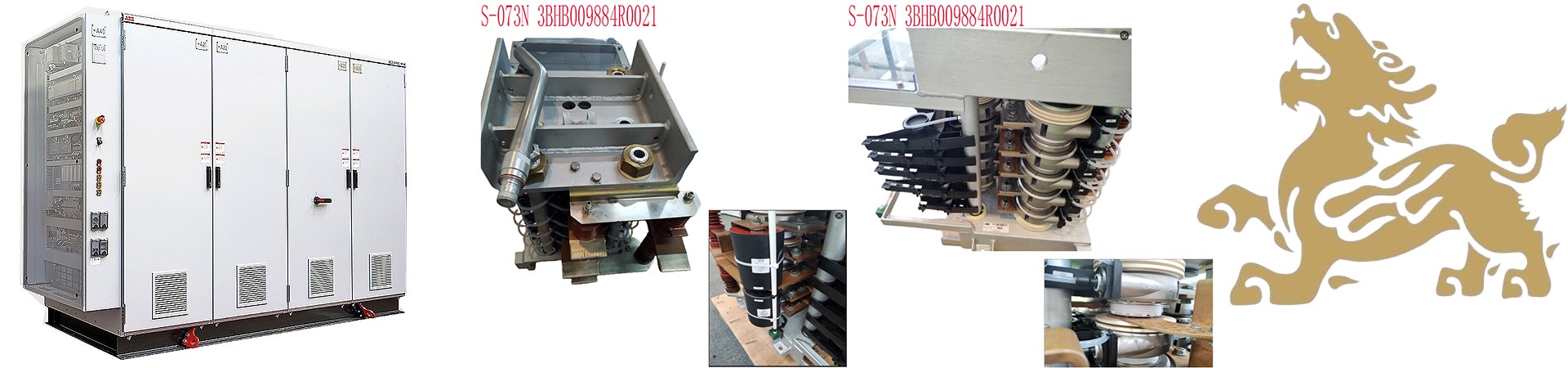
Description
Many products have not been listed yet. For more products, please contact us
If the product model is inconsistent with the displayed image, the model shall prevail. Please contact us for specific product images, and we will arrange for photos to be taken and confirmed in the warehouse
We have 16 shared warehouses worldwide, so sometimes it may take several hours to accurately return to you. We apologize for any inconvenience caused. Of course, we will respond to your concerns as soon as possible.
3BHE046836R1102 Other names:
Central Processing Unit Module 3BHE046836R1102
3BHE046836R1102 Control System
Excitation controller 3BHE046836R1102
3BHE046836R1102 Excitation System
ABB AC 800PEC excitation controller, model 3BHE046836R1102 , is a high-performance controller designed specifically for high-speed and low-speed process control tasks. It is part of ABB ControlIT’s product line, providing multifunctional solutions for various industrial applications, including power electronics, wind turbines, micro turbines, light rail propulsion, voltage restorers, drivers, and more.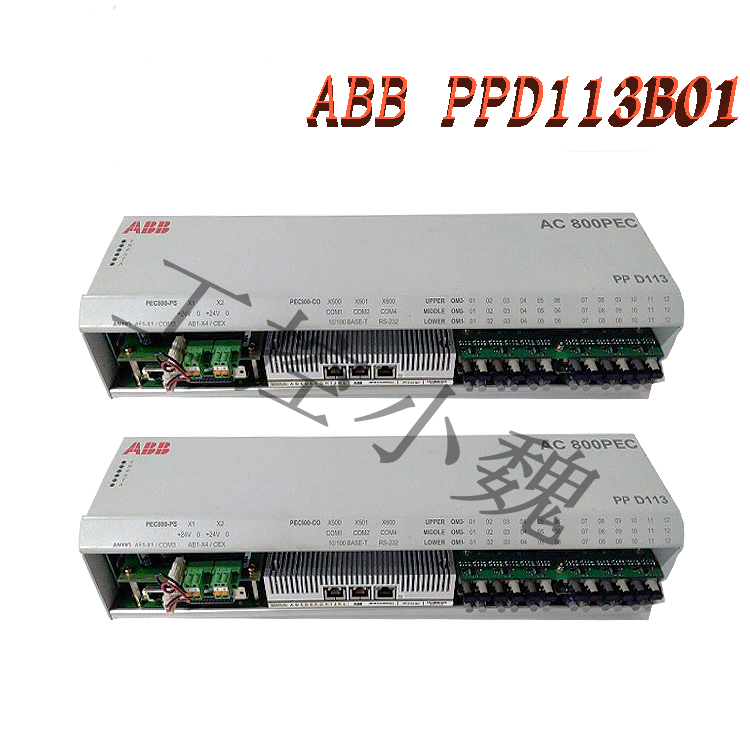
The following is a summary of its main functions and capabilities based on the provided sources:
3BHE046836R1102 is designed specifically for high-speed control applications, providing very fast analog and digital process I/O with a typical cycle time of 25 µ s. This makes it suitable for demanding power electronics applications where speed and accuracy are crucial.
Versatility suitable for different processes
The 3BHE046836R1102 can handle both high-speed and slow processes, such as cooling circuits and monitoring, making it a multifunctional controller suitable for a wide range of industrial applications.
Integration and Programming
3BHE046836R1102 controller uses ABB’s mature programming tool Control Builder M and Real Time Workshop ® MATLAB ®/ Configure and program with Simulink. This can develop complex control algorithms and integrate controllers into larger automation projects.
Modular design
The 3BHE046836R1102 adopts a modular design and can be flexibly configured according to specific I/O requirements of the application. It supports up to 36 bidirectional fiber PowerLinks to connect I/O modules..jpg)
Connection
It provides a wide range of connection options, including two Ethernet ports, RS-232/RS-422 serial ports, and onboard AnyIO ports for various fieldbus types. This ensures seamless integration with other control devices and systems.
Software and tools
3BHE046836R1102 is fully integrated into ABB’s Control IT software environment, providing a comprehensive set of engineering tools for all stages of automation projects, from engineering and installation to operation and major stages.
High speed performance
The 3BHE046836R1102 excitation controller is a high-performance, modular control system designed specifically for power electronic control applications. The following are detailed features and information about the AC800PEC excitation controller:
Modular design:
The 3BHE046836R1102 control system has a modular structure, which means it can be flexibly configured according to the needs of different applications..jpg)
The optical connection between the controller and process I/O is used for fast control and measurement.
Supports up to 36 bidirectional fiber PowerLinks, providing excellent communication capabilities with other control devices.
High performance and fast response:
Provides very fast analog and digital process I/O, with a typical cycle time of 25 µ s, ensuring precise response to fast control loops.
The dual core processor unit combines high-speed control and low-speed process control tasks to meet various application requirements.
Programming and Integration:
Using ABB Control Builder M programming environment based on IEC 61131-3 standard for programming, supporting MATLAB ®/ Develop advanced control strategies using Simulink.
Fully integrated into ABB’s ControlIT software environment, providing a seamless integration experience.
Connectivity:
Provide two Ethernet ports for connecting to the factory control network and other processor modules.
The RS-232/RS-422 serial port supports the connection of local process panels and service terminals..jpg)
ABB Communication Expansion Bus (CEX) and AnyBus suitable for all universal fieldbus types ®- S module.
Hardware and software advantages:
The optical connection between the PPD513 AOC-100440 controller and I/O module eliminates the need for backup batteries while improving system reliability.
The program and data are stored in flash memory to ensure the persistence and reliability of the data.
3BHE046836R1102 controller supports rapid application code development through MATLAB ®/ Simulink ® and RealTime Workshop ® Implement model-based design.
Application scenario:
The 3BHE046836R1102 excitation controller is suitable for high-power rectifier applications, as well as various applications from large industrial equipment and propulsion systems to compact products.
Especially suitable for applications that require fast response and precise control, such as power electronic control, motor control, etc.
In summary, the 3BHE046836R1102 excitation controller is a powerful and high-performance control system that provides an ideal solution for various power electronic control applications through its modular design, high performance and fast response capabilities, flexible programming and integration options, and strong connectivity.
All products on this website are special products, and market prices have been fluctuating,
The specific customer service quotation shall prevail, as the product is a new product and the price is not genuine,
Please confirm the model, product, price, and other detailed information with customer service before placing an order. The website has been used,
The new one is for sale, please contact customer service to communicate.
Other excitation controllers:
PPD517A3011 3BHE041576R3011
PPD517 3BHE041576R3011
3BHE040375R103E PPD115
PPD539A102 3BHE039770R0102
3BHE057901R0101 PCD235
PCD235C101 3BHE057901R0101
GFD563A102 3BHE046836R0102
GFD233A101 3BHE022294R0101
GFD563A101 3BHE046836R0101
PPD103801 3BHE020455R0001
PPD513AOC-100440 3BHE039724R0C3D
PPD517A3011 3BHE041576R3011
PPD517A3011
PPD517
PPD517 3BHE041576R3011
UAD149A0001
UAD149A1501 3BHE014135R1501
UAD149A1501
UAD142A01
UAD142A01 3BHE012551R0001
GFD563A102 3BHE046836R0102
GF D563 3BHE046836R010
More……
-300x300.jpg)
-300x300.jpg)
admin –
The following is a summary of its main functions and capabilities based on the provided sources:
3BHE046836R1102 is designed specifically for high-speed control applications, providing very fast analog and digital process I/O with a typical cycle time of 25 µ s. This makes it suitable for demanding power electronics applications where speed and accuracy are crucial.
Versatility suitable for different processes
The 3BHE046836R1102 can handle both high-speed and slow processes, such as cooling circuits and monitoring, making it a multifunctional controller suitable for a wide range of industrial applications.
Integration and Programming
3BHE046836R1102 controller uses ABB’s mature programming tool Control Builder M and Real Time Workshop ® MATLAB ®/ Configure and program with Simulink. This can develop complex control algorithms and integrate controllers into larger automation projects.
admin –
The 3BHE046836R1102 is a dedicated excitation controller designed by ABB for the AC800PEC (Power Electronics Controller) system. It is a high-performance version of the UNITROL 6000 series.
Core Positioning: Designed for excitation control of synchronous generators, synchronous motors, and doubly-fed induction generators (DFIGs), it supports high-precision voltage regulation, dynamic stability control, and renewable energy grid integration.
Core Control Logic
Multi-Mode Control:
AVR Mode: Automatic Voltage Regulation (steady-state accuracy ±0.1%).
PSS2B/PSS2E Mode: Suppresses low-frequency oscillations (0.1-3Hz) and improves grid inertia.
V/Hz Limit Mode: Prevents stator core saturation (overvoltage protection).
Power Factor Control Mode: Maintains constant generator reactive power (suitable for phase-converter applications).
Adaptive Algorithm: Based on Model Predictive Control (MPC), it dynamically adjusts PID parameters to adapt to grid frequency fluctuations (stable operation within a ±2Hz range).
Hardware Architecture and Technical Parameters
1. Modular Design
Module Type and Functional Description
Main Control Unit (CPU): Dual-core ARM Cortex-A53 processor, clocked at 1.2GHz, running the VxWorks real-time operating system, supporting multi-tasking and parallel processing.
The Signal Conditioning Board isolates input/output signals, offers interference rejection ≥15kV (IEC 61000-4-5 standard), and supports 16 analog inputs (16-bit ADC).
The Power Interface Board provides 12 PWM outputs (driving IGBT bridge rectifiers), with a maximum output current of 20A and a switching frequency of 10kHz.
The Communication Module features dual redundant Ethernet ports (1000Mbps) supporting IEC 61850-90-5, Modbus TCP/IP, and Profinet protocols. The power module provides three redundant power supplies (220V AC/110V DC), with automatic switching in the event of a failure in any power supply (switching time < 2ms). https://www.weikunfadacai1.com/product/3bhe046836r1102-abb-3bhe046836r1102-ac800pec-system-excitation-controller/
admin –
Key Technical Parameters
Parameter Category Technical Specifications
Input Signal – Generator Voltage: 100V AC (PT Secondary Side)
- Generator Current: 5A AC (CT Secondary Side)
- Excitation Current: 0-15A DC (Hall Sensor Input)
Output Signal – Excitation Current Command: ±10V DC (Corresponding to 0-15A)
- Alarm/Trip Signal: 24V DC Dry Contact (Capacity 5A)
Control Accuracy – Voltage Regulation Error: ≤±0.05% (Steady State)
- Dynamic Response Time: ≤30ms (Recovers to 95% after a ±15% voltage change)
Environmental Adaptability – Operating Temperature: -40°C to +70°C (Industrial Grade)
- Humidity: ≤95% RH (Non-Condensing)
- Protection Level: IP54 (Dustproof and Waterproof)
Electromagnetic Compatibility Complies with IEC IEC 61000-6-2 (industrial environments) and IEC 61000-6-4 (power plant environments) standards.
Software Functionality and Extensibility
Core Software Package
UNITROL 6000 Control Suite: Integrates basic functions such as AVR, PSS, and limiters, and supports online parameter tuning.
AC800PEC Adaptive Module: Provides renewable energy grid-connected adaptation algorithms (such as virtual synchronous machine control and inertia support).
Cyber Security Toolkit: Complies with IEC 62443 standards, supporting AES-256 encryption and role-based access control (RBAC).
Extended Functionality
Black Start Support: Enables self-starting without grid support through the built-in diesel generator interface (requires battery storage).
Multi-machine Collaborative Control: Supports parallel operation of up to 16 generators, with data synchronization via optical fiber (latency <1μs).
AI-Assisted Diagnosis: Integrates machine learning models to monitor the health of the excitation system in real time (e.g., IGBT junction temperature prediction and capacitor aging analysis).
https://www.weikunfadacai1.com/product/3bhb030310r0001-igct-module-abb/
https://www.weikunfadacai1.com/product/honeywll-05704-a-0144/
https://www.weikunfadacai1.com/2024/05/16/abb-excitation-control-unit-module-gfd563a102-3bhe046836r0102/
https://www.weikunfadacai1.com/product/abb-gfd563a102-3bhe046836r0102/
https://www.weikunfadacai1.com/product/abb-3bhe046836r0102/
https://www.weikunfadacai1.com/product/gfd563a102-ac-800pec-control-unit-abb-3bhe046836r0102-gfd563a102/
https://www.weikunfadacai1.com/product/3bhe046836r1102-abb-3bhe046836r1102-ac800pec-system-excitation-controller/
admin –
Typical Application Scenarios
Synchronous Generators in Thermal/Nuclear Power Plants
1000MW Ultra-Supercritical Units: Combined with the UNITROL 6800 excitation system, achieves voltage regulation accuracy of ±0.03%, meeting NERC standards.
Frequency Regulation: Through fast excitation response (response time <50ms), it participates in grid primary frequency regulation (regulation range ±5% of rated power).
Pumped Storage Units in Hydropower Plants
Four-Quadrant Operation: Dynamically adjusts excitation parameters to suppress water hammer when switching between generation and pumping modes (voltage fluctuation <±1%). Isolated Grid Operation: Supports autonomous frequency and voltage control in off-grid mode (requires energy storage). Renewable Energy Grid Integration Wind Power Hydrogen Project: Provides excitation control for the synchronous generator powering the electrolyzer, ensuring stable hydrogen production (power fluctuation <±0.5%). Photovoltaic Energy Storage System: Improves grid stability by simulating synchronous generator characteristics (such as inertia and damping) (compliant with IEEE 1547-2018 standard). Industrial Synchronous Motor Large Compressor Drive: Achieves constant power factor operation (power factor ≥ 0.95) through excitation control, reducing reactive power losses. Soft Start Function: Limits starting current (peak value < 3 times rated current), extending equipment life.
admin –
Common Faults and Solutions
Fault Symptom, Possible Cause, Solution
Large voltage fluctuations. PID parameter imbalance or loose PT wiring. Retune the PID using ABB Control Builder Plus software (Kp=0.5, Ki=0.02, Kd=0.05); check the tightness of the PT/CT wiring.
Unable to regulate excitation current. Power module fault, trigger pulse loss. Use an oscilloscope to verify the PWM output waveform (frequency = 10kHz, pulse width = 1ms). Replace the damaged IGBT module (model: ABB 5SNA 1500E170100).
Communication interruption. Network cable damage. IP address conflict. Check the physical connection and configure a static IP address. Update the firmware to V2.15 (supports automatic DHCP conflict detection).
Self-diagnostic alarm (E102): Power module overtemperature. Clean the cooling fan and check the ambient temperature (must be ≤55°C). Replace the power board fan (model: ABB 5SYA2045-00).
PSS function failure. Sensor signal drift and filter parameter errors. Calibrate the speed sensor (accuracy ±0.1%). Adjust the PSS filter cutoff frequency (recommended 1.5Hz) through FFT analysis.
Maintenance and Spare Parts Management
Regular Maintenance Items
Every 3 months: Clean dust from the module interior and check the tightness of the terminal blocks (torque value: 0.8 Nm).
Every 6 months: Calibrate the PT/CT ratio and test the PSS function (inject a 0.8 Hz oscillation signal using ABB TestManager software).
Annually: Replace the cooling fan filter and check the capacitor capacity (replace if attenuation > 20%).
Spare Parts Strategy
Critical Spare Parts: It is recommended to stock one complete module (including the main control board, power interface board, and power supply module), with an inventory cycle of ≤ 18 months.
Refurbished Modules: ABB certified refurbished parts are available (test reports and a 12-month warranty are required).
admin –
Firmware Upgrade
Download the latest firmware (e.g., V2.18) through the ABB Ability™ Remote Diagnostics Platform. Back up configuration parameters before upgrading.
Precautions: Do not disconnect the power supply during the upgrade process, as this may permanently damage the module. A self-test must be performed after the upgrade (running time ≥ 10 minutes).
Safety Precautions
Power off before operation: During maintenance, the input power must be disconnected and a “Do Not Close” sign must be displayed.
Anti-static Measures: Wear an anti-static wrist strap when replacing modules to avoid damage to electronic components.
Compliance: Ensure that the module complies with local grid regulations (e.g., IEEE STD 421.5, GB/T 7409.3).
admin –
The 3BHE046836R1102 is a dedicated excitation controller designed by ABB for the AC800PEC (Power Electronics Controller) system. It is a high-performance version of the UNITROL 6000 series.
Core Positioning: Designed for excitation control of synchronous generators, synchronous motors, and doubly-fed induction generators (DFIGs), it supports high-precision voltage regulation, dynamic stability control, and renewable energy grid integration.
Core Control Logic
Multi-Mode Control:
AVR Mode: Automatic Voltage Regulation (steady-state accuracy ±0.1%).
PSS2B/PSS2E Mode: Suppresses low-frequency oscillations (0.1-3Hz) and improves grid inertia.
V/Hz Limit Mode: Prevents stator core saturation (overvoltage protection).
Power Factor Control Mode: Maintains constant generator reactive power (suitable for phase-converter applications).
Adaptive Algorithm: Based on Model Predictive Control (MPC), it dynamically adjusts PID parameters to adapt to grid frequency fluctuations (stable operation within a ±2Hz range).
Hardware Architecture and Technical Parameters
1. Modular Design
Module Type and Functional Description
Main Control Unit (CPU): Dual-core ARM Cortex-A53 processor, clocked at 1.2GHz, running the VxWorks real-time operating system, supporting multi-tasking and parallel processing.
The Signal Conditioning Board isolates input/output signals, offers interference rejection ≥15kV (IEC 61000-4-5 standard), and supports 16 analog inputs (16-bit ADC).
The Power Interface Board provides 12 PWM outputs (driving IGBT bridge rectifiers), with a maximum output current of 20A and a switching frequency of 10kHz.
The Communication Module features dual redundant Ethernet ports (1000Mbps) supporting IEC 61850-90-5, Modbus TCP/IP, and Profinet protocols. The power module provides three redundant power supplies (220V AC/110V DC), with automatic switching in the event of a failure in any power supply (switching time < 2ms). Key Technical Parameters Parameter Category Technical Specifications Input Signal - Generator Voltage: 100V AC (PT Secondary Side) - Generator Current: 5A AC (CT Secondary Side) - Excitation Current: 0-15A DC (Hall Sensor Input) Output Signal - Excitation Current Command: ±10V DC (Corresponding to 0-15A) - Alarm/Trip Signal: 24V DC Dry Contact (Capacity 5A) Control Accuracy - Voltage Regulation Error: ≤±0.05% (Steady State) - Dynamic Response Time: ≤30ms (Recovers to 95% after a ±15% voltage change) Environmental Adaptability - Operating Temperature: -40°C to +70°C (Industrial Grade) - Humidity: ≤95% RH (Non-Condensing) - Protection Level: IP54 (Dustproof and Waterproof) Electromagnetic Compatibility Complies with IEC IEC 61000-6-2 (industrial environments) and IEC 61000-6-4 (power plant environments) standards. Software Functionality and Extensibility Core Software Package UNITROL 6000 Control Suite: Integrates basic functions such as AVR, PSS, and limiters, and supports online parameter tuning. AC800PEC Adaptive Module: Provides renewable energy grid-connected adaptation algorithms (such as virtual synchronous machine control and inertia support). Cyber Security Toolkit: Complies with IEC 62443 standards, supporting AES-256 encryption and role-based access control (RBAC). Extended Functionality Black Start Support: Enables self-starting without grid support through the built-in diesel generator interface (requires battery storage). Multi-machine Collaborative Control: Supports parallel operation of up to 16 generators, with data synchronization via optical fiber (latency <1μs). AI-Assisted Diagnosis: Integrates machine learning models to monitor the health of the excitation system in real time (e.g., IGBT junction temperature prediction and capacitor aging analysis). Typical Application Scenarios Synchronous Generators in Thermal/Nuclear Power Plants 1000MW Ultra-Supercritical Units: Combined with the UNITROL 6800 excitation system, achieves voltage regulation accuracy of ±0.03%, meeting NERC standards. Frequency Regulation: Through fast excitation response (response time <50ms), it participates in grid primary frequency regulation (regulation range ±5% of rated power). Pumped Storage Units in Hydropower Plants Four-Quadrant Operation: Dynamically adjusts excitation parameters to suppress water hammer when switching between generation and pumping modes (voltage fluctuation <±1%). Isolated Grid Operation: Supports autonomous frequency and voltage control in off-grid mode (requires energy storage). Renewable Energy Grid Integration Wind Power Hydrogen Project: Provides excitation control for the synchronous generator powering the electrolyzer, ensuring stable hydrogen production (power fluctuation <±0.5%). Photovoltaic Energy Storage System: Improves grid stability by simulating synchronous generator characteristics (such as inertia and damping) (compliant with IEEE 1547-2018 standard). Industrial Synchronous Motor Large Compressor Drive: Achieves constant power factor operation (power factor ≥ 0.95) through excitation control, reducing reactive power losses. Soft Start Function: Limits starting current (peak value < 3 times rated current), extending equipment life. Common Faults and Solutions Fault Symptom, Possible Cause, Solution Large voltage fluctuations. PID parameter imbalance or loose PT wiring. Retune the PID using ABB Control Builder Plus software (Kp=0.5, Ki=0.02, Kd=0.05); check the tightness of the PT/CT wiring. Unable to regulate excitation current. Power module fault, trigger pulse loss. Use an oscilloscope to verify the PWM output waveform (frequency = 10kHz, pulse width = 1ms). Replace the damaged IGBT module (model: ABB 5SNA 1500E170100). Communication interruption. Network cable damage. IP address conflict. Check the physical connection and configure a static IP address. Update the firmware to V2.15 (supports automatic DHCP conflict detection). Self-diagnostic alarm (E102): Power module overtemperature. Clean the cooling fan and check the ambient temperature (must be ≤55°C). Replace the power board fan (model: ABB 5SYA2045-00). PSS function failure. Sensor signal drift and filter parameter errors. Calibrate the speed sensor (accuracy ±0.1%). Adjust the PSS filter cutoff frequency (recommended 1.5Hz) through FFT analysis. Maintenance and Spare Parts Management Regular Maintenance Items Every 3 months: Clean dust from the module interior and check the tightness of the terminal blocks (torque value: 0.8 Nm). Every 6 months: Calibrate the PT/CT ratio and test the PSS function (inject a 0.8 Hz oscillation signal using ABB TestManager software). Annually: Replace the cooling fan filter and check the capacitor capacity (replace if attenuation > 20%).
Spare Parts Strategy
Critical Spare Parts: It is recommended to stock one complete module (including the main control board, power interface board, and power supply module), with an inventory cycle of ≤ 18 months.
Refurbished Modules: ABB certified refurbished parts are available (test reports and a 12-month warranty are required).
Firmware Upgrade
Download the latest firmware (e.g., V2.18) through the ABB Ability™ Remote Diagnostics Platform. Back up configuration parameters before upgrading.
Precautions: Do not disconnect the power supply during the upgrade process, as this may permanently damage the module. A self-test must be performed after the upgrade (running time ≥ 10 minutes).
Safety Precautions
Power off before operation: During maintenance, the input power must be disconnected and a “Do Not Close” sign must be displayed.
Anti-static Measures: Wear an anti-static wrist strap when replacing modules to avoid damage to electronic components.
Compliance: Ensure that the module complies with local grid regulations (e.g., IEEE STD 421.5, GB/T 7409.3).