
Description
Many products have not been listed yet. For more products, please contact us
If the product model is inconsistent with the displayed image, the model shall prevail. Please contact us for specific product images, and we will arrange for photos to be taken and confirmed in the warehouse
We have 16 shared warehouses worldwide, so sometimes it may take several hours to accurately return to you. We apologize for any inconvenience caused. Of course, we will respond to your concerns as soon as possible.
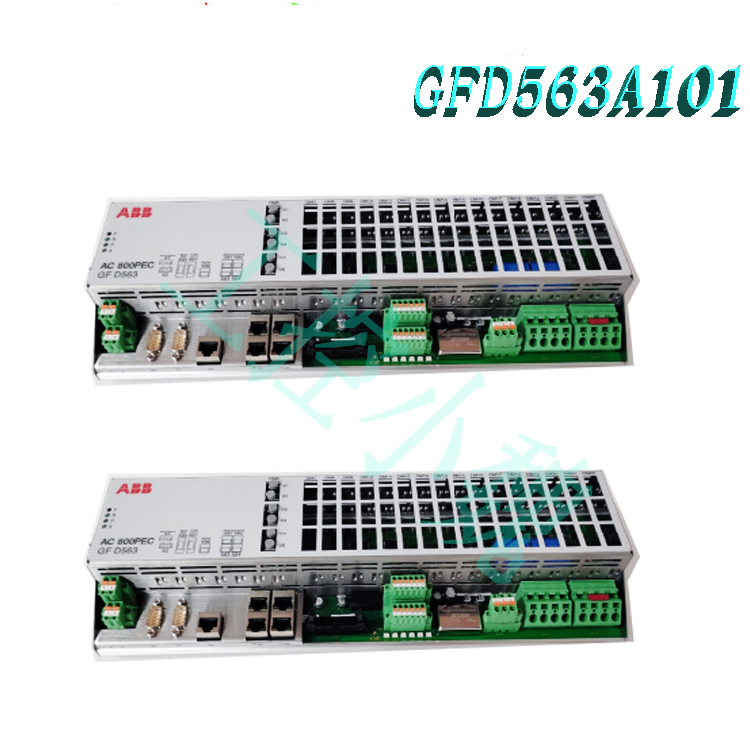
GFD563A101 Other names:
GFD563A101 control unit
Output unit module GFD563A101
Analog unit GFD563A101
Function Introduction
GFD563A101 excitation controller is an excitation regulator for self parallel excitation static rectification excitation systems, evolving from semiconductor discrete components to integrated solid components and from analog to digital. Domestic devices can be divided into three categories: semiconductor analog excitation regulators, microcomputer (including programmable controllers) digital excitation regulators, and hybrid microcomputer (including programmable controllers) analog excitation regulators. Domestic semiconductor excitation regulators have a record of export since the early 1970s. The development of microcomputer excitation regulators began in the late 1970s..jpg)
The GFD563A101 controller has the following characteristics:
Error control: The device controller also manages error detection of data transmitted by I/O devices. If an error is found during transmission, the error detection code is usually set and reported to the CPU, so the CPU invalidates the data transmitted this time and performs a new transmission. This ensures the accuracy of data input..jpg)
Data exchange: This refers to the exchange of data between CPUs and controllers, as well as between controllers and devices. For the former, data is written to or read from the controller in parallel by the CPU through the data bus; For the latter, it is the device that inputs data to the controller or transmits it from the controller to the device. Therefore, data registers must be set in the controller.
Receive and recognize commands: The CPU can send various different commands to the controller, and the device controller should be able to receive and recognize these commands.
All products on this website are special products, and market prices have been fluctuating,
The specific customer service quotation shall prevail, as the product is a new one and the traps are not real,
Please confirm the model, product, price, and other detailed information with customer service before placing an order. The website has been used,
New for sale, please contact the website https://www.weikunfadacai1.com/ Customer service communication.
Recommended modules with the same function:
GFD563A101
GFD563A101 3BHE046836R0101
GFD563A102
GFD563A102 | 3BHE046836R0102
GFD212A 3BHE020357P201
GFD212A 3BHE020356R0101
GFD233A 3BHE022294R0103
GFD233A
GFD233A103
KUC321AE HIEE300698R1
3BHB004661R0101
more……
-300x300.jpg)
-300x300.jpg)
admin –
GFD563A101 excitation controller is an excitation regulator for self parallel excitation static rectification excitation systems, evolving from semiconductor discrete components to integrated solid components and from analog to digital. Domestic devices can be divided into three categories: semiconductor analog excitation regulators, microcomputer (including programmable controllers) digital excitation regulators, and hybrid microcomputer (including programmable controllers) analog excitation regulators. Domestic semiconductor excitation regulators have a record of export since the early 1970s. The development of microcomputer excitation regulators began in the late 1970s.
angel –
ABB GF D563 | 3BHE046836R0101 | GFD563A101 | AC 800PEC. ABB AC 800PEC is a controller that combines high-speed process control requirements (such as those in power electronics applications) with low-speed process control tasks typically performed by individual PLC units. It uses ABB’s Control Builder M programming tool that complies with IEC 61131-3, as well as MATLAB, Simulink, and Simulink encoders for configuration and programming. The AC 800PEC interfaces with ABB’s I/O system through the optical S800 ModuleBus and with ABB’s communication module through the Communication Expansion Bus (CEX). It also supports third-party Anybus-S fieldbus modules.
Chantelle Cosey –
Heya i’m for the first time here. I came across this board and I find It really useful & it helped me out much. I hope to give something back and help others like you helped me.
Libby Sax –
I used to be recommended this website via my cousin. I am no longer certain whether this publish is written through him as no one else understand such unique approximately my trouble. You’re wonderful! Thank you!
Leroy Mioduszewski –
You are my intake, I own few blogs and very sporadically run out from to brand : (.
admin –
Data exchange: This refers to the exchange of data between CPUs and controllers, as well as between controllers and devices. For the former, data is written to or read from the controller in parallel by the CPU through the data bus; For the latter, it is the device that inputs data to the controller or transmits it from the controller to the device. Therefore, data registers must be set in the controller.
vorbelutrioperbir –
Can I simply say what a reduction to search out someone who truly is aware of what theyre talking about on the internet. You positively know how to carry an issue to light and make it important. Extra folks have to learn this and understand this aspect of the story. I cant consider youre not more common since you undoubtedly have the gift.
admin –
The 3BHE046836R0101 GFD563A101 excitation central processing unit module supports a variety of analog and digital input and output combinations, and can process multiple signals simultaneously. The specific input and output configuration may include digital input, analog input, digital output, and high-speed digital output, etc., to meet complex control requirements. At the same time, through additional expansion modules, the configuration of this module can be further expanded to adapt to more complex application requirements in the fields of industrial automation and robotics. The expansion modules can be installed locally or remotely, providing greater flexibility and convenience.
https://www.axcontroler.com/ABB/gfd563a101—excitation-central-processor-module—abb—3bhe046836r0101—gfd563a101
https://www.weikunfadacai1.com/product/gfd563a101-excitation-system-controller/
admin –
Possible Uses:
Industrial Automation: ABB interface modules are often used in PLC (Programmable Logic Controller) systems, drive controls, or other industrial machinery to facilitate communication between devices.
Communication Protocols: It may support protocols like Modbus, Profibus, DeviceNet, or Ethernet/IP, depending on the specific module.
Signal Conversion: Could convert between different signal types (e.g., analog to digital, serial to Ethernet).
https://www.weikunfadacai1.com/product/abb-gfd563a101/
admin –
The following is an in-depth technical analysis of the ABB AC800PEC control unit (model GFD563A101, hardware version 3BHE046836R0101), covering its positioning, hardware architecture, functional features, application scenarios, maintenance points, and comparisons with similar products:
I. Product Positioning and Core Identification
Model Identification
The GFD563A101 is a high-performance control unit in the ABB AC800PEC (Power Electronics Controller) series, designed for power electronic equipment (such as frequency converters, SVGs, and energy storage converters). It belongs to the third-generation hardware platform (hardware version 3BHE046836R0101).
Core Positioning:
Real-time control core: Executes complex power electronics algorithms (such as SVPWM, harmonic compensation, and energy management) with control cycles up to 50μs.
Multi-protocol Communication Hub: Integrates industrial Ethernet protocols such as EtherCAT, Profinet, and Modbus TCP, supporting high-speed data exchange with host computers (e.g., DCS, SCADA) and downstream devices (e.g., IGBT drivers, sensors).
Redundancy and High Availability: Supports dual-controller hot standby (failover time <2ms), meeting IEC 61508 SIL3 functional safety standards.
Application Scenarios
New Energy Grid Integration: Main control unit for photovoltaic/wind power converters, implementing maximum power point tracking (MPPT) and low voltage ride-through (LVRT).
Industrial Drives: Power cell control for high-voltage inverters (e.g., ABB ACS880), supporting vector control of asynchronous/synchronous motors.
Power Quality Management: Core controller for static VAR generators (SVGs) and active power filters (APFs), with response time <5ms.
Energy Storage Systems: Bidirectional power control for battery storage converters (PCSs), supporting seamless switching between charge and discharge modes.
II. Hardware Architecture Analysis
1. Main Control Unit
Module Parameters
Processor: TI C6678 multi-core DSP (octa-core, 1.2GHz, 176GFLOPS floating-point performance) + ARM Cortex-A9 (dual-core, 800MHz, responsible for communication and logic control)
Memory: 1GB DDR3 SDRAM (data cache) + 512MB NAND Flash (program storage) + 16MB NOR Flash (configuration parameters)
Operating System: ABB Control IT Real-Time (hard real-time kernel, task scheduling accuracy ≤1μs)
Security Mechanism: Hardware encryption module (supports AES-256 encryption) + Secure Boot (to prevent firmware tampering)
2. Interface Type and Specifications
Interface Category, Channel Number, Detailed Specifications
16 digital inputs: 24V DC (compatible with 110V DC), optocoupler isolation, supports SOE (Sequence of Events), resolution 10μs
8 digital outputs 24V DC/2A (relay contact) with fault feedback (normally open/normally closed, configurable), response time <50μs
Analog inputs: 8 16-bit ADCs, input range ±10V/4-20mA (software configurable), sampling rate 100kSPS, common-mode rejection ratio >100dB
Analog outputs: 4 16-bit DACs, output range ±10V/4-20mA, drive capability ≥1kΩ, settling time <10μs
Ethernet: 2 Gigabit Ethernet (RJ45/fiber), supporting EtherCAT master/slave, Profinet IO, and Modbus TCP
Fieldbus: 1 CANopen (baud rate 1Mbps) or DeviceNet (baud rate 500kbps)
Encoder interface: 2 incremental encoders (A/B/Z phase, up to 1MHz) or absolute encoders (SSI/BiSS Protocol)
3. Electrical Characteristics
Parameter Value Notes
Operating Voltage: 24V DC ±10%. Inputs with reverse polarity protection and overvoltage suppression (TVS diode, 60V withstand voltage).
Power Consumption: <30W, 18W typical (at full load).
Isolation Voltage: 3000Vrms (input/output/bus). Complies with IEC 61010-1 and IEC 61850-3 standards.
Ambient Temperature: -40°C to +85°C. Industrial-grade wide operating temperature design, suitable for outdoor cabinet installation (cooling fan required).
Vibration Resistance: 5g (10-500Hz). Complies with IEC 60068-2-64. Suitable for vibration environments such as ships and rail transit.
III. Core Features
High-Performance Real-Time Control
Multi-Core Parallel Processing:
DSP Cores 0-3: Execute current loop control (50μs cycle) and PWM Generates (dead time adjustable, minimum 1μs).
DSP cores 4-5: Execute velocity/position loop control (100μs cycle) and harmonic compensation algorithms.
ARM core: Handles communication protocol stacks (such as EtherCAT) and human-machine interface interaction (HMI data updates).
High-precision synchronization:
Supports IEEE 1588 PTP protocol, with synchronization error of <1μs with the host computer clock.
Accurate motor rotor position detection (resolution 0.001°) via the encoder interface.
Redundancy and reliability design
Dual controller hot standby:
Master and slave controllers synchronize data in real time via a fiber optic link (synchronization cycle 1ms).
Automatic switchover in the event of a fault (switchover logic configurable to "fail-safe" or "predictive").
Self-diagnostic function:
Real-time monitoring of CPU temperature, memory errors, and interface status (such as disconnection and short circuit).
LED indicators (red/green/yellow) intuitively display operating status (e.g., RUN, ALARM, FAULT).
Watchdog Timer:
Hardware-level watchdog (10ms timeout reset) + software-level task monitoring (to prevent deadlock).
Intelligent Functions
Data Logging and Fault Traceability:
Built-in 4GB eMMC stores the latest 10,000 event logs (including timestamps and waveform data).
Supports COMTRADE format export for easy integration with simulation tools such as PSS/E and PSCAD.
Remote Configuration and Debugging:
Online parameter tuning (e.g., PID parameters, PWM frequency) is enabled via ABB Control Builder Plus software.
Supports SSH remote login for firmware upgrades (without downtime) and log downloads.
Functional Safety Support:
Integrated safety inputs/outputs (SIL3 certified) enable emergency shutdown (EST) and safe torque off (STO).
IV. Typical Application Cases
Offshore Wind Converter Control
Scenario: A 10MW offshore wind turbine uses the GFD563A101 to implement two-in-one pitch control and converter control, synchronized with the main control system via an EtherCAT interface.
Effects:
Power factor remains stable at 0.98 (error <±0.01), increasing annual power generation by 3%. Even when the grid voltage drops to 15%, it can still maintain a current output of 0.9 pu (meeting LVRT requirements). High-Voltage Converter Drive Scenario: A 10kV high-voltage converter at a steel plant uses the GFD563A101 to control a 12-pulse rectifier unit, implementing vector control of a synchronous motor. Effects: Speed fluctuations were reduced from ±0.5% to ±0.1%, meeting the high-precision requirements of the mill's finishing section. Redundant design prevents single points of failure, achieving uninterrupted operation for over three years. Battery Energy Storage Converter (PCS) Scenario: A 20MW/40MWh energy storage power station uses the GFD563A101 to achieve seamless switching between charge and discharge modes with a response time of <2ms. Effects: Rapidly adjusts output power (at a rate of 10MW/s) during grid frequency fluctuations, supporting grid stability. Communicates with the BMS via the CANopen interface, enabling accurate battery SOC estimation (with an error of <2%).
admin –
V. Maintenance and Troubleshooting
1. Key Maintenance Periods
Maintenance Project Periodic Notes
Interface Cleaning: Clean digital/analog terminals every six months with electronic contact cleaner to prevent oxidation and poor contact.
Before every two-year firmware upgrade, back up the current configuration (using Control Builder Plus to export a .cfg file). After the upgrade, verify all channel functions.
Redundancy testing: Simulate a master controller failure every year to verify that the slave controller can take over control within 2ms and check log records for completeness.
Cooling system inspection: Clean the cooling fan dust every three months, check the fan speed (normal value >3000 RPM), and ensure that the cabinet air inlet and outlet are unobstructed.
2. Common Faults and Solutions
Fault Symptom: Possible Cause: Solution
EtherCAT communication interruption: Terminal resistor mismatch or fiber bend radius too small. Check whether the terminal resistor (120Ω) is soldered. The fiber bend radius should be ≥10 times the fiber diameter. Replace the fiber patch cord.
Analog output out of range: Sensor disconnected or range configuration incorrect. Check the sensor power supply (24V DC) and signal cable connections. Reconfigure the range using Control Builder Plus.
Digital input false alarms: Field interference or insufficient filtering time. Increase the software debounce time (from 100μs to 500μs) or check grounding (ground resistance <1Ω).
LED indicator abnormalities: Power failure or internal module damage. Measure the input voltage (24V DC ±10%). If normal, replace the module (requires ABB authorized engineer).
VI. Comparison with Similar Products
Features: GFD563A101, Siemens SINAMICS S120, CM, Schneider ATV630
Processor: TI C6678 DSP + ARM Cortex-A9, Intel Xeon E3 (dual-core, 1.8GHz), STM32H7 (single-core, 480MHz)
Real-time control cycle: 50μs, 100μs, 200μs
Redundancy: Hot standby (2ms switchover), cold standby (manual switchover required), no redundancy
Protocol compatibility: EtherCAT/Profinet/Modbus TCP, Profinet/EtherCAT/OPC UAM, Modbus TCP, CANopen
Functional safety: SIL3, SIL2, SIL1
Price: Base price +30%-20%
admin –
Parameter Value Notes
Operating Voltage: 24V DC ±10%. Inputs with reverse polarity protection and overvoltage suppression (TVS diode, 60V withstand voltage).
Power Consumption: <30W, 18W typical (at full load).
Isolation Voltage: 3000Vrms (input/output/bus). Complies with IEC 61010-1 and IEC 61850-3 standards.
Ambient Temperature: -40°C to +85°C. Industrial-grade wide operating temperature design, suitable for outdoor cabinet installation (cooling fan required).
Vibration Resistance: 5g (10-500Hz). Complies with IEC 60068-2-64. Suitable for vibration environments such as ships and rail transit.
III. Core Features
High-Performance Real-Time Control
Multi-Core Parallel Processing:
DSP Cores 0-3: Execute current loop control (50μs cycle) and PWM Generates (dead time adjustable, minimum 1μs).
DSP cores 4-5: Execute velocity/position loop control (100μs cycle) and harmonic compensation algorithms.
ARM core: Handles communication protocol stacks (such as EtherCAT) and human-machine interface interaction (HMI data updates).
High-precision synchronization:
Supports IEEE 1588 PTP protocol, with synchronization error of <1μs with the host computer clock.
Accurate motor rotor position detection (resolution 0.001°) via the encoder interface.
Redundancy and reliability design
Dual controller hot standby:
Master and slave controllers synchronize data in real time via a fiber optic link (synchronization cycle 1ms).
Automatic switchover in the event of a fault (switchover logic configurable to "fail-safe" or "predictive").
Self-diagnostic function:
Real-time monitoring of CPU temperature, memory errors, and interface status (such as disconnection and short circuit).
LED indicators (red/green/yellow) intuitively display operating status (e.g., RUN, ALARM, FAULT).
Watchdog Timer:
Hardware-level watchdog (10ms timeout reset) + software-level task monitoring (to prevent deadlock).
Intelligent Functions
Data Logging and Fault Traceability:
Built-in 4GB eMMC stores the latest 10,000 event logs (including timestamps and waveform data).
Supports COMTRADE format export for easy integration with simulation tools such as PSS/E and PSCAD.
Remote Configuration and Debugging:
Online parameter tuning (e.g., PID parameters, PWM frequency) is enabled via ABB Control Builder Plus software.
Supports SSH remote login for firmware upgrades (without downtime) and log downloads.
Functional Safety Support:
Integrated safety inputs/outputs (SIL3 certified) enable emergency shutdown (EST) and safe torque off (STO).
IV. Typical Application Cases
Offshore Wind Converter Control
Scenario: A 10MW offshore wind turbine uses the GFD563A101 to implement two-in-one pitch control and converter control, synchronized with the main control system via an EtherCAT interface.
Effects:
Power factor remains stable at 0.98 (error <±0.01), increasing annual power generation by 3%. Even when the grid voltage drops to 15%, it can still maintain a current output of 0.9 pu (meeting LVRT requirements). High-Voltage Converter Drive Scenario: A 10kV high-voltage converter at a steel plant uses the GFD563A101 to control a 12-pulse rectifier unit, implementing vector control of a synchronous motor. Effects: Speed fluctuations were reduced from ±0.5% to ±0.1%, meeting the high-precision requirements of the mill's finishing section. Redundant design prevents single points of failure, achieving uninterrupted operation for over three years. Battery Energy Storage Converter (PCS) Scenario: A 20MW/40MWh energy storage power station uses the GFD563A101 to achieve seamless switching between charge and discharge modes with a response time of <2ms. Effects: Rapidly adjusts output power (at a rate of 10MW/s) during grid frequency fluctuations, supporting grid stability. Communicates with the BMS via the CANopen interface, enabling accurate battery SOC estimation (with an error of <2%). V. Maintenance and Troubleshooting 1. Key Maintenance Periods Maintenance Project Periodic Notes Interface Cleaning: Clean digital/analog terminals every six months with electronic contact cleaner to prevent oxidation and poor contact. Before every two-year firmware upgrade, back up the current configuration (using Control Builder Plus to export a .cfg file). After the upgrade, verify all channel functions. Redundancy testing: Simulate a master controller failure every year to verify that the slave controller can take over control within 2ms and check log records for completeness. Cooling system inspection: Clean the cooling fan dust every three months, check the fan speed (normal value >3000 RPM), and ensure that the cabinet air inlet and outlet are unobstructed.
2. Common Faults and Solutions
Fault Symptom: Possible Cause: Solution
EtherCAT communication interruption: Terminal resistor mismatch or fiber bend radius too small. Check whether the terminal resistor (120Ω) is soldered. The fiber bend radius should be ≥10 times the fiber diameter. Replace the fiber patch cord.
Analog output out of range: Sensor disconnected or range configuration incorrect. Check the sensor power supply (24V DC) and signal cable connections. Reconfigure the range using Control Builder Plus.
Digital input false alarms: Field interference or insufficient filtering time. Increase the software debounce time (from 100μs to 500μs) or check grounding (ground resistance <1Ω).
LED indicator abnormalities: Power failure or internal module damage. Measure the input voltage (24V DC ±10%). If normal, replace the module (requires ABB authorized engineer).
admin –
The following is an in-depth technical analysis of the ABB AC800PEC control unit (model GFD563A101, hardware version 3BHE046836R0101), covering its positioning, hardware architecture, functional features, application scenarios, maintenance points, and comparisons with similar products:
I. Product Positioning and Core Identification
Model Identification
The GFD563A101 is a high-performance control unit in the ABB AC800PEC (Power Electronics Controller) series, designed for power electronic equipment (such as frequency converters, SVGs, and energy storage converters). It belongs to the third-generation hardware platform (hardware version 3BHE046836R0101).
Core Positioning:
Real-time control core: Executes complex power electronics algorithms (such as SVPWM, harmonic compensation, and energy management) with control cycles up to 50μs.
Multi-protocol Communication Hub: Integrates industrial Ethernet protocols such as EtherCAT, Profinet, and Modbus TCP, supporting high-speed data exchange with host computers (e.g., DCS, SCADA) and downstream devices (e.g., IGBT drivers, sensors).
Redundancy and High Availability: Supports dual-controller hot standby (failover time <2ms), meeting IEC 61508 SIL3 functional safety standards.
Application Scenarios
New Energy Grid Integration: Main control unit for photovoltaic/wind power converters, implementing maximum power point tracking (MPPT) and low voltage ride-through (LVRT).
Industrial Drives: Power cell control for high-voltage inverters (e.g., ABB ACS880), supporting vector control of asynchronous/synchronous motors.
Power Quality Management: Core controller for static VAR generators (SVGs) and active power filters (APFs), with response time <5ms.
Energy Storage Systems: Bidirectional power control for battery storage converters (PCSs), supporting seamless switching between charge and discharge modes.
II. Hardware Architecture Analysis
1. Main Control Unit
Module Parameters
Processor: TI C6678 multi-core DSP (octa-core, 1.2GHz, 176GFLOPS floating-point performance) + ARM Cortex-A9 (dual-core, 800MHz, responsible for communication and logic control)
Memory: 1GB DDR3 SDRAM (data cache) + 512MB NAND Flash (program storage) + 16MB NOR Flash (configuration parameters)
Operating System: ABB Control IT Real-Time (hard real-time kernel, task scheduling accuracy ≤1μs)
Security Mechanism: Hardware encryption module (supports AES-256 encryption) + Secure Boot (to prevent firmware tampering)
2. Interface Type and Specifications
Interface Category, Channel Number, Detailed Specifications
16 digital inputs: 24V DC (compatible with 110V DC), optocoupler isolation, supports SOE (Sequence of Events), resolution 10μs
8 digital outputs 24V DC/2A (relay contact) with fault feedback (normally open/normally closed, configurable), response time <50μs
Analog inputs: 8 16-bit ADCs, input range ±10V/4-20mA (software configurable), sampling rate 100kSPS, common-mode rejection ratio >100dB
Analog outputs: 4 16-bit DACs, output range ±10V/4-20mA, drive capability ≥1kΩ, settling time <10μs
Ethernet: 2 Gigabit Ethernet (RJ45/fiber), supporting EtherCAT master/slave, Profinet IO, and Modbus TCP
Fieldbus: 1 CANopen (baud rate 1Mbps) or DeviceNet (baud rate 500kbps)
Encoder interface: 2 incremental encoders (A/B/Z phase, up to 1MHz) or absolute encoders (SSI/BiSS Protocol)
3. Electrical Characteristics
VI. Comparison with Similar Products
Features: GFD563A101, Siemens SINAMICS S120, CM, Schneider ATV630
Processor: TI C6678 DSP + ARM Cortex-A9, Intel Xeon E3 (dual-core, 1.8GHz), STM32H7 (single-core, 480MHz)
Real-time control cycle: 50μs, 100μs, 200μs
Redundancy: Hot standby (2ms switchover), cold standby (manual switchover required), no redundancy
Protocol compatibility: EtherCAT/Profinet/Modbus TCP, Profinet/EtherCAT/OPC UAM, Modbus TCP, CANopen
Functional safety: SIL3, SIL2, SIL1
Price: Base price +30%-20%
admin –
Core Functions
Excitation Control
Regulates the generator rotor excitation current to maintain stable output voltage.
Supports multiple control modes (such as constant voltage, constant power factor, and constant reactive power).
Quickly responds to grid fluctuations (such as short circuits and sudden load changes) to improve system stability.
Protection Functions
Overexcitation/underexcitation protection: Prevents rotor overheating and loss of synchronism.
Voltage/current limiting: Prevents equipment overload.
Fault diagnosis and alarms: Records event logs for easy maintenance.
admin –
Communication Interfaces
Supports Modbus RTU/TCP, Profibus, IEC 61850, and other protocols, enabling integration into DCS/SCADA systems.
Provides remote monitoring and parameter adjustment capabilities.
admin –
Application Scenarios
Coal-fired/Hydropower Plants
Equipped with steam turbines/hydrogenerators to achieve efficient excitation control.
Renewable Energy (Wind/Photovoltaic)
Regulate reactive power in energy storage systems to improve power quality.
Industrial Backup Power
Ensure voltage stability when diesel generator sets are connected to the grid.
Common Problems and Solutions
1. Large Excitation Voltage Fluctuations
Possible Causes:
Poor power quality (harmonic interference).
Unoptimized controller parameters (improper PID tuning).
Solution:
Install a filter to improve power quality.
Adjust Kp/Ki/Kd parameters via software (requires professional engineers).
2. Communication Interruption
Possible Causes:
Loose wiring or incorrect protocol configuration.
Address conflict (when multiple devices are connected in parallel).
Solution:
Check physical connections and reconfigure baud rate/parity.
Use the ABB DriveWindow tool to scan device addresses.
3. Alarm Code E02 (Overexcitation)
Possible Causes:
A sudden change in the generator load causes a surge in excitation demand.
Cooling system failure (rotor temperature is too high).
Solution:
Check the load curve to confirm whether the unit is operating beyond rated capacity.
Clean the cooling fan and check the temperature sensor.
V. Maintenance and Upgrades
Regular Inspections
Clean internal dust and inspect capacitor/resistor aging every six months.
Back up control parameters (export via the panel or software).
Firmware Upgrade
Visit the ABB official support page to download the latest version.
Before upgrading, confirm hardware compatibility (e.g., whether the GFD563A101 supports firmware V2.0+).
Spare Parts Management
It is recommended to stock replacement parts for key components (such as IGBT modules and power boards).
Contact
QQ Email: xiongbacarrey@qq.com
Industrial Control Sales Consultant: Carrey
WhatsApp: +86 18030177759
Original spare parts (Model: 3BHE046836R0101, corresponding motherboard).
admin –
GFD563A101 | ABB Industrial Control Module Comprehensive Analysis
Technical Specifications and Core Parameters
Electrical Characteristics
Input Voltage: Supports 220V AC/440V AC or 24V DC/110-240V AC/DC (multi-mode compatible), current range 0-5A.
Output Capacity: 0-10V DC voltage output, 0-20A current output, meeting high-power drive needs.
Environmental Adaptability: Operating temperature -25°C to +70°C, humidity 5%-95% non-condensing, IP20 protection rating, vibration and shock resistance design, suitable for harsh industrial environments.
Power Consumption and Efficiency: ≤5W low power design, 50/60Hz operating frequency, optimized energy efficiency.
Interfaces and Communications
Ethernet Port: Supports industrial Ethernet protocols (such as Modbus TCP and Profinet), enabling high-speed data transmission and system integration.
Expansion Interface: Compatible with ABB S800 I/O modules and third-party sensors/actuators (such as PLCs and frequency converters), supporting analog/digital signal conversion.
Redundant Design: Dual-channel configuration, hot-swappable, and automatic failover (failure switching time ≤ 20ms) ensure continuous system operation.
Core Functions and Application Scenarios
Excitation Control and Power Regulation
As the core module of the AC800PEC system, it precisely regulates the generator excitation current, achieving voltage stability (fluctuation ≤ ±0.5%), reactive power optimization, and improved dynamic response.
Integrated overvoltage, undervoltage, and overcurrent protection, with redundant design, makes it suitable for hydropower, thermal power, wind farms, substations, and industrial motor drives.
Industrial Automation and Process Control
In manufacturing, metallurgy, chemicals, oil and gas, and other industries, it is used for production line control, pump/fan speed regulation, arc furnace power factor optimization, and real-time monitoring of process parameters.
Compatible with the ABB 800xA DCS system, it supports MATLAB/Simulink programming, enabling rapid deployment of complex control algorithms (such as PID and condition monitoring).
Energy Management and Energy Saving Optimization
In power plants, power grids, and distribution systems, it is used for dynamic reactive power compensation, harmonic control, and energy efficiency improvement, thereby reducing carbon emissions.
Supports SCADA system integration, achieving plant-wide data transparency and unified control.
Installation and Maintenance
Installation Requirements: Follow DIN rail or panel mounting specifications to ensure unobstructed heat dissipation and avoid electromagnetic interference sources (such as high-power motors).
Maintenance Recommendations: Regularly inspect connector oxidation, capacitor aging, and cooling fan status. Firmware upgrades are recommended every two years to optimize control algorithms. Unauthorized modifications may void the warranty.
Compatibility and Scalability
System Integration: Seamlessly integrates with the ABB AC800PEC backplane system, supporting expansion I/O modules, communication gateways, and third-party devices (such as Siemens PLCs and Rockwell systems).
Software Support: Compatible with ABB Control Builder, Automation Builder, and CODESYS platforms, supporting IEC 61131-3 programming standards.
Protocol Compatibility: Supports industrial protocols such as OPC UA, Modbus TCP, and IEC 61850, adapting to data exchange with DCS/SCADA systems.
Notes
Model Differences: Minor differences between specific models (e.g., GFD563A101 and GFD563A102) should be carefully considered to avoid configuration errors.
Certifications and Standards: It is recommended to verify compliance with local industry certifications (e.g., CE, UL) and safety regulations.
https://www.weikunfadacai1.com/product/abb-gfd563a101/
admin –
GFD563A101 | ABB AC800PEC Control Unit | 3BHE046836R0101 Comprehensive Analysis
Core Positioning and Technical Features
System Affiliation: This unit belongs to the ABB AC800PEC high-end control system, order number 3BHE046836R0101, and is the core module for generator excitation control and industrial automation. It utilizes a dual-core processor architecture (2.5GHz or PowerPC 405 200MHz) with a cycle time of ≤100 microseconds, supporting the integration of high-speed and low-speed process control, and is suitable for high-power rectifier scenarios.
Hardware Design:
Physical Parameters: Dimensions approximately 13.6cm × 13.6cm × 10.6cm, weight 0.78-1.5kg, IP20 protection rating, operating temperature -10°C to +70°C, suitable for indoor industrial environments.
Electrical Parameters: Operating voltage 24V DC/120V AC, output current 0-5A, control accuracy ±0.5%, response time ≤10ms; equipped with 512MB SDRAM/128MB Flash storage, supports 62 I/O channels (30 digital inputs + 28 digital outputs + 2 analog inputs + 2 high-speed outputs).
Interfaces and Communications: Compatible with Ethernet, Modbus TCP, OPC UA, Profibus DP, IEC 61850, and other protocols. Built-in redundant dual ports support ring network construction and HSR/PRP protocols, and is compatible with ABB 800xA systems and third-party devices (such as Siemens PLCs).
Core Functions and Application Scenarios
Excitation Control: A closed-loop PID algorithm precisely regulates the generator rotor excitation current, maintaining terminal voltage stability (fluctuation ≤±0.5%), optimizing reactive power distribution, and improving the static and dynamic stability of the power system. Overvoltage, undervoltage, and overcurrent protection, as well as rapid de-excitation, are supported.
Industrial Automation: Widely used in power generation (thermal power/hydropower/wind farms), metallurgy, petrochemicals, rail transit, intelligent manufacturing, and other fields. Typical use cases include power plant excitation regulation, dynamic reactive power compensation in HVDC converter stations, process optimization in municipal sewage treatment plants, and automotive production line control.
Special Scenarios: It performs exceptionally well in ship propulsion systems, grid-connected inverters for new energy vehicles, and power factor optimization for arc furnaces, supporting real-time status monitoring and remote maintenance.
Technical Advantages and Innovations
Redundancy and Self-Diagnostics: Supports dual-module redundant configuration with active/standby switchover time of ≤ 20ms, ensuring continuous system operation. Built-in fault code storage, real-time status monitoring, and a remote diagnostic interface are compatible with SCADA systems.
Modular Expansion: Compatible with ABB S800 I/O modules and fiber-optic communication links, it supports functional expansion up to 1024 I/O points, reducing integration costs.
Software Support: Compatible with ABB Control Builder M, Automation Builder, and CODESYS platforms, it supports IEC 61131-3 programming standards and automatically generates control code, streamlining the development process.
Certifications and Standards: It complies with international certifications such as CE and UL, meets industrial automation safety standards (such as IEC 61508), and features a built-in STO (Safe Torque Off) function to ensure safe operation.
Installation and Maintenance Recommendations
Installation: Follow DIN rail mounting standards, ensure unobstructed heat dissipation, and avoid sources of electromagnetic interference (such as high-power motors). A separate overspeed protection device is required to comply with EMC standards (such as EN50082-2).
Maintenance Tips: Regularly inspect connector oxidation, capacitor aging, and cooling fan status. Perform firmware upgrades every two years to optimize algorithms. Unauthorized modifications may void the warranty. Troubleshooting: LED indicators (such as RUN/ERR) can quickly identify problems. A solid red light indicates a hardware failure and requires contacting the supplier’s technical support.
Compatibility Verification: Verify compatibility with the ABB AC800PEC backplane system, S800 I/O modules, and third-party devices to avoid configuration errors.
Application Cases and Industry Practices
Power Industry: Substation automation, grid monitoring, and dynamic reactive power compensation in HVDC converter stations.
Industrial Control: Process control systems, SCADA systems, and PLC expansion modules.
Special Scenarios: Marine propulsion systems, grid-connected inverters for new energy vehicles, arc furnace power factor optimization, and smart factory production line upgrades.
admin –
In-Depth Analysis of the ABB GFD563A101 3BHE046836R0101 Core Interface Module
As a core component of the ABB AC800PEC control system, the GFD563A101, with its high-precision excitation control and industrial automation integration capabilities, has become a key device in the power and heavy industry sectors. The following analysis focuses on four aspects: technical features, application scenarios, maintenance points, and market trends:
Technical Features and Core Advantages
Processor Architecture: Utilizing a dual-core processor (2.5GHz/PowerPC 405 200MHz) with a cycle time of ≤100 microseconds, it supports the coordinated integration of high-speed and low-speed process control, making it suitable for high-power rectifier applications.
I/O Expansion: Supports 62 standard I/O channels (30DI + 28DO + 2AI + 2 high-speed outputs), expandable up to 1024 I/O points through a modular design. Compatible with ABB S800 I/O modules and fiber optic communication links.
Communication Protocols: Compatible with Ethernet, Modbus TCP, OPC UA, Profibus DP, IEC 61850, and other protocols. Built-in redundant dual ports support ring network construction and HSR/PRP protocols, and are compatible with ABB 800xA systems and third-party PLCs (such as the Siemens S7-1500).
Electrical Parameters: Operating voltage 24V DC/120V AC, output current 0-5A, control accuracy ±0.5%, response time ≤10ms; equipped with 512MB SDRAM/128MB Flash storage to meet the needs of complex algorithms.
Application Scenarios and Typical Cases
Power Industry: Generator excitation control, substation automation, dynamic reactive power compensation in HVDC converter stations, and STATCOM applications. For example, in thermal power plants, a closed-loop PID algorithm is used to maintain terminal voltage stability (fluctuation ≤±0.5%) and optimize reactive power distribution.
Industrial Automation: Process control systems (such as DCS integration), SCADA systems, PLC expansion modules, and robotic control (such as machine tools and packaging machinery). In the petrochemical industry, AI control technology enables automated adjustment of process parameters, reducing manual intervention.
Special applications include marine propulsion systems, grid-connected inverters for renewable energy, power factor optimization for electric arc furnaces, and process optimization for municipal sewage treatment plants. In harsh environments (such as high temperature/high humidity), coating technology protects PCBs from dust and oil.
Installation and Maintenance Key Points
Installation Specifications: Follow DIN rail mounting standards, ensure unobstructed heat dissipation, and avoid sources of electromagnetic interference (such as high-power motors). An independent overspeed protection device is required to comply with EMC standards (such as EN50082-2).
Maintenance Recommendations: Regularly inspect connector oxidation, capacitor aging, and cooling fan status; perform firmware upgrades every two years to optimize algorithms. Unauthorized modifications may void the warranty. Troubleshooting can be quickly identified using LED indicators (such as RUN/ERR); a solid red indicator indicates a hardware fault.
Compatibility Verification: Verify compatibility with the ABB AC800PEC backplane system, S800 I/O modules, and third-party devices to avoid configuration errors.
Technological innovation: The new version in 2025 supports compatibility with AC 800M series main modules (such as PM851, PM861), integrates AI control technology to achieve autonomous operation, and improves production efficiency and safety.
zoritoler imol –
I know this if off topic but I’m looking into starting my own weblog and was curious what all is required to get setup? I’m assuming having a blog like yours would cost a pretty penny? I’m not very web smart so I’m not 100 positive. Any suggestions or advice would be greatly appreciated. Cheers
Kimi Estelle –
You need to participate in a contest for probably the greatest blogs on the web. I’ll suggest this site!
tlover tonet –
I’ve been absent for a while, but now I remember why I used to love this site. Thank you, I¦ll try and check back more frequently. How frequently you update your website?
tlovertonet –
It’s laborious to seek out educated individuals on this topic, however you sound like you understand what you’re talking about! Thanks
tlover tonet –
Hello my family member! I wish to say that this post is amazing, great written and include approximately all important infos. I would like to see more posts like this .
Xochitl Seiden –
Excellent blog here! Also your site loads up fast! What web host are you using? Can I get your affiliate link to your host? I wish my website loaded up as fast as yours lol
admin –
Model: GFD563A101
Material Order Number: 3BHE046836R0101
Platform: AC800PEC Power Electronic High-Speed Controller (Dedicated for UNITROL Excitation System)
Positioning: First-generation integrated excitation main control/signal interface module, core computing unit of generator static self-excitation excitation system
Upgraded version in the same series: GFD563A102 (3BHE046836R0102)
II. Core Hardware and Electrical Parameters
Power Supply: Backplane DC24V, typical power consumption 190mA
Communication Interface
Dual PROFIBUS DP-V1 (DB9 female), rate 9.6k~12Mbps adaptive
Onboard Ethernet, service debugging serial port, supports Modbus TCP, 800xA system interface
Signal Channels
Multi-channel isolated AI/DI/high-speed pulse output: Acquisition terminal PT, CT, excitation current, voltage, and temperature signals; output thyristor rectifier bridge trigger pulse; analog measurement accuracy ±0.2% FS
Real-time Control Performance
Minimum control cycle 100μs, FPGA + dual-core floating-point architecture, adaptable to transient rapid adjustments such as grid short circuits and load shedding.
Environmental Specifications
Operating temperature: -20℃ ~ +60℃; storage -40℃~85℃; protection IP20, natural air cooling; supports rack hot-swappable.
Programming tool: Control Builder M, compatible with IEC61131-3, Simulink model download.
III. Core Functions (Complete Control Link of Excitation System)
AVR Automatic Voltage Closed-Loop Regulation
Multi-mode regulation of generator terminal voltage, reactive power, and power factor; built-in P/PI/PID limiting algorithm, accommodating grid connection/ Stable operation under isolated grid conditions
Full-loop fault protection logic
Overexcitation, underexcitation, loss of excitation, rotor overcurrent, frequency over-limit, power bridge fault, over-temperature protection; local LED fault indicator, event log storage
Signal acquisition and power drive output
Isolated acquisition of multiple analog and digital signals, outputting high-speed isolated trigger pulses to drive the excitation thyristor power cabinet
Upper-level system communication and interaction
Uploading excitation parameters, alarms, and adjustment curves to the power plant’s DCS/800xA/SCADA; receiving remote commands to increase/decrease excitation and switch on/off
Redundancy adaptation
Supports UNITROL6000 dual-channel redundant excitation cabinet, seamless switching between dual channels, and online maintenance without unit shutdown
IV. GFD563A101 VS GFD563A102 Version Differences
Table
Comparison Items: GFD563A101 (3BHE046836R0101) GFD563A102 (3BHE046836R0102)
Hardware Generation: Initial Standard Version Upgraded & Optimized Version
Computational Performance: FPGA Computing Power Upgraded, Faster Transient Response
Communication Expansion: DP + Ethernet Enhanced Ethernet, Supports More Power Protocols
Program Compatibility: Older UNITROL firmware backward compatible with 101 program, adds new power grid standard algorithms
In-Stock Positioning: Replacement spare parts for older units, mainstream standard configuration for new/renovation projects
Replacement Relationship: Hardware slots are fully compatible, firmware version adaptation is required after replacement. Can directly replace 101, no need to modify rack wiring
V. Supporting Systems and Application Scenarios
Supporting Exciter Units
ABB UNITROL 5000 / UNITROL 6000 Large and Medium-Sized Static Self-Excited Excitation System
Applicable Units
Thermal/Gas Power 300MW, 600MW Steam Turbine Generators
Large and Medium-Sized Hydropower Generator Sets
Self-Supplied Synchronous Generator Sets in Chemical Plants and Steel Plants
Application Scenarios
Core main control board of power plant excitation control cabinet, serving as an integrated interface module for voltage regulation, reactive power control, fault protection, and external communication; core spare parts for upgrading old units and replacing faults.
https://www.weikunfadacai1.com/product/abb-gfd563a101/
https://www.weikunfadacai1.com/product/wartsila-ldu-20-control-module-ldu-20/