
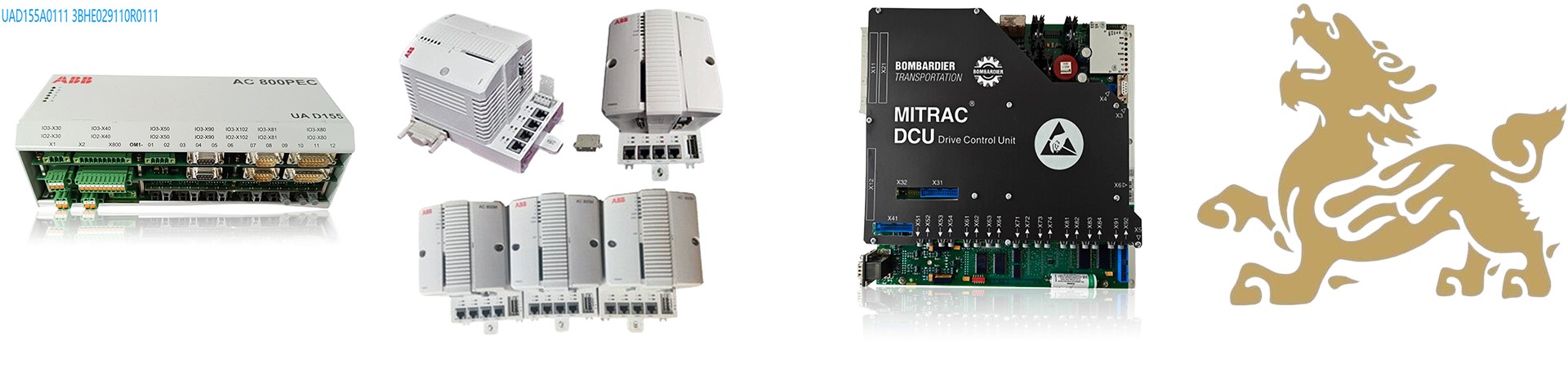
Description
Many products are not yet listed. Please contact us for more product information.
If the product model does not match the displayed image, the model number shall prevail. Please contact us for specific product images; we will arrange to take photos in our warehouse for confirmation.
We have 76 shared warehouses worldwide, so it may sometimes take several hours to return an accurate answer to you. We apologize for the inconvenience. Of course, we will respond to your inquiries as soon as possible.
Other names for UAD149A0011:
Excitation Control Unit UAD149A0011
UAD149A0011 Input/Output Unit
Analog Unit UAD149A0011
Compatible Models and System Integration
Core System Affiliation:
Belongs to the ABB AC 800M Distributed Control System (DCS), directly compatible with AC 800M controllers (such as PM860AK01 3BSE066495R1 , PM864AK01), and supports modular expansion.
Collaboration Module:Compatible with control modules such as UFC765AE102, GVC750BE101, and UAC389AE02, supporting industrial communication protocols such as Modbus, PROFIBUS, and Ethernet, enabling seamless integration with PLCs, SCADA systems, and third-party devices (such as KUKA robots and GE drives).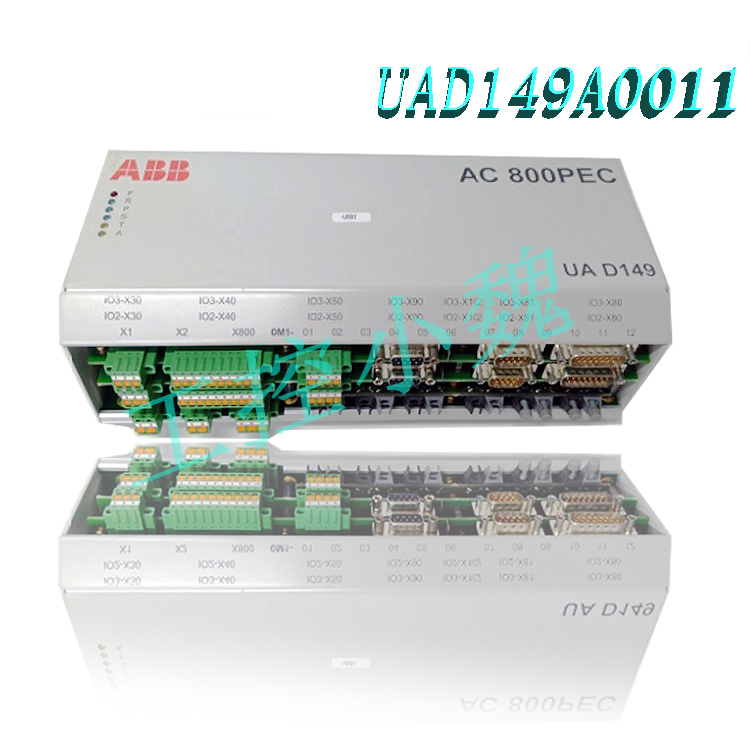
Compatibility List: Supports integration with ABB Advant Master DCS and UNITROL 1020 excitation systems, and mentions compatibility with devices such as Honeywell and Bently Nevada 3500.
Expansion Capabilities:
As a servo drive module, it is suitable for CNC machine tools, industrial robots (such as IRB 2600), packaging machinery, printing equipment, and other scenarios, supporting high-precision motion control (such as position, speed, and trajectory control).
Modular Design:Allows flexible configuration of power output channels, adapting to DI/DO, AI/AO modules and external devices (such as sensors and actuators), supporting 16-channel I/O expansion.
[Further details about the modular design and its compatibility with other modules are not translated as they are not part of the main text.] Special Application Scenarios: Its application in excitation systems (such as “excitation system central processor”) may be used for excitation regulation of generators/motors to ensure power system stability.
System Functions and Roles
Power Management and Signal Processing:
Provides a stable 24V DC power output with a maximum current of 10A and an efficiency >90%, meeting the needs of high-power equipment (such as motors and frequency converters).
Built-in signal conditioning and diagnostic functions, supporting multiple signal types such as voltage, current, resistance, thermocouples, and RTDs, ensuring accurate data acquisition and control.
Possesses self-testing and fault diagnosis capabilities, capable of real-time monitoring of anomalies such as overvoltage, overcurrent, and short circuits, and providing status codes via the Modbus protocol (e.g., error code 2 corresponding to an illegal data address), supporting redundant power supply configuration to improve system fault tolerance.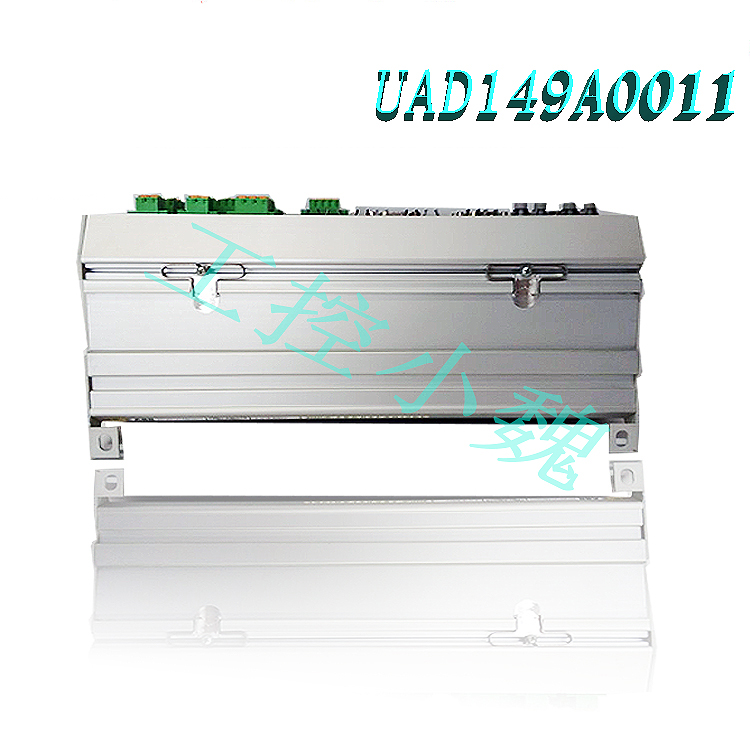
Application Scenarios:
Industrial Automation: In fields such as power, petroleum, chemical, and intelligent buildings, it provides stable power to sensors, actuators, and I/O modules, ensuring reliable system operation in high-temperature, humid, and vibration environments.
High-end Equipment: Used in medical equipment (such as surgical robots and CT scanners), textile machinery, and logistics conveyor belts to achieve precise motion control and efficient material handling.
Process Control: In power plants, oil and gas pipelines, and chemical production, it supports data acquisition, real-time monitoring, and remote maintenance, improving production efficiency and equipment lifespan (e.g., predictive maintenance).
Technical Features:
High Reliability: Passes rigorous industrial environment testing, features anti-interference and dustproof design, and supports redundant communication configurations.
Flexible Configuration: Modular design allows users to expand power output channels according to needs, adapting to different power and voltage requirements.
Ease of Use: Supports software tools such as ABB Engineering Tools, simplifying installation, configuration, and debugging processes.
Technical Parameters:
Electrical Characteristics: Output frequency approximately 350kHz (varies depending on the application scenario), operating voltage typically 220V, power supply range 115-240V.
Interfaces and Communication: Terminal interface design supports multiple network communication protocols, ensuring seamless integration with PLCs, SCADA systems, and other equipment.
System Integration and Expansion Configuration
Hardware Integration
Seamlessly connects to the AC 800PEC control unit via the backplane bus, supporting modular expansion to add more I/O modules or external device interfaces (such as servo drives and frequency converters).
Physical installation conforms to industry standards, supporting rack mounting and conduit junction box configuration. It is vibration resistant (IEC 60068-2-64), shock resistant (IEC 60068-2-29), and electromagnetic compatibility (EN 61800-3).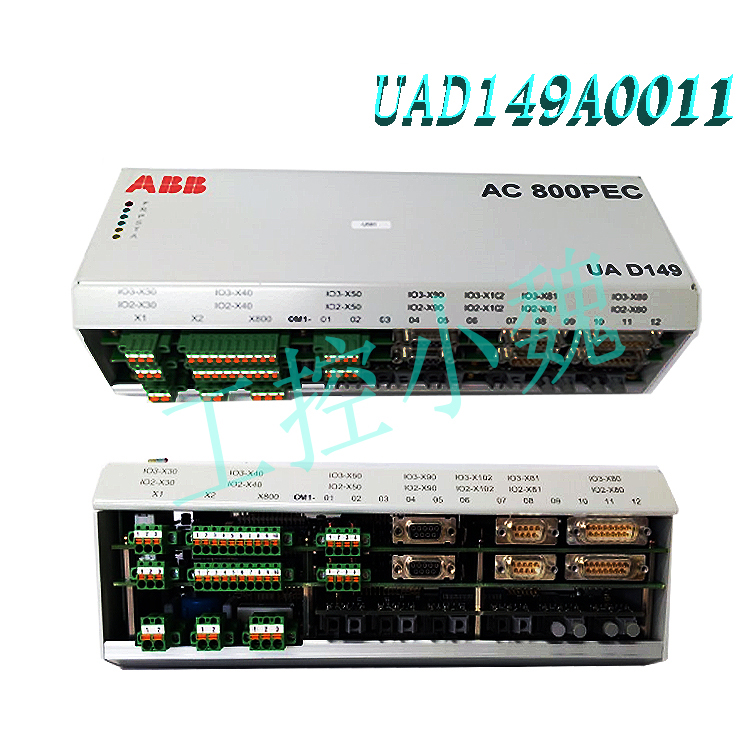
Software Configuration
Parameter configuration (such as voltage/current range, communication protocol, address mapping) is performed via ABB Engineering Tools, supporting seamless switching across all channels, output hold, and safety preset value settings.
Compatible with the ABB Ability cloud platform, enabling remote monitoring, fault diagnosis, and predictive maintenance, reducing equipment downtime and energy consumption.
Maintenance
Maintenance Recommendations
Regularly check the power module temperature and output voltage stability, and use professional tools (such as ABB diagnostic software) for configuration and debugging.
Supports hot-swapping and redundant power supply switching, enhancing system fault tolerance; original components are recommended to ensure compatibility and reliability.
Application Scenarios
Power Industry: Automation control of power plants and substations, generator excitation regulation, and grid stability management.
Industrial Sector: Process control in metallurgy, chemical industry, and pharmaceuticals; motor drive and motion control; smart buildings (e.g., lighting, security).
Renewable Energy: Power conversion and control of wind power and photovoltaic systems, supporting efficient energy conversion and low life-cycle costs.
Summary: The UAD149A0011 is a core power expansion module for ABB industrial control systems. Through efficient power management, precise signal processing, and reliable system integration, it provides stable operation guarantees for complex industrial scenarios. Its modular design, wide voltage adaptability, and high protection level make it widely used in power, petroleum, chemical, and intelligent equipment fields, and it is a key component for achieving high-reliability control in Advant DCS and AC 800M systems.
Please note that all products on this website are specialty items, and market prices are constantly fluctuating.
Please refer to customer service for a specific quote, as the price may not be accurate for new products.
Please confirm the model, product, price, and other details with customer service before placing an order. This website is currently in use.
New items are available for sale; please contact customer service for further information.
Model recommendation:
UAD142A01
UAD142A01 3BHE012551R0001
UAD149A00-0-11 3BHE014135R0011
UAD149 3BHE014135R0011
AC800PECUAD149A0011
UAD149A00-0-11
AC800PECUAD149A0011
UAD149A0011
UAD149A0011 3BHE014135R0011
S-093H 3BHB030478R0009
S-093M 3BHB009885R0013
S-093R 3BHB009885R5311
S-097H 3BHB009885R0052
S-093M 3BHB009885R0063
ABB S-093H 3BHB030478R0309
ABB S-093S 3BHB030475R0009
S-093S 3BHB030475R0009
S-073N 3BHB009884R5211
S-073N 3BHB009884R0021 35SHY3545L0014
S-053M 3BHB012897R0003
S-073N 3BHB009884R0021 35SHY3545L0014
S-073N ABB 3BHB009884R0021
S-097H 3BHB009885R0052
S-093H 3BHB030478R0309
More……
admin –
The design features of UAD149A0011 include:
High performance: Adopting advanced technology and design, it has high performance and stability, which can ensure the stable operation of the power system.
Diversified control functions: With various control functions such as voltage regulation and current control, it can meet the needs of different application scenarios.
Easy to integrate: The central processing unit adopts a modular design, making it easy to integrate and expand with other system components.
https://www.weikunfadacai1.com/product/abb-uad149a0011/