
Description
Many products are not yet on the shelves. Please contact us for more products.
If the product model is inconsistent with the display picture, the model shall prevail. Please contact us for specific product pictures, and we will arrange to take photos in the warehouse for confirmation.
We have 76 shared warehouses around the world, so sometimes it may take several hours to accurately return to you, please understand. Of course, we will respond to your concerns as soon as possible.
SPU232.2 Other names:
Main control board SPU232.2
SPU232.2 control board
PCB board SPU232.2
ALSTOM (now GE Energy Group)’s SPU232.2CAN system single processor board is a high-performance embedded control unit designed for industrial control, rail transportation or energy management. Its core functions revolve around CAN bus communication and real-time data processing.
Technical architecture
Processor core
Performance features: low power design, support for floating-point operations, suitable for high-speed signal processing (such as motor control, sensor data fusion).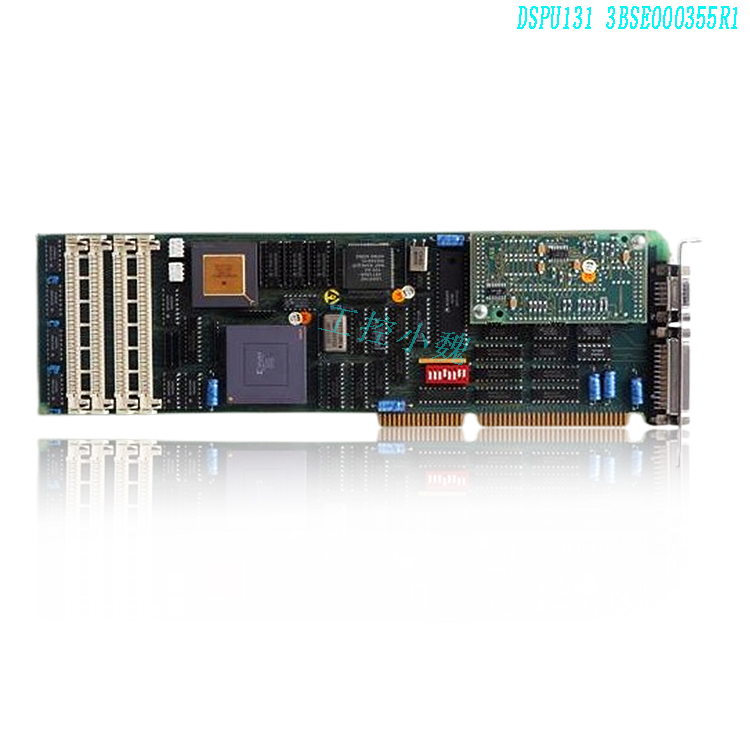
CAN bus interface
Quantity and protocol: Integrates 2-4 independent CAN 2.0B interfaces, supports standard frames (11-bit ID) and extended frames (29-bit ID), and the communication rate is up to 1Mbps.
Hardware isolation: Adopts magnetic coupling or optical coupling isolation technology to enhance anti-interference ability and adapt to the electromagnetic environment of industrial sites.
Interrupt processing: Supports CAN message reception interrupt to ensure real-time response to key events (such as emergency braking signals).
Single processor architecture: Integrates high-performance microcontrollers (such as ARM Cortex-M or similar architectures) to be responsible for logic processing, protocol conversion and task scheduling.
System integration: Contains I/O interface, watchdog timer, EEPROM storage, etc., supports local data acquisition and control.
Software support:
Real-time operating system (RTOS): May run FreeRTOS, ThreadX, etc. to ensure real-time response of tasks.
Protocol stack: Supports upper-layer protocols such as CANopen and DeviceNet to simplify system integration.
Development tools: SDK or IDE (such as Keil, IAR) is provided, and C/C++ programming is supported..jpg)
Expansion interface
Digital I/O: 16-32 programmable I/Os are provided, TTL/CMOS levels are supported, and it is used to connect switch devices (such as relays, buttons).
Analog input: 4-8 12-16-bit ADCs are integrated, 0-10V/4-20mA signal input is supported, and it is used to collect analog quantities such as temperature and pressure.
Communication interface: In addition to CAN, RS232/RS485, Ethernet (such as 10/100Mbps) or SPI/I2C interface may be equipped to facilitate system integration.
Storage and clock
Storage configuration: Built-in 512KB-2MB Flash for program storage, 128KB-512KB SRAM for data cache, and external SD card or EEPROM expansion are supported.
Real-time clock (RTC): Provides accurate timestamps and supports event recording and logging functions.
Core functions
Real-time control
Communicate with distributed I/O modules, drivers or sensors through the CAN bus to achieve closed-loop control (such as motor speed regulation and position tracking).
Support multi-task scheduling, configurable priority, to ensure that key tasks (such as safety protection) are executed first.
Data processing and protocol conversion
Parse the process data (PDO) or service data (SDO) in the CAN message and convert them into internal control instructions.
Realize conversion between different protocols (such as CANopen to Modbus), compatible with multiple device communication standards.
Fault diagnosis and fault tolerance
Monitor the CAN bus status (such as bus error, node offline), trigger alarm or safety mode.
Support watchdog timer to prevent the program from running away and causing the system to lose control.
Remote configuration and update
Realize firmware online upgrade (FOTA) through CAN or Ethernet interface to reduce on-site maintenance costs.
Support remote parameter adjustment (such as PID parameter optimization) to meet different working conditions.
Advantages and limitations
Advantages:
High reliability: Industrial-grade design, adaptable to harsh environments such as wide temperature, vibration, and electromagnetic interference.
Strong real-time performance: CAN bus priority mechanism ensures priority transmission of key data.
Cost-effectiveness: Single processor architecture simplifies system complexity and reduces development costs.
Limitations:
Bandwidth limitation: CAN bus rate (1Mbps) is lower than Ethernet and is not suitable for large data transmission.
Scalability: Single processor performance may not meet the needs of complex algorithms (such as AI reasoning).
Typical application scenarios
Railway transportation
Train control: As the core of the traction control unit (TCU) or auxiliary power control unit (APCU), it communicates with the traction inverter and battery management system (BMS) through CAN.
Signal system: Connect on-board ATP/ATO equipment to realize train position reporting and speed control.
Industrial automation
Production line control: Coordinate multiple PLC or HMI devices to achieve synchronous motion control (such as multi-axis servo system) through CAN.
Energy management: Monitor the power distribution of photovoltaic inverters and energy storage devices in microgrids to optimize energy utilization efficiency.
Smart grid
Substation automation: As part of intelligent electronic devices (IEDs), it communicates with circuit breakers and protection devices through CAN to achieve rapid fault isolation.
Distributed power generation: Control the wind turbine pitch system or photovoltaic tracking bracket to improve power generation efficiency.
Maintenance and troubleshooting.jpg)
Daily inspection
Communication status: Use a CAN analyzer (such as PCAN-USB) to monitor the bus load rate and error frame count to ensure communication stability.
Temperature monitoring: Check the temperature of the processor and CAN transceiver to avoid performance degradation caused by overheating.
Power quality: Measure the input voltage fluctuation and ripple to ensure that it meets the specifications (such as 24V±10%).
Common fault handling
CAN bus interruption:
Check whether the terminal resistor (120Ω) is connected correctly.
Verify the power supply and enable signal of the CAN transceiver (such as TJA1050).
Abnormal program operation:
Connect the debugger through the JTAG/SWD interface to read the crash log or register status.
Check whether the Flash memory is damaged (such as through checksum verification).
Slow I/O response:
Confirm whether the digital filter parameter settings are reasonable (such as debounce time).
Check whether the analog input channel is overloaded or short-circuited.
Spare parts management
Reserve compatible models of key components (such as processors, CAN transceivers, power chips) to shorten the maintenance cycle.
Regularly back up configuration parameters and program images to prevent data loss.
The ALSTOM SPU232.2 CAN system single processor board has outstanding performance in the field of rail transportation and industrial control due to its high reliability, real-time performance and scalability. During maintenance, it is necessary to focus on communication stability and power quality, and troubleshooting should be combined with hardware analysis and software debugging.
All products on this website are special products, and the market price has been fluctuating.
The specific quotation is subject to the customer service. Because the product is a new product, the price is not real.
Please confirm the model and product, price and other detailed information with the customer service before placing an order. The website has been used.
New ones are on sale, please contact customer service for communication.
Related product recommendations:
RET630 1KHL160003R0001H
3BHB030845R0101 ABB
3BHB050206R0100 ABB
3BHE055094R0002 ABB
3BHB030310R0001 ABB
GBU72 3BHE055094R0002
GBU72 3BHB030310R0001
S-093H 3BHB030478R0009
3BHB009884R0021 S-073N
3BHB009885R0052 S-097H
3BHB009885R0013 S-093M
ABB S-093H 3BHB030478R0309
ABB S-093S 3BHB030475R0009
S-093S 3BHB030475R0009
S-073N 3BHB009884R5211
S-073N 3BHB009884R0021 35SHY3545L0014
S-053M 3BHB012897R0003
S-073N 3BHB009884R0021 35SHY3545L0014
S-073N ABB 3BHB009884R0021
S-097H 3BHB009885R0052
S-093H 3BHB030478R0309
More……

Reviews
There are no reviews yet.