
Description
Many products are not yet listed. Please contact us for more product information.
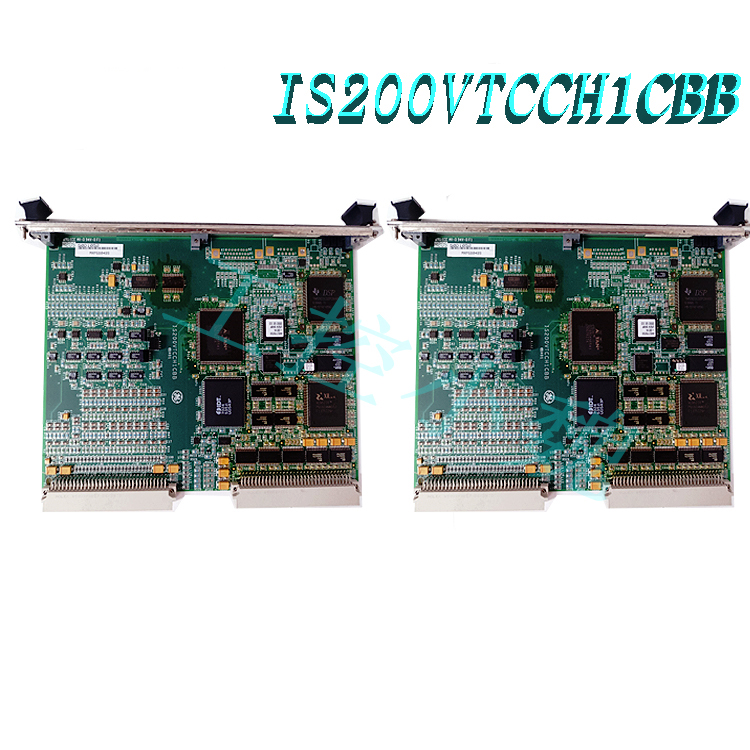
If the product model differs from the displayed image, the model number shall prevail. Please contact us for specific product images, and we will arrange to take photos in our warehouse for confirmation.
We have 76 shared warehouses worldwide, so it may sometimes take several hours to accurately return the information to you. We apologize for any inconvenience. Of course, we will respond to your inquiries as soon as possible.
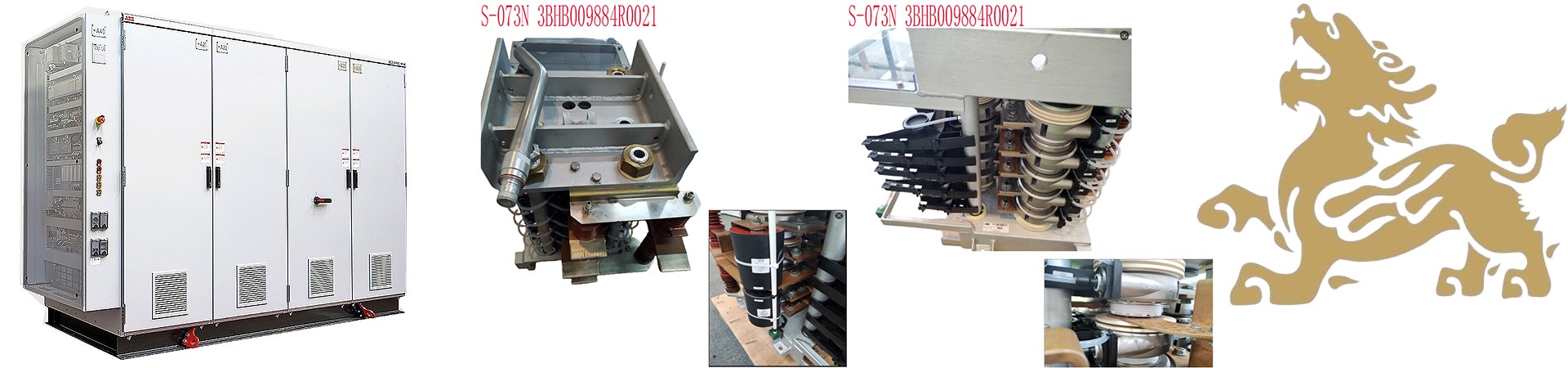
This heatsink belongs to the GE EX2100 MULTIBR multi-bridge SCR rectifier power supply system. This system is a key module for GE Automation to provide core DC power to PLC control cabinets, and is widely used to power GE Fanuc series PLC racks, I/O expansion modules, and communication modules. The entire unit operates at 4200V, which is suitable for high-voltage, high-power rectification applications.
I. Core Functions
Function Item Details:
Thermal Management: As the main heat dissipation unit of the SCR (Selective Catalytic Reduction) high-voltage system, it rapidly dissipates heat generated by high-voltage components such as power semiconductor devices, catalytic reaction zones, and urea injection valves within the SCR module, preventing device failure due to overheating.
Temperature Control: Maintains the internal operating temperature of the SCR system within a safe range (typically 80~120℃), ensuring that the evaporation, decomposition, and catalytic reaction of the urea aqueous solution (DEF) occur within the optimal temperature window.
High-Voltage Insulation Heat Dissipation: “HS” stands for High Stress. This heat sink must meet the electrical insulation requirements of the high-voltage system while dissipating heat, preventing high-voltage leakage and breakdown.
Extended Device Lifespan: The lifespan of power semiconductor devices is approximately halved for every 10℃ increase in temperature. This heatsink uses forced air cooling/natural convection to keep the junction temperature within acceptable limits, ensuring long-term reliable system operation.
System stability is ensured. Poor heat dissipation in an SCR system can lead to a sharp drop in NOx conversion efficiency, urea crystallization clogging pipelines, and even triggering system protection shutdown.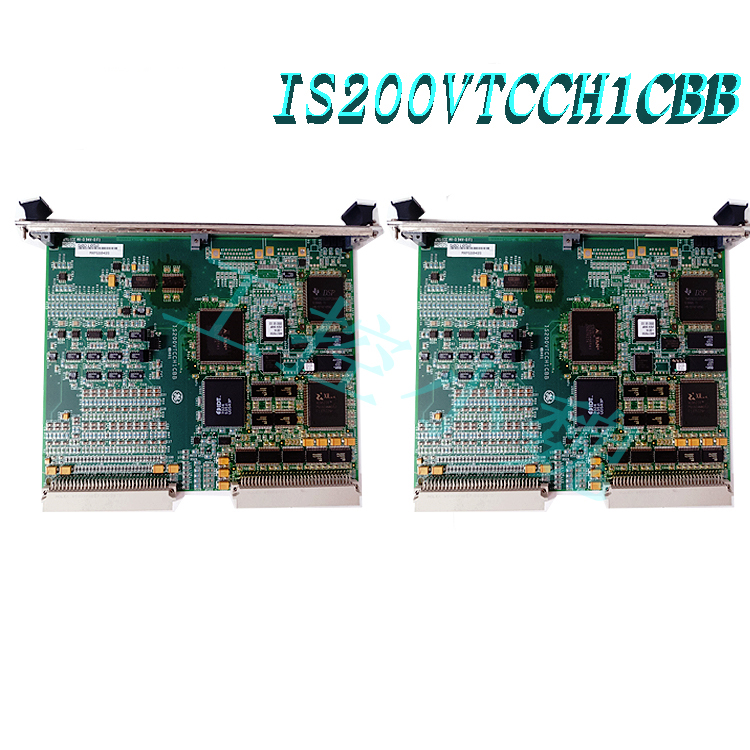
High-voltage isolation heat dissipation—the HS (high-voltage) rating means that the heatsink body must maintain a safe insulation distance from 4200V live parts while still achieving efficient heat conduction. The 100mm heat dissipation area is a design result that balances heat dissipation capacity and insulation distance within the limited cabinet space.
II. Technical Background (Why is this heatsink needed?)
The heat in an SCR system mainly comes from three sources:
Power device conduction losses — High-voltage IGBTs/MOSFETs generate on-state voltage drops and switching losses during switching, which are converted into heat.
Exothermic catalytic reaction — The reaction between NH₃ and NOx on the catalyst surface is itself an exothermic reaction.
Contact resistance heating — Contact resistance exists at high-voltage connection points, generating Joule heat when a large current flows through.-1.jpg)
According to power electronics heat dissipation theory, an increase in semiconductor device temperature leads to: a sharp increase in reverse leakage current → a decrease in withstand voltage → breakdown failure. Therefore, the main heatsink is an indispensable core thermal management component of an SCR system.
III. Application Areas
Specific Application Scenarios
GE Gas Turbine Power Generation: SCR Denitrification System for Heavy-Duty Gas Turbines. GE Frame series (e.g., 9HA, 9FB) gas turbines are equipped with SCR systems for power plant emission compliance.
GE Diesel Generator Sets: Marine/Land-based Generator Set Exhaust Gas Treatment. Classification societies (DNV, ABS, etc.) require NOx emissions to meet Tier III standards, necessitating the configuration of SCR + radiator.
Industrial Boilers/Incinerators: Flue Gas Denitrification for Coal/Gas-fired Boilers. 100mm specification suitable for the heat dissipation needs of medium-power (1~5MW) SCR reactors.
Marine Power Systems: Ship Propulsion System Exhaust Gas Aftertreatment. In GE’s marine SCR solutions, HS-grade radiators are used to withstand marine high-pressure (690V/1140V) environments.
Mining/Construction Machinery: Emission Control for Large Diesel Equipment. SCR aftertreatment modules are used with GE’s Jenbacher, Wacker Chemie, and other engines.
IV. Performance in Typical PLC Automation Scenarios
Scenario 1: PLC Rack Power Supply
The EX2100 MULTIBR is installed on the top or side of the PLC control cabinet, providing stable DC power to the CPU module, power supply module, and I/O modules. The main heatsink operates continuously, and even at an ambient temperature of 40°C, it must keep the SCR junction temperature below 100°C. Heat dissipation efficiency directly determines the lifespan of the power supply module.
Scenario 2: Multi-axis Servo Drive Power Supply
In multi-axis control systems such as CNC machine tools and packaging machinery, the EX2100 simultaneously provides rectified power to the servo drives. When the load fluctuates significantly, the SCR switching frequency increases dramatically, causing a sharp rise in heat generation. The main heatsink must maintain thermal balance under transient high loads; otherwise, an over-temperature alarm will be triggered, and all servo axes will stop abruptly.
Scenario 3: Redundant Power Supply System
Large automated production lines often use dual redundant power supplies, with two EX2100s operating in parallel. If the performance of either main heatsink deteriorates, the load-carrying capacity of that power supply line decreases. During redundancy switching, a temporary power supply gap may occur, affecting the PLC scan cycle and communication synchronization. Failure Symptoms and Maintenance Indicators
Precursor Signs of Failure: Abnormally high internal temperature, frequent triggering of over-temperature protection by the SCR module, and flashing PLC power indicator light.-1.jpg)
Typical Faults: Dust accumulation on the fins leading to increased thermal resistance; aging thermal grease causing increased contact thermal resistance; loose mounting bolts causing the heatsink to detach from the SCR substrate.
Maintenance Cycle: It is recommended to clean the fins every 12 months, replace the thermal interface material every 24 months, and perform thermal imaging inspection every 60 months to confirm heat dissipation uniformity.
V. Key Parameter Inferences
Parameter Inference Basis
Heat Dissipation Method: Forced air cooling (with fan). SCR systems typically use forced cooling fans; 100mm is the standard module size.
Heat Dissipation Power:Approximately 150~300W. Refer to the heat dissipation requirements of similar SCR power modules (power electronics heat sink manual data).
Material: Aluminum alloy fins + copper/aluminum substrate. HS high-voltage rating requires good thermal conductivity and insulation; aluminum alloy is the mainstream choice.
Operating Voltage Rating: 690V~1140V DC. HS stands for High Stress, corresponding to the voltage range of GE high-voltage SCR systems.
Installation Method:Bolted to the SCR power cabinet/reactor base. GE standard modular installation.
VI. Location in the System
Urea Tank → Injection Valve → [SCR Reactor] ← This heat sink (main heat sink) is installed here.
High Voltage Power Module (HS) ← Heat Dissipation Target
Catalyst Module ← Heat Dissipation Target
Temperature/Pressure Sensor ← Heat Dissipation Components
This heat sink is directly installed on the side or top of the high-voltage power cabinet of the SCR reactor. Through heat conduction and forced convection, it dissipates heat from all high-voltage heating components.
VII. Summary of Relationship with the PLC System
This heat sink itself does not participate in logic control, but it is the physical basis for the EX2100 rectifier power supply to continuously power the PLC system. Without it, the SCR overheat protection will activate, the PLC will lose power, and the entire automation control chain will be interrupted. In PLC automation industry, it belongs to the category of critical hardware that “doesn’t appear in the program, but determines whether the program can run.”
Summary: This is the core thermal management component in GE’s high-pressure SCR denitrification system. 100mm is its standard module size, primarily serving scenarios requiring strict emission regulations, such as gas turbines, diesel generators, and industrial boilers. Without it, the SCR system will either overheat and shut down or exceed emission standards.
Please note that all products on this website are specialty items, and market prices are constantly fluctuating.
Please refer to customer service for a specific quote, as the price may not be accurate for new products.
Please confirm the model, product, price, and other details with customer service before placing an order. This website is currently in use.
New items are available for sale; please contact customer service for further information.
Related product recommendations:
IS200ESELH1A
IS220UCSAH1A
IS200AEPGG1AAA
IS200TSVCH2AED
IS215UCCCM04AB
IS220PDIOH1A
IS220PPROS1B
IS200EPMCH1
IS215UCCAH3A
IS200JPDGH1A
IS420UCSBH1a
IS415UCVHH1A
IS215UCVHM06A
IS415UCVHH1AB
IS420UCSCS2A-B-V0.1-A
IS41ySUAAH1A
IS410BAPBH1A
IS41yJPDEG1A
IS41yJPDDG4A
more……
-300x300.jpg)
Reviews
There are no reviews yet.