
.jpg "IS230TVBAH2A(1)")
.jpg "IS230TVBAH2A(2)")
Description
IS230PCAAH1A – Core simulation module in stock, shipped on the same day.
IS230PCAAH1A – The core simulation module is in an unused and rebuilt state.
To receive the best discount on IS230PCAAH1A – Core Analog Module, please contact us and we will reply to you within 24 hours.
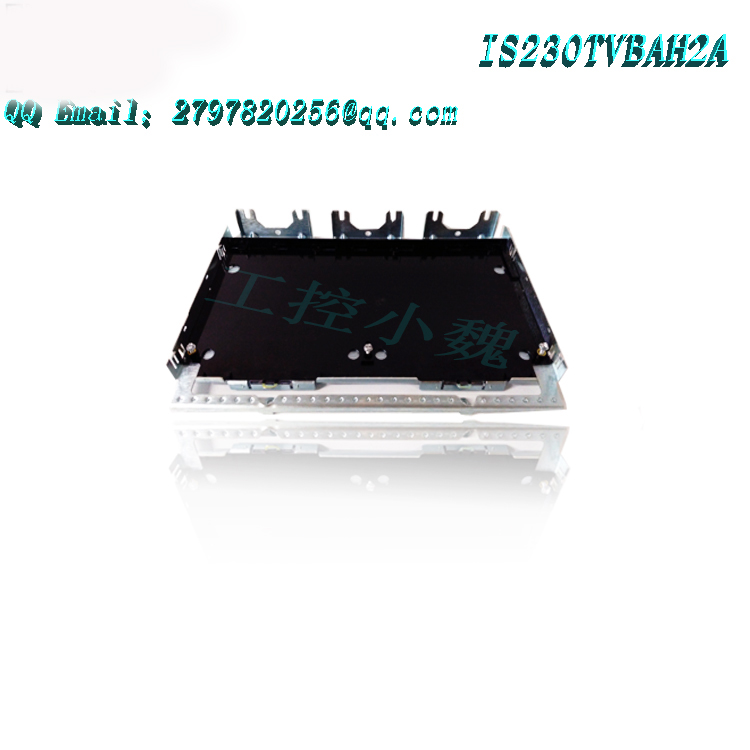
IS230PCAAH1A is a core simulation module designed specifically for the Mark VIe system. It was developed by General Electric. Most of the analog signal I/O required for operating a gas turbine is provided by the core analog (PCAA) module and related core analog (TCAS and TCAT) terminal boards. Thermocouple input, 4-20 mA current loop I/O, seismic input, linear variable differential transformer (LVDT) excitation and input, pulse rate input, and servo coil output are all provided by PCAA and TCAT.
The IS230PCAAH1A core simulation module is a key component of the system platform and plays an important role in different fields.
In the technical field related to gas turbines, core simulation modules (such as PCAA modules and related core simulation TCAS and TCAT terminal boards) are responsible for providing most of the analog signal I/O required for gas turbine operation. These modules are capable of handling thermocouple inputs, 4-20 mA current loop I/O, seismic inputs, linear variable differential transformer (LVDT) excitation and inputs, pulse rate inputs, and servo coil outputs. They are suitable for simplex, dual, and TMR systems and include shared processor boards, application I/O boards, and terminal boards. This module design makes it the least replaceable unit and does not provide separate board level diagnostic or replacement functions.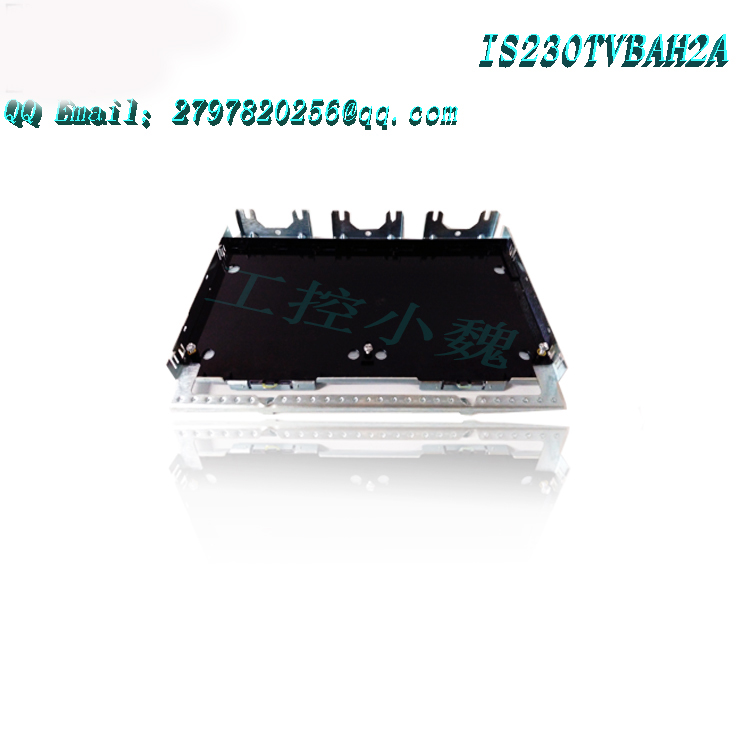
In a broader system platform architecture, the core simulation module may be responsible for loading and running decentralized computing applications. Users can configure the characteristics of edge data centers and application services through files, and the system platform starts corresponding modules based on these configurations to complete simulation experiments or other tasks.
Function Description
This module is suitable for simplex, duplex, and TMR systems. A single TCAT terminal board distributes signal inputs to one, two, or three PCAA modules.
The shielding grounding of adjacent JGPA boards and the 24V field power supply terminals have been supplemented with terminals on PCAA and TCAT. The module includes a processor board shared by all Mark VIe distributed I/O boards, two application I/O boards, and a terminal board.
The entire module is considered the least replaceable unit and does not provide any assistance in diagnosing or replacing the various boards that make up the module.
This module is powered by a 28 V DC power connector and two RJ45 Ethernet connectors. At the edge of the module, 120 European style box terminals provide on-site device I/O. Power the JGPA board through connector P4. This module is connected to TCAT through two 68 pin cables on connectors P1 and P2.
The PCAA signal is divided into two groups. The TCAT terminal board routes signal inputs, which can be fan-shaped from a single input to a single, dual, or TMR PCAA module. Signal connection dedicated to a single PCAA module to terminals. If fan-shaped input is not required, PCAA can be used without TCAT.
IS230PCAAH1A installation
Firmly secure the PCAA module.
Connect the JGPA power supply to the P4 connector of PCAA.
Connect the PCAA module to the optional associated TCAT terminal board using two 68 pin cables on connectors P1 and P2. Network connection to TCAT connector. PR1 and PR2 are connected to the R controller network, PS1 and PS2 are connected to the S controller network, and PT1 and PT2 are connected to the T controller network. To ensure proper grounding of the cable, please fully secure the cable mounting screws to PCAA and TCAT (tighten by hand only). Failure to secure the cable may prevent the module from reading the electronic ID on the TCAT and may lower the quality of other signals.-1.jpg)
According to the system configuration, connect one or two Ethernet cables. When using only one INet connection, the module can be used on any port. When using dual connections, the usual practice is to connect ENET1 to the network associated with the R controller. On the other hand, PCAA does not care about Ethernet connections and will negotiate the correct operation on any port. If there is a TMR module, the network connection should correspond to the TCAT connection. For example, PCAA modules with R IONet connections should have cables connected to TCAT PR1 and PR2 connectors.
Check if the JGPA shielding wire terminals are properly grounded. In most cases, the JGPA shielded grounding terminal is electrically connected to the metal plate where the circuit board is installed. Then install the component as the grounding path for the terminal. In some applications, it is necessary to define a shielding grounding independent of the installation metal plate. JGPA uses hardware that isolates circuit boards from metal plates for installation in these applications. In these applications, it is crucial to provide a suitable grounding wire between one or more JGPA terminals and the required shielding ground potential.
Connect the module to the power supply through the P5 connector and check the power and Ethernet status indicator lights.
If necessary, use the ToolboxST application to configure I/O packages.
Wiring
The PCAA module has 120 European style plug-in box terminals. The JGPA board installed next to the module provides 48 shielded termination points (green) and 12 24V DC output terminals (orange) for 4-20 mA transmitters using European style box terminals.
Processor characteristics
Two completely independent 10/100 Ethernet ports with connectors
Hardware watchdog timer and reset circuit
Internal temperature sensor
Status indicator LED
Electronic ID and the ability to read IDs from other boards
Soft start/current limiter on the input power connector
Local power supply, including sorting and monitoring
Energy management
The 28 V input circuit includes power management. The management function provides soft start to control current surges during power application.
After power on, the circuit implements a fast current limiting function to prevent power interference in the module from spreading back to the 28 V power system.
When the power is turned on and running normally, the green PWR indicator light will light up. If the current limiting function is enabled, the indicator light will light up until the problem is resolved.-1.jpg)
Frequently asked questions
What is IS230PCAAH1A?
It is a core simulation module designed specifically for the Mark VIe system.
What is the power input voltage of the component?
The power input voltage of this component is 28V.
What is the operating temperature of the module?
The working temperature range is -30 to 65 degrees Celsius.
All products on this website are special products, and market prices have been fluctuating,
The specific customer service quotation shall prevail, as the product is a new product and the price is not genuine,
Please confirm the model, product, price, and other detailed information with customer service before placing an order. The website has been used,
The new one is for sale, please contact customer service to communicate.
Model recommendation:
IS220YDIAS1B
IS220YDIAS1A
IS220PTURH1A
IS220PTCCH1A
IS220YAICS1AJA0C2S7
IS220YDIAS1AJA4F19X
IS220YDOAS1AJA1C10P
IS220PAICH1A 336A4940CSP3
IS220PAICH2A 336A4940CSP11
IS220PAOCH1A 363A4940CSP5
More……
-300x300.jpg)
-300x300.jpg)
admin –
Product Positioning and Core Functions
Core Identity: The core analog input module (I/O Pack) in the GE Mark VIe/VIeS control system, specifically designed for gas turbines, steam turbines, generator sets, and industrial automation systems. It integrates high-precision analog signal acquisition and processing capabilities, adapting to simplex, duplex, and TMR (triple modular redundancy) architectures.
Core Functions:
Signal Processing: Supports multiple analog signal types, including 4-20mA current loop, ±5V/±10V voltage, thermocouples (E/J/K/S/T type), seismic signals, LVDT excitation/input, pulse rate input, and servo coil output.
Redundancy Design: Communicates with the controller via dual-redundant Ethernet (IONet), supporting hot-swapping and online maintenance to ensure high system availability.
Diagnostic Capabilities: Built-in channel-level short-circuit/open-circuit detection, self-test function, and status indicator lights, supporting fault warnings and remote diagnostics.
Technical Relevance: As a key component of GE’s industrial control systems, it supports redundant design, high-precision signal processing, and system integration, and is suitable for automation scenarios involving gas turbines, steam turbines, compressors, and power plants.
Technical Parameters and Characteristics
Electrical Performance:
Input Type: Supports analog signals such as 4-20mA, 0-20mA, ±5V, and ±10V, depending on the configuration of the connected terminal boards (e.g., TBCA, TBCC).
Number of Channels: Typically equipped with 10-20 analog input channels, with signal access capacity expanded via terminal boards.
Communication Interface: Integrated redundant Ethernet (IONet), supporting dual-channel data transmission to ensure system reliability.
Power Requirements: 28V DC power supply, with built-in soft-start/current limiting circuitry to prevent current inrush from interfering with the power system.
Hardware Design:
Dimensions and Installation: 17.71 × 13.77 × 7.87 cm, supports DIN rail or panel mounting, adaptable to industrial control cabinet space.
Processor and Diagnostics: Built-in 32-bit DSP processor, supports self-diagnostics (short circuit, open circuit detection), equipped with status indicator LEDs and electronic ID recognition function.
Protection Rating: IP56/IP65 protection, adaptable to harsh environments such as salt spray, high humidity, and vibration, compliant with IEC 60945 standard.
Redundancy and Expansion: Supports I/O redundancy with dual-channel terminal boards, adaptable to simplex, dual-channel, and TMR (Triple Modular Redundancy) system architectures.
Application Scenarios and Value
Typical Applications:
Power Industry: Analog signal acquisition and control of gas turbines, steam turbines, and generator sets, adapted for power plant automation systems.
Industrial Scenarios: Process control of petrochemical, metallurgical, and marine propulsion systems, supporting integration with ABB, Siemens, and other brand systems.
Special Environments: Equipment health management in explosion-proof areas, high/low temperature environments, and high electromagnetic interference scenarios.
Performance Advantages:
High Reliability: Industrial-grade design, MTBF ≥ 100,000 hours, supports hot-swapping and redundant configuration.
Intelligent Diagnostics: Built-in self-diagnostic function, real-time monitoring of equipment status, supports fault early warning and remote maintenance.
Compatibility: Adapts to various sensors (such as magnetoresistive speed sensors) and actuators, supports seamless integration with DCS/PLC systems.
Installation and Maintenance Recommendations
Installation Specifications:
Mount to DIN rails or metal plate assemblies, ensuring good grounding to avoid electromagnetic interference; sensor installation positions must be precisely aligned with monitoring points.
Power lines must be independently wired, avoiding sharing lines with high-voltage equipment to prevent voltage fluctuations from affecting control accuracy.
Maintenance Requirements:
Regularly calibrate sensors, check connection lines and interface status; clean module surfaces to prevent oil and dust from affecting heat dissipation and performance.
Configure I/O blocks using the ToolboxST application, back up historical data to an SD card or cloud for trend analysis and fault tracing.
Summary
The IS230PCAAH1A-GE-IS230PCAAH1A-Core Analog Module is a core component of the GE Mark VIe control system. It integrates high-precision analog signal processing, redundant communication, and intelligent diagnostic functions, making it suitable for applications with extremely high system stability requirements, such as power, petrochemical, and metallurgical industries. Its modular design, strong scalability, and industry adaptability make it a key solution for industrial automation and energy management.
https://www.weikunfadacai1.com/product/ge-is230pcaah1a/
admin –
IS230PCAAH1A | In-depth Technical Analysis of the GE Mark VIe Core Analog Module
As a core component of the GE Speedtronic Mark VIe/VIeS control system, the IS230PCAAH1A module, with its high-precision signal processing capabilities, redundant architecture design, and industrial-grade reliability, has become a key support for scenarios such as gas turbine control and power plant automation. The following analysis focuses on three aspects: technical details, application value, and maintenance support:
I. Core Technical Characteristics
Signal Processing Capabilities:
Supports 16 differential/32 single-ended analog input channels, compatible with various signal types including ±10V, 4-20mA, thermocouples (E/J/K/S/T type), LVDT, and pulse rate. Employs a 24-bit Σ-Δ ADC architecture, achieving a sampling accuracy of ±0.01% FSR.
A sampling rate of 1kSPS/ch in synchronous sampling mode and a total throughput of 10kSPS in asynchronous mode, coupled with a common-mode rejection ratio of >120dB@50/60Hz and a noise level of 0.8μV RMS, ensures high-fidelity acquisition of weak signals.
Channel-to-channel isolation voltage of 1500Vrms and system-side isolation of 2500Vrms, achieving sub-microsecond synchronization through TMR-Lockstep technology, with a crosstalk rejection ratio of -140dB@1kHz, suitable for high-precision scenarios such as vibration monitoring.
Redundancy and Communication:
Dual 28V DC redundant power supply, automatically switching in case of single power supply failure, with a built-in power monitoring circuit to detect voltage fluctuations in real time and trigger alarms.
Dual 10/100BaseT Ethernet ports support the IONet redundancy protocol, automatically switching to the backup link in case of network failure to ensure data continuity.
Connects to the TCAT terminal board via a 68-pin cable, and connects to the R/S/T controller network via PR1/PR2, PS1/PS2, and PT1/PT2 interfaces respectively, adapting to simplex/duplex/TMR system architectures.
Installation and Integration:
Standard DIN rail mounting, dimensions 17.7cm × 13.8cm × 7.9cm, weight approximately 0.8kg, suitable for compact control cabinet layouts.
The JGPA auxiliary board provides 48 shielded terminals (green) and 12 24V DC output terminals (orange). Ensure proper shielding grounding to avoid electromagnetic interference.
Supports ToolboxST software for I/O package configuration, firmware upgrades, and status monitoring, compatible with Mark VIe series terminal boards (such as TBCA and TCAT) and controllers (such as the R/S/T series).
II. Application Scenarios and Value
Gas Turbine Control: Monitors key parameters such as inlet air temperature, exhaust air temperature, and vibration signals, supporting PID closed-loop control and over-temperature protection, improving the efficiency of combined cycle power plants.
Petrochemical Industry: Achieves precise temperature/pressure control in reactors and distillation towers to prevent thermal runaway accidents and ensure production safety.
Power Automation: Monitors transformer oil temperature and cable joint temperature, supports SCADA system data acquisition and fault diagnosis, and improves power grid reliability.
Iron and Steel Metallurgy: Achieves reliable signal acquisition in high-temperature environments in blast furnaces and hot rolling mills, optimizing process control flows.
III. Maintenance and Support
Reliability Assurance: MTBF ≥ 100,000 hours, UL/CE certified, adaptable to wide temperature environments from -40°C to 85°C and high-dust, high-vibration scenarios.
Maintenance Process: Supports automatic reconfiguration of ControlST V03.05 software, simplifying module replacement procedures; repair processes include replacing aged components, applying TIL modifications, resoldering, cleaning, and applying protective coatings.
Summary: The IS230PCAAH1A, with its high-precision signal processing, redundant architecture design, modular integration capabilities, and industrial-grade environmental adaptability, has become a core component for analog signal processing in Mark VIe systems. Its precise signal acquisition and reliable fault-tolerant mechanism significantly improve the safety and operation and maintenance efficiency of industrial control systems, making it suitable for the stringent requirements of high-risk scenarios such as power generation, petrochemicals, and metallurgy.
https://www.weikunfadacai1.com/product/ge-is230pcaah1a/
https://www.weikunfadacai1.com/product/ge-is230pcaah1a/
https://www.weikunfadacai1.com/product/is230jpdgh1b-ge-power-distribution-din-rail-module-is230jpdgh1b/
https://www.weikunfadacai1.com/product/ge-is230tcath1a/
https://www.weikunfadacai1.com/product/is220pturh1a-ge/
https://www.weikunfadacai1.com/product/is230snrth2a-ge/
https://www.weikunfadacai1.com/product/is230sncih6a-ge/
https://www.weikunfadacai1.com/product/ge-is230pcaah1a/
admin –
I. Core Technical Features
Signal Processing Capabilities:
Supports 16 differential/32 single-ended analog input channels, compatible with ±10V, 4-20mA, thermocouples (E/J/K/S/T type), LVDT, pulse rate, and other signal types. Employs a 24-bit Σ-Δ ADC architecture, achieving a sampling accuracy of ±0.01% FSR, a synchronous sampling rate of 1kSPS/ch, and a total throughput of 10kSPS in asynchronous mode.
Channel-to-channel isolation voltage is 1500Vrms, and system-side isolation is 2500Vrms. Sub-microsecond synchronization is achieved through TMR-Lockstep technology, suitable for high-precision scenarios such as vibration monitoring.
Built-in signal conditioning circuitry (such as excitation current source and low-noise amplifier) and linearization processing chip, supporting wide temperature range measurement from -200℃ to 850℃, and adaptable to thermocouple/RTD signal conversion.
Redundancy and Communication:
Dual 28V DC redundant power supply, automatically switching in case of single power supply failure; built-in power monitoring circuit detects voltage fluctuations in real time and triggers alarms; soft-start/current limiting function prevents current inrush interference.
Dual 10/100BaseT Ethernet ports support IONet redundancy protocol, automatically switching to the backup link in case of network failure to ensure data continuity; connects to the TCAT terminal board via a 68-pin cable, adaptable to simplex/duplex/TMR system architectures.
II. Installation and Integration Requirements
Physical Installation:
Standard DIN rail mounting, dimensions 17.71×13.77×7.87cm, weight approximately 0.8kg, suitable for compact control cabinet layouts; 120 European pluggable terminals provide field I/O connections, and the JGPA auxiliary board supplements with 48 shielded terminals (green) and 12 24V DC output terminals (orange).
The module connects to the TCAT terminal board via P1/P2 connectors. PR1/PR2, PS1/PS2, and PT1/PT2 interfaces are connected to the R/S/T controller network respectively. Ensure the cable grounding screws are fully secured to avoid signal quality degradation.
Grounding and Protection:
The JGPA shielded grounding terminal must be electrically connected to the metal plate of the mounting plate, or achieve shielded grounding through an independent grounding wire. It features a built-in dust filter and heat dissipation design, meets IP20 protection standards, and is suitable for operating environments from -30°C to 65°C.
III. Application Scenarios and Value
Gas Turbine Control:
Monitors key parameters such as inlet air temperature, exhaust air temperature, and vibration signals, supporting PID closed-loop control and over-temperature protection, improving the efficiency of combined cycle power plants; adapts to TMR architecture, ensuring continuous system operation.
Petrochemical Industry:
Achieves precise temperature/pressure control in reactors and distillation towers, preventing thermal runaway accidents; supports 4-20mA signal acquisition and output, adapting to valves, frequency converters, and other equipment.
Power Automation:
Monitors transformer oil temperature and cable joint temperature, supporting SCADA system data acquisition and fault diagnosis; integrated into intelligent distribution cabinets, supporting 800A high-power distribution (such as ABB Tmax XT circuit breakers).
Iron and Steel Metallurgy:
Achieves reliable signal acquisition in high-temperature environments in blast furnaces and hot rolling mills, optimizing process control and extending equipment life.
IV. Maintenance and Support
Reliability Assurance:
MTBF ≥ 100,000 hours, UL/CE certified, adaptable to high dust and high vibration environments; built-in self-diagnostic functions (channel-level short/open circuit detection, electronic ID verification, internal temperature alarm), combined with ToolboxST software for remote fault diagnosis and firmware upgrades.
Maintenance Process:
Supports hot-swapping operation, simplifying on-site maintenance; firmware version must be matched when replacing aging components to avoid compatibility issues; regular inspection via LED status lights is recommended to maintain cabinet ventilation and cleanliness.
Summary: The IS230PCAAH1A, with its high-precision signal processing, redundant architecture design, modular integration capabilities, and industrial-grade environmental adaptability, has become a core component for analog signal processing in Mark VIe systems. Its accurate signal acquisition and reliable fail-safe mechanisms significantly improve the safety and operational efficiency of industrial control systems, making it suitable for the stringent requirements of high-risk scenarios such as power generation, petrochemicals, and metallurgy.
https://www.weikunfadacai1.com/product/ge-is230pcaah1a/