
Description
IS230TCISH6C – DIN rail I/O modules are available in stock and will be shipped on the same day.
IS230TCISH6C – DIN rail I/O module in unused and rebuilt state.
To receive the best discount on IS230TCISH6C – DIN rail I/O modules, please contact us and we will reply to you within 24 hours.
Function Description
IS230TCISH6C is a DIN rail I/O module manufactured and designed by General Electric. It is part of the Mark VIe series used in GE distributed control systems. The Mark VIe I/O module is used for turbines and factory control systems. Its I/O modules reflect this diversity, have multiple types, and can be distributed individually or in clusters. The I/O module consists of I/O packages installed on the terminal board. The I/O package includes the local processor running the QNX operating system and the data acquisition board. The terminal board includes on-site wiring terminal blocks and passive circuits that connect the terminal blocks to the I/O package. In case of failure of the passive circuit of the module, the terminal block can be removed and the field wiring can be connected.
Features
Terminal block: composed of two terminal blocks, each with two rows of screw connections. These terminal blocks provide a convenient and safe way to connect wires and cables to the I/O module. These blocks are installed in a single row on one long side of the card and secured together with two screws to ensure stability and reliability of the connection.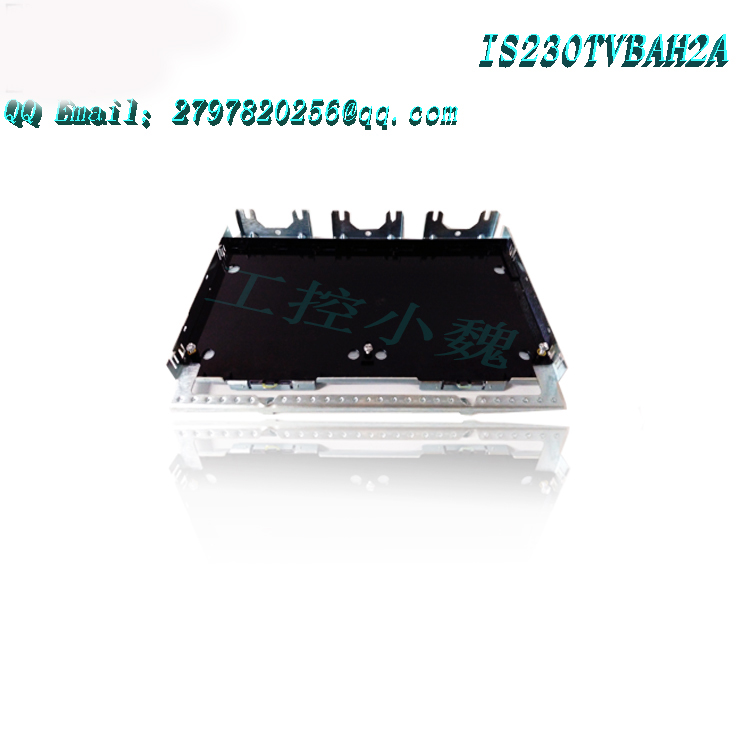
Connector: On the other side of the board, there are three 37 pin female connectors. These connectors are used as interfaces to connect external devices or other components to I/O modules. They allow seamless transmission of signals and data between modules and connected devices.
Plug connector: With two plug connectors, providing additional connection options. These connectors can be used to connect with other compatible modules or devices, expanding the versatility and integration capabilities of I/O systems.
Compatibility between metal carrier and DIN rail: Installed in a metal carrier, providing physical protection and support for the module. The metal carrier is designed to be compatible with DIN rails and can be easily and safely installed on standard DIN rails commonly found in industrial environments. This ensures the correct installation and integration of the module into the entire system setup.
Chassis grounding: Equipped with factory made holes for chassis grounding screws. These grounding screws are specifically designed for SCOM (grounding) purposes and should have the shortest possible connection. Proper grounding is crucial for electrical safety and mitigating any potential electrical interference or interference that may affect the performance of I/O modules and connected devices.-1.jpg)
I/O module characteristics
The I/O module consists of I/O packages installed on the terminal board. The I/O package includes the local processor running the QNX operating system and the data acquisition board. The terminal board includes on-site wiring terminal blocks and passive circuits that connect the terminal blocks to the I/O package.
In case of failure of the passive circuit of the module, the terminal block can be removed and the field wiring can be connected. Includes two fence style pluggable terminal blocks, each with 24 points. For circular connectors, each point can accept two 2.05 mm2 (0.081 in ²) # 12 AWG wires with an insulation voltage of 300 V. Fixed clips are also provided for terminating bare wires.
The center to center spacing of the screws is 9.53 millimeters (0.375 inches). T-shaped modules are usually base mounted and can accommodate multiple I/O packages. The box terminal block on the S-type module can accept one 2.05 mm2 (0.081 in 2) # 12 AWG wire or two 1.63 mm2 (0.064 in 2) # 14 AWG wires with an insulation voltage of 300 V per point. The center to center spacing of the screws is 5.08 millimeters (0.2 inches). The S-type module adopts DIN rail and base installation, with a single I/O package.
Installation
Installed on metal plate carrier: The components are installed together with plastic insulators on the metal plate carrier. The carrier provides structural support and protection for the components. The components and insulators are firmly fixed on the carrier to ensure stability during operation.
Install on DIN rail: Install the metal plate carrier with components and insulators on the DIN rail. DIN rails are commonly used as standardized methods for installing control and automation components in industrial environments. DIN rails ensure the safety and standardized installation of components.
Installed in the cabinet: In some cases, circuit boards with insulation components can be installed on metal plate components and then fixed to the cabinet with bolts. This method allows for a more organized and compact installation inside the cabinet, making it easier to access and maintain components.
Wiring: The connection to components is usually completed by directly connecting them to two sets of 48 terminal blocks. These connections typically use 18 AWG wires. The upper terminal (referred to as TB1) is connected to the relay section of the circuit board, while the lower terminal TB2 is connected to the contact input circuit. These wiring terminals provide safe and reliable connections for necessary wiring.-1.jpg)
Screw allocation and shielding termination: The screw allocation for the two sets of terminal blocks (TB1 and TB2) is the same as the screw allocation on the relay board and contact input terminal board. This standardization ensures consistency and simplicity of installation. In addition, when using shielded cables, the shielding layer should be properly terminated using its own bracket or grounding point to maintain proper grounding and minimize electromagnetic interference.
The DIN rail I/O module is an important component in the field of industrial automation, used to achieve connection with industrial production processes. It is based on a backplane system that provides support for a large number of modules, providing various I/O functions, including AC power, and even intrinsic safety signals within the same node. This module has an “open” architecture and can communicate with various different fieldbuses by selecting the appropriate Bus Interface Module (BIM).
The main function of I/O modules is to provide data transmission services between field devices. The input module receives signals from the transmitter and sensors, and converts them into digital instructions to be sent to the bus interface module. The output module receives instructions from the bus interface module and transmits them to the actuator. These modules typically have 4, 8, or 16 field channels, providing great flexibility for industrial automation.
In addition, DIN rail I/O modules have good compatibility and can adapt to various sizes of DIN rail adapters, making them easy to install on rails or racks with multiple slots. This design makes the layout and configuration of modules more flexible and efficient.
Overall, DIN rail I/O modules play a crucial role in the field of industrial automation. They are one of the key components for achieving industrial automation control, which can improve production efficiency, reduce maintenance costs, and enhance the stability and reliability of the overall system.
Frequently asked questions
What is IS230TCISH6C?
It is a DIN rail I/O module manufactured and designed by General Electric
What is an I/O package?
The I/O package is a component of the Mark VIe I/O module, which includes a local processor running the QNX operating system and a data acquisition board.
What is a terminal board?
The terminal board is a component of the Mark VIe I/O module, which includes field wiring terminal blocks and passive circuits that connect the terminal blocks to the I/O package.
What if the passive circuit of the module malfunctions?
If the passive circuit of the module malfunctions, the terminal block can be removed and connected to the field wiring. This allows for easy replacement of faulty circuits without interrupting on-site wiring.
All products on this website are special products, and market prices have been fluctuating,
The specific customer service quotation shall prevail, as the product is a new product and the price is not genuine,
Please confirm the model, product, price, and other detailed information with customer service before placing an order. The website has been used,
The new one is for sale, please contact customer service to communicate.
Warehouse stock recommendation:
IS200JPDEG1A
IS200VPROH1BEF
IS200VPROH2B
IS200VPROH2B
IS200VPWRH1AHD
IS200VPROH1BEF
IS200VPROH2B
IS420ESWBH3AX
IS220PDIAH1BE
More……
-300x300.jpg)
admin –
IS230TCISH6C | In-depth Analysis of the GE Mark VIe DIN Rail I/O Module
As a core component of the GE Speedtronic Mark VIe/VIeS control system, the IS230TCISH6C module focuses on high-reliability discrete signal acquisition and redundant communication, and is widely used in industrial automation and turbine control scenarios. The following analysis covers four aspects: technical characteristics, system integration, application scenarios, and maintenance support.
I. Core Technical Characteristics
Signal Processing Capabilities
Multi-type Input Compatibility: Supports 24-channel isolated contact inputs (such as buttons, limit switches, and sensor trigger signals), adaptable to 125V DC/24V DC industrial field switch signals. Inter-channel isolation voltage is 1500Vrms, system-side isolation is 2500Vrms, built-in EMC filtering circuit, and complies with IEC 61000-4 immunity standards.
Redundancy and Response: Employs TMR (Triple Modular Redundancy) design to ensure that a single point of failure does not affect the overall system operation; maximum response time is 25ms, supporting both hardware filtering (4ms) and software filtering mechanisms.
Physical Specifications: Dimensions 17.8cm × 33.02cm, weight 2.7kg, supports DIN rail mounting; operating temperature -30℃ to 65℃, IP20 protection standard, suitable for high dust and high vibration environments. Input voltage 24V DC, current 1A, dimensions 170mm × 157mm × 153mm, surface mount technology, temperature range -30℃ to +65℃.
Communication and Interface:
Connects to the TCAT terminal board via a 68-pin cable, adaptable to simplex/duplex/TMR system architectures; equipped with dual 10/100BaseT Ethernet ports, supports IONet redundancy protocol, automatically switching links in case of network failure.
The physical interface includes three 37-pin sub-D connectors, two terminal blocks (TB1/TB2), and integrates 25 metal oxide varistors for overvoltage protection. 120 pluggable European terminals provide field I/O connections, and the JGPA auxiliary board provides shielded terminals (green) and a 24V DC output terminal (orange).
II. System Integration and Compatibility
Integration with Mark VIe Systems: Connects to the R/S/T controller network via PR1/PR2, PS1/PS2, and PT1/PT2 interfaces, supporting I/O packet configuration, firmware upgrades, and status monitoring via ToolboxST software. Compatible with TCAT terminal boards and Mark VIe series controllers, and adapted to TMR redundant architecture.
Protocol Support: Compatible with industrial protocols such as Modbus and CAN, supporting integration with DCS and SCADA systems for remote monitoring and data acquisition.
Expansion Capabilities: Modular design supports hot-swapping, expandable to 7 modules to adapt to different application scenarios.
III. Application Scenarios and Value
**Core Industrial Scenarios**
**Gas Turbine/Steam Turbine Control:** Monitors key parameters such as start-up/shutdown status, overspeed protection, and vibration alarms, supporting PID closed-loop control and fail-safe mechanisms. For example, in combined cycle power plants, real-time acquisition of switching signals ensures continuous system operation.
**Industrial Automation:** Acquires switching signals (such as valve status and equipment start-up/shutdown) in production lines, supporting PLC control logic and fault diagnosis; adaptable to the high reliability requirements of petrochemical, steel metallurgy, and rail transportation industries.
**Power Systems:** Integrates with SCADA systems to achieve remote monitoring, data acquisition, and event logging, ensuring stable grid operation; used in generator excitation control cabinets (such as the EX2100 excitation system) to coordinate excitation regulation and voltage stability.
**Specialty Industry Expansion:** Suitable for harsh environments such as semiconductor manufacturing and aerospace, adaptable to explosion-proof, dust-proof, and high-vibration scenarios; supports redundant system architecture to ensure that single-point failures do not affect overall operation.
IV. Maintenance and Support
Reliability Guarantee: MTBF ≥ 100,000 hours; industrial-grade design ensures long-term stable operation. Built-in self-diagnostic functions (channel-level short/open circuit detection, electronic ID verification, internal temperature alarm), combined with LED status indicators for rapid fault location.
Regular Maintenance Recommendations: Check module status via LED status lights; maintain cabinet ventilation and cleanliness; regularly perform firmware upgrades and calibrations to ensure stable performance.
Summary: The IS230TCISH6C, with its highly reliable discrete signal acquisition, TMR redundant architecture design, and industrial-grade environmental adaptability, has become a core component of discrete I/O in Mark VIe systems. Its precise signal control and reliable fail-safe mechanisms significantly improve the safety and operational efficiency of industrial control systems.
https://www.weikunfadacai1.com/product/is230tcish6c-ge/