
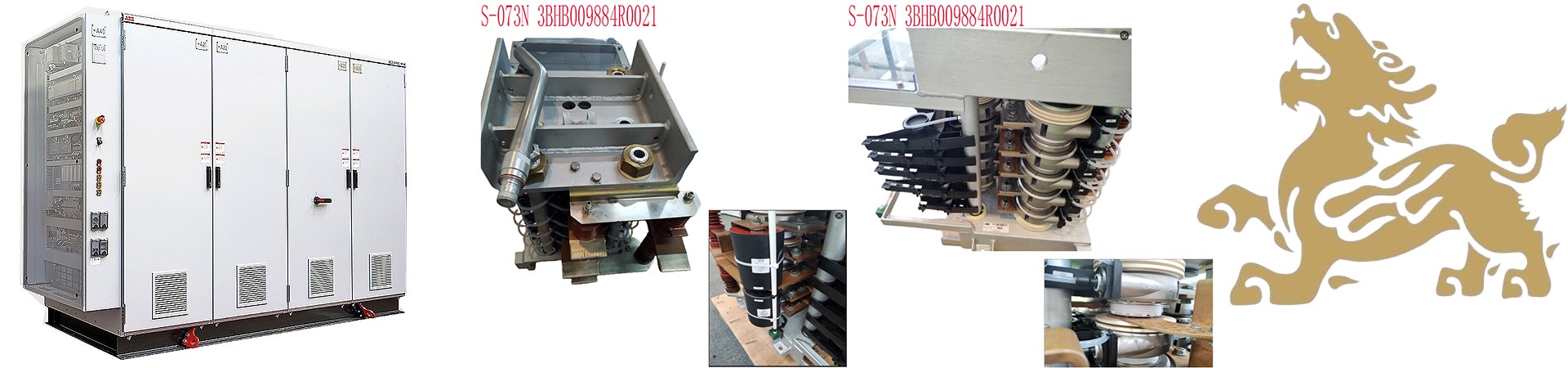
.jpg "PPD512 A10-15000 3BHE040375R1023(1)")
.jpg "PPD512 A10-15000 3BHE040375R1023(2)")
.jpg "PPD512 A10-15000 3BHE040375R1023(3)")
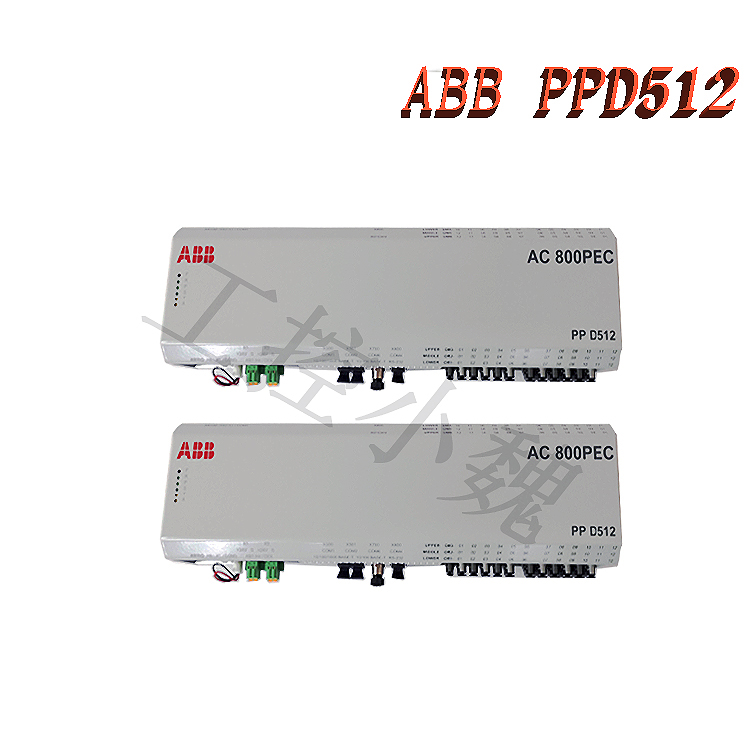
Description
Many products are not yet on the shelves. Please contact us for more products.
If the product model is inconsistent with the display picture, the model shall prevail. Please contact us for specific product pictures, and we will arrange to take photos in the warehouse for confirmation.
We have 76 shared warehouses around the world, so sometimes it may take several hours to accurately return to you, please understand. Of course, we will respond to your concerns as soon as possible.
PPD513AOC-100440 3BHE039724R0C3D 800 D513 Other names:
Excitation controller unit PPD513AOC-100440 3BHE039724R0C3D 800 D513
PPD513AOC-100440 3BHE039724R0C3D 800 D513 Central processor unit
Analog unit PPD513AOC-100440 3BHE039724R0C3D 800 D513
Product Overview
Brand and series: This product belongs to the AC800PEC series controller of ABB.
Material code: PPD513AOC-100440 3BHE039724R0C3D 800 D513 which is the unique identifier of the product.
Category: PLC programmable controller, used in the field of industrial automation control.
Product Features
Structural form: Time-sharing management linearization, this structure helps to improve the processing efficiency and stability of the controller.
Output frequency: standard kHz, meeting the needs of general industrial automation control.
I/O points: analog output, with I/O modules such as SM1232, 4AO, etc., which can be flexibly configured to meet different control needs.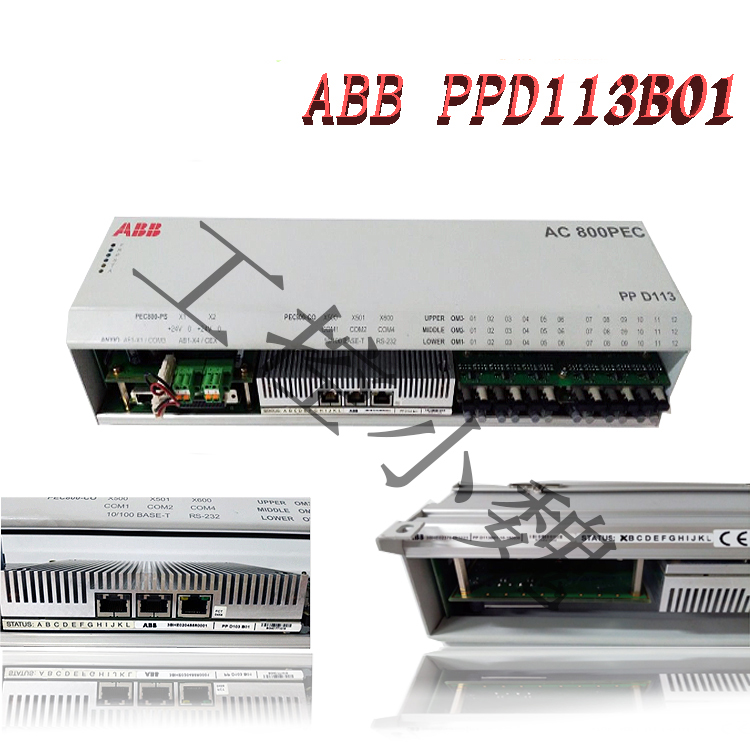
Installation method: plug and play, which simplifies the installation and debugging process and improves work efficiency.
Working voltage: standard voltage range, suitable for a variety of industrial environments.
Product certification: After original factory certification, the quality and reliability of the product are guaranteed.
Modular design: The AC 800PEC series adopts modular design, which is convenient for users to add or remove modules according to actual needs.
High performance: The control device has an extremely high processing speed and is suitable for occasions that require fast response and precise control.
Communication capability: Supports multiple communication protocols and interfaces, such as Ethernet, RS-232/RS-422 serial ports, etc., which is convenient for communication with other control devices and systems.
Programming environment: ABB Control Builder M programming environment based on IEC 61131-3 standard, and optimized rapid application code development environment based on MATLAB®/Simulink® and RealTime Workshop® provide users with powerful programming support.
Integration: AC 800PEC is fully integrated into ABB’s ControlIT software environment, which facilitates system integration and unified management.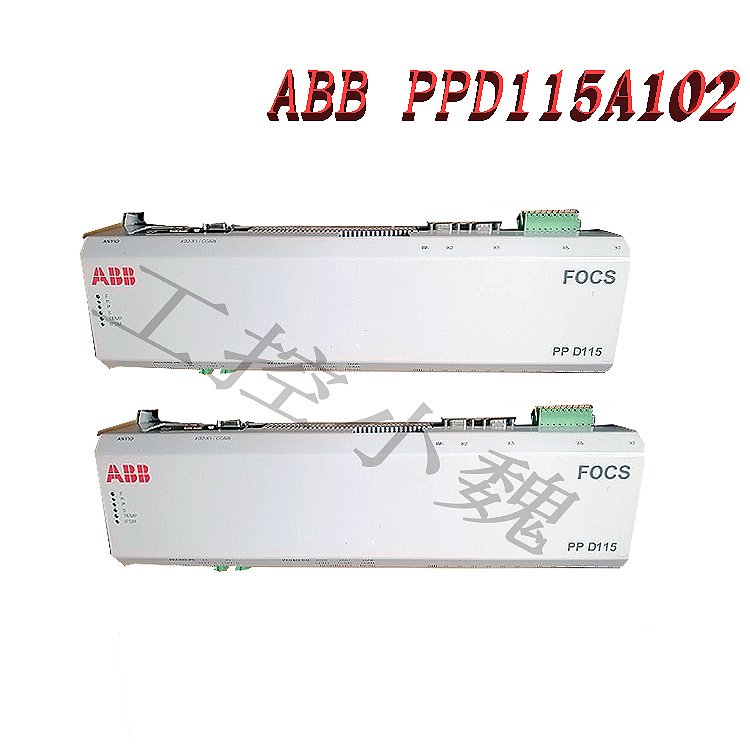
Remote I/O expansion: ABB’s remote input/output (I/O) expansion units allow users to monitor and control equipment in decentralized locations. These expansion units can be connected to the main controller via Industrial Ethernet or other types of communication networks.
Rich communication interfaces: Provide multiple communication interfaces to support connection and communication with other devices, making it easy for users to build complex control systems.
Excellent connectivity:
Supports up to 36 bidirectional fiber optic PowerLinks.
It has two Ethernet ports for connecting to plant control networks, other processor modules, etc.
It provides RS-232/RS-422 serial ports for local process panels and service terminals.
Equipped with up to two onboard AnyIO ports for optical PowerLink and ABB S800 optical module bus.
Programming and Integration:
ABB Control Builder M programming environment based on IEC 61131-3 standard.
Can be integrated with MATLAB®/Simulink® and RealTime Workshop® to optimize rapid application code development.
Fully integrated into ABB’s ControlIT software environment.
Application and Optimization
Hardware Optimization: AC 800PEC hardware is optimized for power electronic control, and the optical connection between the controller and process I/O is used for fast peripheral I/O devices for control and measurement. Programs and data are stored in flash memory, without backup battery, compatible with standard ABB S800 I/O devices, suitable for field installation.
Software Programming: Programming based on ABB Control Builder M programming environment based on IEC 61131-3 standard. At the same time, it supports optimized rapid application code development based on MATLAB®/Simulink® and RealTime Workshop®.
Integrated environment: AC 800PEC is fully integrated into ABB’s ControlIT software environment for easy system management and monitoring.
Application areas
AC 800PEC control device PPD513AOC-100440 3BHE039724R0C3D 800 D513 is widely used in industrial automation control fields that require high performance, high reliability and flexible configuration, such as power, petroleum, chemical, metallurgy and other industries. Its modular design allows the system to be expanded and upgraded according to actual needs to meet the changing needs of industrial automation.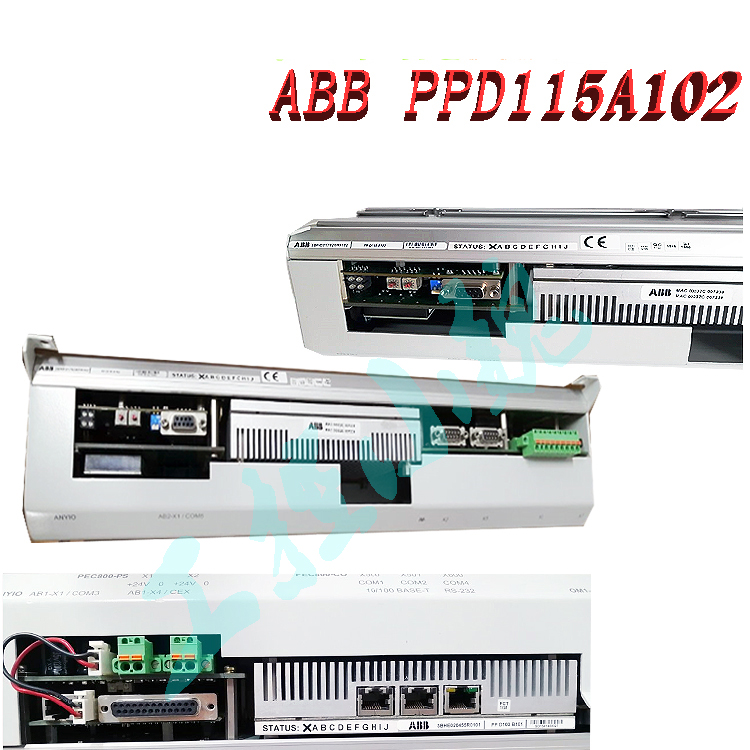
Power electronics control: The control device is particularly suitable for the control of power electronic equipment, such as high-power rectifiers, micro turbines, wind turbines, traction drives and battery energy storage systems.
Industrial automation: In the field of industrial automation, AC 800PEC control devices can be used for monitoring and control of various industrial processes to improve production efficiency and product quality.
Company background
ABB company profile: ABB (Abb Co., Ltd.) is a global leading electrical and automation technology company headquartered in Zurich, Switzerland. Its business covers more than 100 countries around the world and has about 105,000 employees. ABB is committed to promoting technological innovation and industrial transformation, and providing customers with efficient, reliable and sustainable solutions.
ABB in China: ABB’s business in China began in 1907, and now has a full range of business activities in China, including R&D, manufacturing, sales and engineering services. ABB’s products and services are widely used in China’s industrial, commercial, power and public utilities fields, and have made important contributions to China’s national key project construction.
In summary, AC 800PEC control device PPD513AOC-100440 3BHE039724R0C3D 800 D513 is a high-performance, modular programmable controller module launched by ABB, suitable for power electronic control and industrial automation and other fields. Users can choose to purchase according to actual needs and enjoy the powerful programming support and system integration services provided by ABB.
All products on this website are special products, and the market price has been fluctuating.
Specifically subject to customer service quotation, because the product is a new product, the price is not real,
Please confirm the model and product, price and other details with customer service before placing an order, the website has been used,
New ones are on sale, please contact customer service for communication.
Related product recommendations:
PPD517A3011 3BHE041576R3011
PPD517 3BHE041576R3011
3BHE040375R103E PPD115
PPD539A102 3BHE039770R0102
3BHE057901R0101 PCD235
3BHE039724R0C3D PPD513AOC-100440
PCD235C101 3BHE057901R0101
GFD563A102 3BHE046836R0102
GFD233A101 3BHE022294R0101
GFD563A101 3BHE046836R0101
GFD563A102 3BHE046836R0102
GF D563 3BHE046836R010
PPD512 A10-15000 3BHE040375R1023
More……
-300x300.jpg)
-300x300.jpg)
admin –
Installation method: plug and play, which simplifies the installation and debugging process and improves work efficiency.
Working voltage: standard voltage range, suitable for a variety of industrial environments.
Product certification: After original factory certification, the quality and reliability of the product are guaranteed.
Modular design: The AC 800PEC series adopts modular design, which is convenient for users to add or remove modules according to actual needs.
High performance: The control device has an extremely high processing speed and is suitable for occasions that require fast response and precise control.
Communication capability: Supports multiple communication protocols and interfaces, such as Ethernet, RS-232/RS-422 serial ports, etc., which is convenient for communication with other control devices and systems.
Programming environment: ABB Control Builder M programming environment based on IEC 61131-3 standard, and optimized rapid application code development environment based on MATLAB®/Simulink® and RealTime Workshop® provide users with powerful programming support.
admin –
PPD513AOC-100440 | Comprehensive Analysis of the ABB AC800PEC Excitation Control Unit
Core Positioning and Technical Features
System Affiliation: This module is part of the ABB AC800PEC high-end control system and serves as the core module for generator excitation control. It integrates IGCT (Insulated Gate Commutation Transistor) technology, combining the low losses of thyristors with the high-frequency switching characteristics of transistors, making it suitable for high-power power electronics devices (such as 3300V/4500V systems).
Core Function: It precisely regulates the generator rotor excitation current through a closed-loop PID algorithm, achieving voltage stability (fluctuation ≤ ±0.5%), optimizing reactive power, and improving dynamic response. It supports a redundant, hot-swappable design with a master/slave module switchover time of ≤20ms, ensuring continuous system operation.
Hardware Design:
Modular Structure: Dimensions approximately 150mm × 100mm × 450mm, weight 2.8kg, IP20/IP54 protection rating, and is suitable for harsh environments ranging from -40°C to +70°C.
Interface Configuration: Supports Ethernet, RS485, Modbus TCP/IP, Profibus DP, CAN bus, and PROFIBUS DP protocols; compatible with ABB 800xA systems.
Electrical Parameters: Input voltage AC 220V (wide range 110-240V), output DC 0-250V/0-10A, control accuracy ±0.5%, response time ≤10ms; dual-core PowerPC processor, 512MB SDRAM, 128MB Flash storage.
Application Scenarios and Industries
Power Industry: Excitation control of hydropower, thermal power, and wind turbine generators, dynamic reactive power compensation for power grids, and substation voltage stabilization.
Industrial Automation: Metallurgical rolling mills, petrochemical process control, compressor/pump load speed regulation, and arc furnace power factor optimization.
Special Applications: Marine propulsion systems, rail transit traction motor control, grid-connected inverters for new energy vehicles, and industrial motor drives.
Typical Applications: Power plant generator sets, high-voltage direct current (HVDC) converter stations, and dynamic reactive power compensation devices (such as STATCOM).
Technical Advantages and Innovations
IGCT Integration: Combining the high blocking voltage of thyristors with the fast switching characteristics of transistors, it is suitable for high-power applications and reduces losses by approximately 50%.
Redundancy and Self-Diagnostics: Dual-channel configuration supports online hot swapping; built-in fault code storage, real-time status monitoring, and a remote diagnostic interface are compatible with SCADA systems.
Communication and Expansion: Supports protocols such as OPC UA, Modbus TCP, and IEC 61850, is expandable to 1024 I/O points, and is compatible with ABB S800 I/O modules and third-party devices (such as Siemens PLCs).
Software Support: Compatible with ABB Control Builder, Automation Builder, and CODESYS platforms, supports IEC 61131-3 standard programming, and can automatically generate control code.
Installation and Maintenance
Installation Requirements: DIN rail mounting ensures unobstructed heat dissipation and avoids electromagnetic interference sources (such as high-power motors). An independent overspeed protection device is required to comply with EMC standards (such as EN50082-2).
Maintenance Recommendations: Regularly check connector oxidation, capacitor aging, and cooling fan status. Firmware upgrades are recommended every two years to optimize control algorithms. Unauthorized modifications may void the warranty.
Troubleshooting: Use the LED indicators (such as RUN/ERR) to determine the status. A solid red light indicates a hardware failure and requires contacting the vendor’s technical support.