
Description
Please note that all products listed on this website are specialized items subject to frequent market price fluctuations.
The prices shown are not final; please consult our customer service team for accurate, up-to-date quotes. Before placing an order, kindly confirm the specific model, product details, and pricing with our representatives.
We offer both new and previously used equipment—please contact us to discuss your requirements.
The YOKOGAWA 16137-223 is a V-net transceiver control unit designed for the Yokogawa CENTUM VP and CENTUM CS3000 DCS (Distributed Control System) platforms. Serving as the core communication management module for the V-net control network, it handles signal scheduling, media conversion, message forwarding, and network fault management. It acts as a critical communication component, facilitating real-time data exchange between Field Control Stations (FCS), operator stations, and engineering stations within the DCS.
I. Operating Principle
The 16137-223 features a dedicated V-net communication processing chip that centrally manages V-net transceivers. It supports both coaxial cable and fiber-optic transmission media, performing electrical-to-optical signal conversion, data frame verification, timing synchronization, and bus impedance matching. The module continuously monitors the communication status of the V-net link, performing error detection and managing message retransmission. In the event of a link disconnection, signal distortion, or transceiver malfunction, an integrated isolation mechanism automatically disconnects the faulty network segment, preventing the issue from spreading across the entire V-net network, while simultaneously reporting fault codes and channel status to the higher-level DCS system. Through the use of DIP switches, the module defines the network topology, node address, and transmission medium type. Working in conjunction with the backplane bus and the V-net bus, it ensures deterministic, real-time communication within the DCS, enabling the bidirectional transfer of commands and process data between controllers, human-machine interface (HMI) stations, and remote I/O racks.
II. Product Advantages
Dual-Medium Compatibility and Flexible Networking: Supports both coaxial copper cables and fiber optics. Transmission media can be selected based on site distance and electromagnetic environment; fiber optics can be used for long-distance connections, effectively extending the V net coverage range.
Automatic Fault Isolation and High Network Fault Tolerance: Features independent network segment isolation, ensuring that a communication failure at a single point does not paralyze the entire network. This significantly reduces the risk of unplanned DCS system downtime and enhances control system availability.
Deterministic Real-Time Communication: Equipped with a dedicated V net protocol processing chip, it offers low latency and high synchronization. It meets the stringent real-time requirements of closed-loop control in the process industry and ensures a low data packet loss rate.
Industrial-Grade Interference Resistance: Features a reinforced PCB substrate and comprehensive electromagnetic shielding. It is designed to withstand harsh operating conditions—such as dust, humidity, and strong electromagnetic interference—and supports a wide temperature range, making it suitable for continuous, uninterrupted operation.
Simple Configuration via DIP Switches: Basic parameters are configured using DIP switches, eliminating the need for complex software setup and simplifying the processes for commissioning and spare parts replacement.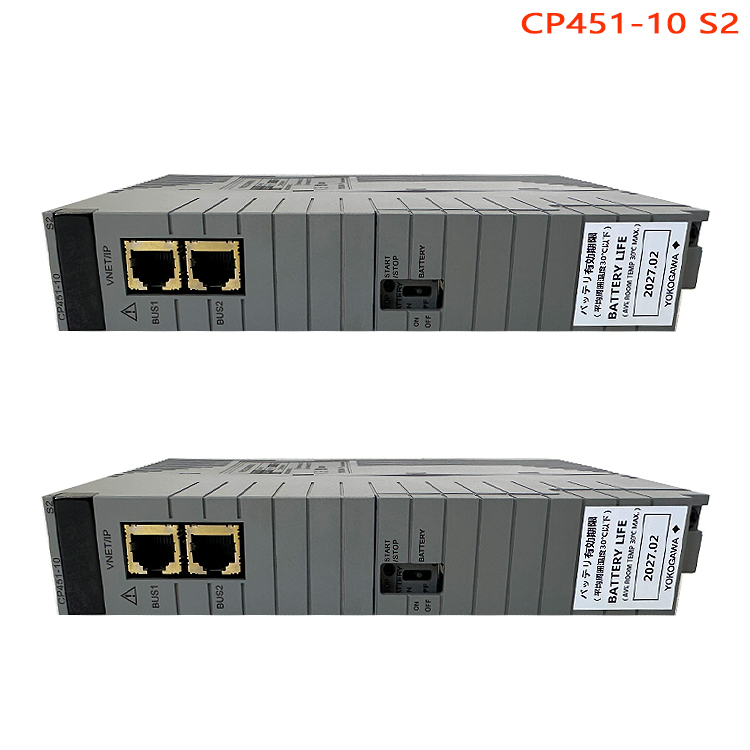
Standard Plug-in Design: Designed as a rack-mountable module, it supports hot-swapping for maintenance and is easy to install or remove. It is compatible with standard Yokogawa DCS racks, ensuring excellent compatibility when upgrading or retrofitting existing CENTUM systems.
Comprehensive Self-Diagnostics: Real-time monitoring of transceivers, links, and power supply status. Fault information is automatically reported, allowing maintenance personnel to quickly pinpoint the source of communication anomalies.
III. Industry Applications
Petrochemical and Coal-Chemical Industries: Ensures the stability of the DCS control network for industrial units. It provides reliable transmission of process parameters—such as temperature, pressure, liquid level, and flow rate—thereby securing the continuous, safe operation of reaction and distillation units and preventing process fluctuations caused by network interruptions. Thermal Power Generation and Cogeneration: Used for the V-net backbone communication within a unit’s Distributed Control System (DCS). It ensures the stable transmission of control commands and measurement data for boilers, steam turbines, and auxiliary equipment, supporting unit load regulation and interlock monitoring.
Metallurgy: Adapted for DCS networks in smelting and rolling mill automation. It provides resistance against electromagnetic interference (EMI) generated by high-power variable-frequency drive (VFD) equipment, ensuring reliable exchange of control signals for rolling and heating processes.
Oil & Gas Extraction and Long-Distance Pipelines: Fiber-optic networking solutions facilitate communication between remote field stations, isolating the system from complex on-site interference and ensuring stable network connectivity for pipeline pressure monitoring and remote valve assembly control.
Pharmaceuticals and Fine Chemicals: Meets the DCS communication requirements for continuous processes and cleanroom environments. It ensures real-time transmission of data for batch control and recipe adjustments, satisfying the high-stability demands of continuous production.
New Energy and Waste-to-Energy: Suitable for DCS retrofit projects in power plants and waste incineration facilities. It enables the integration of new and legacy systems, supporting the automated monitoring of incinerators and waste-heat recovery boilers.
IV. Operating Procedures
Pre-installation Inspection: Unpack the unit and verify the model (16137-223). Inspect the board for physical damage or oxidation on the gold-plated edge connectors. Ensure that the supporting rack, V-net cables, and fiber-optic transceivers are compatible with the specific version of the CENTUM system. Perform all work while the equipment is powered off.
DIP Switch Configuration: Configure the DIP switches on the side of the board based on the project’s V-net topology, communication medium type, and node rules. Document the switch settings to prevent address conflicts.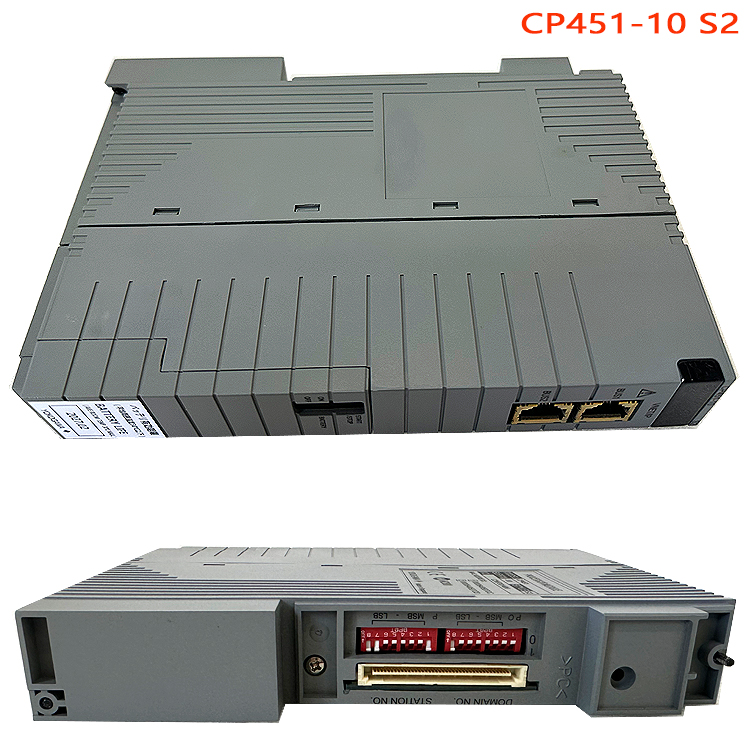
Rack Installation: Align the 16137-223 module with the rack slot and slide it in steadily. Secure the locking clips to ensure reliable contact with the backplane connector. If a redundant configuration is required, install the modules in pairs in accordance with Yokogawa’s V-net redundancy specifications. Wiring: Connect the V net coaxial cables or fiber-optic links according to the system diagrams and ensure they are properly labeled. For coaxial cables, pay close attention to terminal impedance matching. Connect the grounding wire to the cabinet’s equipotential grounding busbar.
Power-up and Commissioning: After verifying that all wiring is correct, power on the system and observe the status of the module’s RUN, COM, and FAULT indicators. Log in to the DCS engineering station to check the V net network status, ensuring that nodes are online and there are no communication errors.
Online Verification: Perform point read/write tests and cross-station data exchange tests to confirm that control commands and acquired data are being transmitted correctly. Once commissioning is complete, retain records of the configuration and DIP switch settings.
Replacement and Maintenance: Online replacement of spare parts is supported. After installing the new module and ensuring its DIP switch settings match those of the original unit, complete the replacement and verify the network status.
V. Precautions
Always power down the equipment before performing installation or modifying DIP switch settings. When performing online replacement, strictly adhere to DCS shutdown risk assessment protocols to prevent accidental operations that could disrupt the process.
For coaxial V net buses, proper terminal impedance matching is mandatory; impedance mismatches can lead to signal reflection, communication jitter, and intermittent packet loss. For fiber-optic links, ensure that the fiber end-faces are clean, as dust can cause insufficient optical power.
DIP switch settings must strictly match the system diagrams. Do not alter these settings arbitrarily, as doing so may cause network conflicts, nodes to go offline, or communication interruptions.
Ensure reliable cabinet grounding, with grounding resistance meeting Yokogawa DCS specifications. Do not share a grounding circuit with variable-frequency drives (VFDs) or high-power electrical equipment to avoid common-mode interference.
Install modules in environments free from corrosive gases, standing water, or severe vibration. Regularly inspect the status of the indicator lights, log any fault alarms, and proactively check for issues such as aging links or loose connectors. When storing spare parts, ensure proper moisture-proof and anti-static measures are in place. Wear an anti-static wrist strap during handling to prevent electrostatic discharge (ESD) from damaging communication chips on the circuit boards. Dispose of decommissioned modules in accordance with regulations for industrial electronic waste.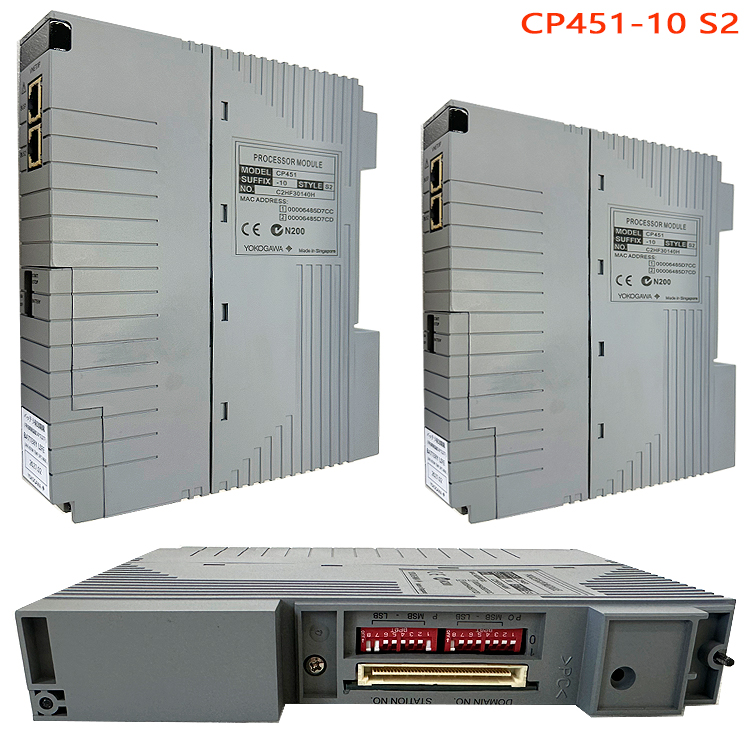
The 16137-223 is a dedicated transceiver control card for the V net network; it cannot be used as a substitute for analog input or digital I/O modules. When selecting components, verify compatibility with the CENTUM system hardware version to avoid network integration issues caused by version mismatches.
Redundant architecture configurations must adhere to Yokogawa’s official V net redundancy design specifications. Do not alter the topology of redundant links, as doing so may compromise the reliability of failover operations.
Recommended products:
Yokogawa ALR121-S00
Yokogawa AMM42
Yokogawa ANB11D-215
Yokogawa ANR10D
Yokogawa ANT502-50 S1
Yokogawa ATK4A-00
Yokogawa ATK4A-00 S1
Yokogawa AVR10D-A22010
Yokogawa CP451-10
Yokogawa CP451-10 S2
More……


Reviews
There are no reviews yet.