
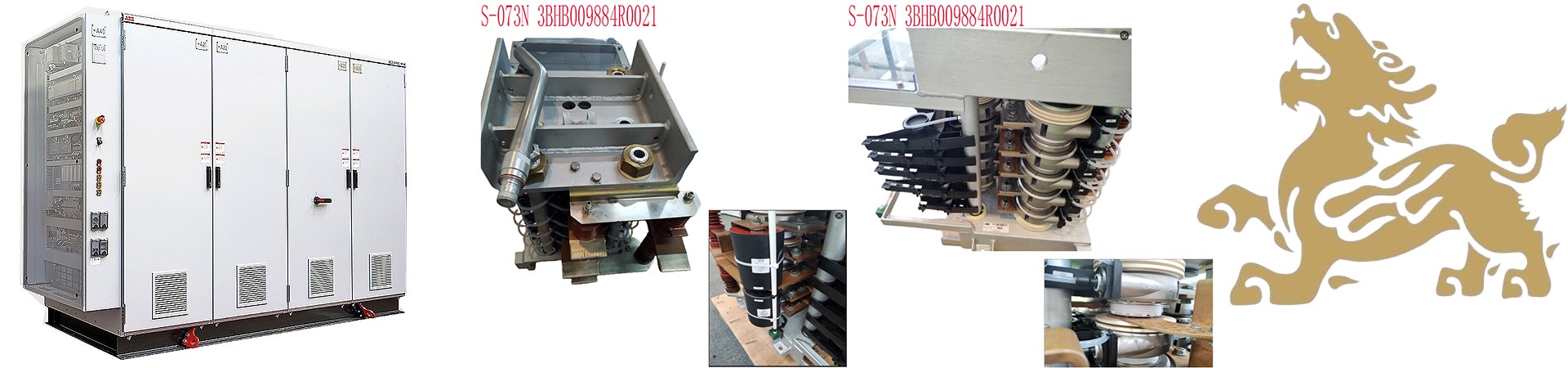
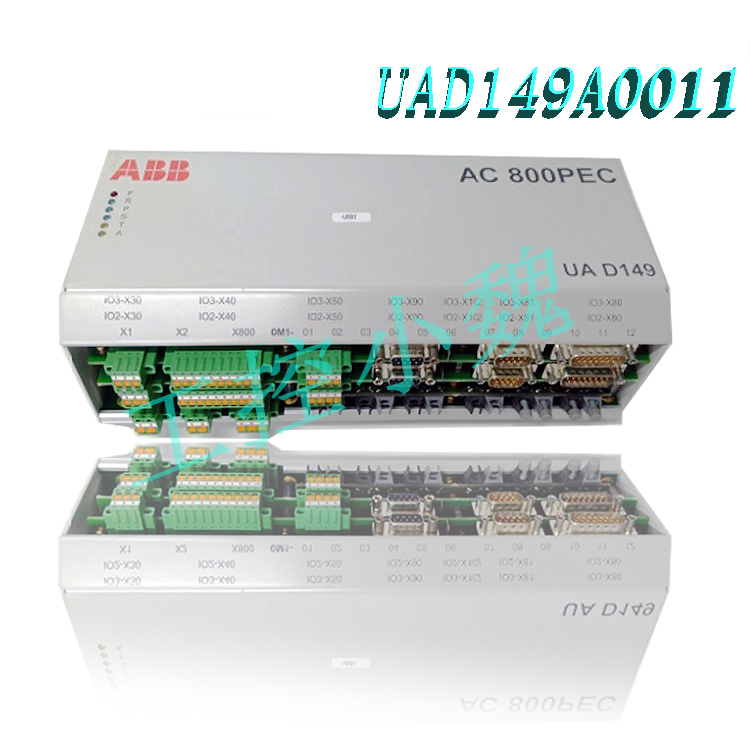
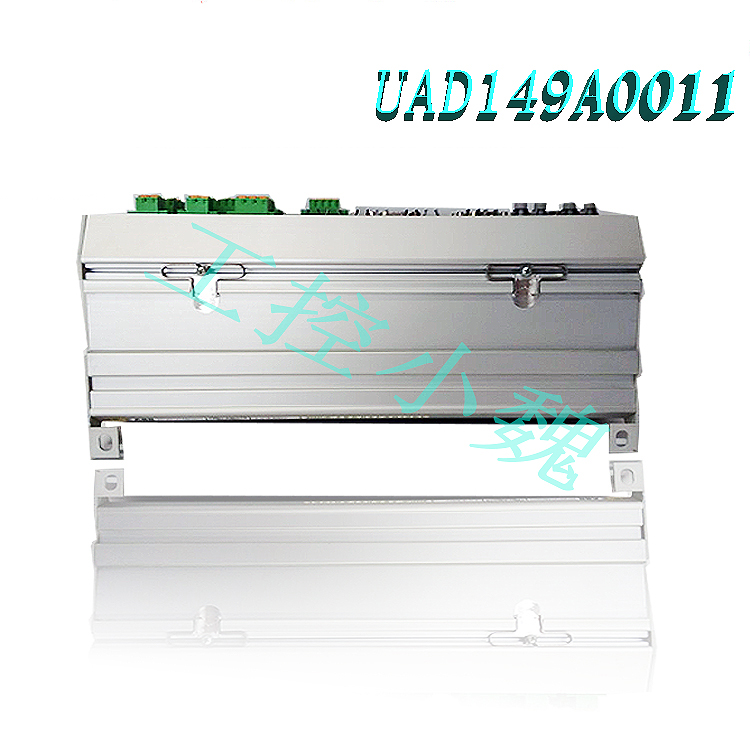
Description
Many products have not been listed yet. For more products, please contact us
If the product model is inconsistent with the displayed image, the model shall prevail. Please contact us for specific product images, and we will arrange to take photos in the warehouse for confirmation.
We have 16 shared warehouses worldwide, so sometimes it may take several hours to accurately return to you. We apologize for any inconvenience caused. Of course, we will respond to your concerns as soon as possible.
3BHE029110R0111 Other names:
Signal unit module 3BHE029110R0111
3BHE029110R0111 Input/Output Module
Editable Control 3BHE029110R0111
3BHE029110R0111 excitation control board is a circuit board used to control the excitation system of synchronous generators. The excitation system is an important component of the generator, used to provide the required excitation current to control the output voltage and reactive power of the generator.
The 3BHE029110R0111 excitation control board usually has the following characteristics:
Programmable and configurable:The 3BHE029110R0111 excitation control board usually has programmable functions, which can be configured and adjusted according to different application requirements. This allows users to optimize the performance and control strategy of the excitation system based on specific generator and power system parameters.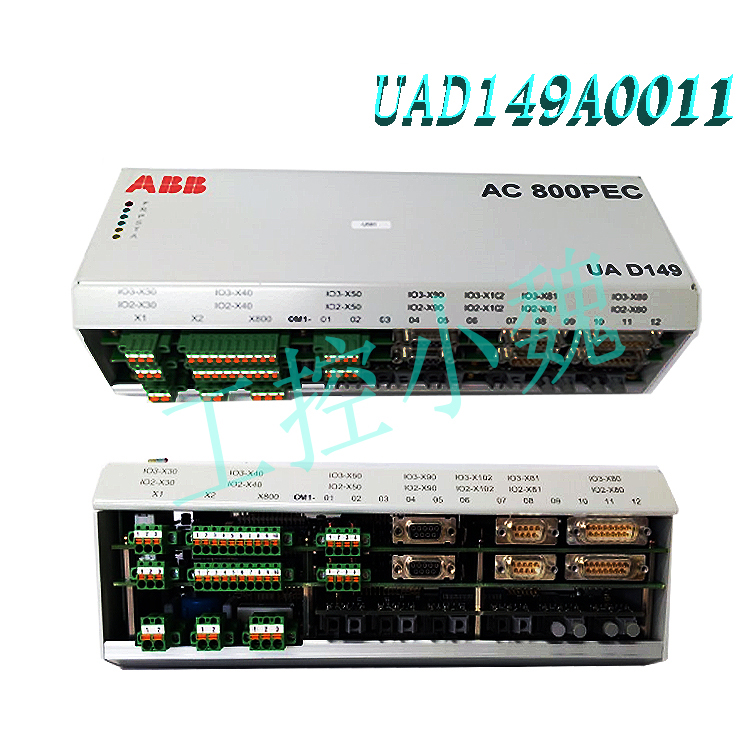
Advanced control algorithms: The 3BHE029110R0111 excitation control board adopts advanced control algorithms such as Automatic Voltage Regulation (AVR) and Automatic Reactive Power Regulation (AQR) to accurately control the output voltage and reactive power of the generator. These algorithms can be adjusted in real-time according to the real-time conditions of the power system, ensuring the stable operation of the generator.
Communication and interface functions: The 3BHE029110R0111 excitation control board usually has communication and interface functions and can communicate with higher-level monitoring systems, other control equipment, or PLCs. This allows users to monitor and adjust the excitation system in real-time through remote monitoring and control, improving the flexibility and reliability of the system.
High reliability and stability: The 3BHE029110R0111 excitation control board is designed as a highly reliable and stable equipment, suitable for various harsh industrial environments. It usually uses high-quality materials and advanced production processes to ensure stable performance during long-term operation.
It should be noted that the specific configuration and application methods depend on the actual industrial environment and requirements. When using the 3BHE029110R0111 excitation control board, it is recommended to collaborate with professional engineers or system integrators to ensure the correct configuration and optimal performance of the system.
All products on this website are special products, and market prices have been fluctuating,
The specific customer service quotation shall prevail, as the product is a new one and the traps are not real,
Please confirm the model, product, price, and other detailed information with customer service before placing an order. The website has been used,
New for sale, please contact the website https://www.weikunfadacai1.com/ Customer service communication.
Recommended excitation system models:
GFD563A101
GFD563A101 3BHE046836R0101
GFD563A102
GFD563A102 3BHE046836R0102
GF D563 3BHE046836R010
GFD233A103
GFD233A
GFD233A 3BHE022294R0103
PPD512A10-454000 3BHE040375R103E
3BHE040375R103E
PPD539A102 A
PPD539A102 A800PEC
UAD149A0011 3BHE014135R0011
UAD149A0011 3BHE014135R0011
UAD149A0011 UAD149A00-0-11
AC800PECUAD149A0011
PM864AK01-eA
PM864AK01-eA 3BSE018161R2
PM865K01
PM865K01 3BSE031151R1
more……
-300x300.jpg)
-1-300x300.jpg)
admin –
3BHE029110R0111 excitation control board is a circuit board used to control the excitation system of synchronous generators. The excitation system is an important component of the generator, used to provide the required excitation current to control the output voltage and reactive power of the generator.
admin –
Product Positioning and Core Functions
Core Identity:This high-performance control and signal processing module (model UAD155A0111) belongs to ABB’s industrial automation systems. It is specifically designed for power plant control systems, process automation, and high-reliability industrial networks, and is compatible with ABB 800xA systems and DCS/PLC architectures. The module integrates high-speed data processing, multi-protocol communication, and redundancy design, supporting complex industrial control scenarios.
Core Functions:
Signal Processing: Supports pulse signal counting, frequency/period measurement, filtering, and frequency conversion. It is compatible with 4-20mA and 0-10V analog signals, and adapts to sensors, counters, and other devices.
Communication Capabilities: Integrates Modbus TCP/RTU, Ethernet, and other protocols, supporting seamless integration with ABB DCS and PLC systems (such as the S800 IO series) and third-party devices (such as Siemens and Rockwell).
Redundancy Design: Dual redundant Ethernet interfaces, hot-swappable modules, and fault self-diagnosis functions ensure continuous system operation and rapid fault recovery.
Dynamic Control: Supports vector control, V/f control, and direct torque control (DTC) to meet high-precision requirements for motor speed regulation and torque control.
Technical Parameters and Characteristics
Electrical Performance:
Input/Output: Supports pulse input, analog input (4-20mA/0-10V), and digital I/O, with 16-bit resolution and an accuracy of ±0.1%.
Power Requirements: Compatible with 24V DC/120V AC, power consumption ≤50W, adaptable to industrial power fluctuations (±15%).
Environmental Adaptability: IP20/IP56 protection rating, operating temperature -30°C to +65°C, with a sulfur corrosion resistant conformal coating (IEC 721-3-3 standard), suitable for harsh environments such as salt spray, high humidity, and vibration.
Hardware Design:
Structural Dimensions: 17.6×56.7×42.3mm, weight 90g, supports DIN rail or panel mounting, modular design for easy expansion and maintenance.
Processor: 32-bit DSP digital controller, integrating hardware watchdog and real-time clock, supporting floating-point arithmetic and multitasking.
Certification Standards: CE, UL/cUL, IEC61508 SIL-2, compliant with explosion-proof (ATEX Zone 2) and classification society certifications (ABS, DNV-GL).
Application Scenarios and Value
Typical Applications:
Power Industry: Speed control of boiler blowers, water pumps, and circulating pumps; parallel control of generator sets to optimize energy consumption and operating efficiency.
Manufacturing: Production line automation (e.g., rolling mills, continuous casting equipment), process control (e.g., chemical reactors, packaging machinery) to ensure product consistency and production continuity.
Transportation: Railway signal control, port cranes, ship propulsion systems to improve operational efficiency and safety.
Building Automation: Air conditioning systems, lighting control, security equipment to achieve energy optimization and comfortable environment management.
Performance Advantages:
High Reliability: Industrial-grade design, MTBF ≥ 100,000 hours, supports online maintenance and hot-swapping.
Flexibility: Modular architecture supports functional expansion (such as adding I/O channels, communication modules), adapting to different control needs.
Maintenance: Built-in self-diagnostic function and status indicator lights support remote debugging and fault tracing, reducing downtime.
Installation and Maintenance Recommendations
Installation Specifications:
Mount to a DIN rail or metal plate, ensuring good grounding to avoid electromagnetic interference; the sensor installation position must be precisely aligned with the monitoring point.
Power lines must be independently wired, avoiding sharing lines with high-voltage equipment to prevent voltage fluctuations from affecting control accuracy.
Maintenance Requirements:
Regularly calibrate sensors and check the status of connection lines and interfaces; clean the module surface to avoid oil and dust affecting heat dissipation.
Back up historical data to an SD card or cloud for trend analysis and fault tracing; functional testing is recommended every six months.
Application Scenarios and Value
Typical Applications:
Power Industry: High-voltage motor speed control for boiler blowers, induced draft fans, water pumps, and circulating pumps; parallel control of generator sets and synchronous monitoring with the power grid.
Industrial Scenarios: Operating status control of large motors in rolling mills, continuous casting equipment, and electric arc furnaces; remote control and redundancy backup for oil and gas compressors and centrifugal pumps.
Special Environments: Equipment health management in explosion-proof areas (e.g., oil and gas platforms), high/low temperature environments, and high electromagnetic interference scenarios.
Performance Advantages:
High Reliability: Industrial-grade design, MTBF ≥ 100,000 hours; supports TMR architecture to reduce the risk of malfunctions.
Flexibility: Modular design supports functional expansion (e.g., adding I/O channels, communication modules) to adapt to different control requirements.
Easy Maintenance: Front panel LED status indicators and ToolboxST configuration tool support remote debugging and fault tracing, reducing downtime.
Installation and Maintenance Recommendations
Installation Specifications:
Mount the sensor on a DIN rail or metal plate, ensuring proper grounding to avoid electromagnetic interference; the sensor installation position must be precisely aligned with the monitoring point.
Power lines must be independently routed, avoiding sharing lines with high-voltage equipment to prevent voltage fluctuations from affecting control accuracy.
Maintenance Requirements:
Regularly calibrate the sensor and check the connection lines and interface status; clean the module surface to prevent oil and dust from affecting heat dissipation.
Back up historical data to an SD card or cloud for trend analysis and fault tracing; functional testing is recommended every six months.
Summary
The ABB 3BHE029110R0111 main control board is a core control component for industrial automation and power systems, integrating high-precision signal processing, redundant communication, and intelligent diagnostic functions. It is suitable for scenarios with extremely high system stability requirements, such as power, petrochemical, and metallurgical industries. Its modular design, strong scalability, and industry adaptability make it a key solution for industrial automation and energy management.
https://www.weikunfadacai1.com/product/3bhe029110r0111-main-control-board-abb/
admin –
3BHE029110R0111 (ABB Main Control Board) Technical Analysis and Industry Applications
This component is the ABB AC 800PEC series core controller board (model UA D155 A0111), specifically designed for industrial automation and power systems. It integrates high-precision signal processing, redundant communication, and intelligent diagnostic functions, making it suitable for high-reliability applications in power, petrochemical, and metallurgical industries. The following analysis covers its technical characteristics, compatibility, application scenarios, and maintenance specifications:
I. Core Technical Parameters and Characteristics
Hardware Architecture: Employs a 32-bit DSP digital controller, integrating a hardware watchdog and real-time clock, supporting floating-point operations and multitasking. Module dimensions are 17.6×56.7×42.3mm, weight 90g, supports DIN rail/panel mounting, IP20/IP56 protection rating, operating temperature -30℃ to +65℃, and features an anti-corrosion coating (IEC 721-3-3 standard), resisting salt spray, high humidity, and vibration environments.
Power Supply and Consumption: Compatible with dual 24V DC/120V AC power input, power consumption ≤50W, adaptable to ±15% industrial power fluctuations, redundant power supply design ensures continuous system operation in the event of a single power supply failure.
I/O Functions: Integrated 16-channel configurable DI/DO (software-selectable input/output), supports 24V DC signals, solid-state output with 0.5A current per channel, and features inter-channel electrical isolation; synchronously supports AI/AO analog signal acquisition and control, adaptable to continuous signal monitoring such as voltage, current, and temperature.
Communication and Expansion: Supports Modbus, Ethernet, and other protocols, compatible with ABB AC 800M controllers and CI500 series compact I/O systems, and can be seamlessly integrated with third-party systems such as Honeywell UCN and Foxboro DCS.
II. Industry Compatibility and System Integration
System Adaptation: As a core component of the AC 800PEC Combi IO Box, it is compatible with ABB 800xA systems, AC 800M controllers, and CI500 series I/O modules. It supports a triple modular redundancy (TMR) architecture, with a failure rate of <10⁻⁹, and complies with IEC 61508 SIL 3 safety certification, meeting the compliance requirements of high-risk industries such as nuclear power and chemical engineering.
Application Expansion: Supports long-distance fiber optic communication (up to 12km), adapting to distributed control systems (such as remote racks in ports and metallurgy), reducing cabling costs and improving anti-interference capabilities; the modular design supports hot-swapping, facilitating on-site maintenance and expansion.
III. Typical Application Scenarios
Power Industry: Used for speed control of high-voltage motors such as boiler blowers, induced draft fans, water pumps, and circulating pumps, optimizing energy consumption and improving equipment operating efficiency; supports grid fault ride-through (FRT) and grid compliance functions.
Industrial Automation: Enables precise torque control and dynamic response in scenarios such as rolling mills, continuous casting equipment, and electric arc furnaces; adaptable to remote control and redundancy backup of large compressors, centrifugal pumps, and transfer pumps.
Process Control: Used for signal acquisition and logic control of valves, sensors, and actuators in petrochemical, metallurgical, and rail transportation industries, ensuring production continuity and product consistency.
IV. Installation and Maintenance Specifications
Installation Requirements: Requires independent wiring to avoid sharing lines with high-voltage equipment; ensure proper grounding to reduce electromagnetic interference; sensor installation must be precisely aligned with monitoring points; DIN rail installation must ensure mechanical stability.
Maintenance Cycle: Perform functional testing every six months; periodically calibrate sensors and check the status of wiring interfaces; back up historical data to an SD card or cloud for trend analysis and fault tracing; clean module surfaces to prevent oil and dust from affecting heat dissipation.
Summary: As a core component of ABB's industrial control systems, the 3BHE029110R0111 meets the stringent requirements of key industries for process safety, production efficiency, and system flexibility through its high-reliability design, modular architecture, and cross-system compatibility.
https://www.weikunfadacai1.com/product/abb-ppd512a10-150000/
https://www.weikunfadacai1.com/product/woodward-8440-1809/
https://www.weikunfadacai1.com/product/woodward-8440-1800/
https://www.weikunfadacai1.com/product/woodward-8440-1878/?add-to-cart=7735
https://www.weikunfadacai1.com/product/abb-ppd113b03-26-100110-3bhe023584r2634-2/?add-to-cart=1333
https://www.weikunfadacai1.com/product/woodward-8440-1936-2/
https://www.weikunfadacai1.com/product/woodward-8440-1884/?add-to-cart=7725
https://www.weikunfadacai1.com/product/abb-hiee300890r0001-2/?add-to-cart=1313
https://www.weikunfadacai1.com/product/abb-hiee300890r0001-2/
https://www.weikunfadacai1.com/product/abb-hiee300890r0001-2/?add-to-cart=1313
https://www.weikunfadacai1.com/product/woodward-8440-1878/
https://www.weikunfadacai1.com/product/woodward-8440-1884/
https://www.weikunfadacai1.com/product/abb-3bhe017628r0102/
https://www.weikunfadacai1.com/shop/page/245/?add-to-cart=13983
admin –
ABB 3BHE029110R0111 Main Control Board Core Information
Technical Specifications and Functional Characteristics
Core Functions: As the logic pulse controller/excitation control module for the ABB AC 800PEC system, it supports pulse signal processing, counting, frequency measurement, filtering, and frequency conversion, and integrates HART protocol communication and real-time data processing capabilities.
Electrical Parameters: Input voltage 18-36V DC, typical power consumption 5W, operating temperature -40~70℃, protection rating IP20-IP54, compliant with CE, UL, and ATEX Zone 2 certifications, suitable for explosive hazardous environments.
Communication and Expansion: Supports Modbus, Ethernet, IEC 61850, Profibus, and other protocols; compatible with AC 800PEC/800xA systems; supports hot-swapping and modular expansion; adaptable to S800 I/O modules and bus architecture.
Control Capabilities: Used for automatic voltage regulation (AVR), excitation current control, and power system stabilizer (PSS) functions for synchronous generators, integrating over-excitation/under-excitation protection and short-circuit fault switching mechanisms.
Application Scenarios and Industry Adaptability
Power Industry: Applied to excitation control of synchronous generators in hydropower/thermal power plants, speed regulation of boiler blowers and high-voltage motors for water pumps, optimizing energy consumption and system stability; supports grid black start and dynamic positioning (DP) operation.
Industrial Automation: Production line automation, robot control, process monitoring, adaptable to the high-density I/O needs of industries such as chemical, oil and gas, metallurgy, and food and beverage.
Infrastructure: Traffic lights, railway/port automation, building air conditioning/lighting/security systems, and pump and valve control and water quality monitoring in water treatment plants.
Special Environments: Compliant with ATEX/IEC-Ex certification, suitable for explosive gas environments such as offshore platforms and LNG plants, supporting salt spray/corrosion protection.
Maintenance and Troubleshooting
Routine Maintenance: Regularly check terminal connections, signal integrity, and the cooling system; clean dust filters; use ABB software to verify module configuration, upgrade firmware, and verify redundancy functions.
Troubleshooting:
For communication errors, check cabling, switches, and protocol settings; verify IP address configuration.
For hardware failures (such as channel malfunction), locate the problem through hot-swap testing; contact ABB technical support for diagnostic tools and spare parts support.
For configuration errors, refer to the manual to verify parameters; use configuration management tools to avoid accidental operation.
Preventative Maintenance: Perform voltage analysis and power quality checks; maintain spare parts inventory to reduce downtime; follow standardized procedures according to the ABB maintenance manual.