
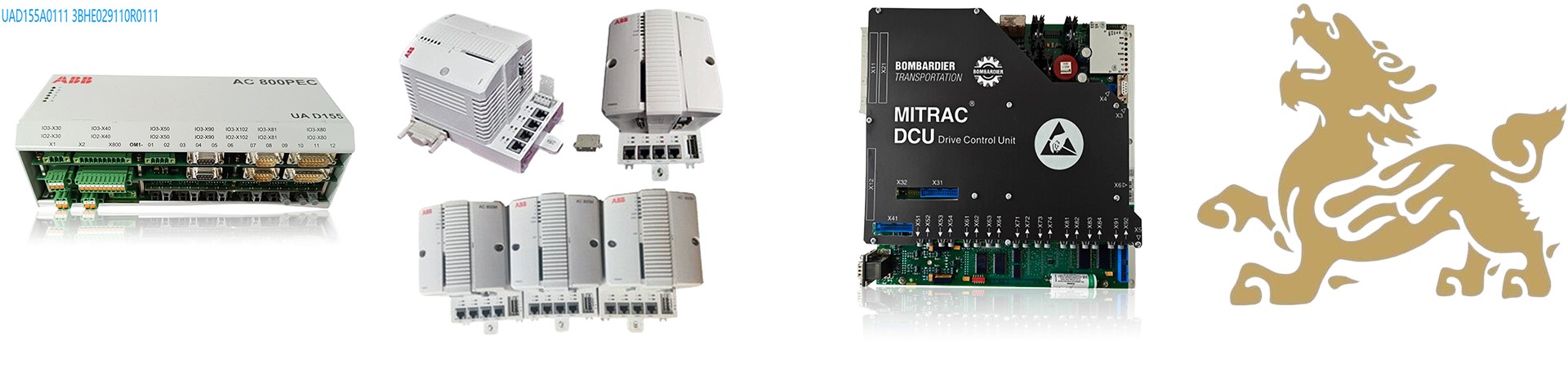
Description
Many products are not yet listed. Please contact us for more product information.
If the product model differs from the displayed image, the model number shall prevail. Please contact us for specific product images; we will arrange to take photos in our warehouse for confirmation.
We have 76 shared warehouses worldwide, so it may sometimes take several hours to accurately return the information to you. We apologize for any inconvenience. Of course, we will respond to your inquiries as soon as possible.
I. Core Control and Data Processing Functions
The 3EGM031400R1-002, as a Bombardier 3EST series control electronic module, primarily undertakes vehicle-level data acquisition and centralized processing tasks. This unit uses an internal high-speed processor to acquire analog and digital signals from various sensors throughout the vehicle in real time, including but not limited to vehicle speed signals, wheel diameter correction signals, traction motor temperature signals, brake disc temperature signals, air conditioning return air temperature signals, door status signals, pantograph status signals, and battery voltage signals. The acquired raw data undergoes analog-to-digital conversion and digital filtering before being stored in internal memory and processed according to priority. This unit possesses multi-channel parallel data processing capabilities, capable of simultaneously processing no fewer than dozens of input signals, ensuring no data loss or delay under high-speed operating conditions. Its internal control software is written according to the unified architecture of the Bombardier TCMS train control and management system, supporting both periodic task scheduling and event-driven task scheduling modes to guarantee real-time response to critical control commands.
II. Traction Control Function
This control unit plays an intermediate coordinating role in traction management. It receives traction and braking commands from the driver’s console, performs logical judgments and safety condition verifications, and then sends control commands to the traction inverter and auxiliary inverter via the MVB multifunction vehicle bus or Ethernet. Specific functions include: traction level analysis and allocation, i.e., converting the driver’s lever position into corresponding traction or braking force settings; traction force limit calculation and execution, dynamically adjusting the maximum available traction force based on parameters such as adhesion coefficient, wheel diameter difference, and axle load transfer; anti-slip and anti-wheel slip protection, automatically reducing traction or applying braking when abnormal deviations between wheel speed and vehicle speed are detected; and coordinated control of electric and air braking, prioritizing regenerative braking in high-speed areas and smoothly transitioning to air braking in low-speed areas to ensure continuous and shock-free braking force. Furthermore, this unit also participates in traction system fault diagnosis, quickly recording fault codes and triggering corresponding degraded operation strategies when the traction inverter experiences faults such as overcurrent, overvoltage, overtemperature, or communication loss.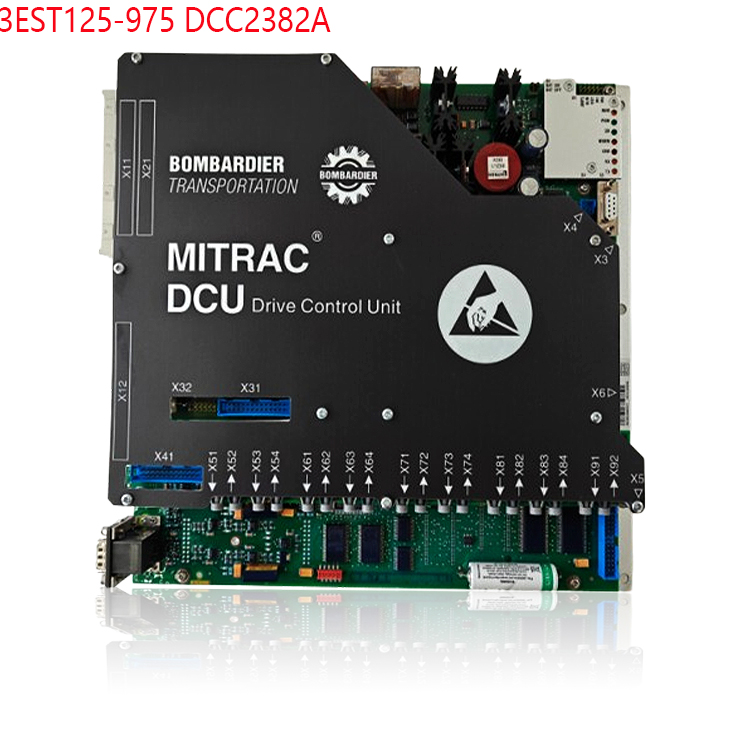
III. Braking Control Functions
In the braking management field, 3EGM031400R1-002 is responsible for the unified coordination of the entire vehicle’s braking system. Its functions include: hybrid control logic for electro-pneumatic braking, accurately calculating the distribution ratio of electric braking force and air braking force based on factors such as vehicle load, operating speed, and braking command level; anti-skid protection function, automatically adjusting the braking force of the axle to prevent wheel lock-up when anti-skid is detected by real-time monitoring of wheel speed; emergency braking function, directly triggering the maximum service braking or emergency braking of the entire vehicle without any intermediate links upon receiving an emergency braking command or safety circuit disconnection signal; self-detection and status monitoring of the braking system, periodically inspecting parameters such as brake cylinder pressure, brake disc wear, and brake shoe clearance, and promptly reporting any abnormalities to the TCMS and displaying a notification on the driver’s terminal. This unit also supports parking brake control, including issuing parking brake application and release commands, monitoring spring energy storage status, and vehicle interlocking logic under parking brake unreleased conditions.
IV. Auxiliary System Management Functions
3EGM031400R1-002 implements centralized monitoring and scheduling of all vehicle auxiliary systems. Regarding air conditioning and ventilation, this unit automatically adjusts the start/stop and power output of the air conditioning compressor based on in-vehicle temperature sensors, outside temperature sensors, and passenger load signals to maintain the set temperature inside the passenger compartment. It also switches to ventilation mode when necessary to save energy. For the lighting system, this unit automatically controls the switching and brightness adjustment of passenger compartment lighting, driver’s cab lighting, and external indicator lights based on external light intensity and vehicle operating status, and supports full-light testing in daily inspection mode. In terms of door management, this unit receives door opening and closing commands, monitors the locking and locking status of each door, and issues an alarm and prohibits departure if a door is not fully closed during train operation. Upon arrival at the platform, the doors open automatically or semi-automatically according to a preset door opening strategy. This unit also performs command forwarding and status monitoring duties in the control of other auxiliary equipment such as the toilet system, broadcasting system, and passenger information display system.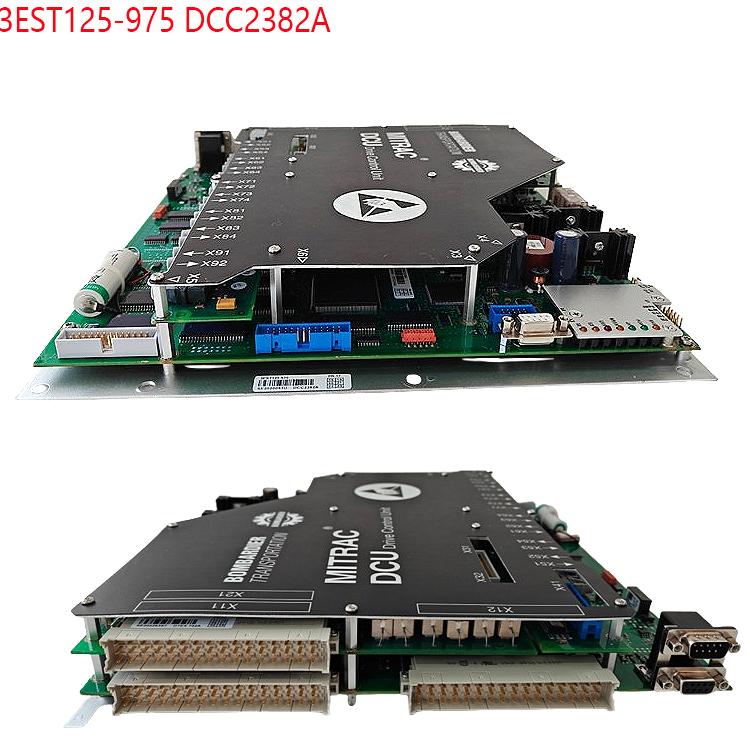
V. Communication and Network Management Functions
This control unit is a key node in the vehicle’s internal communication network. At the MVB multi-function vehicle bus level, the 3EGM031400R1-002 participates in vehicle-wide data communication as either a master or slave device, responsible for data encapsulation and decapsulation at its node, requesting and releasing bus access rights, and detecting and recovering from communication errors. At the Ethernet level, this unit supports in-vehicle Ethernet communication based on the TCP/IP protocol, enabling high-speed data exchange with driver display terminals, remote diagnostic equipment, gateway routers, etc. Regarding communication between the vehicle and the ground, this unit interconnects with control units of other vehicles via the WTB train bus, achieving information sharing and collaborative control within the train formation. Furthermore, this unit has built-in communication diagnostic functions, capable of real-time monitoring of signal quality, data frame error rate, and communication latency of each communication channel. When communication is interrupted, it automatically executes fail-safe strategies to ensure the vehicle maintains basic operational capabilities even under communication loss conditions.
VI. Fault Diagnosis and Recording Functions
The 3EGM031400R1-002 has a comprehensive built-in fault diagnosis system. This unit continuously performs self-checks on its hardware circuitry, including CPU operating status, memory integrity, power supply voltage stability, and input/output channel connectivity. Upon detecting an internal fault, it immediately triggers protection actions and reports to the TCMS. For system-level diagnostics, this unit analyzes the rationality and consistency of various sensor signals to determine whether the vehicle subsystems are functioning correctly. For example, it identifies sensor faults by comparing readings from multiple temperature sensors and determines load anomalies by analyzing the relationship between current and voltage. All detected faults are classified and recorded according to the Bombardier standard fault coding system. Fault information includes detailed information such as fault code, fault level, occurrence time, and vehicle operating parameters at the time of occurrence, stored in non-volatile memory and readable by ground diagnostic equipment via MVB or Ethernet. This unit also has fault statistics capabilities, recording the frequency of each fault occurrence to provide data for preventative vehicle maintenance.
VII. Safety Protection and Redundancy Management Functions
As a critical safety component of rail vehicles, 3EGM031400R1-002 is designed in strict accordance with railway safety standards such as EN50128. Its safety protection functions include: safe acquisition of input signals; all safety-related input channels adopt a dual-channel redundant design and cross-checking; when two signals are inconsistent, it is judged as an input fault and triggers a safety action; safe driving of output signals; all safety-related outputs are executed through safety relays or safety drive circuits to ensure that the output automatically returns to a safe state in the event of a fault within the control unit; watchdog monitoring; an internal hardware watchdog timer continuously monitors the program’s running status, and forces a reset if the program enters an infinite loop or runs out of control; power supply monitoring; continuous monitoring of the power supply voltage; when the voltage exceeds the allowable range, an orderly shutdown procedure is executed to protect data integrity. Regarding redundancy architecture, this unit supports hot backup switching with other control units in the same vehicle. When the main unit experiences an unrecoverable fault, the backup unit can take over all control functions within a specified time to ensure uninterrupted train operation.
VIII. Environmental Adaptability and Electrical Characteristics
The operating voltage of this control unit is typically DC 110V or DC 24V, depending on the power supply system of the vehicle in which it is installed. Its operating temperature range covers -40 degrees Celsius to +70 degrees Celsius, enabling it to adapt to operating environments in extremely cold and tropical regions. Regarding vibration and shock, this unit meets the Class 1A vibration requirements and Class 2 shock requirements specified in the IEC 61373 standard, and can withstand long-term continuous vibration and accidental shocks. Regarding electromagnetic compatibility, this unit meets the emission limits and immunity requirements specified in the EN 50121 standard, will not interfere with other electronic equipment on the vehicle, and is unaffected by external electromagnetic environments. The enclosure protection rating is typically IP40 or higher, effectively preventing dust intrusion and finger contact with live parts.
IX. Comprehensive Management Functions of Auxiliary Systems
In addition to traction and braking, 3EGM031400R1-002 also implements unified scheduling and management of all vehicle auxiliary systems. Specifically, it includes the following sub-functions: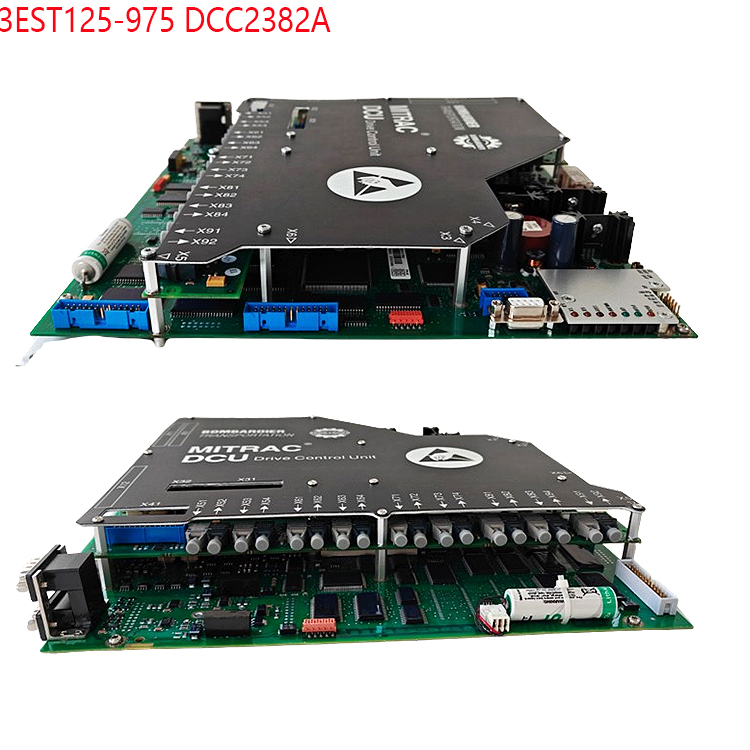
Air Conditioning and Ventilation Control: This unit automatically adjusts the start/stop and airflow of the air conditioning compressor based on temperature sensor data inside and outside the passenger compartment, passenger load data, and preset comfort temperature curves, optimizing energy consumption while ensuring passenger comfort.
Lighting System Management: Automatically switches lighting modes based on train operating status (station stops, inter-station operation, tunnel passage, etc.), and includes an emergency lighting switching function in case of malfunction.
Door Control Coordination: Linked with the door control unit, it controls the opening and closing sequence of doors based on train speed, platform position, door opening commands, etc., and triggers anti-pinch protection logic when an obstacle is detected.
Passenger Information System:Sends train operating status, arrival information, fault prompts, and other data to the in-vehicle display screen and broadcast system, providing passengers with real-time information services.
X. Fault Diagnosis and Safety Protection Functions:
3EGM031400R1-002 possesses a comprehensive self-diagnosis and safety protection system. At the self-diagnosis level, this unit continuously monitors its own hardware status (CPU temperature, memory status, power supply voltage, communication link quality, etc.). Once an anomaly is detected, it immediately generates a fault code and reports it to the TCMS central management system, while simultaneously storing fault history records locally for later analysis. In terms of safety protection, this unit implements multiple redundant protection logics:
First, overvoltage and undervoltage protection: When the supply voltage exceeds the allowable range of the DC 24V system (typically ±20% of the rated value), the controlled circuit is automatically disconnected and an alarm is triggered.
Second, overcurrent and short-circuit protection: When the output circuit current exceeds a set threshold, a shutdown operation is performed within microseconds.
Third, communication timeout protection: When communication with critical subsystems is interrupted for more than a set time (typically hundreds of milliseconds to several seconds), a safety degradation operation mode or emergency braking is automatically triggered.
Fourth, watchdog protection: A built-in hardware watchdog timer automatically resets the system when the main program malfunctions, ensuring the control unit does not enter an infinite loop.
XI. Functional Comparison with Similar Models
The 3EGM031400R1-002 differs in functional positioning from other Bombardier control units in the same series. For example, 3EST000216-9320 is geared towards traction inverter control, 3EST000216-9064 towards auxiliary power management, 3EST000216-9644 towards braking control, while 3EGM031400R1-002 focuses more on multi-system integrated management and communication gateway functions, belonging to the core coordination node in the TCMS architecture. Compared with models such as 3EST000225-5707, 3EST000212-0728, 3EST000228-7043, and 3EST000209-5692, 2814 typically provides more MVB ports and Ethernet ports in its interface configuration, making it suitable for installation in vehicle end or mid-level equipment cabinets that require connection to multiple subsystems.
XII. Environmental Adaptability and Reliability Indicators
The design of 3EGM031400R1-002 strictly adheres to rail industry and avionics avionics standards. The operating temperature range covers -55°C to +70°C, meeting the operational requirements of extreme environments such as frigid regions and high-temperature tunnels. Vibration and shock tolerance levels comply with EN50155 and DO-160 standards, capable of withstanding continuous high-frequency vibrations during train operation and severe impacts during shunting operations. Protection rating reaches IP54 and above, effectively preventing dust and moisture intrusion. Electromagnetic compatibility performance meets EN50121 standards, ensuring accurate transmission of control commands even in environments with strong electromagnetic interference. The unit’s design life is typically matched with the vehicle’s overhaul cycle, reaching over twenty years.
All products on this website are special products, and market prices are constantly fluctuating.
Specific pricing is subject to customer service quotes, as the price is not accurate for new products.
Please confirm the model, product, price, and other detailed information with customer service before placing an order. This website is currently in use.
New products are available for sale; please contact customer service for further information.
Recommended related products:
Bombardier-3EST000214-2059
Bombardier 3EST92-329
Bombardier 3EST000215-9408
Bombardier 3EST000212-3045
Bombardier 3EST000212-3025
Bombardier 3EST000210-3203
Bombardier 3EST000218-9605
Bombardier-3EST000214-2088
Bombardier 3EST000210-3458
Bombardier 3EST000211-9905
Bombardier 3EST000210-3467
Bombardier 3EST000224-0729-PBSE1205
Bombardier 3EST000224-0729
Bombardier 3EST92-490
Bombardier 3EST000216-8730
Bombardier 3EST53-618
Bombardier 3EST000210-3201
Bombardier 3EST000235-4971
More……

Reviews
There are no reviews yet.