
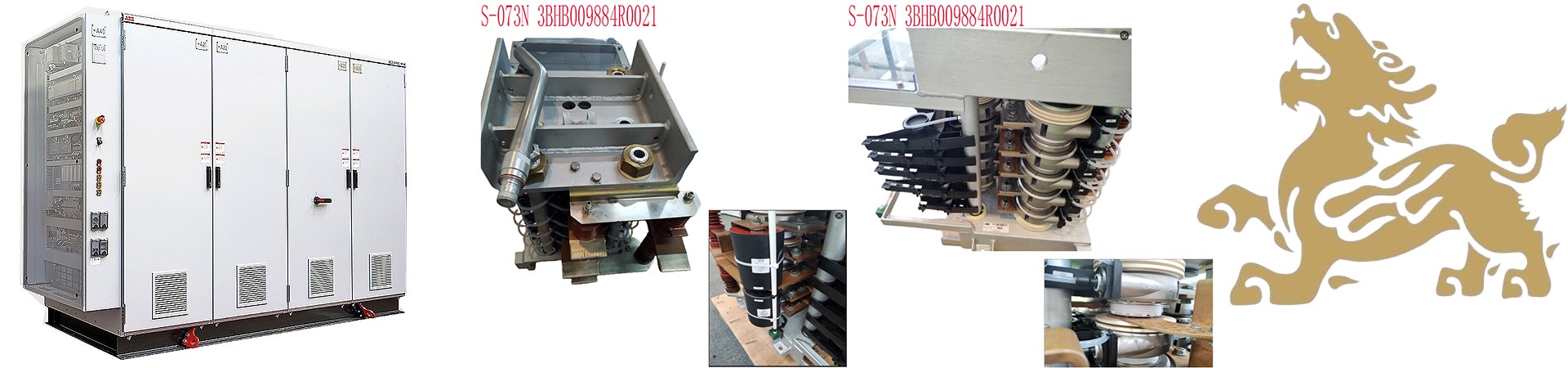
Description
Many products are not yet listed. Please contact us for more product information.
If the product model differs from the displayed image, the model number shall prevail. Please contact us for specific product images; we will arrange to take photos in our warehouse for confirmation.
We have 76 shared warehouses worldwide, so it may sometimes take several hours to accurately return the information to you. We apologize for the inconvenience. Of course, we will respond to your inquiries as soon as possible.
3EST000209-5690 Other Names:
Distributed I/O Station 3EST000209-5690
3EST000209-5690 I/O Station Controller Module
Distributed Slave Station 3EST000209-5690
I. Core Positioning
This controller is a distributed I/O station of a train-level programmable logic controller. It is installed in the control cabinet at the bottom of the train carriage and communicates with the train’s main controller via an industrial bus (such as Profibus/Profinet). It is responsible for collecting field signals and executing control commands. Equivalent to the “brain” of the entire train, it is installed inside the train carriages and is responsible for monitoring and controlling various subsystems of the vehicle to ensure safe and efficient operation. It is widely used in Bombardier-manufactured subway cars, intercity railway trains, trams, and high-speed trains, among other rail transit equipment.
II. Main Functions
1. Data Acquisition and Processing Function: Receives signals from various sensors on the vehicle, including speed sensors, temperature sensors, pressure sensors, current and voltage sensors, etc., and converts these analog and digital signals into digital information for real-time processing and calculation. It collects switch signals from various train systems, including but not limited to: door open/close status, braking system status, air conditioning operation status, emergency stop button status, and various relay feedback signals.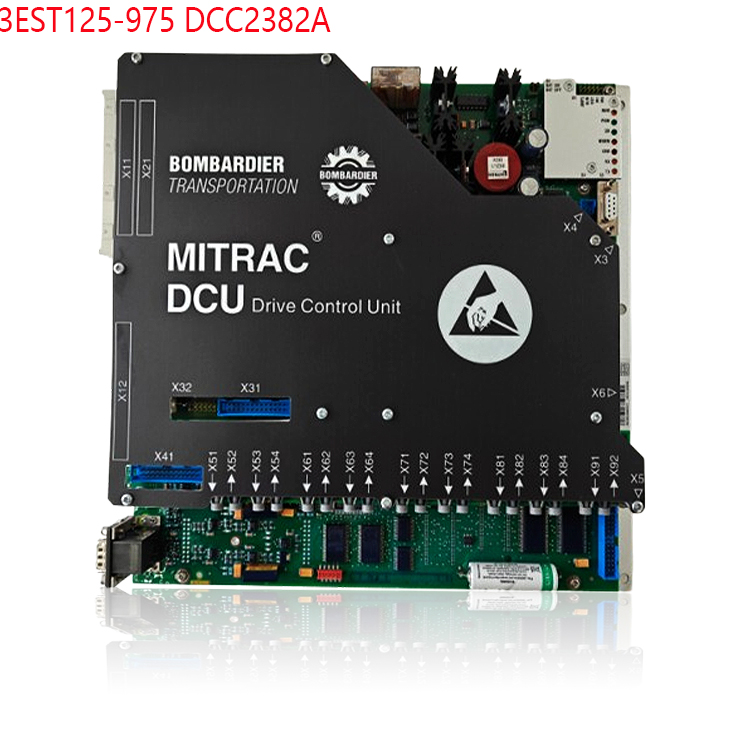
2. Logic Control Function: Analyzes and judges the collected data according to preset programs and control algorithms, automatically issuing corresponding control commands to achieve automated logical management of train operation.
3. Traction System Control Function: Controls the train’s traction converter, manages the train’s traction output and regenerative braking energy feedback, and achieves precise control of the train’s acceleration, constant speed, deceleration, and other operating states. 4. Braking System Control Function: Receives and executes braking commands, coordinates the use of electric and air brakes, and implements various braking modes such as service braking, emergency braking, and holding braking to ensure safe stopping of the train under various operating conditions.
5. Auxiliary System Control Function: Controls various auxiliary systems of the train, including the air conditioning and ventilation system, passenger compartment lighting system, door opening and closing system, passenger information display system, and public address system, ensuring passenger comfort.
6. Communication Function: Exchanges data with the controllers of various subsystems of the train through the internal train communication bus (such as the MVB multi-function vehicle bus or WTB train bus), and communicates with the ground control center and other onboard equipment (such as displays, diagnostic equipment, ATO system, etc.) to transmit operating data and control commands.
7. Fault Diagnosis and Status Monitoring Function: Monitors the operating status of various systems of the train in real time, automatically diagnoses faults and records fault codes and historical information, and supports maintenance personnel to download fault data through the maintenance interface or portable data collector, providing a basis for maintenance.
8. Train Interface Management Function: As the information aggregation node for various train subsystems, it coordinates and processes various input signals from the driver’s cab, ATC train control system signals, door safety circuits, emergency braking circuits, etc., performing priority judgment and command distribution.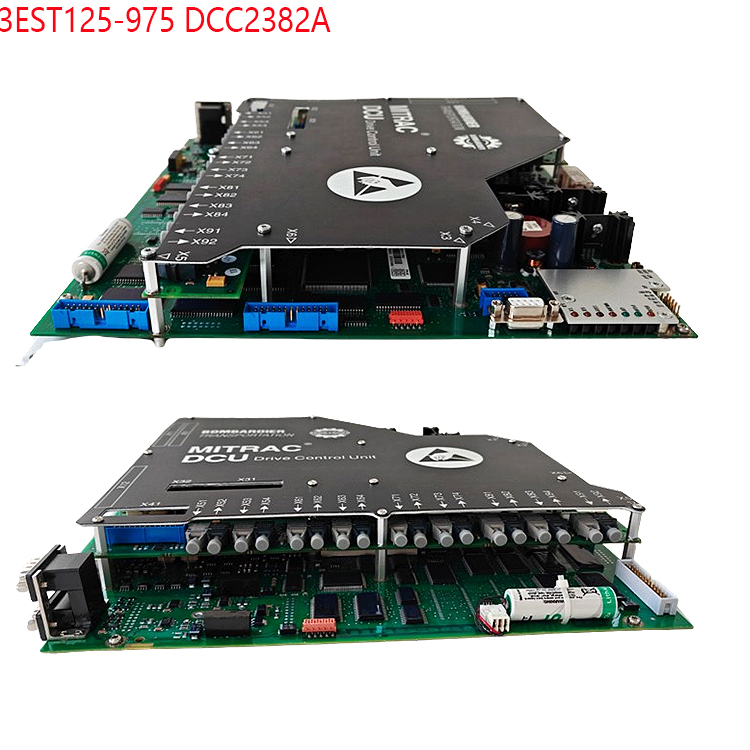
9. Digital Output Control Function: Sends control commands to train actuators, including but not limited to: relay drive, solenoid valve control, indicator light control, buzzer drive, contactor on/off control, etc.
10. Analog Input Acquisition Function: Acquires analog signals from various train sensors, including but not limited to: temperature sensor, pressure sensor, speed sensor feedback, current and voltage monitoring, etc.
11. Analog Output Control Function: Outputs control signals to devices requiring analog quantity adjustment, including but not limited to: braking force adjustment, traction force adjustment, air conditioning temperature setting, etc.
12. Communication Function: Exchanges data with the train main controller via the train’s internal communication bus (such as MVB multi-function vehicle bus or WTB train bus) to achieve remote monitoring and diagnostics.
13. Fault Diagnosis and Status Monitoring Function: The module itself has fault detection capabilities for input/output channels, and can report fault information to the train control system, facilitating fault location by maintenance personnel.
14. Traction Control Interface: Receives and transmits start/stop commands from the traction converter, traction stage position signals, and motor speed feedback signals, enabling precise control of train traction and electric braking.
15. Braking Control Interface: Acquires signals from brake cylinder pressure sensors and anti-slip exhaust valve status signals, outputting service braking and emergency braking commands, and working with the ATP system to achieve safe braking curve control.
16. Door Control Interface: Acquires signals from door opening/closing sensors and safety circuit signals, outputting door opening/closing drive commands to achieve automatic door opening/closing and interlock protection.
17. Auxiliary System Monitoring Interface: Acquires and monitors switch and analog signals from auxiliary equipment such as the HVAC system, lighting system, battery voltage, and air conditioning compressor operating status.
18. Fault Diagnosis and Self-Test: Real-time acquisition of fault alarm signals from each subsystem, status monitoring through the module’s built-in diagnostic function, and uploading fault information to the train main control unit and ground maintenance system, supporting remote fault location.
19. Passenger Information and Broadcast Interface: Outputs passenger information system control commands such as train arrival broadcast trigger signals, LED display drive signals, and emergency intercom trigger signals.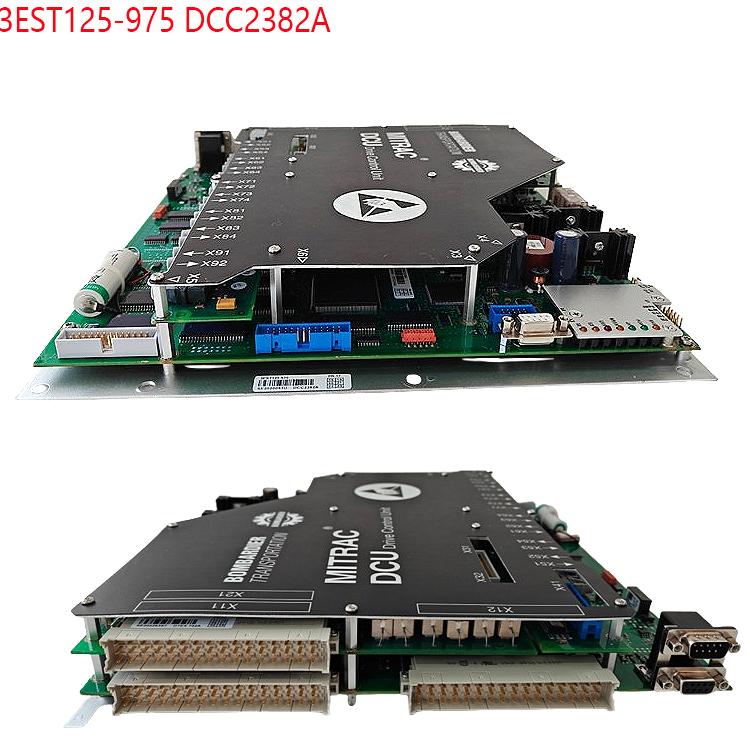
20. Onboard Safety Circuit Monitoring: Acquires the status of the emergency stop button, the driver’s cab key switch, and safety loop integrity signals to ensure immediate emergency braking is triggered when any safety loop is disconnected.
III. Technical Features
This module operates in an ambient temperature range of -40°C to +105°C (depending on power dissipation), has an IP20 protection rating, adopts DIN rail mounting, and possesses vibration and shock resistance capabilities, making it suitable for the harsh operating environments of urban rail transit and mainline railway vehicles.
III. Application Scenarios
This module is widely used in various rail transit vehicles manufactured by Bombardier, including:
Metro trains (such as Bombardier trains used in metro lines in cities like Beijing, Shanghai, and Guangzhou)
Intercity railway trains (such as train control equipment provided by Bombardier as a subsystem supplier in projects like ICE 4)
Light rail and trams
IV. Summary
The 3EST000209-5690 is a remote I/O station controller module in the Bombardier MITRAC system architecture. Installed inside each train car, it acts as a distributed slave station of the main vehicle control unit (VCU), responsible for connecting the field sensors and actuators of various train subsystems. It enables local signal acquisition and local output of control commands, making it a key node device in the entire train control network.
Please note that all products on this website are specialty items, and market prices are constantly fluctuating.
Please refer to customer service for a specific quote, as the price may not be accurate for new products.
Please confirm the model, product, price, and other details with customer service before placing an order. This website is currently in use.
New items are available for sale; please contact customer service for further information.
Recommended related products:
Bombardier 3EST000210-3458
Bombardier 3EST000211-9905
Bombardier 3EST000210-3467
Bombardier 3EST000224-0729-PBSE1205
Bombardier 3EST000224-0729
Bombardier 3EST92-490
Bombardier 3EST000216-8730
Bombardier 3EST53-618
Bombardier 3EST000210-3201
Bombardier 3EST000235-4971
More……

Reviews
There are no reviews yet.