
Description
Many products have not yet been listed online; please contact us for more information.
If there is a discrepancy between the product model and the displayed image, the model number takes precedence. Please contact us for specific product photos; we can arrange for warehouse staff to take and provide confirmation images.
We operate 76 shared warehouses globally, so it may sometimes take a few hours to provide you with an accurate response; we appreciate your understanding. Rest assured, we will address your inquiries as quickly as possible.
Product Overview
The 3BHE046836R0102 (GFD563A102) is a core excitation control module for the ABB AC 800PEC high-speed power control platform and serves as a critical control unit within static excitation systems for synchronous generators. This module handles excitation signal acquisition, closed-loop regulation, pulse output, status monitoring, and fault protection. Acting as the core control interface between the Automatic Voltage Regulator (AVR) and the excitation power rectifier bridge, it is widely used in excitation control systems for various generator sets to achieve precise digital regulation of the generator excitation circuit.
I. Operating Principle
The 3BHE046836R0102 utilizes a high-speed digital closed-loop control architecture, employing a built-in high-performance processor to perform excitation regulation calculations. Real-time acquisition of analog signals—such as generator terminal voltage, stator current, excitation current, and grid frequency—and conversion of field electrical signals into digital signals;
Incorporates built-in AVR (Automatic Voltage Regulator) and PSS (Power System Stabilizer) algorithms; compares measured values against system reference values and uses PID closed-loop calculations to determine the required excitation adjustment;
Converts calculation results into thyristor/IGBT trigger pulse signals and outputs them to the excitation power unit to regulate the DC current in the excitation circuit;
Continuously acquires feedback signals from the excitation circuit to establish a complete closed-loop control system, dynamically adjusting the excitation output to stabilize the generator terminal voltage;
Features built-in fault detection logic to monitor for abnormal conditions such as overcurrent, overvoltage, over-temperature, and wire breakage; upon exceeding thresholds, it rapidly blocks pulse output and initiates protective actions to ensure the safe operation of the generator and the power grid.
Supports switching between multiple control modes—including constant terminal voltage control, constant excitation current control, and constant reactive power control—and automatically adjusts control logic based on grid operation strategies to suit various operating conditions, such as grid-connected or islanded modes.
II. Core Product Advantages
High-speed, high-precision control capability: The module features a high-speed processor, high-precision signal acquisition, and short pulse response cycles. It rapidly responds to grid disturbances and suppresses voltage fluctuations, meeting the rigorous dynamic regulation requirements for generator grid connection and complying with international grid standards.Modular integration and strong system compatibility: Based on the ABB AC 800PEC platform, it supports IEC 61131-3 standard programming and allows for program development and parameter configuration using tools such as Control Builder M and Simulink. It supports mainstream industrial communication protocols like Modbus TCP/IP and Modbus RTU, enabling seamless integration with DCS, SCADA, and HMI supervisory systems for convenient remote data acquisition and parameter monitoring.
Comprehensive multi-layer protection mechanisms: It integrates a full suite of protection functions—including over-excitation, under-excitation, over-current, over-voltage, over-temperature, pulse loss, and circuit breakage detection. With rapid fault response, it quickly executes protective interlocking during excitation circuit anomalies, thereby mitigating the risk of damage to the generator and excitation power cabinet and reducing downtime incidents.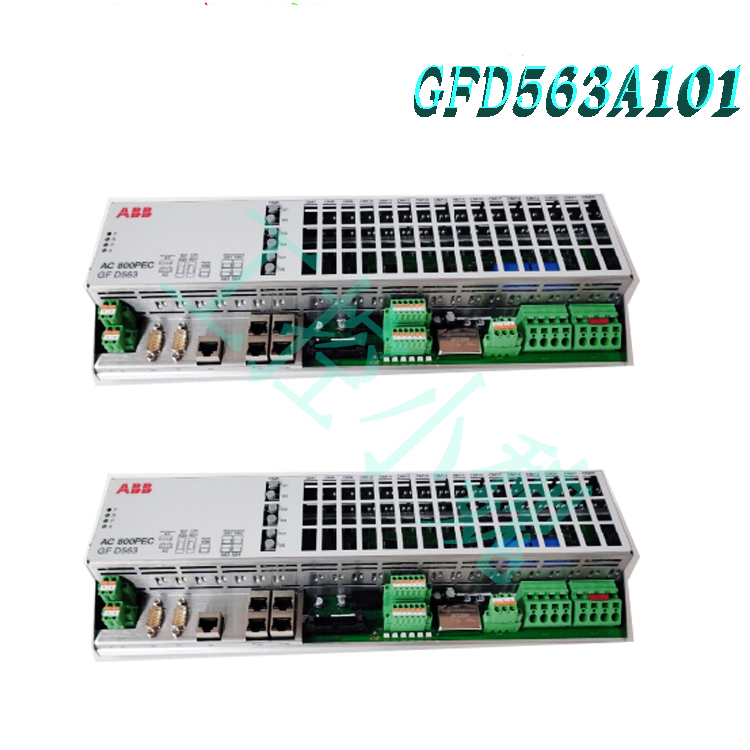
High interference immunity, adapted for harsh power plant environments: The hardware circuitry features electromagnetic hardening and shielded circuit boards, delivering excellent electromagnetic compatibility (EMC) performance. It ensures stable, long-term operation within cabinets exposed to high electromagnetic interference, vibration, and significant temperature fluctuations typical of power plant environments.
Flexible dual-channel pulse I/O design: The module supports dual-channel pulse input and output with independently configurable channels. A single hardware unit handles both signal acquisition and pulse drive output, offering high hardware reusability. This reduces the number of modules required, lowering the overall hardware costs of the excitation system and minimizing cabinet space requirements.
III. Applicable Industries and Functions
1. Thermal Power Plants
Used in excitation systems for steam turbine generator units, it stabilizes terminal voltage and regulates reactive power output. It enhances damping capabilities during grid disturbances, ensures stable grid connection and load operation, and minimizes voltage oscillations, serving as a core control component for the safe operation of thermal power plant generators.2. Hydropower Plants / Pumped-Storage Power Stations
Used for the excitation control of hydro-generator units; adapts to the rapid operational changes characteristic of turbines by quickly adjusting excitation during rapid load fluctuations, thereby maintaining voltage stability and meeting peak-shaving and frequency-regulation requirements.
3. Gas Turbine Combined-Cycle Power Plants
Equipped with UNITROL series excitation systems for gas turbine generators; responds to the rapid start/stop and load fluctuation characteristics of gas turbines, ensuring rapid grid synchronization and stable unit operation.
4. Captive Power Plants for Steel, Petrochemical, and Large-Scale Coal-Chemical Industries
Provides excitation control for industrial captive synchronous generator units; ensures voltage stability within the plant’s internal grid, shields on-site production facilities from the impact of main grid fluctuations, and guarantees uninterrupted chemical and metallurgical production processes.
5. Other Industrial Energy Sectors
Excitation system retrofit projects for small-to-medium-sized synchronous generators (e.g., in biomass and distributed energy power plants); facilitates the digital upgrade of aging excitation systems by replacing obsolete analog excitation regulators and enhancing automation capabilities.
Summary of Industry-Wide Role: The core function of this module is to stabilize generator output voltage and regulate reactive power output by adjusting the synchronous generator’s excitation current. It enhances power system damping, suppresses low-frequency oscillations, and ensures the safe, stable, and compliant grid-connected operation of generator units. Additionally, it monitors the health status of the excitation system in real-time, providing early fault warnings to reduce the risk of unplanned shutdowns.
IV. Operating Procedures
Note: All operations must be performed by certified electrical engineers in strict accordance with power plant safety regulations.
Pre-installation Checks and Installation: Install the module onto the cabinet DIN rail in accordance with specifications and tighten the mounting screws. Complete the wiring for power supply, analog signal acquisition, pulse output, and communication; use shielded twisted-pair cables for analog signals and ensure the shield is grounded at a single point. Verify all wiring after completion to ensure there are no short circuits or incorrect connections.
System Configuration and Parameter Download: Use ABB Control Builder M software to configure module channel types, signal ranges, control modes, and protection setpoints. Configure the excitation control logic and PSS parameters; after verifying the accuracy of the parameters, download the program and parameters to the 3BHE046836R0102 module.
Power-up and Commissioning: Confirm circuit isolation before applying power, then switch on the module’s power supply. Access the local monitoring interface to check that voltage and current acquisition signals are normal and free from signal drift. Conduct pulse output tests to verify correct trigger pulse timing and ensure no false triggering occurs.
No-load and Grid-connection Tests: Test voltage regulation performance and verify the voltage adjustment range while the generator is at no-load. Gradually engage control modes and complete pre-grid-connection excitation system tests. After the unit is connected to the grid, test reactive power regulation and dynamic disturbance response, fine-tuning control parameters for optimal performance.
Routine Operational Monitoring: Monitor module operating status, excitation parameters, and alarm information via the supervisory HMI during operation. Record module temperature and communication status, and periodically export operation logs.
Shutdown and Module Replacement: Before shutdown and maintenance, disconnect the generator unit from the grid, cut off the excitation system’s high- and low-voltage power supplies, and perform voltage verification and discharging. Wear an anti-static wrist strap and insert or remove the module according to specifications. After installing the new module, download the corresponding firmware and parameters, and re-commission the system. V. Precautions
Safe Operation Protocols: The module is a high-voltage control component for power excitation systems. On-site operations must strictly adhere to procedures for power isolation, voltage verification, and the installation of grounding cables. Do not plug or unplug the module or signal terminals while the system is energized to prevent electrostatic discharge (ESD) from damaging chips or causing short circuits.
Electrostatic Protection: The module contains precision semiconductor circuit boards. Personnel must wear certified anti-static wrist straps during handling, installation/removal, and maintenance. Touching the board’s metal pins or chips with bare hands is prohibited, as static electricity can cause permanent damage to the module.
Environmental and Heat Dissipation Requirements: Maintain the cabinet’s ambient temperature within the module’s specified operating range and ensure a clearance of at least 15mm on both sides of the module for heat dissipation. Prevent the accumulation of dust, corrosive gases, or condensation inside the cabinet. Regularly clean the cabinet’s air filters to avoid overheating alarms.
Wiring and Grounding Requirements: Route analog signal lines, pulse output lines, and communication cables separately; do not lay high-voltage power cables and low-voltage signal cables in the same conduit or tray. Securely connect the grounding terminal to the cabinet’s protective ground and ensure grounding resistance meets specifications. Poor grounding can introduce interference, leading to data acquisition distortion or erroneous pulse output.
Firmware and Version Management: When replacing a module, verify that the firmware and hardware versions are compatible with the existing system. Back up parameters before upgrading firmware and do not cut power during the upgrade process to prevent firmware corruption.
Parameter Modification Control: Excitation control parameters and protection settings are critical to generator safety. Modifications must follow an approval process; keep records of changes and perform verification tests. Arbitrary alteration of critical parameters—such as PSS settings or protection thresholds—is prohibited.
Spare Parts and Service Life Management: For long-term operation, periodically assess the module’s aging status and maintain an adequate stock of spare parts. If the module exhibits persistent alarms, signal drift, or abnormal pulse output, shut down the system for inspection; do not continue operation with unresolved faults. Repair Restrictions: This module is a precision industrial board from ABB. Field repair involving opening the casing is not recommended; it is advised to replace the entire unit in the event of a malfunction. Unauthorized disassembly compromises the reliability of the spare part and may result in further damage.
Recommended popular module models:
3BHE046836R0101
GFD563A101 3BHE046836R0101
3BHE046836R0102
GFD563A102 3BHE046836R0102
GFD563A101 3BHE046836R010
3BHE046836R010
PC D232 A|PEC80-CIO|3BHE022293R0101
PDD24
PCD2000
GFD563A101
8R37-2021-21-3101 PCD2000
GFD563A102
GFD563A102 3BHE046836R0102
PC D232 A|PEC80-CIO|3BHE022293R0101|PCD232
UAD149A0011 3BHE014135R0011
more……

-300x300.jpg)
admin –
ABB GFD563A102 | 3BHE046836R0102 | GF D563 A102, AC 800PEC controllers are suitable for industries such as industrial automation and machinery, utilities and energy, process control and monitoring. The AC 800PEC toolbox is required to access the controller hardware. Using Simulink external mode can achieve user-friendly monitoring. If an AC 800PEC controller is required, it can be programmed using ABB’s Control Builder M programming tool (compliant with IEC 61131-3), as well as MATLAB, Simulink, and Simulink Coder.
admin –
It is worth noting that the Application Knowledge Base (AKS) will no longer be available after July 31, 2021. ABB is enhancing its customer and partner experience and migrating data from AKS to a new portal. ABB AC 800PEC is a controller that combines high-speed control requirements for processes such as power electronics applications with low-speed process control tasks typically performed by separate PLC units. It can be programmed using ABB’s Control Builder M programming tool (compliant with IEC 61131-3), as well as MATLAB, Simulink, and Simulink Coder. It is connected to ABB’s I/O system through the optical S800 ModuleBus and to ABB’s communication module through the Communication Expansion Bus (CEX). It also supports third-party Anybus-S fieldbus modules. The controller can be programmed using Simulink and Simulink Coder. The AC 800PEC toolbox is required to access the controller hardware. Using Simulink external mode can achieve user-friendly monitoring. It can be used in various industries such as industrial controllers and PLCs, control systems, digital signal processing, embedded systems, process control and monitoring, real-time systems, industrial automation and machinery, utilities, and energy.
admin –
The 3BHE046836R0102 excitation central processing unit module supports a variety of analog and digital input and output combinations, and can process multiple signals simultaneously. The specific input and output configuration may include digital input, analog input, digital output, and high-speed digital output, etc., to meet complex control requirements. At the same time, through additional expansion modules, the configuration of this module can be further expanded to adapt to more complex application requirements in the fields of industrial automation and robotics. The expansion modules can be installed locally or remotely, providing greater flexibility and convenience.
admin –
The GFD563A102 3BHE046836R0102 excitation central processing unit module supports a variety of analog and digital input and output combinations, and can process multiple signals simultaneously. The specific input and output configuration may include digital input, analog input, digital output, and high-speed digital output, etc., to meet complex control requirements. At the same time, through additional expansion modules, the configuration of this module can be further expanded to adapt to more complex application requirements in the fields of industrial automation and robotics. The expansion modules can be installed locally or remotely, providing greater flexibility and convenience.
admin –
Model Positioning and Core Functions
Model Attribution
3BHE046836R0102 is an ABB internal part number corresponding to the GFD563A102 excitation controller (Unitrol series), used in synchronous generator excitation systems.
Functional Positioning: Serves as the core control unit of the excitation system, implementing generator voltage regulation, reactive power distribution, dynamic stability control, and protection functions.
Core Control Logic
Voltage Closed-Loop Control: Compares the generator terminal voltage with the setpoint and adjusts the excitation current to maintain voltage stability (accuracy ±0.5%).
PSS (Power System Stabilizer): Suppresses low-frequency oscillations (0.1-2 Hz) to improve grid stability.
Limiting Functions: Includes overexcitation limiting (to prevent rotor overheating), underexcitation limiting (to prevent loss of step), and V/Hz limiting (to protect stator insulation).
Key Technical Parameters
Parameter Category Technical Specifications
Input Signal – Generator Voltage: 100V AC (PT Secondary Side)
- Generator Current: 5A AC (CT Secondary Side)
- Excitation Current: 0-20mA DC
Output Signal – Excitation Current Command: 4-20mA DC
- Alarm/Trip Signal: Dry Contact (24V DC, 2A Capacity)
Control Accuracy – Voltage Regulation Error: ≤±0.3% (Steady State)
- Dynamic Response Time: ≤50ms (Recovers to 90% after a ±10% voltage change)
Environmental Adaptability – Operating Temperature: -20°C to +60°C
- Humidity: ≤95% RH (non-condensing)
- Protection Rating: IP20 (Indoor Installation)
Communication Interface – Ethernet: 100Mbps, supports IEC 61850/Modbus TCP
Serial Port: RS485 (optional, supports Modbus RTU)
Power Requirements: Input Voltage: 220V AC ±10% (50/60Hz)
Power Consumption: ≤150W
https://www.weikunfadacai1.com/product/abb-3bhe046836r0102/
admin –
Hardware Structure and Redundancy Design
Modular Architecture
Main Control Board (CPU): Dual ARM Cortex-A9 processors running a real-time operating system (RTOS) implement control algorithms and logic.
Signal Conditioning Board: Isolates input/output signals, with interference immunity ≥10kV (pulse group interference test).
Power Supply Board: Dual redundant power supplies with automatic switchover in the event of a failure in either power supply (switching time <5ms).
Redundant Configuration (Optional)
Hot Standby Mode: Two sets of 3BHE046836R0102 modules operate in parallel, ensuring seamless master/slave switchover (data synchronization via optical fiber).
Two-out-of-three Logic: Critical signals (such as voltage measurement) utilize triple redundancy to prevent malfunctions caused by single-point failures.
Typical Application Scenarios
Synchronous Generators in Thermal Power Plants
600MW Supercritical Units: Combined with the UNITROL 6000 excitation system, achieve high-precision voltage regulation (error <0.2%).
Peak-shaving operation: Rapidly responds to load changes (e.g., voltage fluctuation ≤±1.5% when the load suddenly changes to 50%).
Hydropower plant pumped storage units
Generation/pumping mode switching: Dynamically adjusts excitation parameters to suppress voltage fluctuations caused by water hammer.
Black start capability: When grid support is unavailable, generators can be started through excitation control to restore local power supply.
Renewable energy support
Wind power hydrogen production project: Provides excitation control for the synchronous generators powering the electrolyzers, ensuring stable hydrogen production.
PV energy storage system: Enhances grid inertia response capabilities by simulating the characteristics of synchronous generators.
admin –
Common Faults and Solutions
Fault Symptoms, Possible Causes, and Solutions
Large voltage fluctuations. PID parameters are out of adjustment, and the PT wiring is loose. Recalibrate the PT/CT and adjust the PID parameters using ABB ExpertOptimizer software (Kp=0.8, Ki=0.05, Kd=0.1).
Unable to adjust the excitation current. Power module failure, trigger pulse loss. Check the thyristor rectifier bridge and replace the damaged module; verify the trigger pulse waveform using an oscilloscope (frequency = 50Hz, pulse width = 1ms).
Communication interruption. Network cable is damaged, and there is an IP address conflict. Check the physical connection and configure a static IP address. Update the firmware to the latest version (e.g., V3.12).
Self-diagnostic alarm (E002): Power module overtemperature. Clean the cooling fan and check the ambient temperature (must be ≤45°C). Replace the power board fan (model: ABB 5SYA2045).
Maintenance and Spare Parts Management
Regular Maintenance Items
Every 6 Monthly: Clean dust from the module interior and check the tightness of the terminal blocks (torque value: 0.6 Nm).
Yearly: Calibrate the PT/CT ratio and test the PSS function (using ABB TestManager software to inject a 0.5 Hz oscillation signal).
Spare Parts Strategy
Critical Spare Parts: We recommend stocking one complete module (including the main control board, power board, and signal conditioning board), with an inventory cycle of ≤ 2 years.
Refurbished Modules: For low-cost replacements, ABB certified refurbished parts are available (test reports and a 6-month warranty are required).
Firmware Upgrade
Download the latest firmware (e.g., V3.15) through the ABB Ability™ Remote Diagnostics Platform. Back up configuration parameters before upgrading.
Note: Do not disconnect the power supply during the upgrade process, as this may cause permanent damage to the module.
Safety Precautions
Disconnect the power supply before operation: During maintenance, the input power must be disconnected and a “Do Not Close” sign must be displayed.
Anti-static measures: Wear an anti-static wrist strap when replacing modules to avoid damage to electronic components.
Compliance: Ensure the module complies with local grid regulations (e.g., IEEE STD 421.5, GB/T 7409.3).
admin –
https://www.weikunfadacai1.com/product/3bhe046836r0102-ac-800pec-control-unit-abb-3bhe046836r0102/
https://www.weikunfadacai1.com/product/abb-3bhe046836r0102/
https://www.weikunfadacai1.com/product/3bhe046836r0101-ac-800pec-control-unit-abb-3bhe046836r0101/
https://www.weikunfadacai1.com/product/abb-3bhe046836r0101/
https://www.weikunfadacai1.com/product/3bhe046836r0101-excitation-system-controller/
https://www.weikunfadacai1.com/2025/07/26/5shy4045l0006-3bhb030310r0001-integrated-gate-rectifier-thyristor-module-abb/
https://www.weikunfadacai1.com/product/woodward-pn-8400-015-d-proact-ma-digital-speed-control-panel-2/
https://www.weikunfadacai1.com/product/wartsila-lt7000b-1341106-gcp-pp01-mp-000398-m1c11p-switch-panel/
Product Positioning and Series
Module Model: GFD563A102 (AC 800PEC Series Core Controller Module) is designed for industrial automation, power electronics, and process control. It integrates high-speed control (e.g., FPGA tasks as low as 25ns) with low-speed PLC task processing capabilities, supporting field logic control (LCI), motion control, logic control, and data acquisition.
Series: Part of ABB’s AC 800PEC series and ControlIT product line, it focuses on integrating high-speed power electronics control with low-speed process control.
Application Scenarios: Suitable for power generation, transmission systems, and industrial automation (e.g., generator excitation control and power conversion equipment), supporting both high and low voltage scenarios.
Technical Specifications
Electrical Parameters:
Input Voltage: 400VAC
Output Voltage: 0-400VAC
Output Current: 2.3A
Frequency: 50/60Hz
Control Mode: LCI (Local Control Interface)
Performance:
High-Speed Tasks: FPGA Task Cycle ≤ 25 nanoseconds, Matlab/Simulink Task ≤ 100 microseconds
Low-Speed Tasks: Conventional Control Logic ≤ 1 millisecond
I/O Response: Analog/Digital Conversion Cycle 25μs, Low-Speed I/O Cycle 10ms
Features
Dual-Core Architecture: Integrates high-speed control (power electronics) and low-speed process control (traditional PLC tasks), eliminating separate system requirements.
Communication Capabilities:
Two Ethernet ports (for connecting to the factory network, programming tools, and other devices)
RS-232/RS-422 serial ports (for local panel/terminal connections)
Up to two AnyIO ports (supports CEX bus and AnyBus-S modules, compatible with major fieldbuses)
Fiber optic link (inter-module communication, no electrical connections)
Scalability: Supports 36 bidirectional fiber optic PowerLinks, with a modular design to accommodate diverse I/O configurations.
Technical Specifications
I/O Capacity:
Base Configuration: 62 I/O combinations (30 digital inputs including two shaft encoders, two analog inputs, 28 digital outputs, and two high-speed digital outputs).
Expandability: Expandable up to 1024 I/O points via local/remote expansion modules (up to 1000m).
Voltage Range: Input: 85V AC-264V AC or 24V DC; Output: 0-380V AC/0-400V AC or 5V DC-60V DC, output current up to 10A, power approximately 100W.
Hardware Configuration:
Processor: Multi-core CPU (2.5GHz) or PowerPC 405 (200MHz), with 4GB DDR3 RAM or 256MB RAM + 512MB Flash.
Storage: 8GB eMMC, supporting non-volatile program/data storage.
Communication Interfaces: RS232, RS485, Ethernet, PROFINET DP, CAN, supporting Modbus, CANopen protocols, and third-party Anybus-S bus modules.
Environmental Adaptability:
Operating Temperature: -20°C to +60°C, IP67/IP65 protection rating, suitable for harsh industrial environments.
Mechanical Specifications: Dimensions: 380 × 142 × 73.5 mm, weight: approximately 1.54 kg.
Core Functions and Application Scenarios
Control Performance:
Cycle times as low as 100 μs (fast tasks), support for real-time control development using MATLAB/Simulink, and an integrated FPGA for high-speed algorithm processing.
Compatible with the ABB 800xA system, it supports IEC 61131-3 standard programming (Control Builder M tool) and automatic Simulink code generation.
Programming and Development Environment
admin –
I. Core Identity and Technical Specifications
Module Model and Positioning
This module belongs to the AC 800PEC series of high-performance controllers. Serial number 3BHE046836R0102 corresponds to hardware version GFD563A102. Designed specifically for power electronics and industrial automation, it integrates high-speed control (cycle times as low as 100μs) with low-speed logic processing capabilities, supporting field logic control (LCI), motion control, and data acquisition.
Hardware Configuration: Multi-core CPU (2.5GHz) or PowerPC 405 (200MHz), 4GB DDR3 RAM/256MB RAM + 512MB Flash, 8GB eMMC storage, and support for non-volatile storage.
Communication Interfaces: Supports RS232, RS485, Ethernet, PROFINET DP, and CAN bus. Compatible with Modbus, CANopen protocols, and third-party Anybus-S bus modules, it enables fast I/O data exchange (<100μs) via fiber optic links.
II. Core Functions of Excitation Control
Voltage and Reactive Power Control
Maintains constant generator terminal voltage (fluctuation ≤ ±0.5%), precisely adjusts excitation current using a PID algorithm, optimizes reactive power distribution between paralleled units, avoids overload or underload, and improves grid stability.
In the event of a grid fault, the forced excitation function is triggered to quickly restore system voltage; in the event of an internal generator fault, rapid deexcitation is performed to reduce the risk of equipment damage.
Dynamic Response and Protection Mechanism
Integrated overcurrent, undervoltage, and overvoltage protection software packages support fault self-diagnosis and redundant switching (a dual-channel active/standby design automatically switches to the backup channel in the event of a fault, reducing downtime).
Passing electromagnetic compatibility (EMC) testing, it effectively shields against common-mode interference in industrial environments and ensures signal transmission stability.
Technical Parameters
Parameter Category Specific Specifications
Input Voltage: 85V AC to 264V AC (Some models support 24V DC)
Output Voltage: 0 to 380V AC / 0 to 400V AC; or 5V DC to 60V DC (configurable)
Maximum Output Current: 10A, Output Power: Approximately 100W
Dimensions: 380mm Deep × 73.5mm Height × 142mm Width, Weight: Approximately 1.54kg
Processor and Storage: Multi-core processor (2.5GHz) or PowerPC 405 (200MHz); Memory: 4GB DDR3 RAM / 256MB RAM + 512MB Flash; Storage: 8GB eMMC
Communication Interfaces: RS232, RS485, Ethernet, PROFINET DP, CAN; supports industrial protocols such as Modbus and CANopen.
Environmental adaptability: Operating temperature -10°C to +50°C (or -20°C to +60°C); IP67/IP20/IP65 protection.
I/O expansion supports 62 analog/digital inputs and outputs (30 digital inputs + 28 analog inputs + 2 digital outputs + 2 high-speed outputs), expandable to 1024 I/O points.
Core Functions and Features
Precise Control: Utilizes a high-performance processor and advanced algorithms to achieve fast response and precise motion trajectory planning, meeting the requirements of highly dynamic scenarios.
Comprehensive Protection: Built-in multiple protection mechanisms, including overcurrent, overvoltage, and overtemperature, ensure safe operation of the device. Fault diagnosis and alarm functions are supported (e.g., abnormal speed and voltage fluctuations).
Flexible Communication: Compatible with multiple industrial protocols, it seamlessly integrates with PLCs, SCADA systems, and monitoring platforms, supporting remote configuration and status monitoring.
Expandable Compatibility: Parameter configuration is performed using ABB Control Builder or Automation Builder software; expansion modules (such as adding I/O points or function modules) are supported.
Industrial-grade Design: Utilizing high-quality electronic components and advanced manufacturing processes, it withstands harsh environments (such as high temperature, high humidity, and electromagnetic interference) to ensure long-term stable operation.
III. Application Scenarios and Case Studies
Power Industry
Power Generation Scenarios: Maintaining generator voltage stability and improving grid connection efficiency in coal-fired, gas-fired, and hydropower generation scenarios; coordinating with steam turbine speed regulators to optimize the dynamic balance between power generation and load.
Case Study: The Xiluodu Right Bank Power Station utilizes the ABB UNITROL 6800 excitation system, combined with the AC 800PEC controller, to achieve high-precision excitation control and ensure grid stability.
Industrial Automation
Applications include robotic motion control, CNC machine tool control, synchronous control of packaging machinery, and power factor regulation for arc furnaces, rolling mills, and other equipment to reduce reactive power losses.
Process Industries
Enables process monitoring and optimization in the chemical, metallurgical, and intelligent manufacturing industries, such as furnace top voltage monitoring and electrode speed limit protection.
IV. Programming and Development Environment
Toolchain Support
IEC 61131-3 Standard Programming: Ladder diagrams and function block diagrams are supported through the ABB Control Builder M tool, supporting modular design and reducing hardware redundancy.
MATLAB/Simulink Integration: Model-based design enables a seamless transition from simulation to hardware deployment, supporting FPGA algorithm acceleration (such as protocol processing and high-speed control loops).
System Integration: Deep integration with the ABB 800xA system and compatibility with the OPC UA standard facilitates interaction with DCS/PLC/SCADA systems, supporting remote parameter adjustment and predictive maintenance.
V. Installation and Maintenance Key Points
Physical Configuration
The front panel provides LAN, SVGA, COM ports, USB, and status LEDs. The rear panel supports PMC and IDE drive expansion, requiring dedicated converter boards (such as the VMIACC-0562) to connect to industry-standard interfaces.
The modular architecture supports flexible configuration of I/O modules (such as the S800 series) to meet the needs of applications of varying scales.
Environmental Adaptability
With an operating temperature range of -20°C to +60°C, IP67/IP65 protection, and shock and vibration resistance tested, it's suitable for harsh industrial environments.
The power supply design supports a wide input voltage range of 110-240V and requires a shielded isolation transformer and low-pass filter to reduce interference.
Maintenance and Diagnostics
The onboard BIOS supports CMOS configuration (such as setting the hard drive type to AUTO), stores key parameters in non-volatile SRAM, and supports a watchdog timer and system fault recovery.
VI. Compatibility and Scalability
System Compatibility: Supports integration with third-party devices (such as DCS800 and Siemens PLCs) via standard protocols (such as OPC UA and Modbus), reducing maintenance costs.
Expansion capability: Expand the field bus module through the AnyBus-S slot, support optical fiber links to achieve high-speed communication between modules (100μs level), and can be expanded to a maximum of 1024 I/O points.
https://www.weikunfadacai1.com/product/ppd115a02-abb-acs880-drive-modules-3bhe017628r0002-3bhe017628r0002-sg579989013/
https://www.weikunfadacai1.com/product/ppd513aoc-100440-3bhe039724r0c3d-ac800pec-system-excitation-controller-ppd513aoc-100440/
https://www.weikunfadacai1.com/product/abb-gfd563a101/
https://www.weikunfadacai1.com/product/abb-gfd563a102-3bhe046836r0102/
https://www.weikunfadacai1.com/product/ppd517a3011-3bhe051476r3011/
https://www.weikunfadacai1.com/product/pm891k02-3bse053242r1-abb-2/
https://www.weikunfadacai1.com/product/ppd513aoc-100440-ac-800pec-control-unit-abb-3bhe039724r0c3d-ppd513aoc/
https://www.weikunfadacai1.com/product/ppd539a102-ac-800pec-control-unit-abb-3bhe039770r0102-ppd539a102/
https://www.weikunfadacai1.com/product/ppd517a3011-ac-800pec-control-unit-abb-3bhe041576r3011-ppd517a3011/
https://www.weikunfadacai1.com/product/ppd117a3011-ac-800pec-control-unit-abb-3bhe030410r3011-ppd117a3011/
https://www.weikunfadacai1.com/2025/01/02/abb-3bhe017628r0002-ppd115a02-sg579989013-excitation-system-controller-module/
https://www.weikunfadacai1.com/2025/01/02/abb-ppd512-a10-15000-3bhe040375r1023-excitation-system-controller-module/
https://www.weikunfadacai1.com/2024/12/17/ppd517a3011-3bhe041576r3011-excitation-control-unit/
https://www.weikunfadacai1.com/2025/01/02/abb-3bhe039724r0c3d-ppd513aoc-100440-excitation-system-controller-module/
https://www.weikunfadacai1.com/product/gfd563a101-ac-800pec-control-unit-abb-3bhe046836r0101-gfd563a101-gfd563/
https://www.weikunfadacai1.com/product/gfd563a102-ac-800pec-control-unit-abb-3bhe046836r0102-gfd563a102/
https://www.weikunfadacai1.com/2024/05/16/abb-excitation-control-unit-module-gfd563a102-3bhe046836r0102/
https://www.weikunfadacai1.com/product/abb-gfd563a101/
https://www.weikunfadacai1.com/product/abb-gfd563a101-3bhe046836r0101/
https://www.weikunfadacai1.com/2024/05/16/abb-excitation-control-unit-module-gfd563a102-3bhe046836r0102/
https://www.weikunfadacai1.com/product/abb-gfd563a102-3bhe046836r0102/
https://www.weikunfadacai1.com/2025/09/29/abb-pcs6000-power-supply-system-phase-module-s-093n-3bhb009885r0001/
https://www.weikunfadacai1.com/2025/09/25/bently-nevada-3500-series-rack-mount-system/
https://www.weikunfadacai1.com/product/dlu75-abb-pcs6000-system-core-grid-circuit-breaker-unit-3bhe046085r0100-dlu75/
https://www.weikunfadacai1.com/product/3bhe046085r0100-abb-pcs6000-system-core-grid-circuit-breaker-unit-3bhe046085r0100/
https://www.weikunfadacai1.com/product/gfd563a101-ac-800pec-control-unit-abb-3bhe046836r0101-gfd563a101-gfd563/
https://www.weikunfadacai1.com/2025/04/07/zygo-zmi-4004-spm8020-9274-02-meas-board/
https://www.weikunfadacai1.com/2025/09/29/abb-pcs6000-power-supply-system-phase-module-s-093n-3bhb009885r0001/
https://www.weikunfadacai1.com/2025/03/04/abb-pm865k01-3bse031151r1-redundant-controller-module/
https://www.weikunfadacai1.com/2025/02/21/abb-pm861ak01-3bse018157r1-redundant-controller-module/
https://www.weikunfadacai1.com/product/pm867k02-control-unit-system-abb-3bse081638r1-pm867k02/
https://www.weikunfadacai1.com/2024/12/26/abb-ac800m-3bse053240r1-pm891-redundant-system-control-module/
https://www.weikunfadacai1.com/product/pm867k01-control-unit-system-abb-3bse076355r1-pm867k01/
https://www.weikunfadacai1.com/product/pm867k01-control-unit-system-abb-pm867k01/
Carrey –
General Information
Product ID:
3BHE039770R0102
ABB Type Designation:
–
Catalog Description:
PP D539 A102: AC 800PEC Contr. Device
Long Description:
PP D539 A102: AC 800PEC Contr. Device
Additional Information
ABB Type Designation:
–
Country or Territory of Origin:
Switzerland
China
Customs Tariff Number:
85371092
Frame Size:
Undefined
Gross Weight:
0 kg
Invoice Description:
PP D539 A102: AC 800PEC Contr. Device
Made To Order:
No
Minimum Order Quantity:
1 piece
Order Multiple:
1 piece
Package Level 1 Gross Weight:
0 kg
Package Level 1 Units:
1 piece
Part Type:
New
Product Name:
–
Product Net Depth / Length:
142 mm
Product Net Height:
145.5 mm
Product Net Weight:
0.84 kg
Product Net Width:
71 mm
Product Type:
Undefined
Quote Only:
No
Selling Unit of Measure:
piece
Stocked At (Warehouses):
Baden, Switzerland
WEEE Category:
Product Not in WEEE Scope
Carrey –
The GFD563A102 3BHE046836R0102 excitation central processing unit module supports a variety of analog and digital input and output combinations, and can process multiple signals simultaneously. The specific input and output configuration may include digital input, analog input, digital output, and high-speed digital output, etc., to meet complex control requirements. At the same time, through additional expansion modules, the configuration of this module can be further expanded to adapt to more complex application requirements in the fields of industrial automation and robotics. The expansion modules can be installed locally or remotely, providing greater flexibility and convenience.
https://www.axcontroler.com/ABB/gfd563a102—excitation-central-processor-module—abb—3bhe046836r0102—gfd563a102
admin –
Associated Product Platform
The GFD563A102 is part of the power electronics control interface for ABB’s LCI (Load Commutated Inverter) drive system and serves as a core circuit board within ABB’s high-power synchronous motor drive platform:
LCI is ABB’s drive technology designed for ultra-high-power synchronous motors—commercially known as MEGADRIVE-LCI. It features an output power range of approximately 2,000 to 72,000 kW (with higher ratings available upon request), output voltages reaching the 2 × 10 kV class, output frequencies up to 60 Hz (optionally up to 120 Hz), and a converter efficiency of approximately 99%.
Its control architecture is based on the ABB AC 800PEC (Power Electronics Controller) platform, facilitating the real-time control, triggering, and protection of the thyristor converters.
In terms of system structure, the LCI drive consists of two stages of thyristor converters: a line-side commutated rectifier and a motor-side commutated inverter. The GFD563A102 acts as the interface and signal conditioning link between the control system and the power conversion stage; it converts control signals from the AC 800PEC into signals suitable for the thyristor triggering/driver stage while relaying status, fault, and feedback signals from the power stage back to the control unit. The “LIN” in the model number designates its function as the line-side interface. ABB Group
Functional Positioning
As an LCI (Load-Commutated Inverter) converter interface board, its typical responsibilities include:
Trigger signal distribution and amplification: Distributing thyristor gate trigger commands from the controller to the corresponding power units;
Status and fault data acquisition: Collecting protection signals—such as converter bridge arm status, line-side commutation status, and overcurrent/overvoltage conditions—and feeding them back to the higher-level control and protection logic;
Signal isolation and conditioning: Providing electrical isolation and level shifting between the control level (low voltage/signal level) and the power level (high voltage) to ensure the safety of the control system;
Line-side synchronization and detection: Handling line-side signal interfaces—such as grid voltage synchronization and commutation margin monitoring—to support line-commutated operation.
Typical Applications
LCI drives are primarily used for synchronous motor loads requiring extremely high power ratings and exceptional reliability. Typical applications include:
Large compressors (petrochemical and oil & gas industries)
Large pumps and fans
Motor/generator operation in pumped-storage power plants
Starting and speed control of large synchronous motors (e.g., gas turbine starting systems)
Specialized high-power process drives and marine propulsion systems
Consequently, the end-users of this board are typically found in high-value industrial sectors such as power plants, oil & gas, metallurgy, and large-scale marine operations.
admin –
Spare Parts and Service Life Management: For long-term operation, periodically assess the module’s aging status and maintain an adequate stock of spare parts. If the module exhibits persistent alarms, signal drift, or abnormal pulse output, shut down the system for inspection; do not continue operation with unresolved faults. Repair Restrictions: This module is a precision industrial board from ABB. Field repair involving opening the casing is not recommended; it is advised to replace the entire unit in the event of a malfunction. Unauthorized disassembly compromises the reliability of the spare part and may result in further damage.
admin –
General Information
Product ID:3BHE046836R0102
ABB Type Designation:GF D563 A102
Catalog Description:GF D563 A102; GF D563 A102: LCI CONV. INTERFACE (LIN) without FW
Additional Information
ABB Type Designation:GF D563 A102
Country of Origin:Finland
China
Customs Tariff Number:85371000
Gross Weight:0 kg
Invoice Description:GF D563 A102: LCI CONV. INTERFACE (LIN) without FW
Made To Order:No
Minimum Order Quantity:1 piece
Order Multiple:1 piece
Product Name:GF D563 A102
Product Net Weight:0 kg
Product Type:Undefined
Quote Only:No
Replaced Product ID (OLD):3BHE022294R0102
Selling Unit of Measure:piece
Stocked At (Warehouses):Finland
New Berlin,Wisconsin, United States
Beijing, China
Singapore, Singapore
Tokyo, Japan
Finland
Baden, Switzerland
Bangalore, India
Technical Information:The variant with FW is 3BHB036470R0041.