
Description
Many products have not been listed yet. For more products, please contact us
If the product model is inconsistent with the displayed image, the model shall prevail. Please contact us for specific product images, and we will arrange for photos to be taken and confirmed in the warehouse
We have 16 shared warehouses worldwide, so sometimes it may take several hours to accurately return to you. We apologize for any inconvenience caused. Of course, we will respond to your concerns as soon as possible.
UCD208A101 3BHE020018R0101 Other names:
Analog module UCD208A101 3BHE020018R0101
UCD208A101 3BHE020018R0101 communication module
Information module UCD208A101 3BHE020018R0101
UCD208A101 3BHE020018R0101 Controller Module
UCD208A101 3BHE020018R0101 excitation central processor is an important component used to control and manage the excitation system in the power system. The main function of UCD208A101 3BHE020018R0101 is to provide a stable magnetic field to generators or other rotating motors to regulate and control electrical parameters such as voltage, power factor, reactive power, etc. 3BHE020018R0101 serves as the core computing and processing unit of the excitation system, responsible for receiving signals from sensors and other input devices, executing control algorithms, and outputting corresponding control signals to achieve precise control of the excitation system.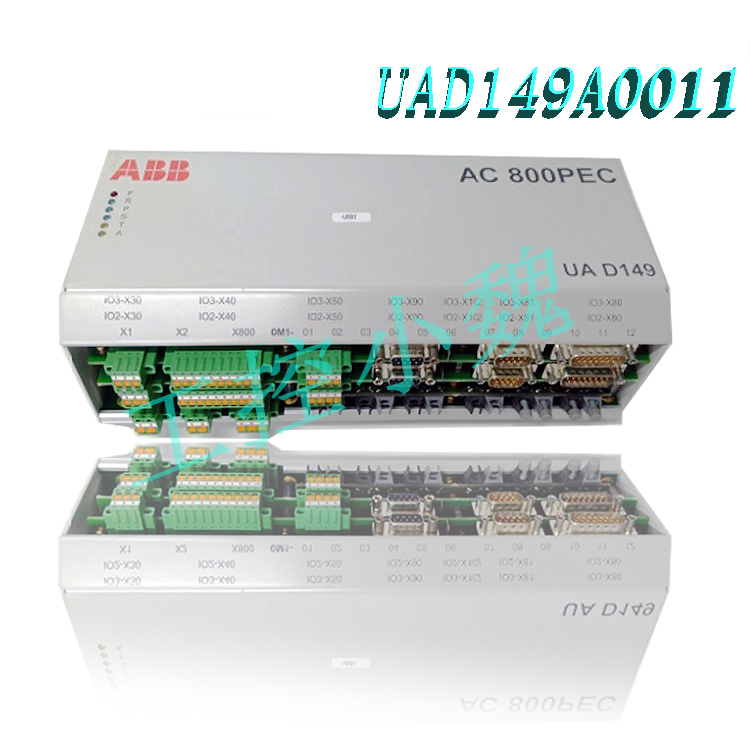
UCD208A101 3BHE020018R0101 typically has high-speed computing capabilities, large capacity memory, and multiple communication interfaces to meet the needs of different motors and applications. It can process various complex control algorithms and data in real-time, ensuring the stable operation and efficient performance of the motor. In addition, the UCD208A101 3BHE020018R0101 excitation central processor also has high reliability and stability, can operate for long periods of time in harsh industrial environments, and has self diagnosis and fault protection functions to ensure the safe and reliable operation of the system.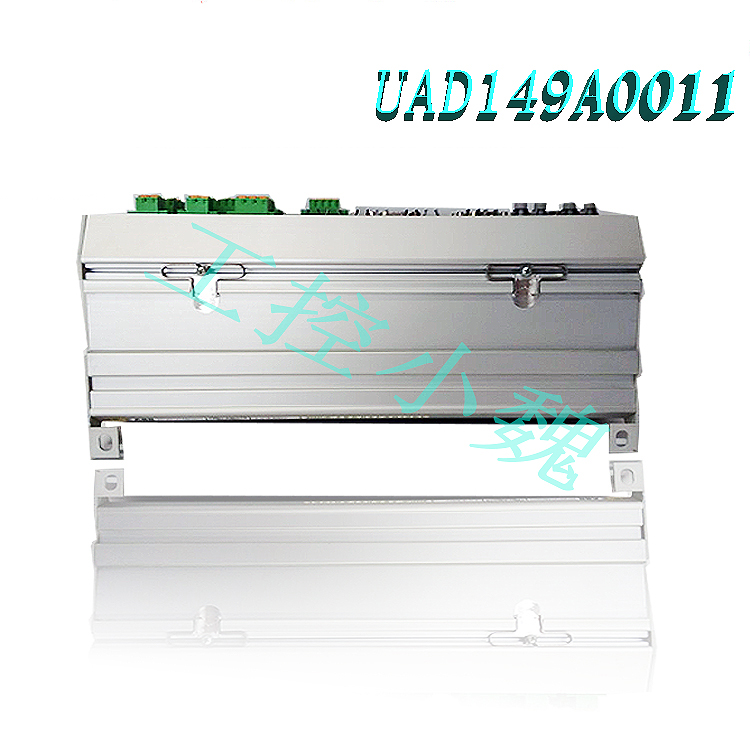
Specially used for controlling and managing the core computing and processing tasks of the excitation system. Excitation systems are typically used for generators or other rotating motors to control their magnetic field and output performance. The UCD208A101 3BHE020018R0101 central processor serves as the “brain” of the excitation system, responsible for receiving input signals, executing control algorithms, and outputting corresponding control signals to ensure the stable operation and efficient performance of the motor.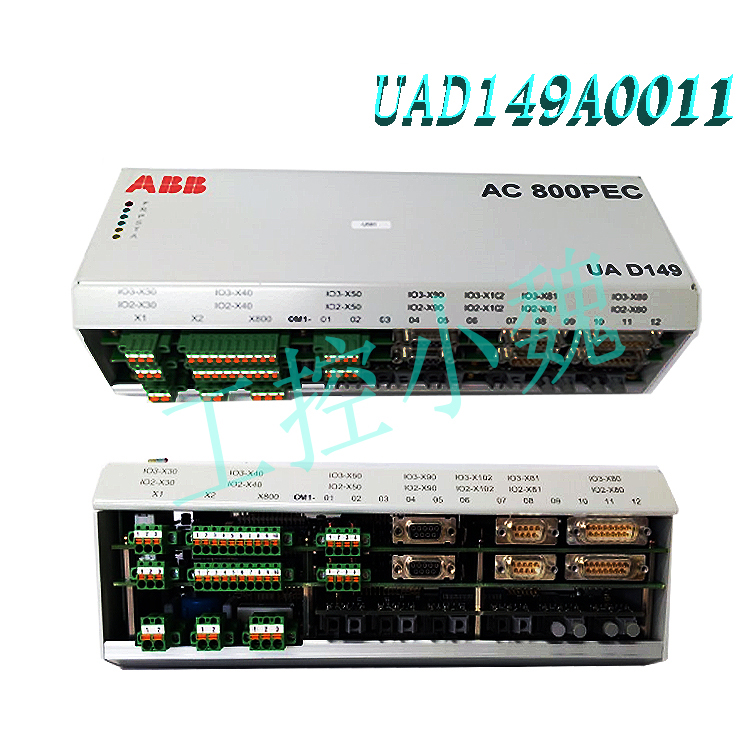
UCD208A101 3BHE020018R0101 excitation central processing unit may have high computing power and stability, capable of real-time processing of various complex control algorithms and data to meet the needs of different motors and applications. At the same time, it also has multiple communication interfaces and connection options, making it easy to integrate and communicate with other systems and devices.
All products on this website are special products, and market prices have been fluctuating,
The specific customer service quotation shall prevail, as the product is a new one and the traps are not real,
Please confirm the model, product, price, and other detailed information with customer service before placing an order. The website has been used,
New for sale, please contact the website https://www.weikunfadacai1.com/ Customer service communication.
Model recommendation:
UAD142A01
UAD142A01 3BHE012551R0001
UAD149A00-0-11 3BHE014135R0011
UAD149 3BHE014135R0011
AC800PECUAD149A0011
UAD149A00-0-11
AC800PECUAD149A0011
UAD149A0011
UAD149A0011 3BHE014135R001
1771-WG
EASYGEN 3500XT 8440-2085
UAD155A0111
PMA323BE
PMA323BE HIEE300308R1
PMA323B
PMA323BE HIEE300308R1
HIEE300308R1
EXC3BSE018104R1
PFSK165 3BSE027778R1
PFSK110 57310001-HG
PFSK108 YM322001-EH
PFSK106 YM322001-EC
PFSK111 5735175-C
More…
-300x300.jpg)
admin –
Industrial Control Sales Consultant: Carrey welcomes customers to comment and contact us to inquire about the status of this module.
Ciasto na Gofry Biszkoptowe –
I’m impressed with the clarity and depth of your analysis. Fantastic article!
Gotowe Ciasto –
Your insights on this topic are really valuable. Thanks for providing a fresh perspective!
Ciasto na Naleśniki –
Your insights are both unique and incredibly valuable. Thanks for sharing your knowledge.
admin –
https://www.weikunfadacai1.com/product/abb-central-processing-unit-ucd208a101-3bhe020018r0101/
Product Model: UCD208A101
ABB Material Code: 3BHE020018R0101
Product Positioning: UCD200 series general-purpose digital controller CPU board (Central Processing Unit), belonging to the ABB PEC80/Advant/electric drive supporting main control I/O integrated board, model alias PEC80-IOU
Classification: Industrial-grade distributed control core unit, integrating a processing processor + local I/O terminals + multi-channel industrial communication
II. Core Hardware Specifications
Processing Core
Equipped with an ARM Cortex-M4 industrial processor, with a maximum processing speed of 250 KIPS, supporting real-time calculation of PID, fuzzy closed-loop, logic sequential control, and motion position/speed/torque algorithms.
Storage: 512KB Flash program storage + 64KB high-speed RAM data cache
Onboard I/O Channels (Integrated Terminals)
Digital Inputs (DI): 8 channels
Digital Outputs (DO): 8 channels 4-channel analog input (onboard relay driver)
Analog Input AI: 4 channels (4–20mA/0–10V standard industrial signal)
Analog Output AO: 4 channels
Power Supply: Standard industrial 24VDC power supply
Communication Interface (3 standard serial ports on the front panel)
RS485, RS232, Ethernet interface
Supported Protocols: Modbus RTU/TCP, PROFIBUS DP, CANopen, ABB Advant 100 bus, compatible with third-party PLC/DCS systems
Environment and Protection
Operating Temperature: -20℃ ~ +70℃; Storage -40℃~85℃
Protection Rating: Reinforced aluminum alloy panel, supports rack hot-swappable design, redundant system configuration, complete hardware fault self-diagnosis, overcurrent/overvoltage/overtemperature protection, CE and UL industrial safety certifications ABB-DCS He… Physical Parameters
Rack-mount card structure, weight approximately 0.74kg, European-style terminal block wiring, compatible with ABB standard control cabinet rack mounting
III. Core Functions
Main Control Operation
As the local subsystem CPU, it independently completes equipment logic interlocking, continuous process closed-loop regulation, timing sequence control, and precise motion control, sharing the computational load of the main DCS controller.
Field Signal Acquisition and Drive
Directly connects to field sensors, limit switches, regulating valves, solenoid valves, and indicator lights, without the need for additional I/O expansion cards. Small control stations can complete the entire signal interaction with a single module.
Multi-System Interoperability
Simultaneously interfaces with upper-level DCS/supervisor systems and lower-level frequency converters/servo drives/field instruments, supporting multi-bus parallel data interaction and adapting to both new and old ABB control systems for compatibility upgrades.
Operation and Maintenance Diagnosis
Real-time acquisition of channel short circuits, open circuits, communication interruptions, and processor overload faults, actively uploading alarms; supports online program downloading and hot-swappable replacement without interrupting the entire system operation.
IV. Typical Application Scenarios
Power Industry (Main Application)
Generator Auxiliary Control, High Voltage DC Converter System, Substation Automation, Excitation System, SVG Reactive Power Compensation Equipment Supporting Control Board
Process Industry DCS
Chemical, Oil & Gas, and Water Treatment Small-Scale Local Substation Control, Replacing Small Independent PLCs
Transmission and Heavy Industry
Large-Scale Transmission Device Supporting Control, Metallurgical Rolling Mill, Port Lifting Equipment Local Unit Control
General Automation
Production Line Equipment, CNC Machine Tools, HVAC Building Automation, Robot-Assisted Substation Control
Case Study 1: Unitrol Excitation System Retrofit of Generator Units in a Thermal Power Plant (Main Power Scenarios)
Project Overview
A 3×50MW self-owned coal-fired unit in East China had an outdated and aging Unitrol 500 excitation system I/O board that was no longer in production. This resulted in frequent channel disconnections, AVR lag, and inability to meet the new grid voltage regulation standards. The entire station adopted the UCD208A101 as… The PEC80 platform features a local CPU-I/O integrated substation, with one module configured per excitation cabinet.
Module Functions:
8-channel DI (Digital Input) acquisition: Generator switch, disconnector, protection actions, fan/cooling system status, fault alarm nodes;
8-channel DO (Digital Output) relay output: Controls excitation switching, cooling fan start/stop, alarm indicator lights, and fault trip interlocks;
4-channel AI (Analog Input) acquisition: Generator terminal PT voltage, CT stator current, excitation current/voltage, and rotor temperature 4–20mA signal;
4-channel AO (Automatic Asynchronous Detection) closed-loop output: AVR (Automatic Voltage Regulator) setpoint, reactive power regulation, power factor regulation, and remote voltage regulation commands;
RS485 + Ethernet dual communication uploads data to the plant’s AC800M DCS, synchronously interacting with the excitation main processor in a high-speed closed-loop manner.
Project Achievements
Stable operation for 6 consecutive years after replacement with no I/O channel failures; voltage regulation response speed improved to 8ms, meeting the primary frequency regulation assessment of the power grid;**
Integrated board eliminates the need for independent I/O expansion racks, reducing control cabinet wiring by 40%, requiring only a single model of spare parts, and reducing maintenance costs by 55%;**
Built-in hardware self-diagnostics accurately locate open/short circuit faults, reducing maintenance time by 70%.
Case Study 2: Chemical Industrial Park SVG Reactive Power Compensation Complete Control System Project
Project Overview:
Four sets of 10Mvar Static Var Generators (SVG) were installed in the 20kV distribution network of a large-scale refining and chemical industrial park in Shandong Province. The load included high-power compressors and heating furnace frequency converters, resulting in large harmonic and reactive power fluctuations. Each SVG control cabinet was equipped with one UCD208A101 as a local control unit.
Module Functionality Implementation
Collects analog signals including bus voltage, reactive power, SVG DC-side voltage, and IGBT temperature.
Implements interlocking logic: automatic derating, tripping, and cooling fan linkage control in case of overvoltage/overcurrent/overtemperature.
Connects to the campus 800xA DCS via Modbus TCP, uploading power quality data in real time and receiving remote switching and reactive power setting commands.
Implementation Value
A single module completes integrated control of computation, data acquisition, drive, and communication, eliminating the need for an additional small PLC; communication is lossless even under strong electromagnetic interference conditions, and the power factor is stably controlled above 0.98, resulting in annual electricity cost savings of approximately 1.2 million yuan.
Case Study 3: Unmanned On-Site Substation for Shale Gas Gathering (Oil and Gas Industry)
Project Overview
Twelve remote gathering stations in the Chongqing Fuling Shale Gas Field. Each station includes a separation skid, booster compressor, wastewater tank, and heater, requiring unmanned remote monitoring. Each skid-mounted station is equipped with one UCD208A101 local controller, paired with an AC800SCADA system.
On-Site Control Functions
DI: High/low pressure switch, liquid level limit, combustible gas alarm, pump operation feedback;
DO: Booster compressor start/stop, heater solenoid valve, drain valve, on-site audible and visual alarms;
AI: Wellhead pressure, separator temperature, liquid level transmitter (4–20mA);
AO: Continuous adjustment of regulating valve opening;
Communication: 4G gateway + Ethernet dual-link upload to the dispatch center, supporting remote online program modification.
Project Achievements
Stable operation in a wide temperature range of -20℃ to +65℃ in the field, requiring no on-site supervision; streamlined hardware quantity per station, saving 30% of skid-mounted space; hot-swappable modular design, eliminating the need for complete station shutdown during fault replacement, reducing the average annual maintenance frequency per station to less than once.
Case Study 4: Local Process Control of the Biological Treatment Section in a Wastewater Treatment Plant
Project Overview: The second phase of a wastewater treatment plant in a southern prefecture-level city underwent technical upgrades to its biological treatment tanks and aeration systems. The original discrete instrumentation + small PLC solution had a high failure rate. The UCD208A101 was adopted as an independent control substation for each tank, with four modules controlling the aeration, recirculation, and dosing systems.
Control Logic
AI Data Acquisition: Dissolved Oxygen (DO), Tank pH, Liquid Level, Blower Pressure;
AO Output: Adjusts Aeration Blower Frequency Converter Setpoint and Dosing Pump Flow Rate;
DI/DO Enables Pump Interlocking, High/Low Liquid Level Protection, and Equipment Fault Alarm;
RS485 Modbus Interface with Plant-wide Central Control DCS.
Application Advantages
Integrated I/O eliminates the need for intermediate terminal conversion modules, significantly reducing on-site wiring failures; Built-in PID algorithm with local closed-loop ensures independent and stable operation of the aeration system during network interruptions, preventing sludge activity degradation.
Case Study 5: Metallurgical Rolling Mill Auxiliary Drive Substation Control (Heavy Industry)
Project Overview
The auxiliary drive for cooling and side guide plates of the finishing mill in Hebei Hot Rolling Mill was upgraded. The main drive was ACS6000, but the auxiliary control signals were scattered over long distances. A UCD208A101 distributed substation was added.
Work Content
Collects signals from mill limit switches, cooling water flow, and hot metal detector switches; outputs control signals for cooling valves, side guide plate servo inputs, and fault shutdown interlocks; synchronizes the high-speed bus with the main drive controller to ensure precise timing of rolling operations.
Actual Results
Solves the problem of long-distance analog signal attenuation, improving rolling dimensional accuracy; the module is resistant to strong mill vibrations and dusty industrial environments, with no hardware damage for 5 consecutive years.
Case Study Six: HVAC Automation in Large Commercial Buildings (General Building)
Project Overview
Zone-zone control of central air conditioning, chillers, and cooling towers in a super-large commercial complex; each floor’s air conditioning room is equipped with an independent UCD208A101 control unit.
Control Scope
Simulated temperature and humidity data acquisition; simulated output from chilled water valves/fans; fan/pump start/stop interlocks; fire alarm linkage for air conditioning shutdown; Ethernet interface with the building’s upper-level monitoring system.
Highlights
A single module completes a layer of HVAC control, reducing procurement, installation, and spare parts costs by 60% compared to multi-module solutions.
Common Advantages of this Module (Verified by All Case Studies)
Integrated CPU + I/O: Single card integrates computing, data acquisition, driver functions, and multi-channel communication. Small substations require no additional expansion boards, saving cabinet space.
Wide Temperature Range and Strong Industrial Tolerance: -20℃ to +70℃, suitable for harsh conditions in power plants, oil and gas, metallurgy, and wastewater treatment.
Multi-Protocol Compatibility: Modbus RTU/TCP, ABB Advant bus, extremely high compatibility for upgrading old and new ABB DCS systems.
Mature Spare Parts Compatibility: Although discontinued for many years, a large number of spare parts are still in use in power plants and chemical plants both domestically and internationally. Stable supply of new inventory/disassembled spare parts, making it a preferred replacement for older I/O controllers in many technical upgrade projects.