
Description
Many products have not yet been listed online; please contact us for more information.
If the product model differs from the displayed image, the model number takes precedence. Please contact us for specific product photos; we can arrange for warehouse staff to take and verify them.
We operate 76 shared warehouses globally, so it may sometimes take a few hours to provide an accurate response; we appreciate your understanding. Rest assured, we will address your inquiries as quickly as possible.
I. VE3008 DeltaV MQ Controller: Product Overview
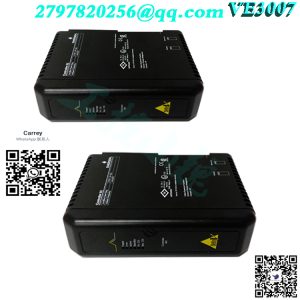
The VE3008 is a core MQ controller within the Emerson DeltaV Distributed Control System (DCS) M-series hardware family, serving as the pivotal link between the field device layer and the control network layer. Equipped with a high-performance embedded processor, 48MB of user memory, and dual-redundant 100 Mbps control network interfaces, it is designed for industrial process control scenarios utilizing traditional I/O architectures. It offers backward compatibility with control strategies and configurations from earlier DeltaV systems, serving as a critical hardware platform for local closed-loop control, data exchange, and operational reliability in industrial production.
II. VE3008 Controller: Core Operating Principles
As the local control unit of the DeltaV DCS, the VE3008 MQ controller operates based on a closed-loop logic comprising field data acquisition, real-time control computation, command output/execution, and network-wide data exchange. Its core operating mechanisms are as follows:
1. Field I/O Data Acquisition and Device Management
The controller connects to various I/O interface modules via the backplane bus and features automatic identification capabilities. Upon power-up, it automatically detects connected I/O card types, channel counts, and device parameters, enabling hardware adaptation without the need for manual configuration. It acquires process signals—such as analog and discrete inputs, as well as data from RTDs and thermocouples—from field sensors and transmitters in real time, while simultaneously issuing control commands to actuators like control valves and solenoid valves. It supports transparent data transmission for HART-enabled smart devices, allowing diagnostic information, calibration parameters, and device identity data from field instruments to be transmitted losslessly to upper-level workstations on the control network, thereby achieving end-to-end data transparency.
2. Control Strategy Loading and Real-Time Computation
The controller executes all control strategies downloaded from the DeltaV engineering station, covering basic control algorithms such as PID loop regulation, logic interlocking, and sequence control. It also supports advanced control functions including batch control, neural control, and model predictive control. With a standard control execution cycle of 100 milliseconds, it meets the real-time control precision requirements of the vast majority of process industries. All control parameters modified online are automatically stored in non-volatile memory, with a complete record of changes preserved to ensure control data traceability and reproducibility.
3. Dual-Network Redundant Communication and System Interaction
The controller is equipped with independent primary and backup 8-pin RJ45 control network interfaces, utilizing full-duplex 100Mbps Ethernet communication to facilitate bidirectional data exchange with DeltaV system operator stations, engineering stations, servers, and other network nodes. It supports a redundant control network architecture; in the event of a single network failure, the system can switch to the backup link without disruption, ensuring continuous communication. Additionally, the controller features a standby redundancy capability, allowing for the configuration of a dual-controller redundant architecture to further enhance overall system availability.
4. Fault Self-Recovery and Status Diagnostics
The controller includes a built-in cold restart function. Following an unexpected power outage and subsequent power restoration, it automatically loads the complete control strategy and the pre-outage operating state from non-volatile memory, resuming normal control operations without the need for manual intervention. The panel features multiple status indicators providing real-time feedback on power, operational status, fault alarms, and network communication. It supports remote Ping identification and online firmware upgrades, enabling O&M personnel to quickly locate devices, troubleshoot status issues, and perform version updates.
III. Core Technical Advantages of the VE3008 DeltaV MQ Controller
1. Cost Reduction and Efficiency Improvement: Significantly Reducing Engineering Workload
The controller features auto-addressing, auto-positioning, and automatic I/O recognition capabilities. I/O modules are plug-and-play, automatically matching field device attributes upon power-up; this eliminates extensive manual configuration and reduces non-value-added engineering costs. A full-duplex 100Mbps Ethernet interface combined with an optimized computing architecture results in lower CPU utilization and a higher capacity for control strategies. Control response speeds match those of the MD Plus controller, allowing for the efficient execution of complex control logic.
2. Industrial-Grade Reliability: Ensuring Long-Cycle Operation
Designed with industrial-grade hardware for a wide operating temperature range (-40°C to 70°C), the unit withstands 10g shocks and significant vibration, ensuring stable operation in harsh industrial environments characterized by high temperatures, high humidity, and dust. It includes a built-in, non-replaceable 3.0A fuse for overcurrent protection. Features such as automatic control parameter storage and automatic recovery after a cold restart minimize the risk of unexpected downtime, meeting the requirements for long-cycle, continuous operation in the process industry.
3. Flexible Compatibility: Scalable Functionality
The controller is fully compatible with control strategies and configurations from earlier DeltaV systems. Upgrading existing systems requires no re-development of control logic, thereby protecting the user’s existing assets. In addition to basic continuous control, it natively supports DeltaV Batch control options and allows for the expansion of advanced algorithms—such as neural control and model predictive control—covering the full spectrum of needs from simple single-loop regulation to complex, intelligent, and optimized control. Its modular architecture supports scalable I/O expansion, adapting to project requirements across different production capacities and development stages.
4. Convenient O&M and full-lifecycle visualization
Front-panel status indicators provide an intuitive view of core operational states—including power, run status, faults, and network communication—enabling rapid assessment of device operation without the need for additional tools. It supports full HART data transparency, achieving end-to-end data visualization from field instruments to the management layer, which facilitates equipment health management and predictive maintenance. Remote diagnostics and firmware upgrade capabilities significantly reduce the workload for on-site operations and maintenance while improving fault-handling efficiency.
IV. Role and Application Scenarios of VE3008 Across Industrial Sectors
As the local control core of the DeltaV DCS, the VE3008 MQ controller plays a pivotal role in process industries by handling precision control, data acquisition, safety interlocking, and operational assurance. It serves as key hardware for driving production automation and digital transformation. Its core application sectors and value propositions are as follows:
1. Petrochemical Industry
In scenarios such as oil refining, ethylene production, fine chemicals, and oil and gas gathering and transportation, the VE3008 manages closed-loop control of temperature, pressure, flow, and liquid levels for units including reactors, distillation columns, pipeline transport systems, and storage and logistics facilities. It also executes emergency shutdown and safety interlocking logic. Its redundant design and high reliability meet the petrochemical industry’s requirements for continuous, long-cycle operation (24/7), helping to minimize production fluctuations and safety risks while enhancing process stability and product yield.2. Power and Energy Industry
Applied in auxiliary control systems for thermal power plants, automation systems for hydroelectric stations, and auxiliary control systems for new energy power plants, it enables data acquisition and automatic control for processes such as boiler feedwater management, turbine auxiliaries, environmental desulfurization and denitrification, and cluster control for PV/wind farms. Its wide-temperature and vibration-resistant hardware characteristics are well-suited to the complex electromagnetic and environmental conditions of power plants; rapid control response ensures the stable operation of generator units, helping to improve power generation efficiency and optimize energy consumption.
3. Water Treatment Industry
In municipal sewage treatment, industrial wastewater treatment, and water purification processes, the VE3008 handles automatic control for stages such as aeration, chemical dosing, sedimentation, filtration, and disinfection, while monitoring water quality parameters in real-time and dynamically adjusting actuators. Its modular design flexibly adapts to the I/O requirements of water treatment plants of various scales; stable control performance ensures effluent quality meets standards and reduces manual O&M costs.
4. Life Sciences and Pharmaceutical Industry
Deeply compatible with DeltaV Life Sciences solutions, it supports batch production control, recipe management, and full data traceability, complying with industry regulations such as GMP. It enables precise control and comprehensive data recording for processes like biological fermentation, formulation filling, and traditional Chinese medicine extraction, ensuring consistency in pharmaceutical production and accelerating technology transfer and compliance validation.
5. Food and Beverage Industry
Applied in continuous production scenarios such as beverage filling, dairy processing, grain and oil production, and condiment brewing, it achieves precise control over temperature, flow rate, ingredient ratios, and sterilization parameters, ensuring consistent product quality. Its stable operational capability meets the demands of long-term continuous production in the food industry, while data traceability features satisfy the requirements of food safety management systems.
V. VE3008 Controller Standard Operation, Installation, and Commissioning Procedures
(I) Pre-installation Preparation
Compatibility Check: Confirm the software version of the existing DeltaV system and verify the compatibility of the VE3008 controller’s firmware version against Emerson’s official compatibility matrix; assess the total system I/O load to ensure the number of I/O cards and the volume of data handled by the controller remain within rated limits.
Work Plan Formulation: For non-redundant systems, develop a process shutdown and system switchover plan in advance, clearly defining the shutdown duration and risk mitigation strategies; for redundant systems, the standby controller may be replaced online, provided the operational status of the primary controller is confirmed to be normal.
Safety and Tool Preparation: Prepare tools such as anti-static wrist straps and screwdrivers of the appropriate specifications; execute cabinet power-off and Lockout/Tagout (LOTO) procedures, confirming the absence of power before commencing work to prevent equipment damage caused by live operations.
(II) Hardware Installation Steps
Align the VE3008 controller with the right-hand slot of the 2-slot power/controller carrier and slide it in steadily in a horizontal direction until the latch locks and the device is fully seated; ensure reliable contact with the backplane connector.
Connect the RJ45 Ethernet cables for the primary and redundant control networks to the corresponding controller ports; ensure the cables are securely plugged in and properly labeled to facilitate future operation and maintenance.
Inspect the controller installation to ensure there is no looseness and that no foreign objects are obstructing the cooling vents; verify that all wiring is correct and free from short-circuit risks before preparing for power-up testing.(III) System Commissioning Steps
Power-up Status Check: Connect the system power and observe the panel indicator lights. A steady green “Power” light indicates normal power supply; a steady green “Active” light indicates the controller has entered the main operating state; a flashing yellow “Network” light indicates normal control network communication. If the red “Error” light remains steadily lit, disconnect the power immediately to troubleshoot hardware or wiring faults.
Configuration Download and Verification: Establish communication between the DeltaV engineering station and the controller, then download the corresponding control strategy configuration. Upon completion, verify online the data acquisition and command output functions for all I/O channels, confirming that field device signal feedback aligns with control outputs.
Functional Testing and Backup: Test core functions such as manual/automatic control loop switching, interlock logic triggering, and network redundancy failover; confirm that control precision and response speed meet process requirements. After testing, back up the current controller configuration program and firmware version.
VI. VE3008 Operation, Maintenance, and Safety Precautions
1. Installation and Operation Safety Standards
Controller installation, replacement, and firmware upgrades must be performed by personnel professionally trained on the Emerson DeltaV system, strictly adhering to the procedures outlined in the official hardware installation manual.
Implement anti-static measures before handling any hardware; wear an anti-static wrist strap and touch a grounded cabinet to discharge static electricity, thereby preventing electrostatic damage to precision electronic components.
For non-redundant systems, power must be completely disconnected before inserting or removing hardware. When performing an online replacement of a standby controller in a redundant system, verify that the primary controller is operating normally; hot-swapping (inserting/removing while powered) is strictly prohibited if the primary controller is in a fault state.
2. Configuration and Firmware Management Requirements
Before making any configuration changes or firmware upgrades, perform a complete backup of all configuration programs, parameter settings, and firmware versions from the original controller to prevent data loss.Arbitrary firmware upgrades spanning multiple major versions are prohibited; the matching version must be selected in strict accordance with Emerson’s official compatibility matrix, and proper operation must be verified in a test environment prior to upgrading.
All online modifications to control parameters must be documented in writing; changes are automatically stored in the controller’s memory and must be periodically synchronized with the engineering station database to ensure configuration consistency between the controller and the workstation.
3. Key Points for Routine Operation and Maintenance
Regularly inspect the status of the controller panel indicator lights—paying particular attention to the power, fault, and network indicators—and promptly troubleshoot any abnormal alarms. Use the DeltaV Diagnostics tool on a quarterly basis to retrieve controller diagnostic information and assess operational health.
Clean accumulated dust from the controller surface and ventilation slots every six months to ensure unobstructed heat dissipation; periodically check the security of the connection between the controller and its carrier to prevent poor contact caused by prolonged vibration.
Hot-swapping the controller or associated I/O modules while powered on is prohibited to avoid damaging the backplane bus and electronic components; implement appropriate anti-static, moisture-proof, and impact-resistant measures during equipment storage and transport.
4. Environmental and Load Limitations
The controller’s operating environment must be maintained within a temperature range of -40°C to 70°C and a relative humidity of 5% to 95% (non-condensing); prolonged operation at the upper temperature limit will reduce the equipment’s service life.
Configure I/O modules strictly according to rated load specifications; overloading is prohibited to prevent excessive power consumption, which could lead to operational instability or data anomalies.
Install the unit away from sources of strong electromagnetic interference, and route control network cables separately from power cables to ensure communication stability.
Model recommendation:
EMERSON SE4301T02
EMERSON SE4304T01
EMERSON SE4302T02
EMERSON SE4303T01
EMERSON SE4023
EMERSON SE4003S2
EMERSON SE4801T03
EMERSON SE4304T01
EMERSON SE4001S3T2B2
EMERSON VE4003S2B1
EMERSON VE4001S2T2B1
EMERSON VE4002S1T2B5
EMERSON VE4002SIT2B5
EMERSON VE4003S2B2
EMERSON VE4022
EMERSON VE4002S1T2B1
EMERSON VE4001S2T2B5
EMERSON VE4001S2T2B4
EMERSON VE4003S2B1
SE300
SE3007
SE3008 KJ2005X1-SQ1
SE3008 KJ2005X1-SQ1 12P6383X032
KJ3208X1-BA1
VE3008 CE3008
VE3008 CE3008 KJ2005X1-MQ1
VE3008 CE3008
CE3008
L0115032
PR6424 CON021/914-080
more……
admin –
1. Installation and Operation Safety Standards
Controller installation, replacement, and firmware upgrades must be performed by personnel professionally trained on the Emerson DeltaV system, strictly adhering to the procedures outlined in the official hardware installation manual.
Implement anti-static measures before handling any hardware; wear an anti-static wrist strap and touch a grounded cabinet to discharge static electricity, thereby preventing electrostatic damage to precision electronic components.
For non-redundant systems, power must be completely disconnected before inserting or removing hardware. When performing an online replacement of a standby controller in a redundant system, verify that the primary controller is operating normally; hot-swapping (inserting/removing while powered) is strictly prohibited if the primary controller is in a fault state.
2. Configuration and Firmware Management Requirements
Before making any configuration changes or firmware upgrades, perform a complete backup of all configuration programs, parameter settings, and firmware versions from the original controller to prevent data loss.Arbitrary firmware upgrades spanning multiple major versions are prohibited; the matching version must be selected in strict accordance with Emerson’s official compatibility matrix, and proper operation must be verified in a test environment prior to upgrading.
All online modifications to control parameters must be documented in writing; changes are automatically stored in the controller’s memory and must be periodically synchronized with the engineering station database to ensure configuration consistency between the controller and the workstation.
3. Key Points for Routine Operation and Maintenance
Regularly inspect the status of the controller panel indicator lights—paying particular attention to the power, fault, and network indicators—and promptly troubleshoot any abnormal alarms. Use the DeltaV Diagnostics tool on a quarterly basis to retrieve controller diagnostic information and assess operational health.
Clean accumulated dust from the controller surface and ventilation slots every six months to ensure unobstructed heat dissipation; periodically check the security of the connection between the controller and its carrier to prevent poor contact caused by prolonged vibration.
Hot-swapping the controller or associated I/O modules while powered on is prohibited to avoid damaging the backplane bus and electronic components; implement appropriate anti-static, moisture-proof, and impact-resistant measures during equipment storage and transport.
4. Environmental and Load Limitations
The controller’s operating environment must be maintained within a temperature range of -40°C to 70°C and a relative humidity of 5% to 95% (non-condensing); prolonged operation at the upper temperature limit will reduce the equipment’s service life.
Configure I/O modules strictly according to rated load specifications; overloading is prohibited to prevent excessive power consumption, which could lead to operational instability or data anomalies.
Install the unit away from sources of strong electromagnetic interference, and route control network cables separately from power cables to ensure communication stability.