
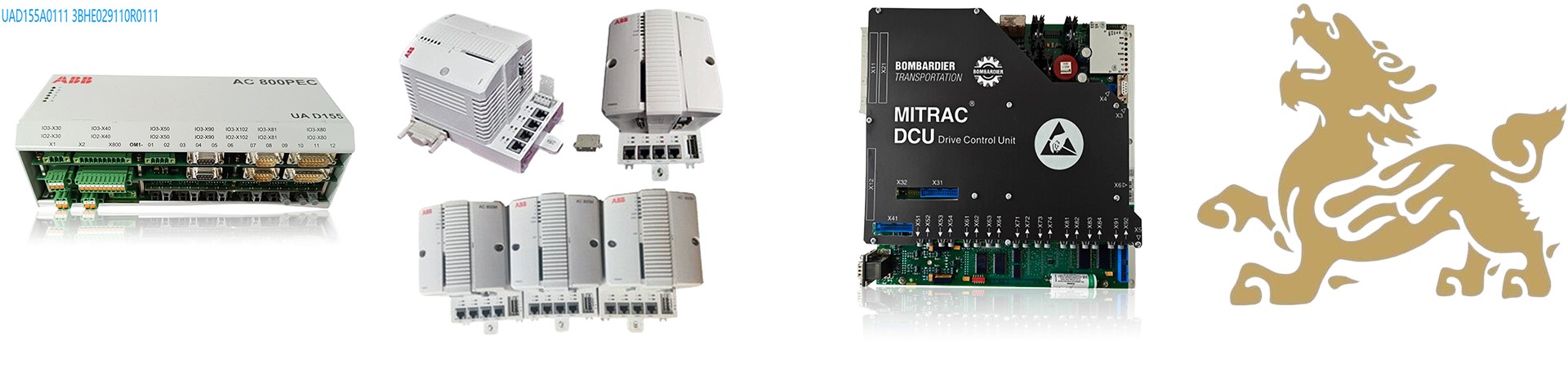
Description
Many products are not yet listed. Please contact us for more product information.
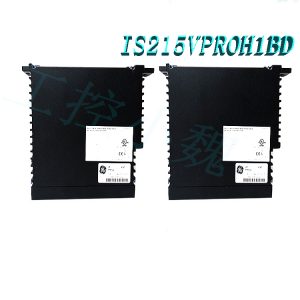
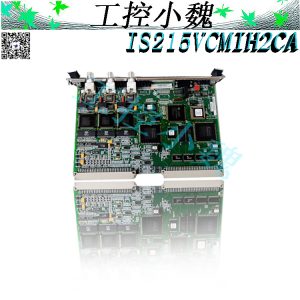
If the product model differs from the displayed image, the model number shall prevail. Please contact us for specific product images; we will arrange to take photos in our warehouse for confirmation.
We have 76 shared warehouses worldwide, so it may sometimes take several hours to accurately return the information to you. We apologize for any inconvenience. Of course, we will respond to your inquiries as soon as possible.
I. Core Functions
Signal Conversion and Conditioning: Acts as a bridge between the controller core board and external terminal boards and field sensors, realizing digital and pulse signal isolation, level conversion, and signal filtering.
Speed/Counting Signal Processing:Supports frequency pulse acquisition from speed probes (magnetoresistive probes, Hall effect probes), used for turbine/gas turbine speed measurement, zero-speed protection, and overspeed protection circuit signal preprocessing.
Internal Bus Communication: Interacts with the UC controller (UCVE/UCSE) via the CPCI backplane, and simultaneously leads out multiple I/O connectors to interface with various terminal boards (IS210MVRTxx series).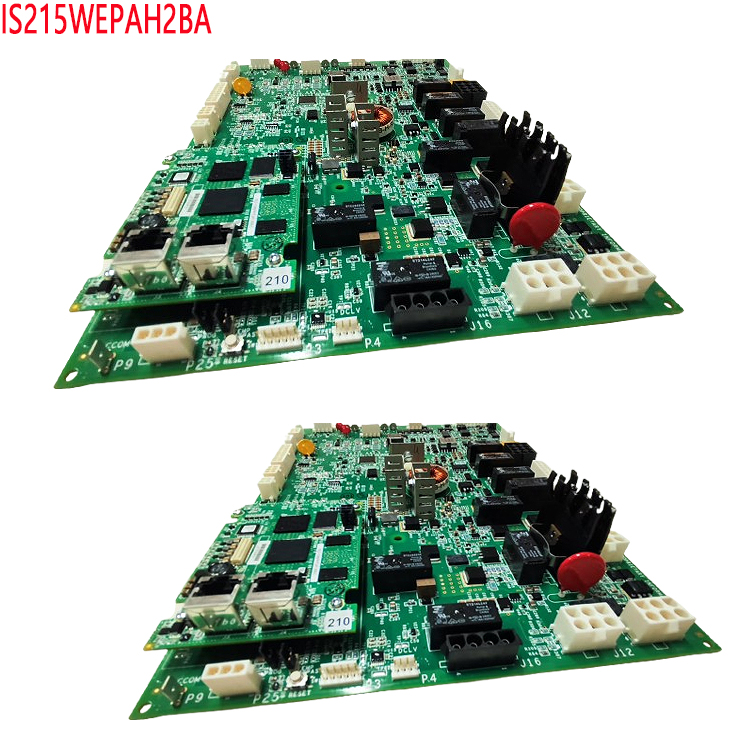
Circuit diagnostics includes built-in channel disconnection detection and power monitoring, allowing reporting of channel faults, module power failures, and signal anomalies on the upper-level control screen.
II. Typical Application Scenarios
GE Heavy-Duty Gas Turbine and Steam Turbine Mark VIe Control System
Combined Cycle Power Plant and Captive Power Plant Unit Main Control and Protection System
Integrated with EX2100 Excitation Control System
III. Hardware and Environmental Parameters
Structure: 6U CPCI card, VME/CPCI rack mounting
Operating Temperature: 0℃ ~ +60℃ (inside control cabinet)
Power Supply: DC power supply from rack backplane
Protection: Onboard electrical isolation to resist strong electromagnetic interference from power plants
IV. Common Faults and Troubleshooting Points
Speed signal jump: Aging of the board’s pulse input channel operational amplifier and filter capacitors
Module cannot be recognized by the controller: Oxidation of backplane gold fingers, damage to the local bus interface chip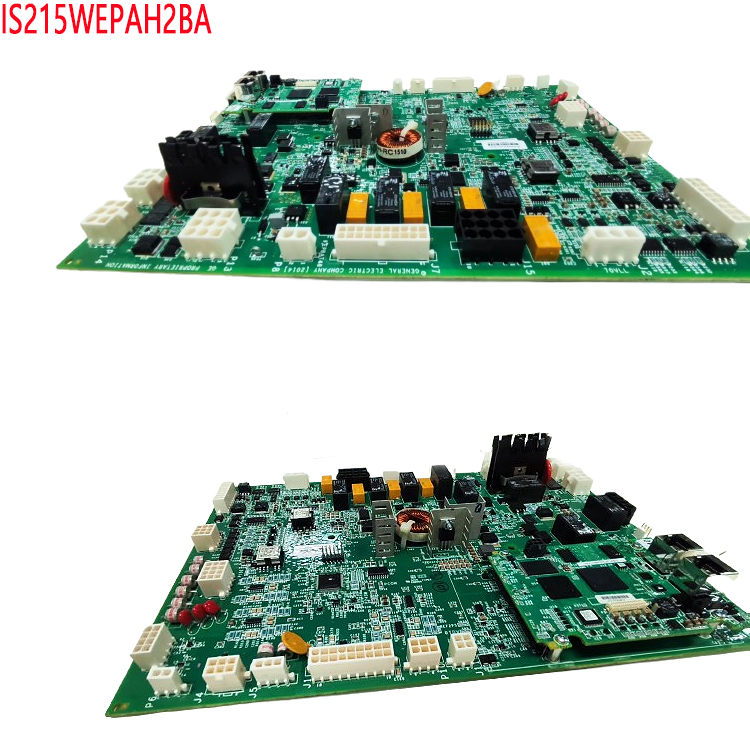
No input to the channel: Burnout of external surge protection circuit and input current limiting resistor
Repair cycle: Professional industrial control repair typically takes 3-7 working days, supports on-board verification with a test platform
V. GE Speedtronic Mark VIe Key Features of the Control System
Mark VIe is GE Vernova’s (formerly GE Power) fourth-generation distributed control system specifically for gas turbines/steam turbines. It is an evolution of Mark VI and is widely used in heavy-duty gas turbines, combined cycle steam turbines, and generator excitation (matching EX2100e). The IS210MVRFH1A you mentioned earlier is the pulse/speed interface board within the CPCI frame of this platform.
I. Hardware Architecture Features
CPCI 6U Rack Modular Controller Architecture
Main Control Board: UCVE / UCSE / UCSC single-board controller; backplane equipped with various I/O interface cards (MVRF, MVRC, MVRT, etc., IS210 series);
The controller interacts with local I/O boards via the CPCI backplane; I/O is extended remotely via IONet industrial Ethernet, eliminating the limitations of the Mark VI centralized backplane;
Supports hybrid deployment of local rack I/O + remote distributed I/O, allowing for more flexible rack layout.
Multi-level Redundancy with Flexible Configuration (Key Advantage) Supports three architectures: Simplex (single), Dual, and TMR (triple redundancy, 2oo3 voting).
TMR Architecture: Controller, power supply, IONet network, and critical I/O can all be triple-redundant; signal voting is based on a three-way selection, preventing system tripping in case of a single point of failure.
Supports online hot-swappable modules, allowing for non-stop replacement of faulty boards, improving unit availability.
Power supplies are generally dual/triple redundant.
Dedicated signal interface boards cover typical signals of rotating machinery.
MVRF (IS210MVRFH1A): Speed pulse and magnetoresistive probe frequency signal acquisition;
MVRC: Analog signal conditioning board; MVRT: Terminal adapter board; the boards have built-in signal isolation, filtering, and disconnection diagnosis, adapting to the strong electromagnetic interference environment of power plants.
II. Communication System (Major Upgrade Point, Compared to Mark VI)
IONet Deterministic Industrial Ethernet (100M) replaces the outdated IONet asynchronous bus of Mark VI. Based on standard Ethernet, it balances real-time performance and openness; controllers and I/O packs interact via IONet.
Multi-layer Network Isolation
IONet: Control Layer (Real-time I/O, not external)
Control Network (UDH): Controllers, HMIs, Historical Stations, Engineer Stations
Plant-level Network: Interfacing with Power Plant DCS
Rich Standard Protocols: Modbus TCP, IEC 61850, DNP3, Profinet; Seamlessly interfacing with excitation systems EX2100e and LS2100e; Supports GPS unified clock.
Unified Millisecond-Level Time Stamping Across the Entire Network: All SOE alarms, events, and trip records use a unified timestamp (1ms accuracy), significantly enhancing fault tracing capabilities compared to the previous generation.
III. Software Platform: ControlST Suite
A unified toolchain, distinct from the various distributed software packages of Mark VI:
ToolboxST: Configuration, logic editing, downloading, online diagnostics, trend analysis, fault recording;
WorkstationST: Operator HMI screen, alarm management;
HistorianST: Historical data storage;
Operating System: QNX real-time operating system, hard real-time, low jitter, meeting the requirements for fast response in speed control and overspeed protection;
Logic Language: Function block diagram, with numerous built-in GE original gas turbine-specific control algorithms (start-up, temperature control, FSR fuel control, exhaust temperature protection, overspeed logic, etc.).
IV. Control and Protection Capabilities (Original Gas Turbine Design)
Mark VIe is not a general-purpose PLC, but a dedicated integrated control and protection platform for rotating machinery.
Control Functions: Speed regulation, load control, fuel ratio, temperature control, IGV adjustable stator vane control, start-stop sequence, grid synchronization, exhaust temperature equalization control; supports hydrogen fuel co-firing control extension.
Integrated Protection (Critical): Overspeed protection, vibration, temperature, pressure, combustion monitoring, flameout protection; equipped with Mark VIeS safety version, meeting IEC 61508 SIL safety level, independent safety loop, can be used as a SIS system.
High-Speed Dynamic Acquisition: Built-in DMR dynamic data logger, continuously captures waveforms before and after tripping for accident analysis.
V. Operation and Maintenance & Diagnostic Features
Board-Level Deep Self-Diagnosis: Real-time reporting of backplane communication, channel status, power supply, temperature, and chip faults; online monitoring of channel disconnection and signal drift.
Powerful Trend and Fault Tracing: Long-cycle trend, event sequence (SOE), trip history; ToolboxST allows remote retrieval of fault waveforms.
Standardized Spare Parts: Controllers, switches (IS420ESWB series), and I/O boards are universal across gas turbine/steam turbine/excitation platforms, reducing the types of spare parts.
VI. Key Differences Compared to the Previous Generation Mark VI
Mark VI: Centralized rack, dedicated asynchronous IONet bus, I/O close to the controller rack;
Mark VIe: Distributed Ethernet IONet, remote I/O, CPCI single-board controller, ControlST integrated software, supports IEC61850, network security design, higher clock synchronization accuracy;
Hardware is not directly compatible; some unit upgrades can be carried out in stages.
VII. Typical Application Scenarios
GE 9FA/7FA/6FA Heavy-Duty Gas Turbines
Combined Cycle Steam Turbine Control
Steam Turbine Generator Excitation System (EX2100e)
Self-owned Power Plants, Oil and Gas Turbine Units
VIII. Shortcomings and Current Status
Original manufacturer hardware is gradually entering the mid-to-late stage of its life cycle, resulting in long lead times for brand-new original manufacturer spare parts; a large number of disassembled and refurbished IS210 series boards (such as IS210MVRFH1A) are circulating in the market;
The software is highly proprietary, with encrypted configuration files, making it difficult for third parties to modify the underlying gas turbine algorithm;
Strict requirements are placed on the temperature control, grounding, and shielding of the control cabinet; electromagnetic interference can easily cause pulse signal (MVRF channel) jumps.
Recommended related products:
IS200TPROH1BCB
IS200TPROH1BCB
IS210BPPCH1AEC
IS210AEPAH1BHC
IS215WEPAH2BA
GE IS200SRLYH2AAA
IS200EXHSG3AEC
IS200AEPCH1ABC
IS200TREAH2AED
IS200STCIH6AED
IS200SRTDH2ACB
IS200TVBAH2ACC
IS200TRLYH1BHH
IS200WEORG1A
IS200ESELH1A
IS200AEPGG1AAA
IS200TSVCH2AED
IS200EPMCH1
IS200JPDSG1A
IS220PPDAH1A
IS210JPDHG1A
IS220YSILS1B
IS200SCSAS1A
IS200WCSAS1A
IS220YSILS1A
IS200TCSAS1A
IS200WNPSS1A
IS41yJPDDG2A
IS41yJPDDG3A
IS40yJPDGH1A
IS411JPDHG1A
IS4210UCSBH4A
more……
-300x300.jpg)
Reviews
There are no reviews yet.