
Description
Many products have not been listed yet. For more products, please contact us
If the product model is inconsistent with the displayed image, the model shall prevail. Please contact us for specific product images, and we will arrange for photos to be taken and confirmed in the warehouse
We have 16 shared warehouses worldwide, so sometimes it may take several hours to accurately return to you. We apologize for any inconvenience caused. Of course, we will respond to your concerns as soon as possible.
PPD517 3BHE041576R3011 Other names:
Control unit PPD517 3BHE041576R3011
PPD517 3BHE041576R3011 signal unit
Analog controller PPD517 3BHE041576R3011
PPD517 3BHE041576R3011 excitation unit
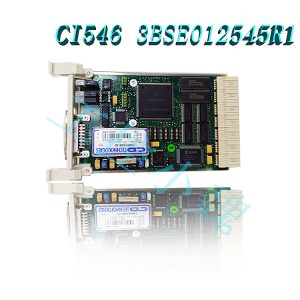
The PPD517 3BHE041576R3011 excitation system central processor is a key component in the field of industrial automation, specifically used for controlling and regulating excitation systems. The excitation system is mainly used to generate a magnetic field to control the operation of motors or other electrical equipment. The central processing unit plays a core role in the excitation system, responsible for processing control signals, executing control algorithms, and outputting corresponding control instructions.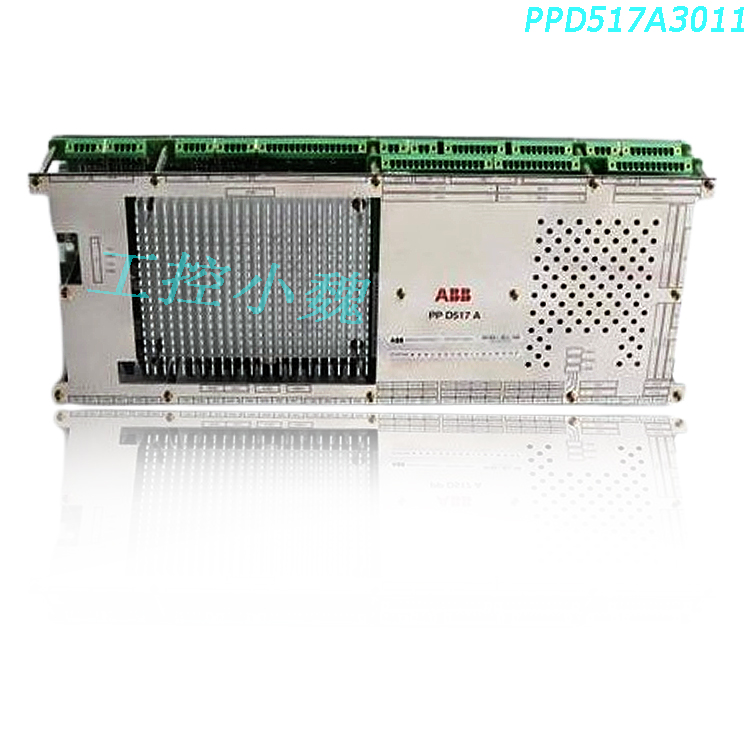
As the central processor of the excitation system, PPD517 3BHE041576R3011 has the following characteristics and functions:
High performance processing: The central processing unit adopts high-performance chips and algorithms, which can quickly process signals from sensors and calculate corresponding control instructions in real time, ensuring fast response and stable operation of the excitation system.
Rich control functions: The central processing unit supports multiple control modes, such as voltage control, current control, power factor control, etc., to meet the needs of different application scenarios. It can also adjust control parameters based on real-time data to achieve precise excitation control..jpg)
Fault diagnosis and protection: The central processing unit has fault diagnosis and protection functions, which can monitor the operating status of the excitation system, timely detect potential problems, and take corresponding protective measures to avoid equipment damage or fault expansion.
Communication and Interface: Central processing units are usually equipped with multiple communication interfaces, such as RS-485, Ethernet, etc., to facilitate data exchange and remote control with other devices. This helps to achieve integration and intelligent management of the excitation system.
Easy to configure and maintain: Central processing units usually have a user-friendly interface and programming functions, allowing users to easily set parameters, monitor, and debug. In addition, it also supports remote maintenance and upgrades, reducing maintenance costs and difficulty..jpg)
The PPD517 3BHE041576R3011 excitation system central processor has a wide range of applications in power plants, hydropower stations, wind power generation, and other fields, which is of great significance for ensuring the stable operation of generator units and improving power generation efficiency. When selecting and using this central processing unit, it is recommended to configure and debug it reasonably based on actual application scenarios and requirements to ensure its optimal performance and reliability.
All products on this website are special products, and market prices have been fluctuating,
The specific customer service quotation shall prevail, as the product is a new product and the price is not genuine,
Please confirm the model, product, price, and other detailed information with customer service before placing an order. The website has been used,
The new one is for sale, please contact customer service to communicate.
Editable controller:
PPD115A102
3BHE017628R0102 PPD115A102
PPD115A102 3BHE017628R0102
PPD115A102
PPD115A102 controller
SYN5201A-Z V277 3BHB006714R0277
3BHB006714R0217
SYN5201A-Z V217 3BHB006714R0217
SYN5200a-Z 3BHB006713R0217
PPD539A102 A 800PEC 3BHE039770R0102
PPD539A102 A800PEC
PPD513A24–110110
PPD513A24–110110 3BHE039724R2441
PPD513 A24-110110
PPD513 A24-110110 3BHE039724R244
3BHB006713R0217
PPD512A10-454000 3BHE040375R103
PPD513A24–110110 3BHE039724R2441
3BHE057901R0101 PCD235
PCD235C101 3BHE057901R0101
PCD235C101 PCD235
GFD563A101 3BHE046836R0101
ABB GFD563A102 3BHE046836R0102
ABB GF D563 3BHE046836R010
PCD235C101 3BHE057901R0101
More……
-300x300.jpg)
Sarah Gavina –
I am also commenting to make you know what a really good encounter my friend’s girl encountered visiting the blog. She came to find too many issues, not to mention what it is like to possess an awesome teaching style to let folks with ease fully understand certain specialized subject matter. You undoubtedly exceeded readers’ desires. Many thanks for providing these invaluable, trustworthy, revealing and in addition fun tips about this topic to Julie.
Madlyn Mazikowski –
Does your website have a contact page? I’m having trouble locating it but, I’d like to send you an e-mail. I’ve got some creative ideas for your blog you might be interested in hearing. Either way, great website and I look forward to seeing it expand over time.
admin –
Model Affiliation
The PPD517 is the core central processing module (CPM) for the ABB UNITROL 6000 series excitation system. It belongs to the third-generation hardware platform (with approximately 40% performance improvement compared to the earlier R2011 version).
Core Positioning: Designed specifically for excitation control of synchronous generators, synchronous motors, and grid-connected renewable energy systems (such as energy storage and hydrogen power plants). It supports high-precision voltage regulation, multi-mode dynamic stability control, and intelligent diagnostics.
Core Control Logic
Multi-Mode Switching:
AVR Mode: Automatic Voltage Regulation (steady-state accuracy ±0.1%, response time ≤20ms).
PSS Mode: Integrated PSS2B/PSS2C algorithms to suppress low-frequency oscillations (0.1-3Hz, adjustable gain 1-20).
V/Hz Limit Mode: Prevents stator core saturation (overvoltage protection threshold configurable from 1.1 to 1.25Un).
Power Factor/Reactive Power Control: Supports constant power factor (±0.05) or constant reactive power (±5% Qn) operation.
Intelligent Protection:
IGBT overtemperature protection (>90°C triggers derating).
Rotor ground fault detection (sensitivity adjustable to 1kΩ).
Communication interruption self-recovery (3 retries, 500ms interval).
Hardware Architecture and Technical Parameters
1. Modular Design
Module Type Functional Description
Main Control Unit (CPU): Dual-core ARM Cortex-A53 (1.2GHz), running the VxWorks 7 real-time operating system, supporting 16 concurrent tasks (adjustable priority).
The signal conditioning board isolates input/output signals, with an anti-interference capability of ≥15kV (IEC 61000-4-5 standard) and supports 16 analog inputs (16-bit ADC, 10kHz sampling rate).
The power interface board provides 12 PWM outputs (driving IGBT bridge rectifiers), with a maximum output current of 20A and a switching frequency of 12kHz (with an adjustable dead time of 2μs).
The communication module has dual redundant Ethernet ports (1000Mbps) and supports IEC 61850-8-1 (GOOSE/MMS), Modbus TCP/IP, and PROFINET protocols.
The power module offers dual power supply (220V AC/110V DC), with a master/slave switchover time of <2ms and hot-swappable support (with power status monitoring).
The storage module includes 1GB DDR4 RAM and 8GB eMMC (for storing event logs and fault recorder data, supporting FAT32/EXT4 file systems).
2. Key Technical Parameters
Parameter Category Technical Specifications
Input Signal - Generator Voltage: 100V AC (PT secondary side, accuracy ±0.1%)
- Generator Current: 5A AC (CT secondary side, accuracy ±0.2%)
- Excitation Current: 0-15A DC (Hall sensor input, resolution 1mA)
Output Signal - Excitation Current Command: ±10V DC (corresponding to 0-15A, load capacity ≥500Ω)
- Alarm/Trip Signal: 24V DC dry contact (5A capacity, with LED status indicator)
Control Accuracy - Voltage Regulation Error: ≤±0.08% (steady state)
- Dynamic Response Time: ≤15ms (recovers to 95% after a ±10% voltage change)
Environmental Adaptability - Operating Temperature: -40°C to +70°C (industrial grade, compliant with MIL-STD-810G)
- Humidity: ≤95% RH (non-condensing)
- Protection Rating: IP54 (dustproof and waterproof)
Electromagnetic compatibility complies with IEC 61000-6-5 (power plant environment) standard, with radiated interference (RE) ≤30dBμV/m (30MHz~1GHz).
Software Functionality and Extensibility
Core Software Package
UNITROL 6000 Advanced Suite: Integrates AVR, PSS, limiters, and intelligent diagnostic functions, and supports online parameter tuning (via ABB PC Tool Pro software).
AC 800PEC Gen3 Module: Compatible with UNITROL 5000/6000 series protocols (such as CANopen and IEC 60870-5-103).
Cyber Security Toolkit: Supports AES-256 encryption, RBAC role management (up to 8 users), and audit logs (compliant with IEC 62443-3-3).
AI-assisted diagnosis (optional):
Machine-learning-based IGBT life prediction (error <10%).
Vibration sensor fusion analysis (requires external ABB ACC800 module).
https://www.weikunfadacai1.com/product/ppd517-3bhe041576r3011-excitation-system-central-processing-module-ppd517/
admin –
Extended Functions
Black Start Support: Enables automatic start via an external diesel generator controller (start-up time <30s).
Multi-Generator Collaboration: Supports parallel operation of up to 32 generators (synchronized via optical fiber, latency <1μs).
Virtual Synchronous Generator (VSG): Simulates the inertia of synchronous generators (inertia time constant adjustable from 2 to 10s).
Typical Application Scenarios
Large Thermal Power Plants/Hydropower Plants
1000MW Units: Combined with the UNITROL 6800 excitation system, achieves voltage regulation accuracy of ±0.09%, meeting the GB/T 7409.3-2018 standard.
Primary Frequency Regulation: Participates in grid frequency regulation via the PSS function (response time <500ms, regulation range ±5% of rated power).
New Energy Grid Integration
Energy Storage Power Station: Provides virtual synchronous generator control for lithium battery energy storage systems (inertia support time ≥5s).
Offshore wind power: Salt spray-resistant design (coating meets ISO 12944-5 C5-M), supports -40°C low-temperature starting.
Industrial synchronous motors
Large compressor drives: Constant power factor operation (power factor ≥ 0.95) reduces reactive power losses (saving 20% compared to asynchronous motors).
Soft start control: Limits starting current (peak value < 2 times rated current), extending equipment life. Common Faults and Solutions Fault Symptom, Possible Cause, Solution Large voltage fluctuations, PID parameters not optimized, loose PT wiring. Adjust the PID using ABB PC Tool Pro software (Kp=0.2, Ki=0.005, Kd=0.01); check the tightness of the PT/CT wiring. Unable to regulate excitation current. Power module fault. Trigger pulse loss. Use an oscilloscope to verify the PWM output waveform (frequency = 12kHz, pulse width = 1ms). Replace the IGBT module (model: ABB 5SNA 1200N170100). Communication interruption. Network cable damage. IP address conflict. Check the physical connection and configure a static IP address. Upgrade the firmware to V3.0 (supports DHCP conflict detection and self-repair). Self-diagnostic alarm (E203): Power module overvoltage. Check the input voltage (requires ≤264V AC). Replace the power board capacitor (model: Nichicon UPW1H331MHD). PSS function failure. Speed sensor signal drift. Calibrate the sensor (accuracy ±0.1%). Adjust the PSS gain (recommended K = 8). AI diagnosis false alarm. Sensor data anomaly. Check the vibration/temperature sensor wiring. Retrain the AI model (requires ABB expert support). Maintenance and Spare Parts Management Regular Maintenance Items Every 3 months: Clean dust from the module interior and check the tightness of the terminal blocks (torque value: 0.8 Nm). Yearly: Calibrate the PT/CT ratio and test the PSS function (using ABB TestManager Pro software to inject a 0.8 Hz oscillation signal). Every 2 years: Replace the cooling fan filter and check the capacitor capacity (replace if attenuation >10%).
Spare Parts Strategy
Critical Spare Parts: It is recommended to stock one complete module (including the main control board, power interface board, and power supply module), with an inventory cycle of ≤6 months.
Refurbished Modules: ABB certified refurbished parts are available (test report and 12-month warranty required).
Firmware Upgrade
Upgrade the firmware (e.g., V3.2) using ABB DriveManager Pro software. Back up the configuration parameters before upgrading.
Note: Do not power off during the upgrade process, as this may permanently damage the module. A self-test must be performed after the upgrade (running time ≥ 10 minutes).
Selection and Compatibility
Compatibility Verification
Confirm that the module is compatible with the existing UNITROL 6000 system version (e.g., V3.x series).
Check the signal interface type (e.g., whether the PT secondary voltage is 100V and the CT secondary current is 5A).
admin –
Model Affiliation
The PPD517 is the core central processing module (CPM) for the ABB UNITROL 6000 series excitation system. It belongs to the third-generation hardware platform (with approximately 40% performance improvement compared to the earlier R2011 version).
Core Positioning: Designed specifically for excitation control of synchronous generators, synchronous motors, and grid-connected renewable energy systems (such as energy storage and hydrogen power plants). It supports high-precision voltage regulation, multi-mode dynamic stability control, and intelligent diagnostics.
Core Control Logic
Multi-Mode Switching:
AVR Mode: Automatic Voltage Regulation (steady-state accuracy ±0.1%, response time ≤20ms).
PSS Mode: Integrated PSS2B/PSS2C algorithms to suppress low-frequency oscillations (0.1-3Hz, adjustable gain 1-20).
V/Hz Limit Mode: Prevents stator core saturation (overvoltage protection threshold configurable from 1.1 to 1.25Un).
Power Factor/Reactive Power Control: Supports constant power factor (±0.05) or constant reactive power (±5% Qn) operation.
Intelligent Protection:
IGBT overtemperature protection (>90°C triggers derating).
Rotor ground fault detection (sensitivity adjustable to 1kΩ).
Communication interruption self-recovery (3 retries, 500ms interval).
Hardware Architecture and Technical Parameters
1. Modular Design
Module Type Functional Description
Main Control Unit (CPU): Dual-core ARM Cortex-A53 (1.2GHz), running the VxWorks 7 real-time operating system, supporting 16 concurrent tasks (adjustable priority).
The signal conditioning board isolates input/output signals, with an anti-interference capability of ≥15kV (IEC 61000-4-5 standard) and supports 16 analog inputs (16-bit ADC, 10kHz sampling rate).
The power interface board provides 12 PWM outputs (driving IGBT bridge rectifiers), with a maximum output current of 20A and a switching frequency of 12kHz (with an adjustable dead time of 2μs).
The communication module has dual redundant Ethernet ports (1000Mbps) and supports IEC 61850-8-1 (GOOSE/MMS), Modbus TCP/IP, and PROFINET protocols.
The power module offers dual power supply (220V AC/110V DC), with a master/slave switchover time of <2ms and hot-swappable support (with power status monitoring).
The storage module includes 1GB DDR4 RAM and 8GB eMMC (for storing event logs and fault recorder data, supporting FAT32/EXT4 file systems).
2. Key Technical Parameters
Parameter Category Technical Specifications
Input Signal - Generator Voltage: 100V AC (PT secondary side, accuracy ±0.1%)
- Generator Current: 5A AC (CT secondary side, accuracy ±0.2%)
- Excitation Current: 0-15A DC (Hall sensor input, resolution 1mA)
Output Signal - Excitation Current Command: ±10V DC (corresponding to 0-15A, load capacity ≥500Ω)
- Alarm/Trip Signal: 24V DC dry contact (5A capacity, with LED status indicator)
Control Accuracy - Voltage Regulation Error: ≤±0.08% (steady state)
- Dynamic Response Time: ≤15ms (recovers to 95% after a ±10% voltage change)
Environmental Adaptability - Operating Temperature: -40°C to +70°C (industrial grade, compliant with MIL-STD-810G)
- Humidity: ≤95% RH (non-condensing)
- Protection Rating: IP54 (dustproof and waterproof)
Electromagnetic compatibility complies with IEC 61000-6-5 (power plant environment) standard, with radiated interference (RE) ≤30dBμV/m (30MHz~1GHz).
Software Functionality and Extensibility
Core Software Package
UNITROL 6000 Advanced Suite: Integrates AVR, PSS, limiters, and intelligent diagnostic functions, and supports online parameter tuning (via ABB PC Tool Pro software).
AC 800PEC Gen3 Module: Compatible with UNITROL 5000/6000 series protocols (such as CANopen and IEC 60870-5-103).
Cyber Security Toolkit: Supports AES-256 encryption, RBAC role management (up to 8 users), and audit logs (compliant with IEC 62443-3-3).
AI-assisted diagnosis (optional):
Machine-learning-based IGBT life prediction (error <10%).
Vibration sensor fusion analysis (requires external ABB ACC800 module).
Extended Functions
Black Start Support: Enables automatic start via an external diesel generator controller (start-up time <30s).
Multi-Generator Collaboration: Supports parallel operation of up to 32 generators (synchronized via optical fiber, latency <1μs).
Virtual Synchronous Generator (VSG): Simulates the inertia of synchronous generators (inertia time constant adjustable from 2 to 10s).
Typical Application Scenarios
Large Thermal Power Plants/Hydropower Plants
1000MW Units: Combined with the UNITROL 6800 excitation system, achieves voltage regulation accuracy of ±0.09%, meeting the GB/T 7409.3-2018 standard.
Primary Frequency Regulation: Participates in grid frequency regulation via the PSS function (response time <500ms, regulation range ±5% of rated power).
New Energy Grid Integration
Energy Storage Power Station: Provides virtual synchronous generator control for lithium battery energy storage systems (inertia support time ≥5s).
Offshore wind power: Salt spray-resistant design (coating meets ISO 12944-5 C5-M), supports -40°C low-temperature starting.
Industrial synchronous motors
Large compressor drives: Constant power factor operation (power factor ≥ 0.95) reduces reactive power losses (saving 20% compared to asynchronous motors).
Soft start control: Limits starting current (peak value < 2 times rated current), extending equipment life. Common Faults and Solutions Fault Symptom, Possible Cause, Solution Large voltage fluctuations, PID parameters not optimized, loose PT wiring. Adjust the PID using ABB PC Tool Pro software (Kp=0.2, Ki=0.005, Kd=0.01); check the tightness of the PT/CT wiring. Unable to regulate excitation current. Power module fault. Trigger pulse loss. Use an oscilloscope to verify the PWM output waveform (frequency = 12kHz, pulse width = 1ms). Replace the IGBT module (model: ABB 5SNA 1200N170100). Communication interruption. Network cable damage. IP address conflict. Check the physical connection and configure a static IP address. Upgrade the firmware to V3.0 (supports DHCP conflict detection and self-repair). Self-diagnostic alarm (E203): Power module overvoltage. Check the input voltage (requires ≤264V AC). Replace the power board capacitor (model: Nichicon UPW1H331MHD). PSS function failure. Speed sensor signal drift. Calibrate the sensor (accuracy ±0.1%). Adjust the PSS gain (recommended K = 8). AI diagnosis false alarm. Sensor data anomaly. Check the vibration/temperature sensor wiring. Retrain the AI model (requires ABB expert support). Maintenance and Spare Parts Management Regular Maintenance Items Every 3 months: Clean dust from the module interior and check the tightness of the terminal blocks (torque value: 0.8 Nm). Yearly: Calibrate the PT/CT ratio and test the PSS function (using ABB TestManager Pro software to inject a 0.8 Hz oscillation signal). Every 2 years: Replace the cooling fan filter and check the capacitor capacity (replace if attenuation >10%).
Spare Parts Strategy
Critical Spare Parts: It is recommended to stock one complete module (including the main control board, power interface board, and power supply module), with an inventory cycle of ≤6 months.
Refurbished Modules: ABB certified refurbished parts are available (test report and 12-month warranty required).
Firmware Upgrade
Upgrade the firmware (e.g., V3.2) using ABB DriveManager Pro software. Back up the configuration parameters before upgrading.
Note: Do not power off during the upgrade process, as this may permanently damage the module. A self-test must be performed after the upgrade (running time ≥ 10 minutes).
Selection and Compatibility
Compatibility Verification
Confirm that the module is compatible with the existing UNITROL 6000 system version (e.g., V3.x series).
Check the signal interface type (e.g., whether the PT secondary voltage is 100V and the CT secondary current is 5A).
Performance Expansion Limitations
To support the IEC 61850-90-5 protocol, upgrade to PPD517-V4 (replacement of the main control board is required).
For high-altitude applications (>3000m), derating is required (reducing the excitation current limit by 15%).
Safety Precautions
Power off before operation: During maintenance, the input power must be disconnected and a “Do Not Close” sign must be displayed.
Anti-static measures: Wear an anti-static wrist strap when replacing modules to prevent damage to electronic components.
Compliance: Ensure that the module complies with local grid regulations (such as IEEE STD 421.5-2016 and DL/T 843-2021).
The following is a detailed technical analysis of the ABB PPD517 (3BHE041576R3011 excitation system central processing module), covering its hardware architecture, features, application scenarios, maintenance considerations, and model comparison:
I. Model Positioning and Core Functions
Model Classification
The PPD517 is the core central processing module (CPM) for the ABB UNITROL 6000 series excitation system. It belongs to the third-generation hardware platform (with approximately 40% performance improvement compared to the earlier R2011 version).
Core Positioning: Designed specifically for excitation control of synchronous generators, synchronous motors, and grid-connected renewable energy systems (such as energy storage and hydrogen power plants). It supports high-precision voltage regulation, multi-mode dynamic stability control, and intelligent diagnostics.
Core Control Logic
Multi-Mode Switching:
AVR Mode: Automatic Voltage Regulation (steady-state accuracy ±0.1%, response time ≤20ms).
PSS Mode: Integrated PSS2B/PSS2C algorithms suppress low-frequency oscillations (0.1-3Hz, adjustable gain 1-20).
V/Hz Limit Mode: Prevents stator core saturation (overvoltage protection threshold 1.1-1.25Un adjustable).
Power Factor/Reactive Power Control: Supports constant power factor (±0.05) or constant reactive power (±5% Qn) operation.
Intelligent Protection:
IGBT overtemperature protection (>90°C triggers derating).
Rotor ground fault detection (sensitivity adjustable to 1kΩ).
Communication interruption self-recovery (3 retries, 500ms interval).
II. Hardware Architecture and Technical Specifications
1. Modular Design
Module Type Functional Description
Main Control Unit (CPU): Dual-core ARM Cortex-A53 (1.2GHz), running the VxWorks 7 real-time operating system, supporting 16 concurrent tasks (with adjustable priority).
The signal conditioning board isolates input/output signals, with an anti-interference capability of ≥15kV (IEC 61000-4-5 standard) and supports 16 analog inputs (16-bit ADC, 10kHz sampling rate).
The power interface board provides 12 PWM outputs (driving IGBT bridge rectifiers), with a maximum output current of 20A and a switching frequency of 12kHz (with an adjustable dead time of 2μs).
The communication module has dual redundant Ethernet ports (1000Mbps) and supports IEC 61850-8-1 (GOOSE/MMS), Modbus TCP/IP, and PROFINET protocols.
The power module offers dual power supply (220V AC/110V DC), with active/standby switchover time <2ms and hot-swappable support (with power status monitoring).
The storage module includes 1GB DDR4 RAM + 8GB eMMC (for event logs and fault recording data, supporting FAT32/EXT4 file systems).
2. Key Technical Parameters
Parameter Category Technical Specifications
Input Signal - Generator Voltage: 100V AC (PT secondary side, accuracy ±0.1%)
- Generator Current: 5A AC (CT secondary side, accuracy ±0.2%)
- Excitation Current: 0-15A DC (Hall sensor input, resolution 1mA)
Output Signal - Excitation Current Command: ±10V DC (corresponding to 0-15A, load capacity ≥500Ω)
- Alarm/Trip Signal: 24V DC dry contact (5A capacity, with LED status indicator)
Control Accuracy - Voltage Regulation Error: ≤±0.08% (steady state)
- Dynamic Response Time: ≤15ms (recovers to 95% after a ±10% voltage change)
Environmental Adaptability - Operating Temperature: -40°C to +70°C (industrial grade, compliant with MIL-STD-810G)
- Humidity: ≤95% RH (non-condensing)
- Protection Rating: IP54 (dustproof and waterproof)
Electromagnetic compatibility complies with IEC 61000-6-5 (power plant environment) standard, with radiated interference (RE) ≤30dBμV/m (30MHz~1GHz).
III. Software Functionality and Extensibility
Core Software Package
UNITROL 6000 Advanced Suite: Integrates AVR, PSS, limiters, and intelligent diagnostic functions, and supports online parameter tuning (via ABB PC Tool Pro software).
AC 800PEC Gen3 Module: Compatible with UNITROL 5000/6000 series protocols (such as CANopen and IEC 60870-5-103).
Cyber Security Toolkit: Supports AES-256 encryption, RBAC role management (up to 8 users), and audit logs (compliant with IEC 62443-3-3).
AI-Assisted Diagnosis (Optional):
Machine-based IGBT life prediction (error <10%).
Vibration sensor fusion analysis (requires external ABB ACC800 module).
Extended Functions
Black Start Support: Enables automatic start via an external diesel generator controller (startup time <30s).
Multi-machine coordination: Supports parallel operation of up to 32 generators (synchronized via optical fiber, latency <1μs).
Virtual Synchronous Generator (VSG): Simulates synchronous generator inertia (inertia time constant adjustable from 2 to 10s).
IV. Typical Application Scenarios
Large Thermal Power Plants/Hydropower Plants
1000MW Units: Combined with the UNITROL 6800 excitation system, achieves voltage regulation accuracy of ±0.09%, meeting the GB/T 7409.3-2018 standard.
Primary Frequency Regulation: Participates in grid frequency regulation through the PSS function (response time <500ms, adjustment range ±5% of rated power).
New Energy Grid Connection
Energy Storage Power Station: Provides virtual synchronous motor control for lithium battery energy storage systems (inertia support time ≥5s).
Offshore Wind Power: Salt spray resistant design (coating meets ISO 12944-5 C5-M level), supports low-temperature starting at -40°C.
Industrial Synchronous Motor
Large Compressor Drive: Constant power factor operation (power factor ≥0.95), reducing reactive power losses (saving 20% compared to asynchronous motors).
Soft Start Control: Limits starting current (peak value <2 times rated current), extending equipment life.
V. Common Faults and Solutions
Fault Symptom: Possible Causes and Solutions
Large voltage fluctuations: PID parameters not optimized, loose PT wiring. Adjust the PID using ABB PC Tool Pro (Kp=0.2, Ki=0.005, Kd=0.01); check the tightness of the PT/CT wiring.
Unable to adjust the excitation current: Power module fault, trigger pulse loss. Use an oscilloscope to verify the PWM output waveform (frequency=12kHz, pulse width=1ms); replace the IGBT module (model: ABB 5SNA 1200N170100).
Communication interruption: Network cable damaged, IP address conflict. Check the physical connection and configure a static IP address. Upgrade the firmware to V3.0 (supports DHCP conflict detection and self-healing).
Self-diagnostic alarm (E203): Power module overvoltage. Check the input voltage (must be ≤264V AC); replace the power board capacitor (model: Nichicon UPW1H331MHD).
PSS function failure: Speed sensor signal drift. Calibrate the sensor (accuracy ±0.1%); adjust the PSS gain (recommended K=8).
AI diagnosis false alarm: Sensor data anomaly: Check the vibration/temperature sensor wiring; retrain the AI model (requires ABB expert support).
VI. Maintenance and Spare Parts Management
Periodic Maintenance Items
Every 3 months: Clean dust inside the module and check the tightness of the terminal blocks (torque value: 0.8Nm).
Yearly: Calibrate the PT/CT ratio and test the PSS function (using ABB TestManager Pro software to inject a 0.8Hz oscillation signal).
Every 2 years: Replace the cooling fan filter and check the capacitor capacity (replace if attenuation >10%).
Spare Parts Strategy
Key spare parts: It is recommended to stock one complete module (including the main control board, power interface board, and power supply module), with an inventory period of ≤6 months.
Refurbished Modules: ABB certified refurbished parts are available (test reports and a 12-month warranty are required).
Firmware Upgrade
Firmware upgrades (e.g., V3.2) are available via ABB DriveManager Pro software. Configuration parameters must be backed up before upgrading.
Note: Power must not be turned off during the upgrade process, as this may permanently damage the module. A self-test must be performed after the upgrade (running time ≥ 10 minutes).
VII. Selection and Compatibility
Compatibility Verification
Confirm that the module is compatible with the existing UNITROL 6000 system version (e.g., V3.x series).
Check the signal interface type (e.g., whether the PT secondary voltage is 100V and the CT secondary current is 5A).
Performance Expansion Limitations
To support the IEC 61850-90-5 protocol, upgrade to PPD517-V4 (replacing the main control board is required).
For high-altitude applications (>3000m), derating is required (reducing the excitation current limit by 15%).
VIII. Safety Precautions
Power off before operation: During maintenance, the input power must be disconnected and a “Do Not Close” sign must be displayed.
Anti-static measures: Wear an anti-static wrist strap when replacing modules to prevent damage to electronic components.
Compliance: Ensure that the module complies with local grid regulations (e.g., IEEE STD 421.5-2016, DL/T 843-2021).
IX. Comparison with Previous Versions
Features: PPD517 (R3011) 3BHE041576 R2011
Processor Performance: Dual-core ARM Cortex-A53 (1.2GHz) Single-core ARM Cortex-A9 (800MHz)
Communication Redundancy: Dual Ethernet (1000Mbps) Single Ethernet (100Mbps)
PSS Frequency Range: 0.1-3Hz, 0.1-2.5Hz
Dynamic Response Time: ≤15ms, ≤30ms
Operating Temperature Range: -40°C to +70°C, -20°C to +60°C
Firmware Upgrade Method: Remote Upgrade (ABB Ability™), Local Upgrade (DriveManager)
AI Diagnostic Support: Yes (Optional), No