
Description
Many products are not yet listed. Please contact us for more product information.
If the product model differs from the displayed image, the model number shall prevail. Please contact us for specific product images; we will arrange to take photos in our warehouse for confirmation.
We have 76 shared warehouses worldwide, so it may sometimes take several hours to accurately return the information to you. We apologize for any inconvenience. Of course, we will respond to your inquiries as soon as possible.
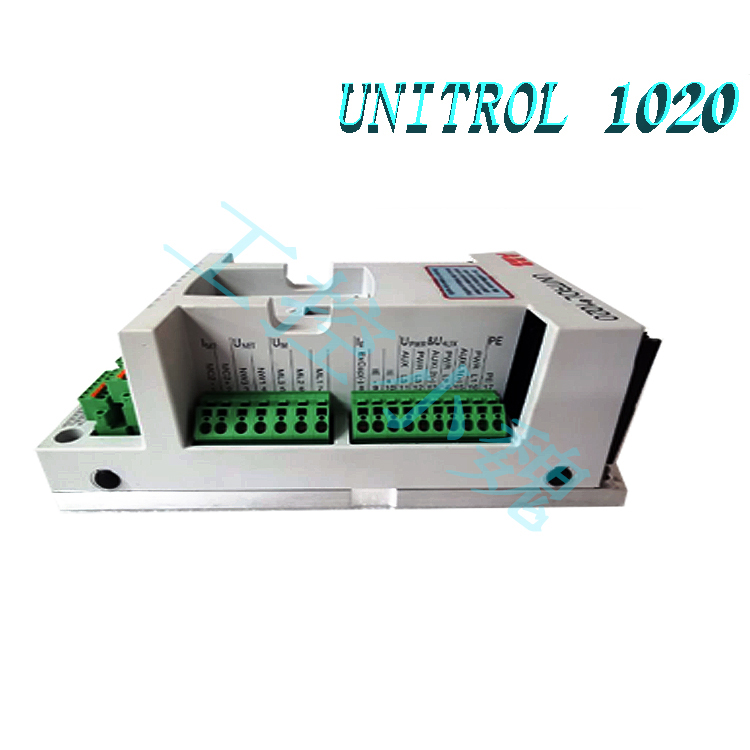
UNITROL 1020 3BHE030579R0003 Other Names:
Excitation Processor UNITROL 1020 3BHE030579R0003
UNITROL 1020 3BHE030579R0003 Analog Processor
Communication Unit UNITROL 1020 3BHE030579R0003
Control Architecture: Dual-channel redundant design, supporting parallel unit load distribution, rotating diode monitoring, and automatic synchronization functions. Employing advanced PID algorithms and IGBT semiconductor technology, the excitation current can be continuously adjusted from 0-38A with a response time of <20ms (three-phase mode).
Protection Mechanism: Integrates V/Hz limiting, overexcitation limiting (OEL), underexcitation limiting (UEL), and COMTRADE fault recording, conforming to DNV/UL certification standards, and can operate stably in a wide temperature range of -25℃ to +70℃.
Communication Capabilities: Natively supports IEC 61850 Ed.2, GOOSE fast tripping, dual Modbus interfaces, and Ethernet/USB expansion, compatible with SCADA system data interaction, and supports remote parameter configuration and diagnostics.
HMI: 3.5-inch color HMI, real-time display of terminal voltage, reactive power, excitation current, and other parameters, supports local AVR/FCR mode switching, and operation requires no external tools..jpg)
Application Scenarios and Advantages
Power Industry: Suitable for small and medium-sized synchronous generators (15-20A excitation current), hydropower/thermal power distributed energy stations, ensuring grid-connected voltage stability and power factor regulation, supporting IEEE 2A/2B power stabilizer standards.
Industrial Sector: Used for excitation control of critical motors in heavy industries such as petroleum, chemical, and steel, achieving precise voltage regulation and fault protection, improving equipment operational reliability.
Renewable Energy: Adaptable to wind/hydropower generation scenarios, optimizing grid connection efficiency and dynamic response through rotating diode monitoring and automatic synchronization functions.
Marine and Special Environments: Compliant with DNV classification society certification, suitable for offshore platforms and ship power systems, with outstanding resistance to vibration and salt spray corrosion..jpg)
Performance Comparison and Upgrades
Comparison with UNITROL 1010: UNITROL 1020 adds Ethernet/USB interfaces, a data event logger, and expanded I/O modules, supports higher excitation currents (20A vs 10A), and enhances communication protocol compatibility.
Compared to the UNITROL 1000-15: The 1020 adopts a modular design, supporting dual-channel redundancy and parallel unit control, while the 1000-15 focuses more on base voltage regulation, with an output current of 15A and weaker expandability.
Combined with the UNITROL 1000-PM40: Connecting to the PM40 power module via CAN bus can extend the excitation current to 40A, suitable for high-power industrial scenarios.
Installation and Maintenance Points
Electrical Requirements: Requires three-phase power supply, external 1mF capacitor, neutral point grounding (>250V system), and supports 25A overload capacity for 10 seconds at 55℃ ambient temperature.
Configuration Tools: Use the CMT1000 tool for parameter setting, avoiding its use as the operating interface; supports remote Modbus/TCP debugging.
Fault Diagnosis: Real-time status monitoring via HMI, combined with COMTRADE waveform analysis, supports predictive maintenance and remote expert support.
In summary, the UNITROL 1020, as a high-performance representative of the ABB UNITROL 1000 series, is an ideal excitation solution for small and medium-sized synchronous generators and industrial equipment due to its dual-channel redundancy, wide temperature adaptability, rich communication interfaces, and precise control algorithms. It performs particularly well in distributed energy, heavy industry, and special environment applications. Its modular design and expandability allow for flexible adaptation to different scenario requirements, while meeting international safety and performance standards to ensure long-term stable operation.
All products on this website are special products, and market prices are constantly fluctuating.
Please refer to customer service for a quote, as the price is not accurate as it is for new products.
Please confirm the model, product, price, and other detailed information with customer service before placing an order. This website is currently in use.
New products are available for sale; please contact customer service for further information.
Model recommendation:
UNITROL 1010 controller ABB
UNITROL 1010 3BHE035301R1002
UNITROL 1010 UNS0121A-Z,V1
UNITROL 1010 UNS0121A-Z,V1/3BHE035301R1002
UNITROL 1020 3BHE030579R0003
UNITROL 1020 UNS0119A-Z,V1
UNITROL 1020 controller ABB
UNITROL 1020 UNS0119A-Z,V1 3BHE030579R0003
UNITROL1000 Z.V3 3BHE014557R0003
UNITROL1000 Z.V3 Excitation system ABB
PCD235B101 3BHE032025R0101
PPD103801 3BHE020455R0001
3BHE020455R0001
PVD164A2059 3BHE014340R2059
BHE014340R2059
PVD164 3BHE014377R0001
3BHE014377R0001
3BHE039724R0C3D
PPD513AOC-100440
more……
-300x300.jpg)
admin –
II. Applicable Unit Scope
Compatible Synchronous Generators: 100kVA ~ 5MVA small and medium-sized units
Application Scenarios: Small hydropower, gas/diesel self-owned power plants, combined heat and power, ship power plants, synchronous condensers, waste heat power generation, distributed microgrids
Excitation Output: Built-in IGBT power circuit, rated excitation current 20A DC, short-time peak up to 40A DC, no need for external independent thyristor power cabinet
III. Core Control Functions (AVR Core Logic)
1. Four Operating Modes Can Be Switched with One Key
AVR Constant Terminal Voltage (Conventional Grid-connected/Isolated Main Mode), Steady-State Voltage Regulation Accuracy ±0.5%
FCR Constant Excitation Current (Maintenance, Excitation Start-up, Fault Standby Mode)
PF Constant Power Factor (Constant Power Factor Operation for Self-owned Plants)
VAR Constant Reactive Power (Reactive Power Distribution for Multiple Units in Parallel)
2. Complete set of grid compliance limiters (built-in, no expansion board required)
Overexcitation peak limit, inverse time overexcitation limit
Underexcitation/loss of excitation limit (prevents tripping due to loss of excitation in the leading phase)
V/F low-frequency limit (prevents low-frequency core saturation, meets grid standards)
Stator current overload limit, rotor current peak limit
PT voltage disconnection detection, rotating diode fault monitoring
3. Communication and parallel connection capabilities
RS485 Modbus RTU: Reactive power sharing among multiple units, remote DCS monitoring
Network port Modbus TCP: Remote CMT1000 debugging, background data acquisition
Synchronization function not supported (3BHE030579R0003 BASIC model), external synchronizing device required for grid connection
IV. Hardware interface and terminal layout
1. Measurement terminals
ML1/2/3: Three-phase generator PT terminal voltage acquisition
IE CT: Excitation Rotor Current Sampling
MC CT: Stator Current Sampling
2. Power Terminals
L1/L2/L3: Control Auxiliary Power Supply (AC 85~264V Wide Range Adaptive)
IE+ / IE-: Excitation Output Directly Connected to Rotor Slip Rings
PE: Protective Grounding
3. I/O Terminals (Spring-loaded Quick-connect Terminals)
Digital DI: Remote Excitation/Decrease, Manual/Automatic Switching, Fault Reset, Interlock Switching
Digital DO: Relay Passive Contact, Outputs AVR Fault, Over-excitation, Under-excitation, and Operating Status Alarms
Analog AI: 4–20mA Remote Voltage Setpoint, Reactive Power Regulation Signal
Analog AO: 4–20mA Excitation Current / Terminal Voltage Transmitted and Uploaded to DCS
4. Front-end Communication Port
USB Debugging Port: Direct Connection to Computer CMT1000 Software allows reading and writing parameters and exporting waveforms without external power supply.
RJ45 Ethernet: Remote debugging, Modbus TCP host communication
RS485 bus terminal: Reactive power sharing in parallel unit operation
5. Local Human-Machine Interface (HMI)
LCD + physical operation buttons
Real-time display: Generator terminal voltage, excitation current, reactive power, power factor, limiter status
Local modification of setpoints, viewing fault codes, event logs
6. Status LED Indicators
Green light POWER: Power supply normal, flashing indicates program running
Yellow light EXC ON: Excitation in operation, flashing indicates any limiter action
Red fault light: Hardware/logic alarm triggered
V. Key Electrical Technical Parameters
Parameter Item Standard Specification
Control Power Supply AC 85~264V / DC 120~370V Adaptive
Maximum Output Excitation Current 20A Continuous DC, Peak 40A DC
Voltage regulation accuracy: Steady-state ±0.5%, Dynamic response <20ms
Operating temperature: -25℃ ~ +70℃, IP20 protection within the cabinet
Storage humidity: 5%~95% non-condensing, industrial-grade vibration resistance
Electromagnetic compatibility: IEC 61000 EMC, CE/UL/DNV marine certification
Installation method: Standard control cabinet embedded panel installation
Size: Compact integrated unit, no matching base required
VI. Built-in protection and fault recording
Hardware watchdog, power failure self-test, IGBT overcurrent and short circuit protection
Complete event log: Records fault occurrence time, trigger conditions, and limiter action sequence
Transient waveform recording function: Captures load shedding, short circuit, and step disturbance waveforms, exporting and analyzing via CMT1000
Fault code coverage: PT disconnection, excitation short circuit, overexcitation, underexcitation, overtemperature, communication interruption, etc.
VII. Dedicated debugging software CMT1000
Connection Method: USB direct connection or Ethernet remote access
Core Functions:
Full parameter online/offline configuration, firmware upgrade
AVR PID, various limiter curve visualization tuning
Built-in oscilloscope, waveform analysis of unit transient characteristics
Fault log, batch export of operating data
Modbus communication diagnostics, multi-unit parallel parameter debugging
VIII. Industry Application Advantages
Integrated Design: Control + power circuit integrated, eliminating the need for external rectifier cabinets, reducing cabinet wiring and costs
Wide Environmental Adaptability: Adaptable to high and low temperature, high vibration scenarios, suitable for marine and mining self-contained power plants
Replacement Compatibility: Directly replaces the old UNITROL1000-15, highly universal wiring logic, short retrofit period
Convenient Operation and Maintenance: Independent local HMI operation, no laptop required for on-site viewing of operating status and fault reset
Standard Bus: Modbus RTU/TCP universal protocol, compatible with mainstream DCS (Foxboro, ABB) 800xA, Siemens, etc.
https://www.weikunfadacai1.com/product/rh924uq-foxboro/
https://www.weikunfadacai1.com/product/3bhe030579r0003-controller-abb/
https://www.weikunfadacai1.com/product/unitrol-1020-controller-abb/
https://www.weikunfadacai1.com/product/abb-unitrol-1020-uns0119a-zv1-3bhe030579r0003/
https://www.weikunfadacai1.com/product/unitrol-1020-3bhe030579r0003/
https://www.weikunfadacai1.com/product/abb-unitrol-1020-3bhe030579r0003/