
Description
Many products are not yet on the shelves, please contact us for more products
If the product model is inconsistent with the display picture, the model shall prevail. Please contact us for specific product pictures, and we will arrange to take photos in the warehouse for confirmation
We have 76 shared warehouses around the world, so sometimes it may take several hours to return to you accurately, please understand. Of course, we will respond to your concerns as soon as possible.
362A1052P104 other names:
Flame sensor 362A1052P104
362A1052P104 ultraviolet flame sensor
Gas turbine ultraviolet detector 362A1052P104
362A1052P104 is a UV-based flame detector that can quickly and accurately detect fire sources. It uses advanced signal processing technology and automatic calibration functions to provide reliable protection for fire safety. The detector is widely used in many fields such as oil, natural gas, electricity, chemicals, aerospace, manufacturing, construction, and oil platforms, and is of great significance for early detection of fire risks and prevention of accidents.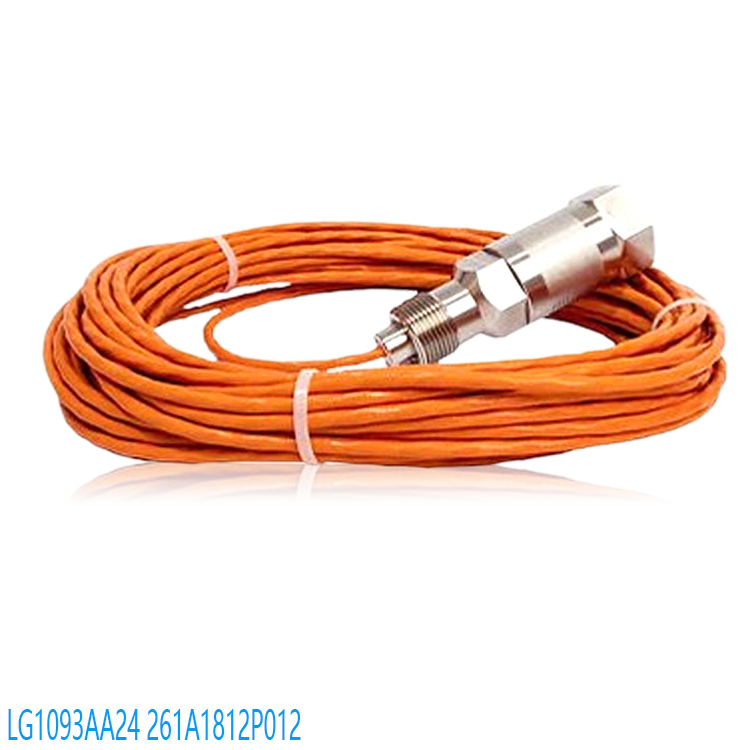
Working principle
The working principle of ultraviolet flame detectors is based on ultraviolet radiation generated when flames burn. The 362A1052P104 detector senses this radiation through an internal UV sensor. When it senses enough UV signals, the detector will send an alarm signal to notify the fire protection system or relevant personnel to handle it.
Product Features
High sensitivity and accuracy: The 362A1052P104 flame detector has high sensitivity and accuracy, and can quickly respond to the presence of flames, even when the flame is just formed.
Low false alarm rate: Since the detector only responds to UV radiation, it can reduce false alarms caused by other factors (such as light, smoke, etc.).
Advanced signal processing technology: The detector uses advanced signal processing technology to effectively filter out interference signals and improve the stability of the detector.
Automatic calibration function: The detector has an automatic calibration function, which can simplify maintenance work and reduce maintenance costs.
Application areas
362A1052P104 flame detectors are widely used in oil, natural gas, electricity, chemical industry, aerospace, manufacturing, construction and oil platforms. They are used to monitor flames in the environment, detect fire risks in time, prevent accidents, and provide strong protection for people’s lives and property safety.
Oil and gas industry: used to monitor flames in oil wells, natural gas equipment, petrochemical plants, etc., which helps to detect fire risks early and prevent accidents.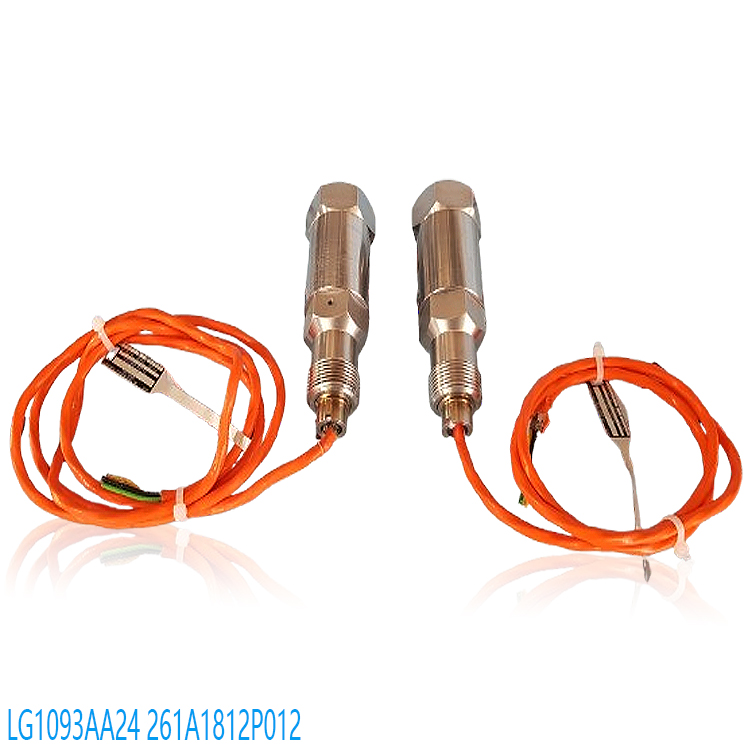
Power plants and energy facilities: In power plants and other energy production facilities, ultraviolet flame detectors can be used to monitor flames, ensure the normal operation of equipment and improve safety.
Chemical and pharmaceutical industries: used to monitor fire risks in chemical plants and pharmaceutical plants, detect and take measures to prevent accidents early.
Aerospace: In the engine systems of aviation and spacecraft, this type of flame detector can be used to monitor flames in the engine combustion chamber to ensure the normal operation of the engine.
Manufacturing: In various manufacturing environments, ultraviolet flame detectors can be used to monitor industrial furnaces, gas heating systems and other potential fire sources.
Buildings and commercial buildings: used in buildings, commercial buildings and large facilities to monitor fire risks and improve the safety of buildings and personnel.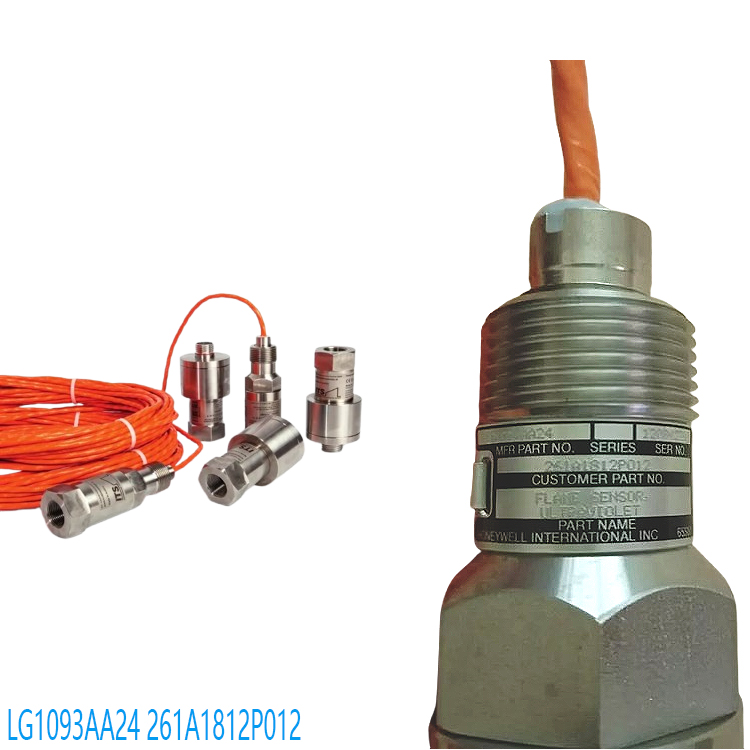
Offshore and onshore oil platforms: On offshore and onshore oil drilling and production platforms, this type of flame detector can be used to monitor potential fire hazards.
All products on this website are special products, and the market price has been fluctuating.
The specific quotation is subject to the customer service. Because the product is a new product, the price is not real.
Please confirm the model and product, price and other detailed information with the customer service before placing an order. The website has been used.
New ones are on sale, please contact customer service for communication.
Model recommendation:
CC-PAOH01
CC-IP0101
CC-IP0101 51410056-175
CC-MCAR02
CC-PAIH01 51405038-175
CC-PAIH01
CC-PAIH02
CC-PAIH51 51410069-275
CC-PAIH51
CC-PAIM01 51405045-175
TC-PPD011
TC-ODK161
TC-FPCXX2
TC-CCR014
05701-A-0502
05701-A-0301
05701-A-0451
05701-A-0327
05701-A-0283
05701-A-301ISS
05701-A-0288
05701-A-0294
05704-A-0123
05704-A-0146
More……

admin –
I. Core Parameters and Performance
Working Principle: Utilizes ultraviolet (UV) sensing technology. It triggers an alarm by detecting UV radiation generated by flame combustion, offering fast response and a low false alarm rate (anti-interference design filters out non-flame light sources such as sunlight and electric arcs).
Technical Specifications:
Material: Aerospace-grade aluminum alloy with P104 ceramic coating, corrosion-resistant and high-temperature resistant (-40℃~+220℃).
Protection Rating: IP67 (waterproof and dustproof), suitable for harsh industrial environments.
Electrical Parameters: 24V DC/110V AC dual-mode power supply, compatible with various industrial power systems.
Dimensions and Weight: 90mm×52mm×34mm, 850g±2%, modular interface supports rapid integration.
Lifespan: Over 50,000 cycles under ISO 9001:2015 certification, failure rate <0.01%.
II. Key Functions and Advantages
Intelligent Compatibility: Optional IoT sensor, enabling real-time performance monitoring and data transmission via RS-FS-9001 protocol, supporting integration with DCS, PLC, and other control systems.
Automatic Calibration: Built-in automatic calibration function reduces manual maintenance costs and ensures long-term stable accuracy.
Anti-interference Design: Advanced signal processing technology filters out interference signals such as smoke and steam, reducing the risk of false alarms.
Modular Interface: Standardized 362A1052 interface, compatible with similar equipment from brands such as GE and Reuter-Stokes, adaptable to various industrial scenarios (e.g., gas turbines, boilers, oil platforms).
III. Installation and Maintenance Requirements
Installation Specifications:
Must be operated by qualified personnel, complying with local electrical and fire regulations.
The installation location must ensure the sensor is unobstructed, avoiding high temperature, high-pressure water splashes, and mechanical impact.
Requires integration with a control system (e.g., Honeywell Analytics platform), setting alarm thresholds and linkage logic.
Maintenance Points:
Regularly clean the sensor screen to prevent dust accumulation from affecting sensitivity. Unauthorized disassembly or alteration of the equipment is prohibited and may affect warranty and performance.
Warm-up time must follow the manual's requirements to ensure stable detector startup.
Damaged equipment must be repaired by contacting official after-sales service to avoid unauthorized repairs that could lead to malfunction.
IV. Application Scenarios and Industry Adaptability
Typical Fields: Oil and Gas, Power, Chemical, Aerospace, Manufacturing, Building Safety, and Offshore Drilling Platforms.
Example Scenarios:
Gas turbine combustion monitoring, boiler flame monitoring, and tank area fire prevention.
High-risk industrial environments (e.g., high temperature, high dust, flammable and explosive areas).
Requires integration with fire protection systems to achieve early fire warning and emergency response.
https://www.weikunfadacai1.com/product/362a1052p104-flame-detector-honeywell-362a1052p104/
admin –
https://www.weikunfadacai1.com/product/rh924uq-foxboro/
https://www.weikunfadacai1.com/product/3bhe030579r0003-controller-abb/
https://www.weikunfadacai1.com/product/unitrol-1020-controller-abb/
https://www.weikunfadacai1.com/product/abb-unitrol-1020-uns0119a-zv1-3bhe030579r0003/
https://www.weikunfadacai1.com/product/unitrol-1020-3bhe030579r0003/
https://www.weikunfadacai1.com/product/abb-unitrol-1020-3bhe030579r0003/
https://www.weikunfadacai1.com/product/362a1052p004-flame-detector-honeywell-362a1052p004/
https://www.weikunfadacai1.com/product/abb-pp881-3bse092978r1/
I. Pre-installation Inspection and Preparation
1. Delivery Inspection
Check part number 362A1052P104; ensure the casing is free of dents, the sapphire crystal window is scratch-free, and free of oil stains.
Check the 5-pin MIL aviation connector at the tail end is intact, with no bent or corroded pins.
Supporting parts: Anti-seize thread grease NG-165 (GE part 248A9779P001), water-cooled/air-cooled tubing, shielded twisted-pair cable, explosion-proof junction box.
2. Environmental and Temperature Limitations
Probe body permissible temperature: -40℃ ~ +150℃; water cooling is required if furnace radiation exceeds 150℃.
Explosion-proof rating: Class I Div.2 / ATEX IECEx Zone2; explosion-proof fittings must be used throughout the explosion-proof area.
Avoid direct sunlight, electric arcs, and high-temperature infrared heat sources to prevent false ultraviolet alarms.
II. Mechanical Installation (Core Steps)
1. Selection of Observation Hole and Sleeve
The probe tip has a 3/4″ NPT external thread, matching the observation sleeve of the gas turbine/boiler:
High-temperature conditions (furnace wall temperature >150℃): Water-cooled sleeve
Cooling water pressure: 0.1–0.17MPa (170kPa), clean demineralized water at room temperature;
The metal clamp of the sleeve must not squeeze the cooling water pipe to avoid pipe deformation and leakage;
Water-cooled sleeve locking torque: 5.6–6.8 N・m (50–60 in-lbs) ManualsLib.
Medium-temperature conditions (80–150℃): Compressed air air-cooled sleeve
Cooling air pressure ≥170kPa, dry oil-free compressed air;
Low-temperature conditions (<80℃): No-cooling direct-installation short sleeve
2. Threaded Installation and Tightening Procedure
Apply a thin layer of high-temperature anti-seize grease to the external threads at the probe tip, being careful not to apply it to the sapphire viewing window;
Hand-tighten the observation nut 3–4 turns, ensuring the threads are aligned and free of obstruction;
Use a wrench to pre-tighten by 2.5 turns, achieving a final tightening torque of 120 in-lbs (13.6 N·m);
Clamping Position: Only clamp the hexagonal body of the probe. Do not pry the tail aviation connector to prevent internal optical path misalignment and damage to the SiC sensor Baker Hugh...
3. Strict Installation Angle Requirements
The probe lens must be tilted downwards at 10°–30°, never upwards;
Function: To prevent furnace condensate, oil, and carbon deposits from dripping and contaminating the sapphire lens;
Unobstructed Optical Path: The sleeve inner diameter ≥ Φ18, the field of view directly facing the flame in the main combustion zone, avoiding obstructions from refractory bricks and nozzle supports;
Keep away from strong vibration sources (vibration > 5g) such as fans and motors. This can cause optical path deviation and signal drift. In environments with high vibration, install vibration damping brackets.
III. Electrical Wiring Specifications (Two-wire system, 4–20mA)
1. Cable Selection
Cable Specifications: 18AWG (1.02mm²) twisted-pair shielded flame-retardant cable, original factory matching cable part number 362A1053Pxxx;
Explosion-proof Areas: Use galvanized explosion-proof metal conduit/explosion-proof flexible conduit, single cable laid separately;
The distance between cables and high-voltage power cables should be ≥30cm, and they must not be run in the same conduit.
2. 5-pin Aviation Plug Pin Definitions (Only 2 signal wires are used)
Pin1: 4–20mA positive (24VDC + power supply)
Pin2: 4–20mA Negative terminal (signal return)
Pin 3/4: Reserved empty pins, do not connect.
Pin 5: Shielded ground wire (outer casing protective ground)
3. Grounding Requirements (Key to anti-interference)
The outer shielding layer of the cable is grounded only at a single point at the control cabinet end; the probe end shield is left floating to prevent ground loop current.
Pin 5 ground wire is reliably connected to the explosion-proof junction box protective ground, with a grounding resistance <1Ω.
Power off the entire process when plugging and unplugging the aviation plug; plugging and unplugging while powered on may burn out the internal amplifier circuit.
4. Power Supply Parameters
Power supply DC 12–30V, rated recommended 24VDC, maximum circuit current consumption 100mA.
No-flame static output 4mA, full-intensity flame output 20mA.
IV. Sealing and Protection After Installation
Seale the water-cooled sleeve joints with PTFE tape to prevent water and air leakage.
The explosion-proof junction box is not in use. NPT Seal the bore with an explosion-proof plug, and fill the inlet gland with explosion-proof sealant.
Add a waterproof protective cap to the tail aviation plug; add a rain cover for outdoor/high-humidity areas.
After installation, wipe the sapphire lens with an isopropyl alcohol swab to remove any residual oil.
V. Power-on Debugging Procedure
Confirm that the mechanical locking is secure, the water/air cooling medium flow is normal, and the cable wiring is correct before powering on.
Automatic self-test for 30 seconds after power-on; if no faults are found, the circuit current should stabilize at 4mA (no flame).
Ignite the burner and read the DCS/controller 4–20mA signal:
A stable flame should output in the 12–18mA range.
A signal below 8mA indicates: optical path obstruction, dirty lens, or installation angle misalignment.
Flameout verification: After the flame disappears, the current quickly drops back to 4mA, with a response time <25ms.
Continuous operation for 2 seconds. Installation is considered successful if the monitoring signal shows no drift or fluctuation within one hour.
VI. Installation Prohibitions (Key Points to Avoid)
Do not overtighten the threads, as this will crack the internal sapphire window;
Do not allow thread-locking grease to come into contact with the lens, as this will block ultraviolet light transmission;
Do not install the probe vertically upwards, as this will easily lead to oil and carbon buildup;
Installing the probe directly in a high-temperature furnace without a cooling sleeve will burn out the SiC sensor within 1-3 hours;
Grounding both ends of the shielding layer simultaneously will cause frequent signal fluctuations and false alarms;
Hot-plugging the aviation connector will directly damage the probe's internal circuitry.
https://www.weikunfadacai1.com/product/3bhl000389p0104-igct-module-abb/
https://www.weikunfadacai1.com/product/362a1052p104-flame-detector-honeywell-362a1052p104/