
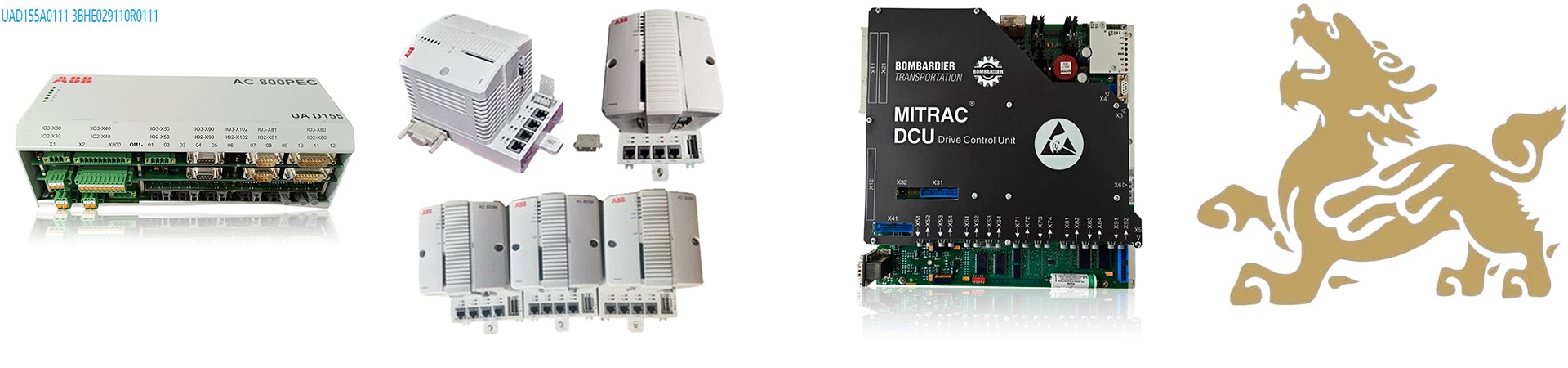


Description
All products listed on this website are specialized items; market prices are subject to frequent fluctuations.
Please rely on the quotes provided by our customer service team. As these are new products, the prices displayed may not be final.
Before placing an order, please confirm the specific model, product details, and pricing with our customer service representatives.
I. Operating Principle
The PPD513A 3BHE039724R2565 AC 800PEC processor unit utilizes a collaborative architecture combining a multi-core processor with an FPGA. This design enables the hierarchical processing of control tasks based on their priority, moving beyond the traditional approach of separating the PLC from the drive control board.
The FPGA hardware logic layer handles high-speed tasks with the most stringent timing requirements—such as pulse signal generation, high-speed sampling, and fiber-optic data transmission/reception—achieving nanosecond-level timing synchronization.
The main processor manages floating-point operations, complex control algorithms, process logic, fault diagnostics, and data exchange. It supports programming in accordance with the IEC 61131-3 standard, as well as the automatic deployment of code generated from MATLAB/Simulink models.
The unit connects to distributed I/O, converters, and excitation systems via the CEX bus and high-speed DDCS fiber-optic links. An Ethernet channel provides connectivity to the ABB Ability 800xA system, facilitating parameter distribution, status data acquisition, and remote monitoring.
The hardware supports a redundant architecture configuration, featuring a “hot standby” setup between the primary and backup controllers. In the event of a failure, the system switches over seamlessly, ensuring the continuous operation of critical power control loops. With a control cycle as fast as 100μs, the unit is capable of handling both high-speed power electronics control and slower process monitoring logic.
II. Product Advantages
High-Speed Deterministic Control: Features microsecond-level control cycles and FPGA hardware acceleration, ensuring stable timing. This is ideal for power electronics applications—such as converters and excitation systems—that require extremely high precision in trigger pulse timing, effectively eliminating the response latency issues typical of standard PLCs.
Integrated Hybrid Control: A single module handles high-speed power electronics control, sequential logic, protection interlocking, and data acquisition. This eliminates the need for separate drive control boards, simplifies system architecture, and reduces both the hardware component count and potential points of failure.
Robust Communication and Expansion: Utilizes an interference-resistant fiber-optic DDCS bus, supporting multi-axis drive synchronization. Ethernet connectivity supports protocols such as OPC UA and MMS, with native integration into the 800xA platform. The system is also expandable via S800 and high-speed PEC I/O modules, facilitating distributed signal acquisition.
Model-Based Development: Supports standard IEC 61131-3 programming via Control Builder M. Additionally, Simulink simulation models can be compiled and downloaded directly to the controller, significantly shortening the cycles for algorithm development and on-site commissioning.
High-Reliability Redundancy: Offers redundancy for power supplies, communication links, and the controller unit itself, meeting requirements for critical, SIL-rated (Safety Integrity Level) applications. The design features no moving parts and operates across a wide temperature range, making it well-suited for harsh industrial environments.
Long Lifecycle and Easy Maintenance: Supports online firmware upgrades and includes a built-in, power-loss-safe file system, ensuring that programs and configurations are not lost during power outages. Comprehensive built-in diagnostic information allows for the rapid identification of faults in communication, hardware, or control loops.
III. Applicable Industries and Functions
Power Generation Industry (UNITROL Excitation Systems for Synchronous Generators): Serves as the core of the excitation control system. It regulates generator excitation current to stabilize terminal voltage and reactive power, ensuring stable grid connection for generator units and suppressing grid disturbances. It acts as the primary control unit for excitation systems in thermal, hydroelectric, and gas-turbine power plants. Metallurgical Industry: Applications include main drives for rolling mills, electric arc furnaces, and rectifier power supply control for aluminum electrolysis. These systems facilitate high-power rectification, electrode regulation, and multi-motor synchronous drive, thereby enhancing rolling precision, stabilizing power supply to electrolytic cells, reducing energy consumption, and ensuring continuous production.
New Energy and Power Grid Quality: Technologies such as wind/photovoltaic converters, STATCOMs, SVGs, and active power filters enable grid-connection control, reactive power compensation, and harmonic suppression. These help stabilize grid voltage and support the integration of new energy power plants into the grid.
Rail Transit and Marine Electric Propulsion: Traction converters and marine propulsion frequency converters are designed to withstand high-vibration and wide-temperature environments. They provide precise control over high-power traction motors, ensuring smooth power output.
Oil, Gas, and Chemical Industry (High-Power Drives): Frequency-controlled drive systems for high-power compressors and pumps provide high-precision closed-loop control of torque and rotational speed. Integrated with process interlock protection, these systems ensure the stable operation of high-risk, continuous industrial processes.
IV. Operating Procedures
Hardware Installation: Align the PPD513A 3BHE039724R2565 processor unit with the slot on the AC800PEC rack backplane, slide it in steadily, and secure the locking latches. Connect the backplane power supply, link the fiber-optic Tx/Rx ports to the corresponding I/O or drive modules (ensuring a cross-connection), and connect the Ethernet interface to the control system network. Implement proper electrostatic discharge (ESD) protection throughout the installation process.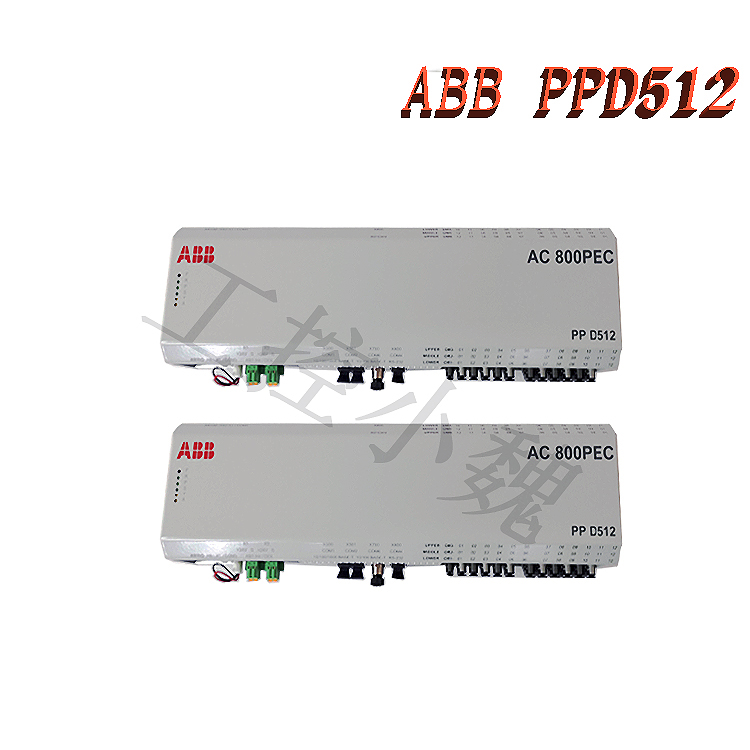
Hardware Configuration: Use the Control Builder M software to create a new project. Add the specific processor model to the hardware tree, configure the rack, I/O modules, and communication channels, and set the IP address, fiber-optic bus parameters, and redundancy mode. Program Development and Download: Method 1: Develop control logic and protection interlocks using IEC 61131-3 languages such as ST (Structured Text) or FBD (Function Block Diagram). Method 2: Build control models in MATLAB/Simulink, generate code, and import it into the project. Connect to the controller online, verify that the firmware versions match, and then download the programs and parameters.
Commissioning and Online Monitoring: Use the PECView or 800xA operator interface to monitor real-time variables, waveforms, and fault codes. Implement a phased commissioning approach: first, test pulses and sampling signals under no-load conditions, then proceed to closed-loop tuning of control parameters under load.
Backup and Restoration: Once commissioning is complete, use the provided tools to back up programs, firmware, and parameter files. In the event of module replacement or system repair, these backup files can be imported to quickly restore the configuration.
Routine Operation and Maintenance: Use the host computer (workstation) to monitor module temperatures, communication status, and fault logs. Periodically inspect fiber-optic connectors, supply voltages, and the cooling system within the rack.
V. Precautions
Electrostatic Protection: The modules consist of precision microelectronic components. Always wear a grounded anti-static wrist strap when handling or installing/removing modules. Do not touch the gold-plated contacts (edge connectors) on the boards or the fiber-optic interfaces with bare hands, as static electricity can easily cause latent damage to the chips.
No Hot-Swapping of Processor Units: Only certain I/O modules support hot-swapping. Processor units must never be inserted or removed while the system is powered on; doing so can damage the backplane, lead to data/program loss, or cause a system crash.
Fiber-Optic Maintenance: Fiber-optic end faces are highly susceptible to dust and oil contamination; if communication issues arise, clean the fiber-optic connectors first. Ensure that the fiber-optic bending radius does not fall below the specified minimum to prevent fiber breakage or signal attenuation.
Firmware Version Compatibility: The processor firmware version must be compatible with the versions of the I/O and communication modules installed in the rack. Version mismatches can result in communication interruptions or functional anomalies. Always back up your project before performing any firmware upgrades. Environmental Control: Ensure adequate ventilation and heat dissipation for equipment racks; keep them away from dust, corrosive gases, and areas with strong electromagnetic radiation. Maintain the supply voltage within the rated range, and implement reliable isolated power supplies and surge protection.
Redundant System Commissioning: Once the redundant primary and backup controllers have been commissioned, verify the switchover logic. Ensure that failover transitions occur without operational disturbances or equipment trips before placing the system into full production.
Access Control and Security: Implement tiered access management for controller programming and parameter modifications. Document any on-site changes to closed-loop control parameters to prevent accidental alteration of protection setpoints, which could trigger equipment trips. Maintain archives of critical program versions.
Fault Handling: In the event of communication interruptions or the illumination of error indicators, prioritize troubleshooting the power supply, fiber-optic links, and network infrastructure; avoid repeated, arbitrary firmware reflashing. If hardware damage is suspected, disconnect power immediately to prevent further damage.
Recommended products:
AFD242A10 3BHE023126R0010
PCD235B1101 3BHE032025R1101
PCD232A 3BHE022293R0101
PCD231 3BHE025541R0101
PP D513 A0C-110440 3BHE039724R0C4A
PFVK 135 3BSE007135R1
PFRL101C 2.0KN 3BSE002964R002
PFSA103B 3BSE002487R1
PFXA401S 3BSE024388R2
PPD103801 3BHE020455R0001
PPD513AOC-100440 3BHE039724R0C3D
PPD517A3011 3BHE041576R3011
PPD517 3BHE041576R3011
GFD563A102 3BHE046836R0102
GFD233A101 3BHE022294R0101
GFD563A101 3BHE046836R0101
GFD563A102 3BHE046836R0102
GF D563 3BHE046836R010
more……
-1-300x300.jpg)

Reviews
There are no reviews yet.