
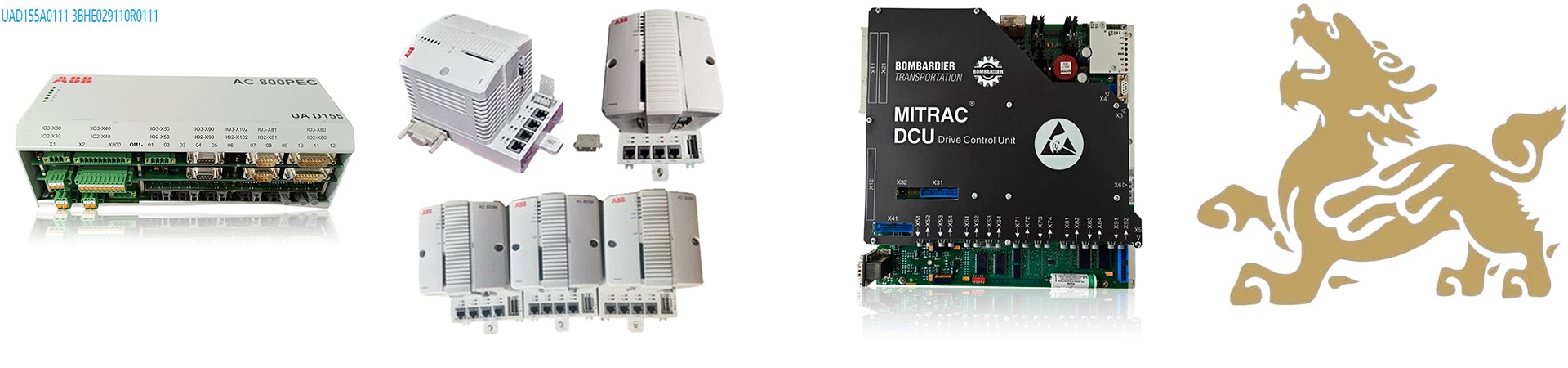
Description
All products on this site are specialized items subject to fluctuating market prices.
Please rely on the quote provided by customer service, as the listed prices are not final.
Before placing an order, please confirm details such as the model, product specifications, and price with customer service.
Please contact customer service for inquiries regarding available stock.
PPD512A10-150000 3BHE040375R1023 (Alternative names):
Static Excitation System Central Controller Module PPD512A10-150000 3BHE040375R1023
PPD512A10-150000 3BHE040375R1023 AC 800PEC Controller
I. Operating Principle
The core function of the excitation control board is to regulate the generator terminal voltage and reactive power output in real-time by precisely controlling the DC excitation current injected into the synchronous generator’s rotor windings. The operational process is as follows:
Signal Sampling and Acquisition: The board acquires electrical parameters—such as generator terminal voltage, stator current, excitation current/voltage, and power factor—in real-time. These signals undergo filtering and A/D (analog-to-digital) conversion before being transmitted to the main control core.
Closed-loop Regulation Calculation: A high-performance processor (utilizing a DSP+FPGA architecture) runs advanced PID control algorithms to calculate the required change in excitation current within milliseconds. When grid loads fluctuate, the system instantly issues optimal control commands.Trigger Pulse Output: The master control unit converts calculation results into high-precision trigger pulses to control the firing angle of the excitation power unit (SCR rectifier bridge/thyristor), thereby regulating the magnitude of the DC current flowing to the rotor windings.
Voltage and Reactive Power Stabilization: By adjusting the excitation current, the unit ensures the generator output voltage remains constant at the set value while maintaining grid voltage stability and reactive power balance, achieving “source-grid coordination.”
Field Flashing Process: At the start of field flashing, the static excitation system draws energy from the generator’s residual voltage; once the input voltage to the SCR rectifier rises to 10V–20V, the rectifier bridge and excitation regulator begin normal operation, with the Automatic Voltage Regulator (AVR) controlling a “soft start” of the excitation.
Redundancy Design: As a critical control device, it typically employs a dual-redundancy design—incorporating two completely independent control channels (each with its own processor, power supply, and I/O). The standby channel remains in “hot standby” while the main channel operates; in the event of a main channel failure, the system performs a bumpless automatic switchover to ensure uninterrupted excitation control.
II. Operation Method
The PPD512A10-150000 (3BHE040375R1023) is an embedded automation controller; its “operation” primarily involves configuration, commissioning, monitoring, and maintenance:
Installation and Wiring
Install the board into the corresponding slot of the AC 800PEC rack or cabinet, following the installation manual provided by ABB.
Connect the 24V DC operating power supply (using power terminals such as X1 and X2; +24V / 0V). Connect the measurement signal terminals (e.g., generator-side voltage and current transformer signals) and fiber-optic/communication interfaces according to the wiring diagram.
Parameter Configuration and Programming
Use dedicated engineering configuration software (such as ABB’s Control Builder or PEC tools) to create or import configurations, including excitation control algorithms, PID parameters, and limits (e.g., over-excitation/under-excitation limits).
Download the configuration and reset the board to activate the parameters.
Startup and Commissioning
Perform functional tests without load first to verify that sampled values and trigger pulse outputs are correct.
Gradually engage the excitation system; perform generator no-load and load tests to tune PID parameters and protection settings, and verify voltage regulation characteristics.
Operational Monitoring
Monitor operating status, alarms, and fault information via panel indicators (STATUS and channel status LEDs), local displays, or a host computer/DCS.
Support communication protocols such as Modbus, Profibus, and Ethernet to exchange data with the power plant’s DCS, SIS, and dispatch systems, enabling remote monitoring.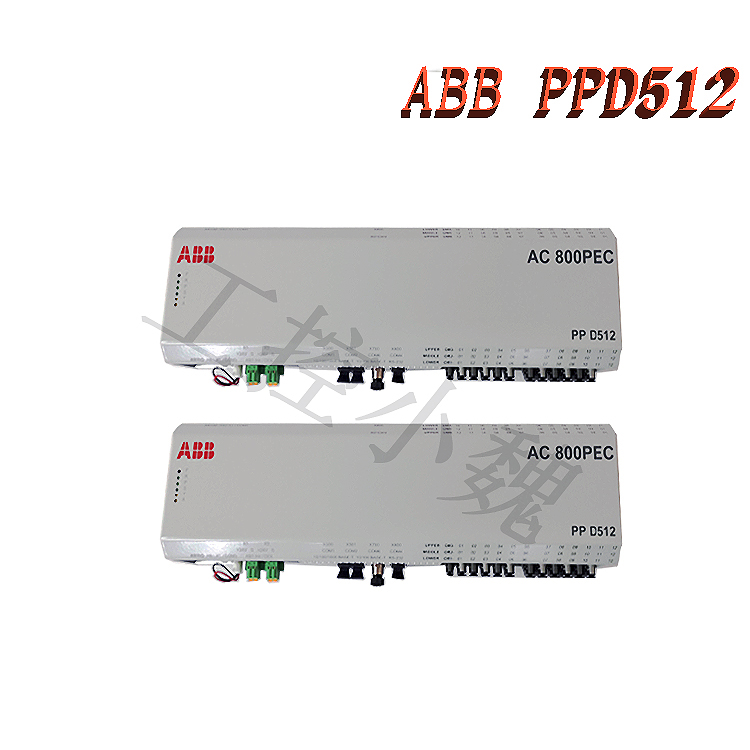
Maintenance and Spare Parts Replacement
Periodically check the board’s operating status, indicator lights, temperature, and power supply quality.
When replacing the board, disconnect the power first; ensure compatibility (e.g., model 3BHE040375R1023 and software version), import the backup configuration, and conduct a trial run.
Note: Specific operating procedures should follow the original ABB user manuals (e.g., PPD512 / AC 800PEC hardware manuals); the information provided here serves as a general operational framework.
III. Precautions (Safety and Operational Guidelines)
High-Voltage Hazard: The excitation system involves high voltage and high current. Before installation, wiring, or maintenance, power must be disconnected, verified as de-energized, and discharged. Operations must be performed by qualified electrical personnel in strict compliance with power plant safety regulations.
Electrostatic and Electromagnetic Interference (EMI) Prevention: Circuit boards are precision electronic devices; wear an anti-static wrist strap when inserting or removing them. Ensure the cabinet is properly grounded to maintain EMC (Electromagnetic Compatibility) and prevent strong electromagnetic interference from affecting measurement and triggering accuracy.
Stable Power Supply: The operating power supply (24V DC) must be stable and isolated to prevent malfunctions or data loss caused by voltage fluctuations; implement power supply redundancy.
Heat Dissipation and Environment: Ensure adequate ventilation and heat dissipation for the control cabinet. Maintain ambient temperature and humidity within the ranges specified by ABB to prevent component aging or failure due to overheating.
Redundancy Switchover Verification: Periodically conduct redundancy channel switchover tests to confirm seamless and reliable switching between primary and backup channels, thereby preventing loss of excitation during critical moments.
Parameter Backup and Version Management: Back up the original configuration before modifying parameters. Verify version compatibility for software/firmware upgrades and re-verify protection functions after the upgrade.
Protection Function Checks: Periodically calibrate protection settings—such as overvoltage, undervoltage, over-excitation, under-excitation, and loss-of-excitation—to ensure correct operation during abnormal conditions and to protect the generator and power grid.
Use of Genuine Spare Parts: When purchasing spare parts, verify the part number (3BHE040375R1023) and batch information. Use genuine ABB parts to avoid compatibility issues.
IV. Application Areas
The PPD512A10-150000 (3BHE040375R1023) is primarily used in scenarios requiring synchronous generator grid-connected operation, where high precision in voltage control and rapid dynamic response are essential:
Thermal Power Plants (Coal-fired/Gas-fired): Precisely controls main generator excitation, stabilizes voltage during load fluctuations, and participates in grid Automatic Voltage Control (AVC).
Hydropower Stations: Controls hydro-generator excitation to accommodate operating condition fluctuations caused by changes in water head and load adjustments.
Captive Power Plants and Grid-connected Units in Energy-intensive Industries: Used in captive power plants or grid-connected generator sets for large enterprises (e.g., steel, chemical, non-ferrous metals) to ensure power quality and prevent voltage fluctuations from affecting precision equipment or causing product scrap.
Pumped-storage and New Energy Power Stations: Applied to synchronous generators or synchronous condensers in pumped-storage units and new energy facilities such as concentrated solar power (CSP) plants.
Large-scale Power System Projects (AC 800PEC / System 800xA Architecture): Serves as a critical intelligent control unit within power electronics control systems or excitation systems for various synchronous machines requiring excitation regulation.
V. Benefits and Value
Stabilizes Generator Terminal Voltage: Delivers millisecond-level response to load fluctuations, maintains constant voltage, and ensures power quality.
Regulates Reactive Power and Improves Power Factor: Precisely controls excitation to optimize reactive power output and power factor, thereby reducing losses.
Enhances Power System Stability: Improves static, transient, and dynamic system stability; suppresses voltage fluctuations; and supports “source-grid coordination.” Rapid Dynamic Response: Combines DSP+FPGA high-speed computing with advanced PID algorithms to provide instantaneous regulation against transient load shocks.
High-Reliability Operation: Features dual redundancy and hot-standby switching to ensure uninterrupted excitation control during critical operating conditions, thereby enhancing the reliability of both the generating unit and the power grid.
Integrated Protection and Intelligent O&M: Incorporates protection functions—such as overvoltage, undervoltage, over-excitation, under-excitation, loss of excitation, and overheating—alongside fault diagnosis capabilities. Supports multi-protocol communication and interfaces with DCS/dispatch systems to enable remote monitoring and intelligent O&M, raising the level of power plant automation.
Strong Environmental Adaptability: Utilizes industrial-grade components, a wide operating temperature range, and robust EMC performance; designed to withstand the harsh operating conditions of power plants and ensure stable, 24/7 operation.
Model recommendation:
UAD142A01
UAD142A01 3BHE012551R0001
UAD149A00-0-11 3BHE014135R0011
UAD149 3BHE014135R0011
AC800PECUAD149A0011
UAD149A00-0-11
AC800PECUAD149A0011
UAD149A0011
UAD149A0011 3BHE014135R0011
1771-WG
EASYGEN 3500XT 8440-2085
PPD113B01-10-150000
PPD113B01-10-150000 3BHE023784R1023
PPD113B03-26-100110
PPD113B03-26-100110 3BHE023584R263
PPD103B101
PPD103B101 3BHE02384R2630
PPD103B101 3BHE020455R0101
PPD103B101 3BHE020455R0101 3BHE02384R2630
PPD113-B03-23-111615 3BHE023584R2365
PPD113-B03-23-111615
PPD103B101 3BHE020455R0101 3BHE02384R2630
PPD113-B03-23-111615 3BHE023584R2365
PPD113-B03-23-111615
GFD233A101 3BHE022294R0101
GFD563A101 3BHE046836R0101
GFD563A102 3BHE046836R0102
GF D563 3BHE046836R010
GFD233A103
GFD563A102
GFD563A101
GFD233A101
3BHE022294R0101
more……

-300x300.jpg)
admin –
The PPD512A10-150000 excitation control board usually has the following functions:
Excitation current control: Automatically adjust the magnitude and phase of the excitation current based on the operating status of the generator and the needs of the power grid, in order to maintain the terminal voltage and power factor of the generator within the set range.
Stability control: Monitor the operating status of the generator, suppress oscillations and instability by adjusting the excitation current, and ensure the stable operation of the generator.
Protection function: It has protection functions such as overcurrent, overvoltage, undervoltage, frequency deviation, etc. When abnormal conditions are detected, it can quickly cut off the excitation current to protect the generator and excitation system from damage.
admin –
Core Functions
Static Excitation Control: Employs a self-excited static excitation method, adjusting the excitation current via a thyristor rectifier bridge to stabilize generator voltage and reactive power (accuracy within ±0.5%), supporting PID algorithm for dynamic reactive power distribution.
Multi-Protocol Compatibility: Supports industrial protocols such as Modbus TCP, CANopen, and Profinet, adapting to ABB 800xA automation systems, and integrating MATLAB/Simulink for advanced algorithms such as model predictive control.
High Reliability Design: Modular architecture supports hot-swapping; triple redundancy design ensures continuous system operation under single-point failure; operating temperature range -40℃ to +70℃; IP20 protection rating; passes 500VAC insulation test.
Intelligent Diagnostics: Built-in self-diagnostic function, supports multi-level alarms from A to F, with customizable thresholds and response actions (e.g., circuit breaker tripping, generator shutdown).
Usage Precautions
Power Supply and Grounding: Operating voltage 24VDC (±25%) or 90-250VAC/DC, overvoltage/undervoltage protection required; grounding resistance ≤100Ω, insulation voltage ≥500VAC.
Environmental Compatibility: Must be installed in a control cabinet, avoiding heat sources, humidity, and corrosive environments; cooling channels must be kept unobstructed, and filter cloth cleaned regularly (every 500 hours).
Configuration and Operation: Parameter configuration using Woodward ToolKit or Control Builder, supporting CAN network communication to the engine ECU; voltage/frequency sensor accuracy must be calibrated regularly (every six months).
Safety Standards: Power must be disconnected during maintenance, and anti-static tools must be used; alarm logic must be verified quarterly to ensure the effectiveness of protection functions.
Maintenance Methods
Daily Inspection: Quarterly inspection of module physical condition (wear, corrosion), connector cleanliness, and heat dissipation channels; semi-annual system-level testing (redundancy switching, protection logic verification).
Troubleshooting: Faulty module replacement must be completed under redundant configuration, and the status should be verified using original manufacturer diagnostic tools; firmware must be updated to the latest version to activate new functions (such as 5G support).
Deep Maintenance: Perform circuit board cleaning, capacitor aging testing, and relay contact wear assessment every 2 years; replace UPS batteries every 3-5 years, and charge/discharge them every 2 months in high-temperature environments.
Preventive Maintenance: Predict fault points based on operating data, such as capacitor aging and relay contact wear, and develop maintenance plans in advance.
Matching Models and Synergistic Functions
Matching Model Function Positioning and Synergistic Effects
The AC800PEC controller main control unit and PPD512A10-150000 form a dual-machine hot standby system, realizing generator excitation regulation and power factor optimization.
The RP-3000 remote panel operation interface and monitoring achieve remote configuration and status monitoring via the CANopen protocol, supporting wall-mounted installation at a distance of up to 250 meters.
The SPM-D10/SPM-D11 synchronizers offer automatic frequency/phase/voltage matching shared with the load, support analog/digital signal output, and are compatible with various actuators.
The 9907-1106 module expands the digital input/output, increasing the number of I/O channels and supporting protocols such as Profinet and Modbus TCP, thus expanding system control capabilities.
Application Systems
Power Systems: Synchronous generator control in power plants, reactive power compensation in power grids, distributed generation (microgrids, renewable energy grid connection), supporting grid-connected/islanded mode switching.
Industrial Scenarios: Control of critical equipment in petrochemical, steel, and chemical industries, providing SIL3 certified safety protection (availability ≥99.999%); optimizing combustion efficiency in combined heat and power systems (biogas/wastewater treatment).
Infrastructure: Traction power supply for rail transit, port cranes, flow monitoring in water treatment plants, supporting 5G/TSN communication for remote monitoring and intelligent diagnostics.
Emerging Technologies: Integrated into the ABB 800xA system, combining edge computing for predictive maintenance, adapting to Industry 4.0 requirements.
Summary: The PPD512A10-150000, as an industrial-grade static excitation controller, achieves high-precision control and system stability assurance in key fields such as power, petrochemical, and metallurgy through modular design, multiple protections, and intelligent algorithms. The synergistic application of complementary models further expands its functional boundaries, meeting the diverse needs of complex industrial scenarios and supporting a wide range of applications from traditional power generation to emerging energy sources.
https://www.weikunfadacai1.com/product/abb-ppd512a10-150000/
https://www.weikunfadacai1.com/product/woodward-easygen-3500xt-8440-2085/
https://www.weikunfadacai1.com/product/woodward-8440-1868/
https://www.weikunfadacai1.com/product/woodward-8440-1947/
https://www.weikunfadacai1.com/product/max-4-11-03-128-08-1-1-00-elau-servo-drive/
https://www.weikunfadacai1.com/product/abb-3bhe051476r3011/
https://www.weikunfadacai1.com/product/ppd517a3011-3bhe051476r3011-2/
https://www.weikunfadacai1.com/product/woodward-8440-1952/
https://www.weikunfadacai1.com/product/easygen-3000-8440-2052-turbo-governor-8440-2052/
https://www.weikunfadacai1.com/product/abb-ppd512a10-150000/
admin –
II. Core Functions
As the core digital regulation motherboard of the generator excitation system, it undertakes all calculation and control of the Automatic Voltage Regulator (AVR):
Generator Excitation Closed-Loop Regulation
Real-time acquisition of generator terminal voltage, stator current, and rotor excitation current; outputting thyristor rectifier trigger pulses through high-speed DSP calculations; precisely adjusting rotor excitation DC; stabilizing generator terminal voltage; controlling reactive power; and maintaining stable grid power factor.
Dual Redundant Independent Controller Architecture
Two completely independent control loops are onboard, enabling one main and one standby hot redundancy operation; seamless fault switching for single channels ensures uninterrupted generator operation, meeting the high reliability requirements of key thermal and hydropower units.
Complete Built-in Generator Protection Logic
Integrated IEC/ANSI standard excitation protection algorithms: overexcitation limit, underexcitation limit, V/Hz limit, rotor overcurrent, loss of excitation protection, stator overvoltage, low-frequency oscillation suppression; real-time blocking of faulty excitation output; protecting generator rotor windings and excitation power cabinet.
Transient Excitation Support
In the event of a grid short circuit or voltage drop, the excitation is rapidly increased to its peak value (1.5 to 2 times the rated value), enhancing the generator’s transient stability limit and quickly restoring grid voltage.
Full-Scale Monitoring and Communication Upload
Collects excitation voltage, excitation current, module temperature, pulse status, and fault codes; connects to the AC800PEC rack via a high-speed fiber optic bus, and simultaneously uploads data to the DCS/SIS monitoring system, supporting remote parameter tuning, mode switching, and fault recording.
III. Key Hardware Technical Parameters
Table
Parameter Specifications
Core Chip: High-speed DSP+FPGA parallel computing architecture
Power Supply: Standard 24VDC control power supply
Communication Interface: High-speed fiber optic point-to-point bus, analog 4–20mA, digital DI/DO
Installation Method: Standard backplane plug-in mounting (AC800PEC rack)
Protection Rating: IP20 (for use in control cabinets)
Operating Temperature: 0℃ ~ +55℃
Ambient Humidity: 5%~95% RH, non-condensing
Power Consumption: 15~20W
Dimensions: 240×130×40mm
Weight: 0.85kg
Power Capacity Suffix: 150000 indicates compatibility with a 1500A rated excitation current rectifier power unit
IV. Model Suffix Differentiation Rules
PPD512A10-XXXXXX The last digit represents the compatible excitation current rating:
PPD512A10-150000: Compatible with 1500A excitation power cabinet (small and medium-sized steam turbine/hydro turbine generators)
PPD512A10-454000: Compatible with 4540A high-power excitation unit (large thermal power and nuclear power units)
V. Typical Application Scenarios
UNITROL static self-excitation system for synchronous generators in thermal power, hydropower, and gas-fired self-owned power plants
Excitation control for high-power synchronous generator sets on offshore platforms and ships
High-speed control of large synchronous condensers and SVC static var compensators
Integrated frequency converter/excitation control cabinet for large industrial synchronous motors
ABB PPD512A10-150000 (compatible with 1500A excitation) excitation control board: Real-world application examples
This module is a UNITROL 6000 Medium The core controller of a medium-sized static self-excited excitation system, equipped with a rectifier cabinet with a rated excitation current ≤1500A, is based on the AC800PEC high-speed power control platform. All cases represent standard configuration scenarios for domestic power plants/self-owned power stations.
Case 1: 3×60MW Gas-fired Combined Cycle Power Plant (North China Industrial Park Thermal Power Plant)
Project Parameters
Unit Capacity: 60MW steam turbine generator, rated rotor excitation current 1280A
Excitation System: ABB UNITROL 6000 Medium dual-redundant excitation cabinet, main controller PPD512A10-150000
System Architecture: Dual-channel, one main and one standby thermal redundancy, two independent PPD512 main controllers, fiber-optic seamless switching.
Application Conditions and Value
The park’s heat load fluctuates significantly between day and night, requiring frequent deep peak shaving by the unit; the board incorporates a PSS2B power system stabilizer to suppress low-frequency oscillations and meet the grid’s new energy grid connection assessment requirements.
In the event of a short-term voltage dip in the power grid, the unit is rapidly excited to 1.8 times its maximum excitation value, ensuring the unit does not disconnect and addressing the transient stability issue of the gas turbine unit.
Built-in comprehensive protection: V/Hz limit, over-excitation/under-excitation limit, and loss-of-excitation protection, repeatedly mitigating rotor overheating and loss-of-excitation tripping accidents.
Communication interface with the power plant’s DCS (ABB 800xA), uploading excitation current, fault waveforms, and setting parameters via the IEC60870-5 protocol for remote online adjustment.
Operation and Maintenance Highlights
In the event of a single-channel board fiber optic interface aging failure, the backup channel seamlessly takes over, resulting in zero unit downtime; field spare parts are directly replaced with the same model PPD512A10-150000, eliminating the need to replace the power cabinet.
Case 2: 2×45MW Riverbed-Type Medium-Sized Hydropower Station (Southwest River Basin Hydropower Plant)
Project Parameters
Hydrogen Turbine Generator Unit: 45MW, Rated Excitation Current: 1150A
Excitation Configuration: Completely renovated project, replacing the old UNITROL 5000 with a full upgrade to UNITROL 6000, main controller PPD512A10-150000
Scenario Characteristics
During wet and dry seasons, head and output fluctuate greatly, and the unit frequently operates in a leading-edge phase; the board’s Low Excitation Limit (UEL) algorithm precisely controls the reactive power lower limit, preventing stator overheating.
In mountainous areas, short-circuit faults are frequent; the module’s microsecond-level pulse output and rapid thyristor excitation improve the stability of the hydropower station operating in isolated grids.
Dual redundant controller configuration enables unattended remote monitoring during the flood season; the board’s built-in event recorder records fault timing in milliseconds, quickly locating rotor grounding and rectifier bridge faults.
Upgrade Benefits
The old system had a high single-channel failure rate. After upgrading to dual PPD512 redundancy, the annual unplanned downtime of the excitation system decreased by 95%.
Case 3: Large-scale self-owned power plant for refining and chemical plants (2×35MW steam turbine generator sets, East China Petrochemical Base)
Unit Parameters
35MW synchronous generator, excitation rated 1020A, supporting continuous production of chemical plants, unplanned downtime is not allowed.
Application Focus
The chemical load includes a large amount of variable frequency and electric arc furnace impact loads, resulting in severe voltage fluctuations at the generator terminals; PPD512 high-speed DSP closed-loop regulation, voltage steady-state accuracy ≤±0.5%.
Redundant Control Architecture: In the event of a main PPD failure, the backup board synchronously takes over AVR regulation, PSS, and all protection logic. The switching process is reactive power-free and voltage-free, ensuring uninterrupted production of the refining and chemical plants.
Integrated 4–20mA analog input, DI/DO hard contacts, interlocking boiler and turbine protection systems, and triggering unit load reduction in case of loss of excitation or rotor overcurrent.
Meets chemical explosion-proof plant specifications; module wide temperature range 0~55℃ suitable for high-temperature conditions in the central control room.
Case 4: 100Mvar Synchronous Condenser Reactive Power Compensation Station in a Steel Plant (Central China Steel Plant)
Equipment Configuration
100Mvar synchronous condenser, rated excitation current 1420A, excitation system UNITROL 6000 Medium, main controller PPD512A10-150000
Special Application Logic
Core tasks of the synchronous condenser: rapidly absorb/generate reactive power, suppress voltage flicker under rolling mill impact loads; PPD512 millisecond-level excitation response, dynamically supporting the 110kV bus voltage in the plant area.
It also features overvoltage, overexcitation, and stator overcurrent protection to prevent damage to the synchronous condenser windings caused by frequent impacts from steel rolling.
It coordinates with the plant’s SVC reactive power unit for control, utilizing high-speed fiber optic communication to achieve plant-wide reactive power optimization.
Case 5: 4×12MW Ship Shore Generator Units at an Overseas Port Diesel Power Station (Southeast Asian Seaports)
Operating Conditions
Diesel synchronous generator, excitation current 950A, high salt spray and humid coastal environment.
Adaptability Advantages
Fully sealed industrial-grade chips on the board, strong resistance to salt spray and EMI interference, adaptable to high-frequency interference from port frequency converters and shore power inverters.
Supports constant power factor and constant voltage dual-mode switching, ensuring stable shore power output when the ship is in port.
Simplified Operation and Maintenance: A single PPD512 integrates all AVR, protection, and waveform recording functions, significantly reducing the number of hardware components in the cabinet and lowering overseas spare parts maintenance costs.
Key Model Matching Instructions (Applicable to All Cases)
The suffix -150000 indicates a maximum compatible DC excitation current of 1500A. All units with excitation currents below 1500A can be directly matched. For excitation currents exceeding 1500A, higher-specification models such as PPD512A10-454000 must be selected. Hardware and software are incompatible and cannot be replaced.
Unique Hardware Part Number: 3BHE040375R1023. All spare parts procurement for all projects will be based on this code.
A standard AC800PEC backplane rack is required. It cannot be used in the UNITROL 1000 small excitation system.
Extended Applications in Similar Scenarios (No separate case listed):
10–50MW units in biomass/waste incineration self-contained power plants;
Large synchronous motor excitation control systems in aluminum plants and cement plants;
Standardized excitation devices for backup power generation in pumped storage power stations.
https://www.weikunfadacai1.com/product/abb-gfd563a102-3bhe046836r0102/
https://www.weikunfadacai1.com/product/abb-gfd563a101/
https://www.weikunfadacai1.com/product/s-093h-abb-high-voltage-inverter-phase-module-3bhb030478r0309-s-093h/
https://www.weikunfadacai1.com/product/s-073n-abb-high-voltage-inverter-phase-module-3bhb009884r0021-s-073n/
https://www.weikunfadacai1.com/product/ppd513aoc-100440-3bhe039724r0c3d-ac800pec-system-excitation-controller-ppd513aoc-100440/
https://www.weikunfadacai1.com/product/ppd113b03-3bhe023584r2365/
https://www.weikunfadacai1.com/product/3bhe023584r2365-cpu-abb/
https://www.weikunfadacai1.com/product/abb-ppd113b03-26-100110-3bhe023584r2634/
https://www.weikunfadacai1.com/product/abb-ppd113b03-26-100110-3bhe023584r2634/
https://www.weikunfadacai1.com/product/abb-3bhe023584r2365-2/
https://www.weikunfadacai1.com/product/3bhe023584r2365-controller-abb/
https://www.weikunfadacai1.com/product/max-4-11-03-128-08-1-1-00-elau-servo-drive/
https://www.weikunfadacai1.com/product/easygen-3000-8440-2052-turbo-governor-8440-2052/
https://www.weikunfadacai1.com/product/abb-central-processing-unit-ucd208a101-3bhe020018r0101/
https://www.weikunfadacai1.com/product/woodward-8440-1947/
https://www.weikunfadacai1.com/product/woodward-8440-1947/
https://www.weikunfadacai1.com/product/abb-ppd512a10-150000/
https://www.weikunfadacai1.com/product/woodward-8440-1868/
https://www.weikunfadacai1.com/product/woodward-easygen-3500xt-8440-2085/
admin –
The PPD512A10-150000 excitation control board is the core component used to control the generator excitation system. The main function of the excitation system is to provide DC excitation current to the generator to establish and maintain the generator’s magnetic field, thereby controlling the output voltage and current of the generator. The excitation control board is responsible for monitoring and controlling the operating status of the excitation system, ensuring that the generator can operate stably and efficiently.